Greatest Chess Players of All Time: Ranked With the Data
Carlsen, Kasparov, Fischer and seven more ranked by FIDE peak, Chessmetrics peak, months at No. 1 and years as world champion, with one clear order.
This page contains affiliate links. As an Amazon Associate, DiscussChess earns from qualifying purchases.
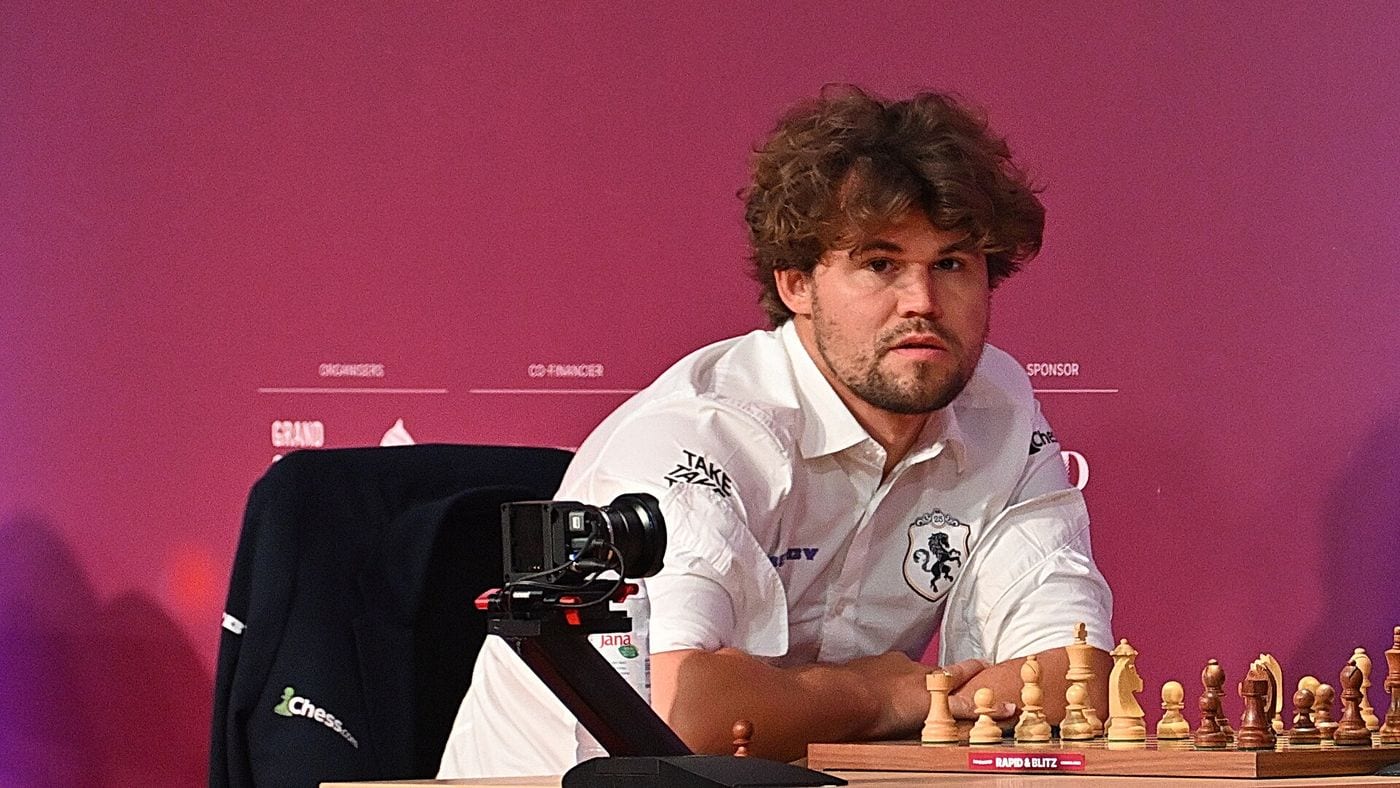
Magnus Carlsen is the greatest chess player of all time on the numbers: a FIDE peak of 2882, higher than any other world number one since the lists began in 1971, and five world championship match wins between 2013 and 2021. Garry Kasparov is second and Bobby Fischer third. The case for each is below.
That’s a verdict, not a theorem. Ratings from different eras sit on different scales, and these players never met across a board in their primes. So the order rests on stated criteria, and every number in the table comes from a rating list or a championship record.
How do you rank the greatest chess players of all time?
Three yardsticks, in this order. First, strength at the top: the FIDE peak where one exists, and Chessmetrics’ best three-year average for everyone it covers, because a rating held for three years says more than one lucky month. Second, time at the top, counted in months as world number one. Third, the title record. Carlsen goes first on FIDE evidence because Chessmetrics stops in early 2005 and can’t see him. Among the other nine the order is Chessmetrics’ own, by best three-year average, and the months and title columns show who that order shortchanges.
| # | Player | World champion | FIDE peak | Chessmetrics peak | Best 3 years (Chessmetrics) | Months at No. 1 (Chessmetrics) |
|---|---|---|---|---|---|---|
| 1 | Magnus Carlsen | 2013-2023 | 2882 (May 2014, again Aug 2019) | not covered | not covered | not covered |
| 2 | Garry Kasparov | 1985-2000 | 2851 (Jul 1999, again Jan 2000) | 2886 (Mar 1993) | 2874 (1989-91) | 263 |
| 3 | Bobby Fischer | 1972-1975 | 2785 (Jul 1972) | 2895 (Oct 1971) | 2867 (1971-73) | 109 |
| 4 | José Raúl Capablanca | 1921-1927 | no FIDE list | 2877 (May 1921) | 2857 (1919-21) | 85 |
| 5 | Emanuel Lasker | 1894-1921 | no FIDE list | 2878 (May 1894) | 2855 (1894-96) | 292 |
| 6 | Mikhail Botvinnik | 1948-57, 1958-60, 1961-63 | no FIDE list at his peak | 2885 (Oct 1945) | 2852 (1945-47) | 131 |
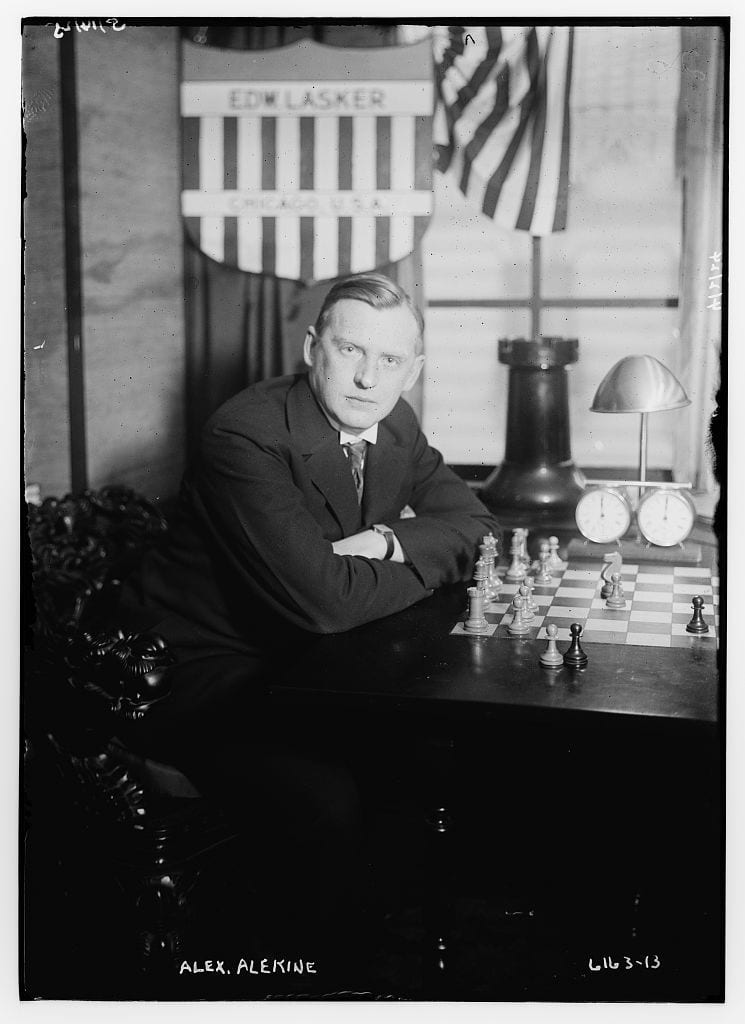
| 7 | Alexander Alekhine | 1927-35, 1937-46 | no FIDE list | 2860 (May 1931) | 2841 (1930-32) | 122 |
| 8 | Anatoly Karpov | 1975-85, FIDE title 1993-99 | 2780 (Jul 1994) | 2848 (Mar 1989) | 2833 (1988-90) | 100 |
| 9 | Viswanathan Anand | FIDE title 2000-02, 2007-13 | 2817 (Mar 2011) | 2833 (Mar 1999) | 2822 (1997-99) | 3 |
| 10 | Vladimir Kramnik | 2000-2007 | 2817 (Oct 2016) | 2826 (Aug 2001) | 2815 (2000-02) | 0 (best rank No. 2) |
Chessmetrics is Jeff Sonas’s retrospective rating system, built from results going back to 1843. FIDE published its first official list in July 1971, so Capablanca, Lasker and Alekhine carry no FIDE peak at all, and Botvinnik appears only on the early lists, long past his best. Don’t subtract one column from another. Fischer is 2785 on the FIDE list and 2895 on Chessmetrics, 110 points apart for the same man.
Is Magnus Carlsen better than Garry Kasparov?
On peak strength, yes. Carlsen’s 2882 came on the May 2014 list and again in August 2019, five years apart, which says the peak wasn’t a one-off. He won five title matches in a row: Viswanathan Anand in 2013 and 2014, Sergey Karjakin in 2016, Fabiano Caruana in 2018 and Ian Nepomniachtchi in 2021. Two of those finished 6-6 in classical games, and he won both in the tiebreaks (3-1 and 3-0). In 2023 he declined to defend the title, citing a lack of motivation and interest in the format.
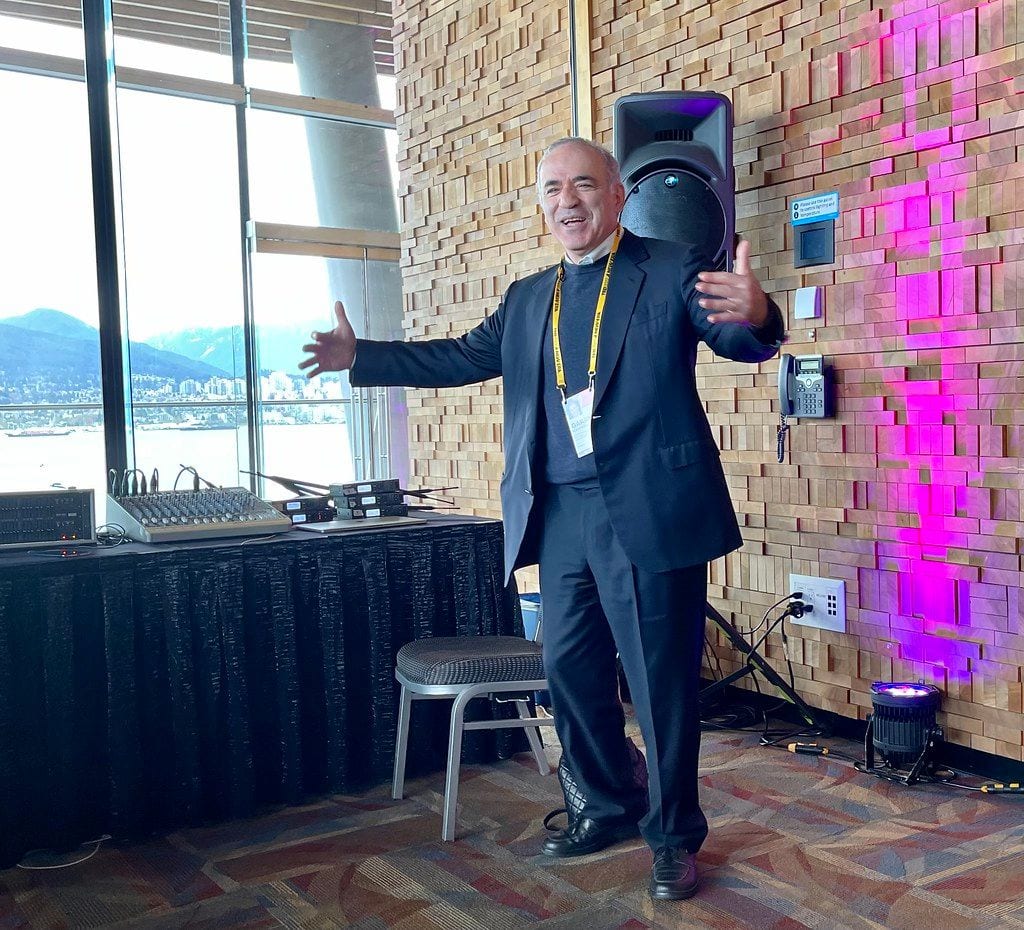
Kasparov’s case is just as concrete. The FIDE list had him at No. 1 from January 1984 through the January 2006 list, with three gaps: Karpov in July 1985, Karpov again on the two 1994 lists, when FIDE had left Kasparov off the list, and Kramnik in January 1996. Kasparov retired on 10 March 2005 and stayed on top until FIDE removed him for inactivity in April 2006. His 2851 from July 1999 stood as the highest rating in FIDE history until Carlsen passed it in January 2013. He held the title from 1985 until Kramnik beat him 8½-6½ in London in 2000, though FIDE had stripped him of its own version in 1993, when he and Nigel Short broke away to form the Professional Chess Association.
So the gap is 31 rating points on the same federation’s list, against a title reign that runs 15 years for Kasparov and 10 for Carlsen. Peak strength is the first yardstick, and there Carlsen wins. Anyone who ranks Kasparov first on longevity isn’t making a mistake. Carlsen’s dispute with Hans Niemann, which began in September 2022, belongs to his story but not to this ranking.
Magnus Carlsen vs Bobby Fischer: who was better?
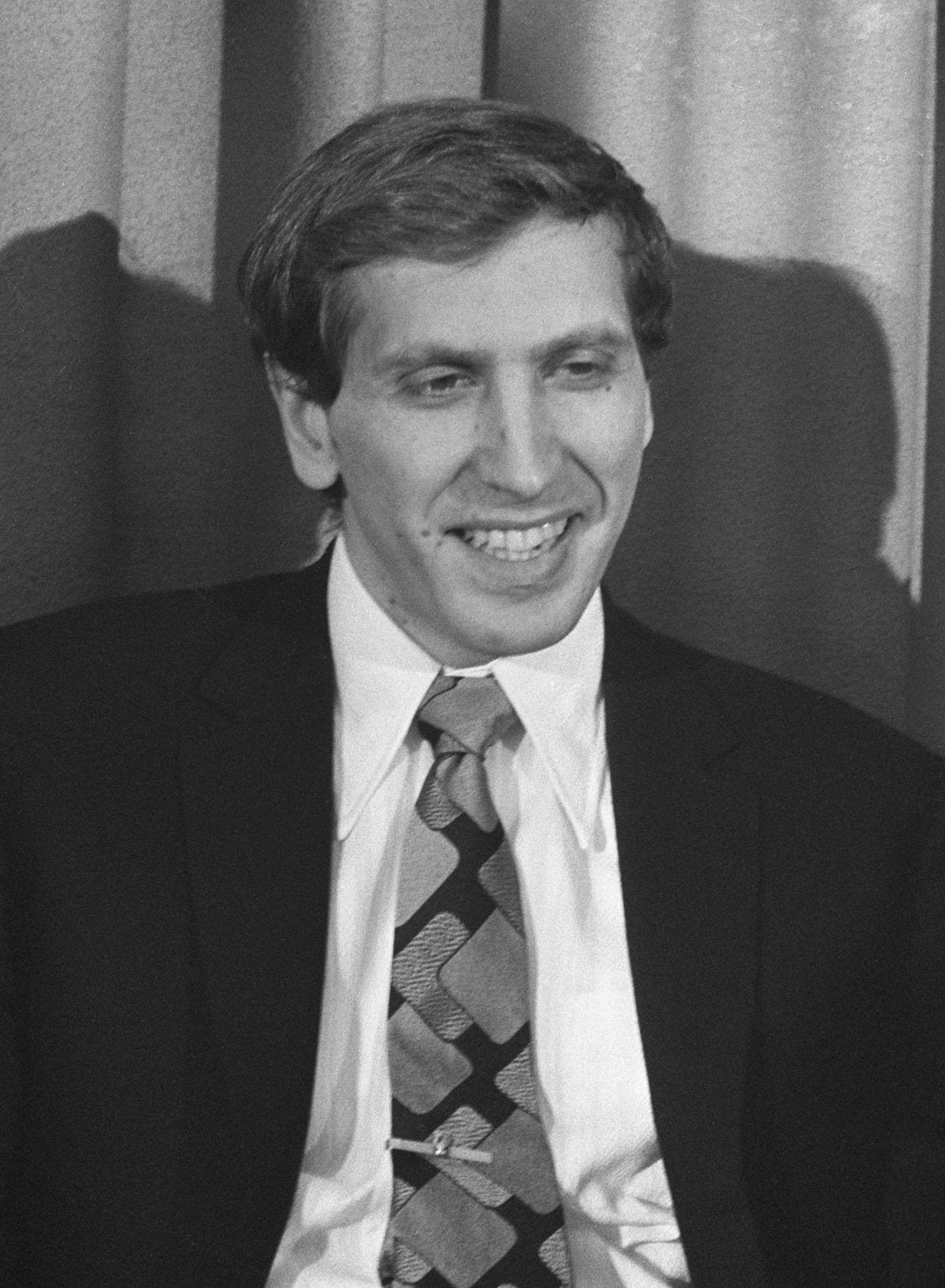
Fischer wins the peak argument and loses the career argument. On the July 1972 FIDE list he stood at 2785 and the second-ranked player, Boris Spassky, at 2660, a 125-point lead over the next man. Chessmetrics gives him the highest single rating of the nine players it covers in the table, 2895 on its October 1971 list. He took the title in Reykjavik in 1972, 12½-8½ over Spassky. Then he stopped. FIDE declared Karpov champion by default in 1975 when the Manila match never happened, and the January 1976 list dropped Fischer for inactivity.
That’s one title match. Carlsen played five and won all five. The raw gap between 2882 and 2785 is 97 points across lists 42 years apart, and nobody can say what that means as strength, because the table has already shown the same man at 2785 on one system and 2895 on another. What can be said is that Fischer led his own field by 125 points in July 1972 and played one title match. That’s why he’s third. His 1956 win over Byrne, played at 13, is the Game of the Century.
Where do Capablanca, Lasker and Botvinnik rank?
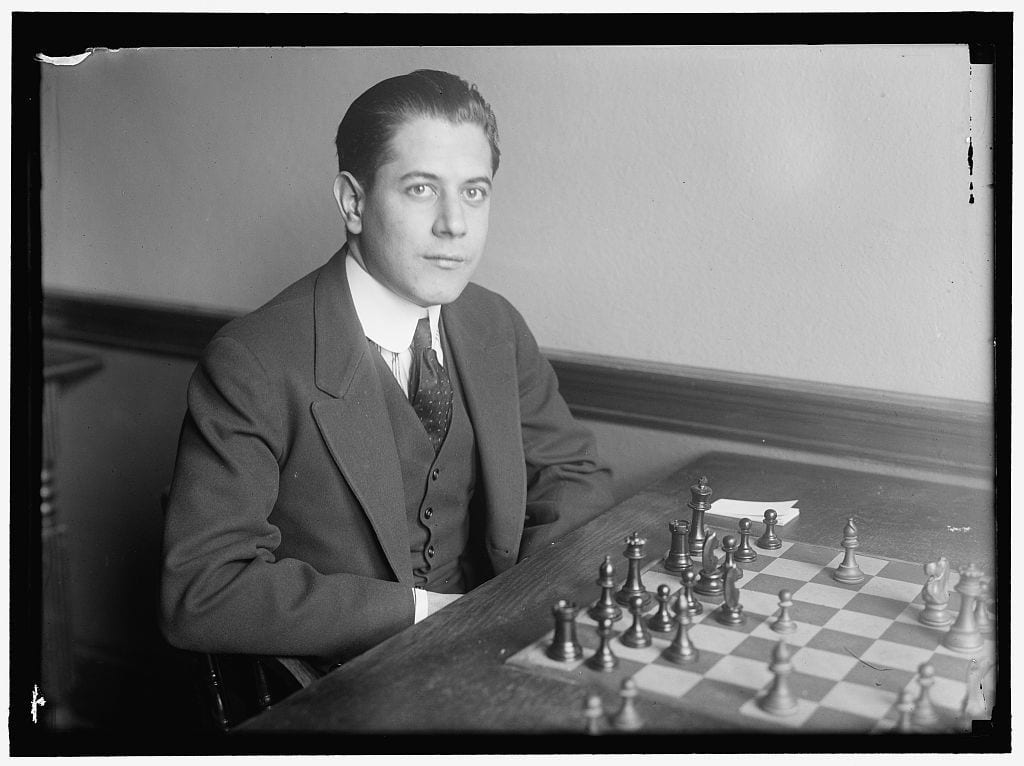
José Raúl Capablanca beat Lasker 9-5 in Havana in 1921 and lost the title to Alexander Alekhine in Buenos Aires in 1927, 18½-15½ in a first-to-six-wins match. Chessmetrics has his best three years at 2857, the 1919 to 1921 stretch that ends with his title win. That puts him fourth. His 85 months at No. 1 are fewer than Karpov’s 100 and a fraction of Lasker’s 292, which is the price of a six-year reign.
Emanuel Lasker is the loudest argument against this order. He held the title from 1894 to 1921, 27 years, the longest reign since 1886, and Chessmetrics has him at No. 1 for 292 months, more than anyone else in the table. But Wikipedia’s list also records two separate ten-year spans in which he didn’t defend the title, and his best three-year average (2855, 1894-96) sits two points under Capablanca’s. A reader who weights time at the top above everything should move Lasker up. This ranking doesn’t.
Mikhail Botvinnik’s Chessmetrics peak, 2885 in October 1945, beats both of theirs. He won the 1948 tournament after Alekhine’s death, then lost the title and won it back twice: to Vasily Smyslov in 1957 and back in 1958, to Mikhail Tal in 1960 and back in 1961. Tigran Petrosian took it for good in 1963. Thirteen years as champion and 131 months at No. 1 are a strong record. His best three years, 2852, sit three points under Lasker’s, which is why he’s sixth and not fifth.
What about Alekhine, Karpov, Anand and Kramnik?
Alexander Alekhine won the title in 1927, defended it against Efim Bogoljubow in 1929 and 1934, lost it to Max Euwe in 1935 and took it back in 1937. He held it until his death in 1946. Chessmetrics puts his peak at 2860 in May 1931 and his best three years at 2841. His 17 years as champion is second only to Lasker’s 27 in the table, and 122 months at No. 1 is a strong total. His best three years, 2841, are 11 points behind Botvinnik’s, which is the gap between sixth and seventh.
Anatoly Karpov became the highest-rated player on the FIDE list in January 1976, when FIDE removed Fischer for inactivity. His FIDE peak of 2780 came in July 1994, and he played Kasparov in five world championship matches between 1984 and 1990, counting the first, which was abandoned without a result. He lost 13-11 in 1985 and 12½-11½ in 1986 and 1990. The 1987 match ended 12-12, which let Kasparov keep the title. Karpov won the FIDE version again in 1993, 1996 and 1998.
Viswanathan Anand reached 2817 in March 2011 and held the undisputed title from 2007, when he won the Mexico City tournament, until Carlsen took it in 2013. Vladimir Kramnik beat Kasparov in 2000 and unified the title in 2006 against Veselin Topalov. He reached No. 1 on the FIDE list in January 1996 and again in January 2008, never while champion. Aaron Nimzowitsch, whose bio is on this site, shows how thin the cutoff is: Chessmetrics lists him 26th on its one-year peak list at 2774 in 1929, and no title match on Wikipedia’s list includes him.
Which single game shows the standard?
Kasparov against Veselin Topalov, Hoogovens tournament, Wijk aan Zee, round 4, 20 January 1999. Six months later the July 1999 FIDE list gave Kasparov his 2851.
The opening was a Pirc Defense. Both kings castled long, and by move 24 Black’s king stood on a7 and White’s rooks sat on d1 and e1. Then 24.Rxd4 cost White a rook for a pawn, and 25.Re7+ offered a second rook that Black couldn’t take: 25…Qxe7 loses to 26.Qxd4+ and a forced mate. Topalov took the first rook anyway. He said years later that accepting had been “suicide,” and Wikipedia’s account notes 24…Kb6 would have been the better decline. Black resigned after 44.Qa7. Chess.com has ranked it No. 1 among the greatest games ever played, according to Wikipedia.
Kasparov White Topalov Black


What do ranked lists leave out?
Most of what makes a champion. A rating shows that a title was won, never how. Kasparov’s matches against IBM’s computer are on the Deep Blue page, and the Freestyle Chess GOAT Challenge covers a format built to remove opening preparation. For the full run of champions from 1886, read the World Chess Championship page. How the numbers themselves are calculated is in chess ratings explained.
Sources
- FIDE rating profiles: Carlsen, Anand, Kramnik.
- OlimpBase, History of Elo ratings 1971-2001, including the July 1972 FIDE list.
- Chessmetrics, Jeff Sonas: peak average ratings and individual player profiles. Ratings run to early 2005.
- Wikipedia: List of World Chess Championships, List of FIDE chess world number ones, Kasparov’s Immortal.
- Chessgames.com, Kasparov vs Topalov, 1999, source of the PGN.
Further reading
- Garry Kasparov on My Great Predecessors, Part I, Garry Kasparov The second name in the table annotating the champions who came before him.
- My 60 Memorable Games, Bobby Fischer Fischer's own annotated selection of his games.
- Wonderboy, Simen Agdestein The story of how Carlsen became a grandmaster so young.