Bobby Fischer: GM at 15, Champion in 1972
From GM at 15 to the 1972 Cold War match in Reykjavik: Bobby Fischer's rise through the US Championship, the 6-0 Candidates sweep, and the Game 6 standing ovation that ended the match.
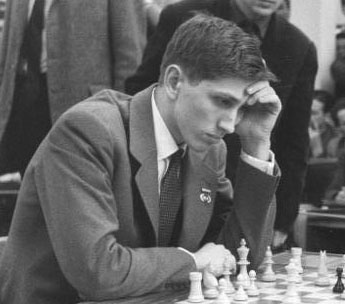
Bobby Fischer was an American chess grandmaster who became World Chess Champion in 1972 by defeating Boris Spassky 12.5–8.5 in Reykjavik, Iceland. Born March 9, 1943, in Chicago, he became a grandmaster at 15, won eight US Chess Championships, and is widely considered one of the greatest players in history. He forfeited his title in 1975 rather than play under amended match conditions, returned to competitive chess once in 1992, and died on January 17, 2008, in Reykjavik.
In the summer of 1971, before any of that, he played 12 consecutive match games against two of the world’s best players and won all 12. Six to zero against Soviet grandmaster Mark Taimanov in Vancouver. Six to zero against Danish grandmaster Bent Larsen in Denver. No one in the documented history of the game had done anything like it.
Chicago, Brooklyn, and the chess set
Fischer was born March 9, 1943, in Chicago. His mother, Regina Wender Fischer, raised him and his sister Joan essentially alone after moving the family to Brooklyn. Joan bought a chess set when Bobby was 6, the kind with instructions included, and he taught himself to play. He was showing up at Brooklyn chess clubs regularly within a year. By 10, his rating was competitive with adults.
He won the US Junior Championship at 13. He won the US Chess Championship at 14, the youngest winner in the tournament’s history at the time. He became an International Master at 14 and a grandmaster at 15 years, 6 months, and 1 day in 1958, the youngest grandmaster in history at the time. He dropped out of high school the same year.
For more on the openings that defined his career, see our Sicilian Defense guide.
Eight US Championships
Between 1957 and 1967, Fischer won eight US Chess Championships and competed in nine. In the 1963–64 championship he went 11–0, a perfect score. He won every game.
He was not easy to work with. He demanded conditions that tournament organizers found unreasonable: specific lighting, specific chairs, no audible camera clicks, no spectators positioned behind him. He forfeited games over disputes. He threatened to withdraw from events and followed through sometimes.
What none of them could deny was the chess.
The 1971 Candidates and the road to Reykjavik
After Taimanov (6–0) and Larsen (6–0), Fischer played former world champion Tigran Petrosian in the Candidates final. Petrosian had built his entire career on prophylactic, defensive play designed to neutralize exactly what Fischer was doing. Fischer won 6.5–2.5.
He arrived at the 1972 World Championship in Reykjavik having won 20 consecutive match games. He had not lost a single game since the 1971 Candidates began.
Then he lost Game 1. He blundered a pawn in a position he should have held. Spassky won cleanly. For Game 2, Fischer didn’t appear, objecting to cameras in the playing hall, and forfeited. He was down 0–2 before a single piece had moved in the second game.
What followed over the next five weeks is the most famous comeback in chess history.
Reykjavik, 1972
Fischer won Game 3. Then Game 5. By the time Game 6 was played, the match was tied at 2.5–2.5. Spassky had the White pieces and Fischer, who had spent his entire career opening 1.e4 and responding with the Najdorf Sicilian, played the Queen’s Gambit Declined, a quiet, classical opening associated with Soviet technical chess.
He played it better than Spassky had prepared for. The game lasted 41 moves. Fischer outplayed Spassky in a positional endgame, converted the technical advantage, and won in a way that drew applause from the audience. Spassky himself applauded from his seat. Standing ovations from a losing player at championship chess almost never happen.
The applause was the chess world acknowledging a standard. For an earlier look at that standard, from 1956, when Fischer was 13, the Game of the Century shows where it started.
Byrne, Donald White Fischer, Bobby Black


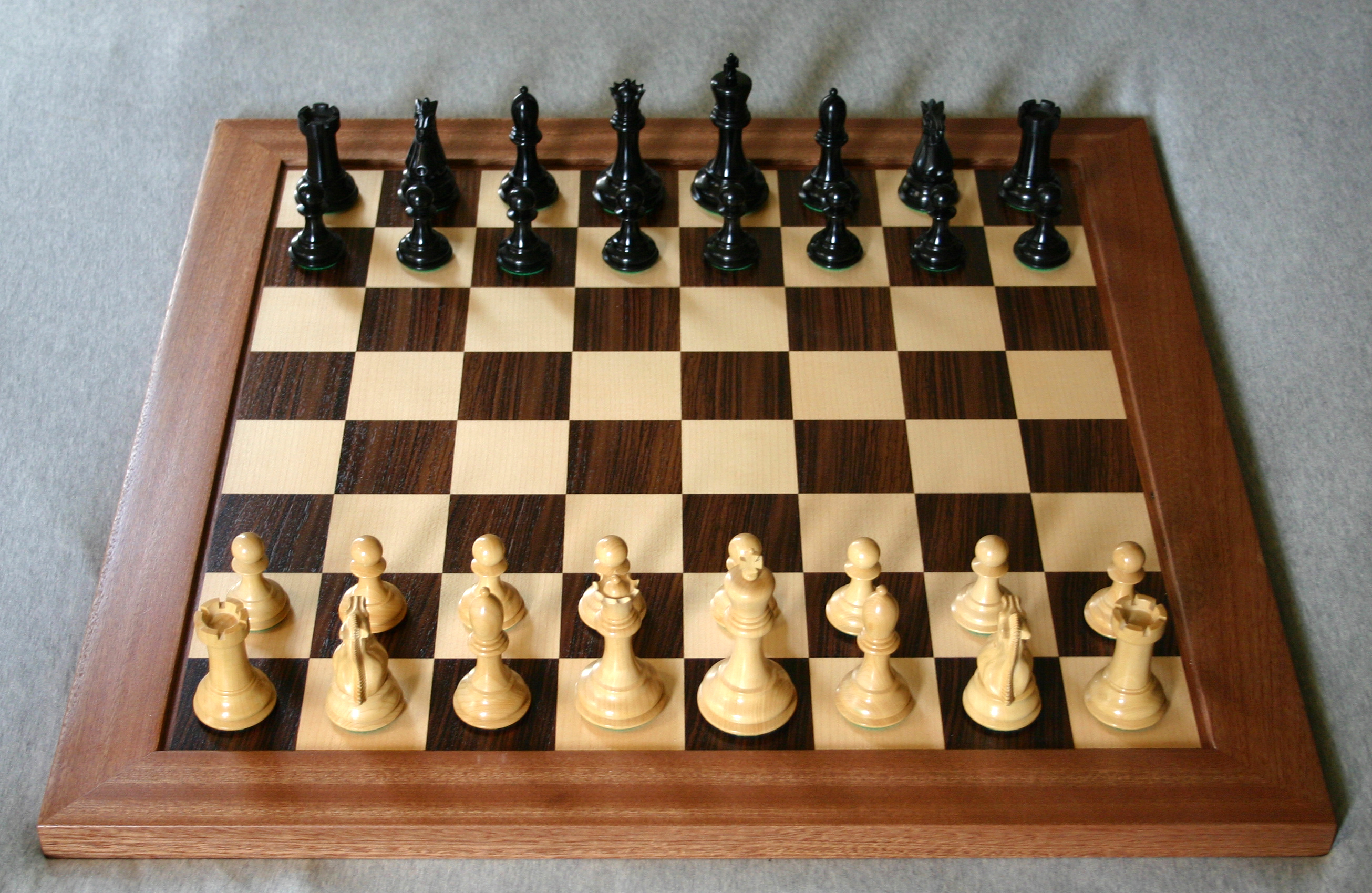
The match ended 12.5–8.5. Fischer won 7 games, lost 3, drew 11 across 21 games total. He was the first American to hold the world championship since Paul Morphy visited Europe in 1858 and 1859.
The Cold War context was impossible to ignore. Henry Kissinger called Fischer before he left for Reykjavik, urging him to play. The Soviet state had never lost a world championship to a Western player in the unified era after 1948. Frank Brady’s Endgame: Bobby Fischer’s Remarkable Rise and Fall (Crown/Broadway, 2011) is the definitive sourced account of the Reykjavik match and Fischer’s full career, drawing on primary documents and court records.
Playing style
Fischer’s chess was built on technical precision and relentless practical pressure, two properties that rarely coexist at the highest level.
He didn’t gamble. He played objectively strong moves in positions most grandmasters found comfortable, and kept playing them until the opponent’s resources ran out. His endgame technique was widely considered the best of any player active in the 1960s and 1970s. He converted positions others let slip.
As White, his signature was the Ruy Lopez, applied to build long-term positional pressure rather than early tactical fireworks. As Black, the Najdorf Sicilian. His annotations in My 60 Memorable Games (Simon and Schuster, 1969; current Batsford edition) remain among the best explanations of the Najdorf’s ideas available in print. Every serious analyst studying the variation returns to Fischer’s original notes.
He is often compared to Garry Kasparov and Magnus Carlsen in conversations about the greatest player of all time. The comparison is genuinely contested; the chess record is clear.
After the title
Fischer was required to defend against Anatoly Karpov in 1975. He withdrew. FIDE agreed to most of his conditions but refused his demand for an unlimited number of games with a required 10-win margin, offering nine instead. Fischer wasn’t playing. FIDE stripped him of the title on April 3, 1975, and Karpov became champion by default.
In 1992, Fischer played Spassky in a rematch in Yugoslavia, a country under US sanctions. He reportedly spat on the US Treasury Department’s warning letter. He won the rematch and collected $3.35 million. The US government indicted him.
In public statements from 1992 onward, he made antisemitic and anti-American remarks that drew widespread condemnation, including radio comments praising the September 11 attacks. He was arrested in Japan in 2004 on a revoked US passport. Iceland granted him citizenship in 2005. He died there on January 17, 2008, from kidney failure. He was 64.
His chess, documented in every serious database and instructional collection, remains among the most technically precise in the recorded history of the game.
Sources
- Brady, Frank. Endgame: Bobby Fischer’s Remarkable Rise and Fall. Crown, 2011.
- Fischer, Bobby. My 60 Memorable Games. Simon and Schuster, 1969.
- FIDE official profile for Bobby Fischer
- 1972 World Chess Championship game scores
This page contains affiliate links. As an Amazon Associate, DiscussChess earns from qualifying purchases.
Sources
- Brady, Frank. Endgame: Bobby Fischer's Remarkable Rise and Fall. Crown, 2011.
- Fischer, Bobby. My 60 Memorable Games. Simon and Schuster, 1969.
- FIDE official profile, Bobby Fischer
- 1972 World Chess Championship game scores, chessgames.com
Further reading
- Endgame: Bobby Fischer's Remarkable Rise and Fall, Frank Brady, Crown, 2012 ASIN verified via Open Library 2026-05-02. Broadway Paperbacks edition. The definitive Fischer biography.
- My 60 Memorable Games, Bobby Fischer, Batsford/Pavilion ASIN verified via Open Library 2026-05-02. Batsford/Pavilion edition with algebraic notation. Fischer's own annotations.