Deep Blue vs. Kasparov: 1996 and 1997 Matches
In 1996, Deep Blue became the first computer to win a game against the reigning world champion. In 1997, it won the match. Kasparov cried foul. IBM retired the machine. What actually happened.
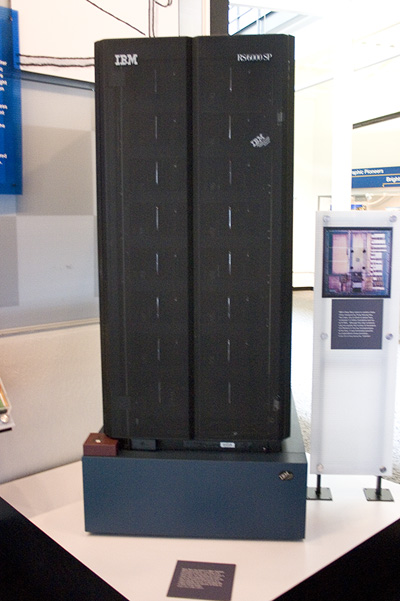
In February 1996, Deep Blue won Game 1 against Garry Kasparov in Philadelphia. The first time a computer had won a game against the reigning world chess champion under standard tournament conditions. Kasparov won the match 4–2. He was composed. He said chess players would always have the edge.
In May 1997, Deep Blue won the rematch 3.5–2.5 in New York. Kasparov called it the most depressing experience of his professional life and demanded a rematch. IBM declined, retired the machine, and never played another competitive chess match. Deep Blue was dismantled and its components distributed to museums.
The sequence of events (win, retire, refuse rematch) is the part that still generates debate.
What Deep Blue actually was
Deep Blue was a dedicated chess-playing supercomputer built by IBM. It used custom chess chips that evaluated roughly 200 million positions per second. It selected moves by searching a game tree to a depth of around 12–14 moves ahead in normal play, deeper in forcing lines.
The “intelligence” involved was not artificial intelligence in the modern sense. Deep Blue didn’t learn from games. It didn’t improve over time. It didn’t generalize from chess to anything else. It was an extremely powerful calculator that evaluated positions using hand-crafted heuristics built by IBM’s team of researchers and chess grandmasters including Miguel Illescas and Joel Benjamin.
This distinction matters for understanding what the matches proved. Deep Blue winning didn’t demonstrate that computers “understood” chess. It demonstrated that exhaustive search of positions at 200 million per second, guided by good heuristics, produces chess moves that beat the best human.
The 1996 match (Philadelphia, February 10–17)
The six-game match started with a shock. Deep Blue won Game 1. Kasparov described being genuinely surprised by a move in the opening, a machine move that looked like strategic planning rather than calculation. He took the match back from there, winning games 2, 5 and 6 and drawing games 3 and 4, for a 4–2 finish.
His conclusion: the computer was beatable because it couldn’t adapt to unusual positions. He could steer to positions the machine’s evaluation function handled poorly. He was right, in 1996. IBM upgraded the machine.
The 1997 rematch (New York, May 3–11)
The upgraded Deep Blue evaluated positions differently. The team had added endgame tablebases (perfect play for all positions with six or fewer pieces), improved the evaluation function with input from grandmasters, and tuned the search algorithms.
Kasparov won Game 1 convincingly, defending the Ruy Lopez and outplaying the machine in a positional endgame. Game 2 changed everything.
Deep Blue, playing White, made a series of moves Kasparov couldn’t explain. Move 36, Ba6, a quiet bishop maneuver to a6 that seemed to do nothing immediately but set up long-term pressure. Kasparov spent an enormous amount of time trying to find a response. He played 37…Be6??, a blunder, and lost. He said afterward that the move 36.Ba6 looked like something a human with deep strategic understanding would play, not a machine doing position evaluation.
Kasparov won Game 3. Games 4 and 5 were drawn. In Game 6, under match pressure, Kasparov played the Caro-Kann Defense, deviated from solid theory with 7…h6 (an objectively bad move in the position), and lost in 19 moves. The match: Deep Blue 3.5, Kasparov 2.5.
Game 6: the collapse
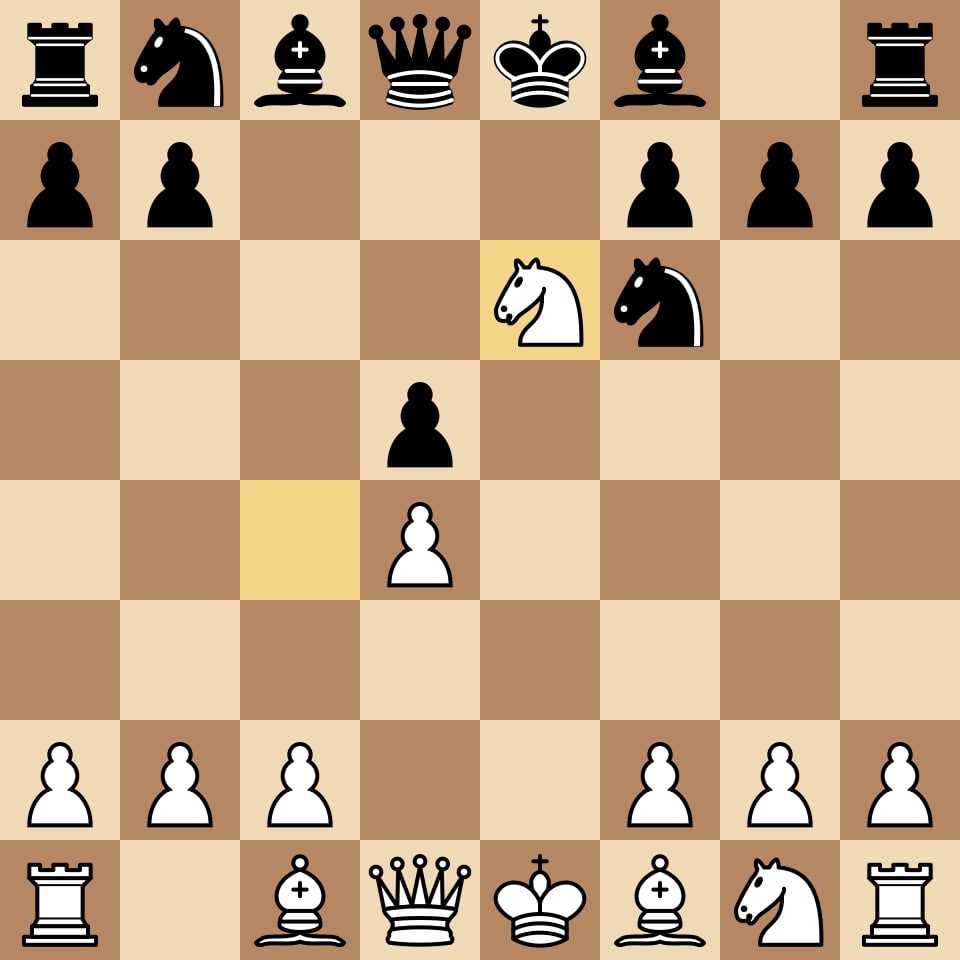
Game 6 is the shortest decisive game in the history of World Chess Championship-level competition. Kasparov, needing a win to level the match, played the Caro-Kann. Deep Blue sacrificed its knight on move 8, a knight for a pawn and an attack against Black’s misplaced king. By move 19, Kasparov resigned. He saw the position clearly enough to know there was no defense.
Deep Blue White Kasparov Black


The knight sacrifice on move 8 (8.Nxe6!!) is the game’s defining moment. After 8…Qe7 9.O-O fxe6, Kasparov has won a piece back on paper. But his king is stuck on e8, his development is frozen, and Deep Blue’s rooks are going to come to the e-file. By move 18, the rook sacrifice on e7 ends the game: 18.Rxe7! Bxe7 19.c4, and the position is lost for Black regardless of what he tries.
Kasparov walked away from the board. He had processed 200 million positions per second fewer than his opponent. He had lost the match.
Kasparov’s accusations
Kasparov alleged IBM may have allowed human intervention in the match, specifically during Game 2. His argument: move 36.Ba6 was too human in character for a machine playing at that depth. IBM’s team was physically present during the match, and in chess matches at the time, there were no mechanisms to audit the machine’s operation in real time.
IBM denied any human intervention. They published the log of Deep Blue’s analysis, showing the move was found by the program. Kasparov and others pointed out that the published logs didn’t fully explain the reasoning for move 36.
IBM’s decision to retire the machine immediately after winning and refuse a rematch added fuel. They denied the match rematch on grounds that they had achieved their objective, demonstrating the machine’s capability, and had no commercial reason to continue. Chess historians have debated whether that was the real reason.
Kasparov wrote his account in Deep Thinking (affiliate), published in 2017. He’s more measured about the matches than he was in 1997 but still believes something unusual happened in Game 2.
What it meant for chess
The matches ended a question that had been open since the early days of computer chess: could machines beat the best human? The answer is clearly yes, and by 2026 that question is unremarkable. The strongest chess engine today (Stockfish, Leela) plays at roughly 3500+ ELO: hundreds of points above any human.
What the matches didn’t settle: whether Deep Blue “understood” chess, what the implications were for machine intelligence generally, or whether the 1997 result was entirely clean. Those remain open questions.
For chess, the practical effect was immediate. Engine analysis became standard in game preparation and post-game review. Modern grandmasters like Magnus Carlsen prepare with engines as primary tools. The relationship between human chess and engine chess has been complex ever since.
Sources
- IBM Research, Deep Blue documentation
- Campbell, Murray, et al. “Deep Blue.” Artificial Intelligence, vol. 134, 2002, pp. 57–83.
- Kasparov, Garry. Deep Thinking. PublicAffairs, 2017. (affiliate)
- Kasparov, Garry. How Life Imitates Chess. Bloomsbury. (affiliate)
- Kasparov vs Deep Blue 1997, Lichess study (PGN source)
This page contains affiliate links. As an Amazon Associate, DiscussChess earns from qualifying purchases.
Sources
- IBM Research, Deep Blue documentation
- Kasparov, Garry. Deep Thinking: Where Machine Intelligence Ends and Human Creativity Begins. PublicAffairs, 2017.
- Campbell, Murray, et al. 'Deep Blue.' Artificial Intelligence, vol. 134, 2002, pp. 57–83.
- Kasparov vs Deep Blue 1997, Lichess study (PGN source)
Further reading
- Deep Thinking: Where Machine Intelligence Ends and Human Creativity Begins, Garry Kasparov ASIN verified via Amazon 2026-05-02. PublicAffairs 2017 hardcover. Kasparov's own account of the matches, with his analysis of what Deep Blue was and wasn't doing.
- How Life Imitates Chess, Garry Kasparov ASIN verified via Open Library 2026-05-02. Bloomsbury paperback edition. Less about Deep Blue specifically, more about decision-making under pressure: the same pressure he faced in 1997.