Garry Kasparov: 15 Years as World Chess Champion
The complete biography of Garry Kasparov: his rise from Baku, the four Karpov matches, the 2851 peak rating, and why the Topalov game at Wijk aan Zee 1999 is still studied today.
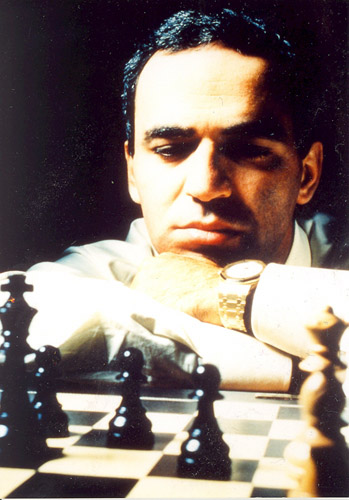
Garry Kasparov is a Russian chess grandmaster who held the World Chess Championship from 1985 to 2000, the longest reign in the modern era. Born April 13, 1963, in Baku, Azerbaijan SSR, he reached a peak FIDE rating of 2851 in January 1999, a record that stood for 14 years until Magnus Carlsen surpassed it with 2882 in 2013. Kasparov is widely regarded as the strongest chess player in history, defined by unprecedented opening preparation depth, aggressive attacking style, and four successive title defenses against Anatoly Karpov between 1985 and 1990.
He won the title at 22. He held the title for fifteen years.
Baku to Moscow
Kasparov was born April 13, 1963, in Baku, Azerbaijan SSR. His father, Kim Weinstein, died in a road accident when Garri was seven. He took a version of his mother’s surname, Kasparyan, later Russified to Kasparov, and his chess talent surfaced early. He corrected a chess problem his parents were working on at age five without having been formally taught the moves.
He entered Mikhail Botvinnik’s chess school at age 10. Botvinnik, a three-time world champion, ran the most prestigious chess training program in the Soviet Union and saw something worth developing. By 1980, Kasparov had won the World Under-20 Championship in Dortmund and earned the grandmaster title at 17.
His rise through the Candidates Matches in 1983 and 1984 earned him the right to challenge Karpov before he turned 22. Karpov had held the title since Bobby Fischer forfeited it in 1975 without playing a game.
The four Karpov matches
The first match, in 1984, was stopped. FIDE President Florencio Campomanes halted it after 48 games with Karpov leading 5 wins to 3, with 40 draws. Karpov had opened 5–0 in wins, but Kasparov had closed the gap in the final stretch of games. Whether stopping the match protected the exhausted champion or denied the challenger a legitimate run is a question that circulated in chess for decades.
The 1985 rematch produced a definitive result. Kasparov won 13–11, with five wins to Karpov’s three and sixteen draws. He became champion on November 9, 1985.
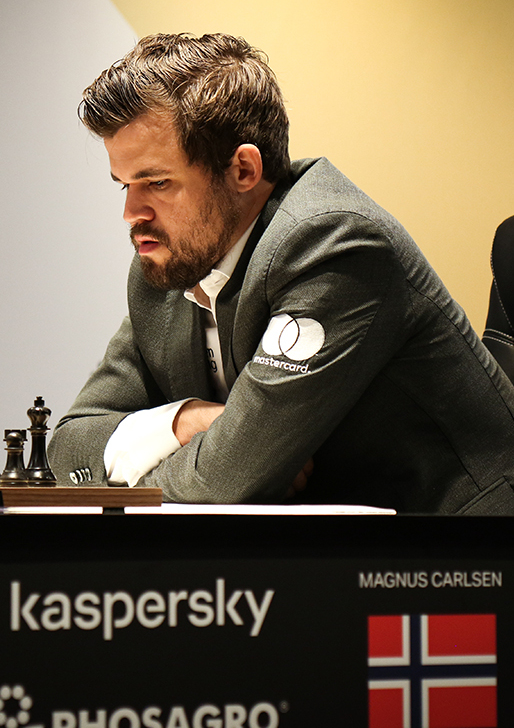
Three more matches followed:
- 1986 (London and Leningrad): Kasparov defended, winning 12.5–11.5. Karpov won the first two games; Kasparov came back and pulled ahead in the second half.
- 1987 (Seville): The match ended 12–12. Championship rules gave the defending champion the title in the event of a tie. Karpov won Game 24 to force the draw but Kasparov retained the title by the narrowest margin possible.
- 1990 (New York and Lyon): Kasparov won 12.5–11.5 in the fourth and final classical contest. By this point the two players had played 144 official classical games across four matches, a rivalry without precedent in the game.
Playing style
Kasparov was an attacking player who backed his attacks with preparation that went deeper than anyone else in his era. He was among the first elite grandmasters to integrate computers into opening research, beginning in the late 1980s. His preparation frequently reached 25 to 30 moves into variations his opponents had to navigate over the board.
His repertoire reflected this approach. As White, he played 1.e4 throughout most of his career, relying on the Ruy Lopez and sharp Sicilian systems, see our breakdown of the Sicilian Defense for the specific structures he favored. As Black against 1.d4, his weapons were the King’s Indian Defense and the Nimzo-Indian, both complex and dynamic, designed for winning rather than equalizing.
His strength showed in the middlegame initiative. He built positions where accurate defense required the kind of preparation he had already done at home. Opponents would reach a critical point with half a dozen playable-looking options and choose the wrong one not from tactical blindness but from the impossibility of calculating Kasparov’s home analysis over the board.
The Topalov game
Kasparov vs. Topalov, played January 20, 1999, at the Hoogovens Tournament in Wijk aan Zee, Netherlands, is regularly cited as the greatest single game of the modern chess era.
Veselin Topalov, then one of the top five players in the world and later himself a FIDE World Champion, was Kasparov’s opponent. The middlegame reached a position in the Pirc Defense where a sequence of piece sacrifices was available to White. Kasparov played it, offering a rook early in the combination, then committing to a follow-up that left him temporarily down in material. The variation was a long forced line that Topalov couldn’t defuse.
The game lasted 44 moves. Across the critical stretch of the combination, Kasparov had not played a single suboptimal move. He annotated it himself in volume five of My Great Predecessors (Everyman Chess, 2006). The game appears in every serious anthology of chess brilliancy published after 1999.
Kasparov, Garry White Topalov, Veselin Black


The loss to Kramnik
In October 2000, Kasparov played Vladimir Kramnik for the unified world title in London. He lost 8.5–6.5. Zero wins, two losses, thirteen draws.
Kramnik prepared a specific answer to Kasparov’s preferred Ruy Lopez. Every time Kasparov played it, Kramnik responded with the Berlin Defense (1.e4 e5 2.Nf3 Nc6 3.Bb5 Nf6), reaching endgames that Kasparov found difficult to convert. The Berlin was a theoretical curiosity in 1999. By November 2000, it had forced the entire theory of 1.e4 to be re-evaluated at every level.
Kasparov never held the world championship again. He played competitively until retiring in March 2005, closing out a 25-year career at the top of the game. His peak FIDE rating of 2851 stood from 1999 until Carlsen surpassed it. Fabiano Caruana reached 2844 in 2014, third all-time; Ding Liren holds the title today.
After chess
Kasparov became one of the most prominent critics of Vladimir Putin’s government in Russia. He co-founded the United Civil Front in 2005 and was arrested briefly during anti-government demonstrations in Moscow in 2007. He has lived primarily in the United States since the mid-2000s.
In 2017 he published Deep Thinking: Where Machine Intelligence Ends and Human Creativity Begins (PublicAffairs), a book on artificial intelligence drawn from his experience in the 1996 and 1997 matches against IBM’s Deep Blue. He wrote about the psychological dimensions of playing against a machine with no emotions to exploit and no fatigue to wait out.
His earlier book How Life Imitates Chess (Bloomsbury, 2008) translates strategic thinking from chess into a framework for decision-making, and remains in print. The Kasparov Chess Foundation, which he founded to promote chess education, operates in multiple countries.
For a deeper dive into Kasparov’s annotations of the players who shaped his own game, Garry Kasparov on My Great Predecessors, Part 1 (Everyman Chess, 2003) is the first volume in the five-part series. Also see our list of best chess books for beginners for titles appropriate at every level.
Sources
- FIDE official rating history for Garry Kasparov
- Kasparov, Garry. My Great Predecessors, Vols. 1–5. Everyman Chess, 2003–2006.
- Kasparov, Garry. How Life Imitates Chess. Bloomsbury, 2008.
- Kasparov, Garry. Deep Thinking: Where Machine Intelligence Ends and Human Creativity Begins. PublicAffairs, 2017.
This page contains affiliate links. As an Amazon Associate, DiscussChess earns from qualifying purchases.
Sources
- FIDE Rating History, Garry Kasparov
- Kasparov, Garry. My Great Predecessors, Parts 1–5. Everyman Chess, 2003–2006.
- Kasparov, Garry. How Life Imitates Chess. Bloomsbury, 2008.
- Kasparov, Garry. Deep Thinking: Where Machine Intelligence Ends and Human Creativity Begins. PublicAffairs, 2017.
Further reading
- Garry Kasparov on My Great Predecessors, Part 1, Everyman Chess, 2003 ASIN verified via Open Library 2026-05-02. Everyman Chess first edition, covering Steinitz through Botvinnik.
- How Life Imitates Chess, Garry Kasparov, Bloomsbury, 2008 ASIN verified via Open Library 2026-05-02. Bloomsbury paperback edition.