Emanuel Lasker: World Chess Champion for 27 Years
Emanuel Lasker held the World Chess Championship from 1894 to 1921: 27 years, the longest reign in history. He was also a mathematician, philosopher, and close friend of Einstein. A biography of chess's most resilient champion.
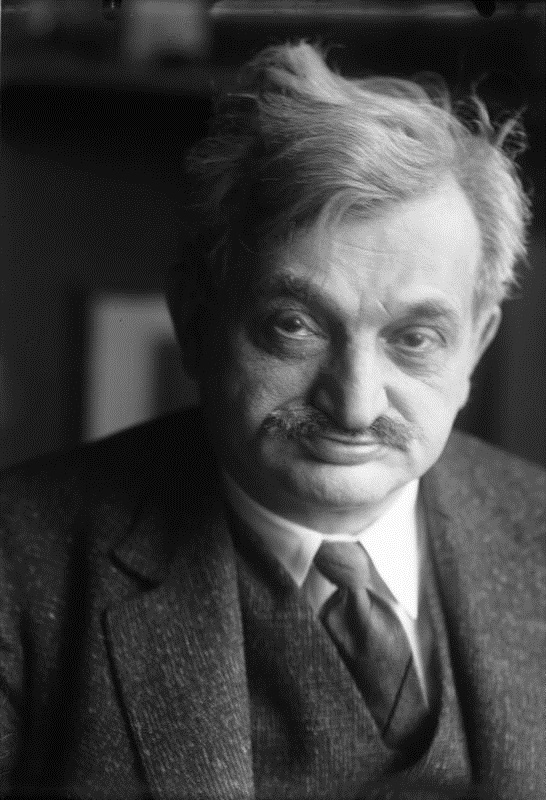
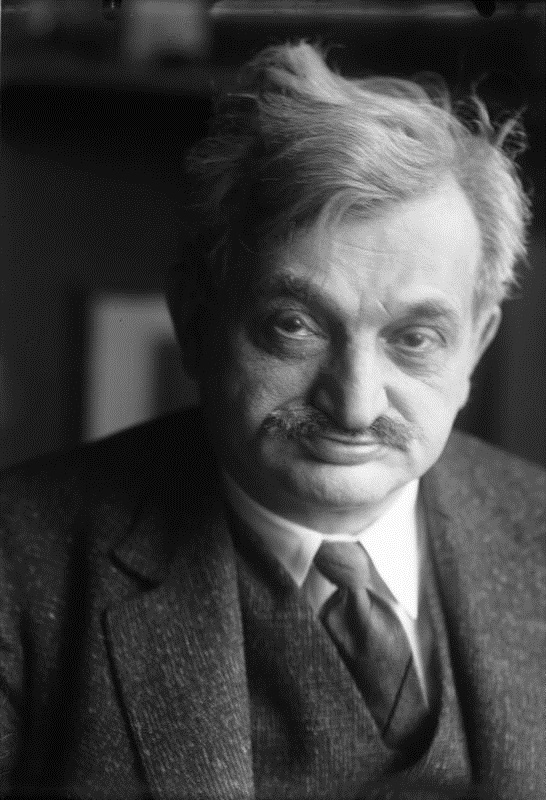
Emanuel Lasker was born December 24, 1868, in Berlinchen (now Barlinek, Poland) and died January 11, 1941, at Mount Sinai Hospital in New York, of a kidney infection, as a charity patient, at 72. He won the World Chess Championship in 1894 by defeating Wilhelm Steinitz 10 wins to 5, with 4 draws, and held it until 1921: 27 years, the longest reign in recorded chess history. Magnus Carlsen held the modern title for a decade and is generally considered the most dominant champion of his era. Lasker held his for nearly three times that long.
He was not just a chess player. Lasker earned a doctorate in mathematics from the University of Erlangen in 1902, having presented his thesis the year before, and his 1905 paper on primary decomposition of ideals in polynomial rings, later generalized by Emmy Noether, is the foundation of what algebraists now call the Lasker–Noether theorem, still taught in graduate commutative algebra courses. He wrote philosophical works on game theory and competition, played bridge and Go at a genuinely high level, representing Germany internationally at bridge, and was a close personal friend of Albert Einstein, who wrote the introduction to his posthumous biography. His range of interests shaped his chess directly: he treated the game as a psychological and philosophical problem as much as a purely technical one, and he was arguably the first world-class player to think that way on purpose.
The rise, and a 13-0 tournament
Lasker’s older brother Berthold, eight years his senior, taught him the game while Emanuel studied mathematics in Berlin. He earned his master’s-level credential by winning the Hauptturnier A at the German Chess Federation’s 1889 Breslau congress, then built a pre-championship record that left no doubt he belonged at the top: second at Amsterdam in 1889, two tournament wins in London in 1892, and, in 1893 in New York, a literally perfect score, 13 wins from 13 games. He challenged Steinitz for the title the following year and won it at 25.
Championship defenses
After defeating Steinitz in 1894 and again in a 1896–97 rematch (10 wins to 2, with 5 draws), Lasker defended the title six more times over the next 27 years:
- 1907 vs. Marshall: 8 wins, 0 losses, 7 draws. Marshall never won a single game across 15 games, the most dominant championship defense on record.
- 1908 vs. Tarrasch: 8 wins, 3 losses, 5 draws.
- 1909 vs. Janowski: 7 wins, 1 loss, 2 draws.
- 1910 vs. Schlechter: 1 win, 1 loss, 8 draws, a 5–5 tie under disputed rules; Lasker retained the title.
- 1910 vs. Janowski (rematch): 7 wins, 1 loss, 3 draws.
- 1921 vs. Capablanca (Havana): Lost, 0 wins to 4, with 10 draws. Lasker was 52 and had not defended the title in over a decade.
The Schlechter match, tied 5–5, was the closest he ever came to losing the crown. Karl Schlechter, one of the finest defensive players of the era, entered the final game needing only a draw to take the title under some interpretations of the match rules then in force. He pushed for a win instead and lost it. The rules were genuinely ambiguous at the time and remain disputed by historians today.
Between title defenses Lasker kept winning the strongest tournaments of the era outright: St. Petersburg 1895–96 (a quadrangular event, 11.5/18, ahead of Steinitz, Pillsbury, and Chigorin), Nuremberg 1896 (13.5/18), a near-total sweep at London 1899 (23.5/28), and Paris 1900 (14.5/16). At St. Petersburg 1914, one of the strongest events ever held to that point, he overcame a 1.5-point deficit to finish ahead of a young Capablanca and Alekhine, a result so admired that Tsar Nicholas II personally bestowed the title “Grandmaster” on the tournament’s top five finishers, one of the earliest recorded uses of the word in chess.
Lasker vs. Bauer, Amsterdam 1889: the double bishop sacrifice
Long before he was champion, the 20-year-old Lasker played the game that would end up teaching more chess students than any other single game in history. Against Johann Bauer at Amsterdam 1889, he sacrificed both bishops in succession, first on h7, then on g7, to strip away the pawn cover around Black’s king and force it into the open. It’s still called simply “the Lasker double bishop sacrifice,” the textbook example every serious chess student eventually studies for what a coordinated attack against a king with no shelter actually looks like.
Lasker, Emanuel White Bauer, Johann Black


Playing style and philosophy
Lasker’s approach was distinctive for its time: he did not always play the objectively best move available. He played moves designed to create psychological pressure specific to the opponent across the board, moves that weren’t wrong but were awkward, that demanded precise, uncomfortable responses, that gave a particular opponent room to make a particular mistake. Contemporaries called this unsound, even coffee-house chess dressed up. His results said otherwise for 27 years. Kramnik has since argued Lasker understood something modern analysis takes for granted: that a tactical edge and a strategic advantage are interchangeable, convertible into each other depending on what the position and the opponent across the table actually need.
He won the 1924 New York tournament, considered one of the strongest events of the era, a full 1.5 points ahead of Capablanca, at 55 years old and three years after losing his own title to him. He finished second the next year at Moscow 1925, and in 1935, at 66, took third at Moscow, undefeated, half a point behind Botvinnik and Flohr and ahead of Capablanca, a result contemporaries called “a biological miracle.” His Lasker’s Manual of Chess (1925) remains a respected instructional text, particularly for its treatment of competitive thinking and the psychological dimensions of the game. Kasparov’s My Great Predecessors Part 1 (affiliate) annotates his games in detail and includes an honest assessment of what made Lasker’s approach distinctive, rather than simply lucky.
Exile, and the final years
Lasker and his wife Martha were Jewish, and in the spring of 1933 they fled Germany as Nazi persecution intensified, losing nearly everything they owned in the process. The Soviet Sports Minister Nikolai Krylenko invited him to Moscow, where he took a research post at the Institute for Mathematics and worked as a trainer for the USSR national team, formally renouncing his German citizenship for Soviet citizenship. He moved on to the United States in 1937, settling first in Chicago and then New York, and supported himself in his final years through chess and bridge lectures rather than any pension. Bobby Fischer initially dismissed him as a “coffee-house player” decades later, then reconsidered, telling associates he thought Lasker was, in fact, great. Chessmetrics analysis has since ranked him the world’s number one player for a combined total of over 24 years, a stretch of dominance longer than all but Kasparov’s and Karpov’s.
For the champion who took the title from him and the one before him, see Wilhelm Steinitz’s founding of positional theory and Jose Raul Capablanca’s 1921 title win in Havana.
Sources
- Hooper, David, and Kenneth Whyld. The Oxford Companion to Chess. Oxford University Press, 1992.
- Hannak, J. Emanuel Lasker: The Life of a Chess Master. Simon and Schuster, 1959.
- Emanuel Lasker, Wikipedia (cross-checked against cited primary sources)
- Lasker versus Bauer, Amsterdam, 1889, Wikipedia
- Kasparov, Garry. My Great Predecessors, Part 1. Everyman Chess, 2003. (affiliate)
This page contains affiliate links. As an Amazon Associate, DiscussChess earns from qualifying purchases.
Sources
- Hooper, David, and Kenneth Whyld. The Oxford Companion to Chess. Oxford University Press, 1992.
- Hannak, J. Emanuel Lasker: The Life of a Chess Master. Simon and Schuster, 1959.
- Emanuel Lasker, Wikipedia (cross-checked against cited primary sources)
- Lasker versus Bauer, Amsterdam, 1889, Wikipedia
Further reading
- Garry Kasparov on My Great Predecessors, Part 1, Everyman Chess, 2003 ASIN verified via Open Library 2026-05-02. Kasparov annotates Lasker's championship games in detail, including his unique psychological approach and his methods for choosing moves based on the opponent.