World Chess Championship: History and Format
Every World Chess Champion from Steinitz in 1886 to Gukesh in 2024. The 1972 Fischer-Spassky Cold War match, the Kasparov-Karpov decade, the 1993 split, and how the modern format works.
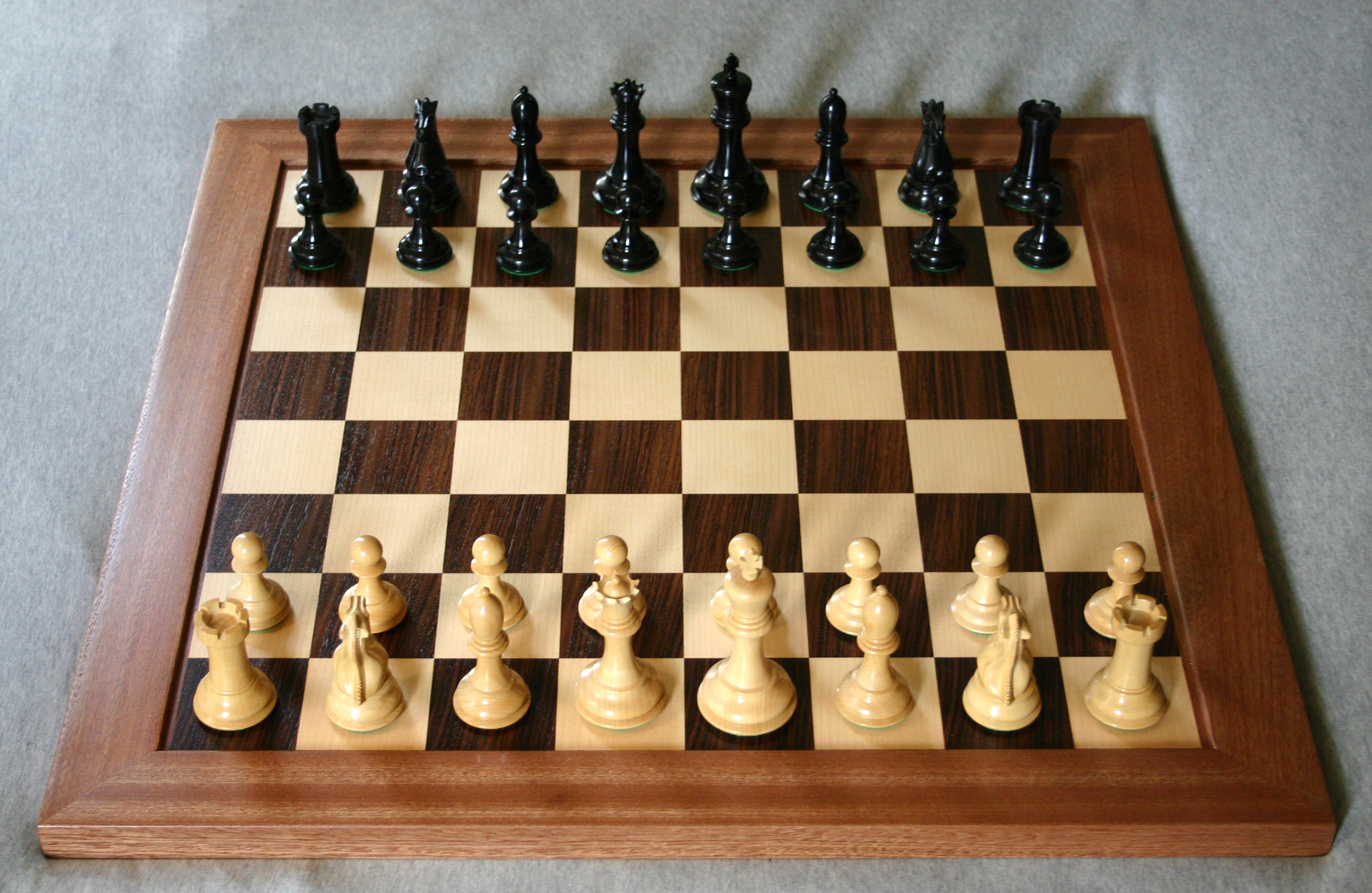
The World Chess Championship is the oldest continuous major intellectual competition in recorded sport. Wilhelm Steinitz won the first official match in 1886, defeating Johannes Zukertort 12.5–7.5 in a contest played across New York, St. Louis, and New Orleans. Gukesh Dommaraju holds the title today, having beaten Ding Liren 7.5–6.5 in Singapore in December 2024 at 18 years old: the youngest undisputed world chess champion in history.
Between those two, 18 players held the title across 138 years.
Complete list of World Chess Champions
| Years | Champion | Country | Notes |
|---|---|---|---|
| 1886–1894 | Wilhelm Steinitz | Austria | First recognized World Champion |
| 1894–1921 | Emanuel Lasker | Germany | Longest reign: 27 years |
| 1921–1927 | José Raúl Capablanca | Cuba | Lost only 34 games in his career |
| 1927–1935 | Alexander Alekhine | France | First champion to recapture the title |
| 1935–1937 | Max Euwe | Netherlands | Defeated Alekhine; only amateur world champion |
| 1937–1946 | Alexander Alekhine | France | Died as champion, 1946 |
| 1948–1957 | Mikhail Botvinnik | USSR | Won FIDE tournament after Alekhine’s death |
| 1957–1958 | Vasily Smyslov | USSR | Lost rematch to Botvinnik |
| 1958–1960 | Mikhail Botvinnik | USSR | Rematch win |
| 1960–1961 | Mikhail Tal | USSR | Youngest champion at the time |
| 1961–1963 | Mikhail Botvinnik | USSR | Final rematch win |
| 1963–1969 | Tigran Petrosian | USSR | ”Iron Tigran,” prophylactic style |
| 1969–1972 | Boris Spassky | USSR | Lost the 1972 Cold War match |
| 1972–1975 | Bobby Fischer | USA | Won 12.5–8.5 in Reykjavik; forfeited title |
| 1975–1985 | Anatoly Karpov | USSR | Won by default after Fischer’s forfeit |
| 1985–2000 | Garry Kasparov | USSR/Russia | Longest modern reign: 15 years |
| 2000–2006 | Vladimir Kramnik | Russia | Classical title; unified with FIDE 2006 |
| 2007–2013 | Viswanathan Anand | India | First Indian world champion |
| 2013–2023 | Magnus Carlsen | Norway | Peak rating 2882; abdicated 2023 |
| 2023–2024 | Ding Liren | China | First Chinese world champion |
| 2024–present | Gukesh Dommaraju | India | Youngest undisputed champion in history |
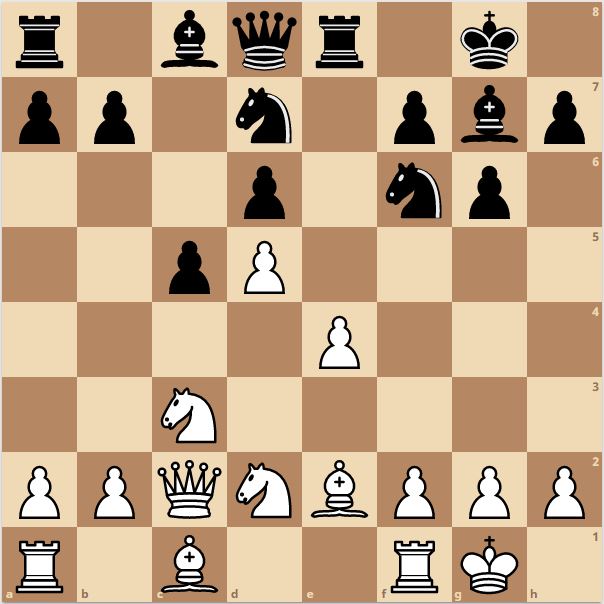
How the current format works
Since 2013 the championship runs on a two-year cycle. FIDE organizes a Candidates Tournament (eight players, double round-robin) and the winner challenges the reigning champion in a 14-game classical match. The Candidates field is drawn from rating (top FIDE Elo performers), Grand Swiss and Grand Prix results, and FIDE wild cards.
The match: 90 minutes per player plus 30-second increment for the first 40 moves, then 30 minutes plus 30-second increment for the rest. First to 7.5 points wins. If tied 7–7 after classical games, tiebreaks run in rapid, then blitz, then Armageddon. The challenger must win: the champion retains on a tie.
1886–1946: Private matches and no governing body
The early championship operated with no federation behind it. Champions set conditions. Steinitz charged a match fee of $2,000. Challengers negotiated terms directly with whoever held the title. There were no qualifying cycles, no governing body.
Emanuel Lasker held the title for 27 years. He was a mathematician and philosopher who treated chess as a science of psychological combat as much as a game of moves. He beat everyone who challenged him, including Capablanca in their 1921 match in Havana, which he lost at age 52, tired and no longer at his peak.
Capablanca’s 1927 loss to Alexander Alekhine in Buenos Aires (the format was first to six wins; Alekhine won 6–3 with 25 draws) is one of the more surprising championship results on record. Capa had gone nearly eight years between losses to anyone. Alekhine prepared for that match systematically and outplayed him.
Max Euwe beat Alekhine in 1935, the only amateur world champion, working full-time as a secondary-school mathematics teacher in Amsterdam. Alekhine reclaimed the title in a 1937 rematch and held it until his death in Estoril, Portugal in March 1946.
1948–1972: FIDE takes over, the Soviets take everything
After Alekhine died as champion, FIDE organized a five-player match tournament in The Hague and Moscow to award the title. Mikhail Botvinnik won it. He was the first Soviet champion, and for the next 24 years, every world champion was Soviet.
Botvinnik is the only champion to win the title, lose it, win it back, lose it again, and win it back again: twice. He lost to Vasily Smyslov in 1957, won the rematch in 1958. Lost to Mikhail Tal in 1960, won the rematch in 1961. Lost for good to Tigran Petrosian in 1963, with no rematch clause to save him.
Tal’s reign was one year but his style has never been equaled. He played moves that were objectively questionable by engine standards, trusted that the resulting complications were beyond human calculation over the board, and was often right. The Life and Games of Mikhail Tal (affiliate) is the primary text for his games and thinking.
Boris Spassky beat Petrosian in 1969 and waited three years for the challenge that would define his legacy: not for good reasons.
1972: Fischer vs. Spassky in Reykjavik
Bobby Fischer qualified for the 1972 title match by dismantling three consecutive Candidates opponents: Taimanov 6–0, Larsen 6–0, Petrosian 6½–2½. Nothing like that had been seen in the Candidates system.
The match nearly didn’t happen. Fischer forfeited Game 1 by not showing up on time. He lost Game 2 by forfeit after refusing to play in a room he found unsuitable. Down 0–2. Then he won 7 of the remaining 19 games and drew the rest, winning 12.5–8.5.
The historical weight of the match is inseparable from its context. It was 1972. The US and the USSR were in the Cold War. A young American had just beaten the entire Soviet chess system. Coverage was live across Europe; American newspapers ran daily front-page reports. Frank Brady’s Endgame (affiliate) covers the match and Fischer’s full arc in detail.
Fischer demanded a 1975 rematch with conditions FIDE rejected. He was stripped of the title. Anatoly Karpov became world champion by default, the only champion in history to receive the title without playing a championship match.
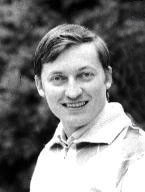
1975–2000: Karpov and Kasparov
Karpov was dominant. He defended the title six times between 1978 and 1985, losing only to Kasparov. His style (technical, positional, patient accumulation of minor advantages) was effective but not explosive.
The 1984 Karpov-Kasparov match was abandoned without a result after 48 games, the longest championship match ever played. The format was first to six wins with draws not counting. Karpov led 5–3 in wins with 40 draws after 48 games. FIDE President Florencio Campomanes suspended it, citing player fatigue. Kasparov objected publicly; he had won 3 of the last 4 decisive games and was gaining. No result. The 1985 rematch used a standard 24-game format; Kasparov won 13–11.
Garry Kasparov held the title for 15 years. He played Karpov four more times (1986, 1987, 1988, 1990) and won or drew each match. His peak rating of 2851 in 1999 stood as the record until Carlsen surpassed it.
Vladimir Kramnik beat Kasparov in London in 2000, 8.5–6.5: Kasparov’s first championship loss in 15 years. Kramnik played a Petroff Defense in every classical game as Black and never lost, which was tactically sound and historically unprecedented.
1993–2006: The split years
In 1993, FIDE and Kasparov couldn’t agree on match terms for his defense against Nigel Short. Kasparov and Short broke from FIDE and played under the Professional Chess Association (PCA). Kasparov won 12.5–7.5.
FIDE ran its own championship, creating two simultaneous world champions for 13 years. Anand, Khalifman, Ponomariov, Kasimdzhanov, and Topalov held the FIDE title at various points. Kramnik held the Classical title.
The unification match in 2006 (Kramnik vs. Topalov in Elista, Russia) went to tiebreaks; Kramnik won 8.5–7.5 overall. One world champion again.
2007–2013: Anand
Viswanathan Anand won the unified title in a tournament format in Mexico City in 2007. He defended it in matches against Kramnik (2008), Topalov (2010), and Gelfand (2012) before losing to Carlsen in Chennai in 2013. His 2010 defense against Topalov is worth looking at. The fifth game, in which Anand played an improvised piece sacrifice over the board against home preparation, is one of the strongest tournament games of that era.
2013–2023: Carlsen
Magnus Carlsen beat Anand 6.5–3.5 in their 2013 match, 6–3.5 in the 2014 rematch, won the 2016 tiebreak against Karjakin, drew all 12 classical games against Fabiano Caruana in 2018 before winning the tiebreaks 3–0, and beat Ian Nepomniachtchi 7.5–3.5 in 2021.
He announced in July 2022 he wouldn’t defend in 2023. He gave no detailed public explanation beyond that the format didn’t motivate him.
The 2023 match between Ding Liren and Nepomniachtchi went 18 games, tied in classical, and Ding won the final tiebreak game to become the first Chinese world champion.
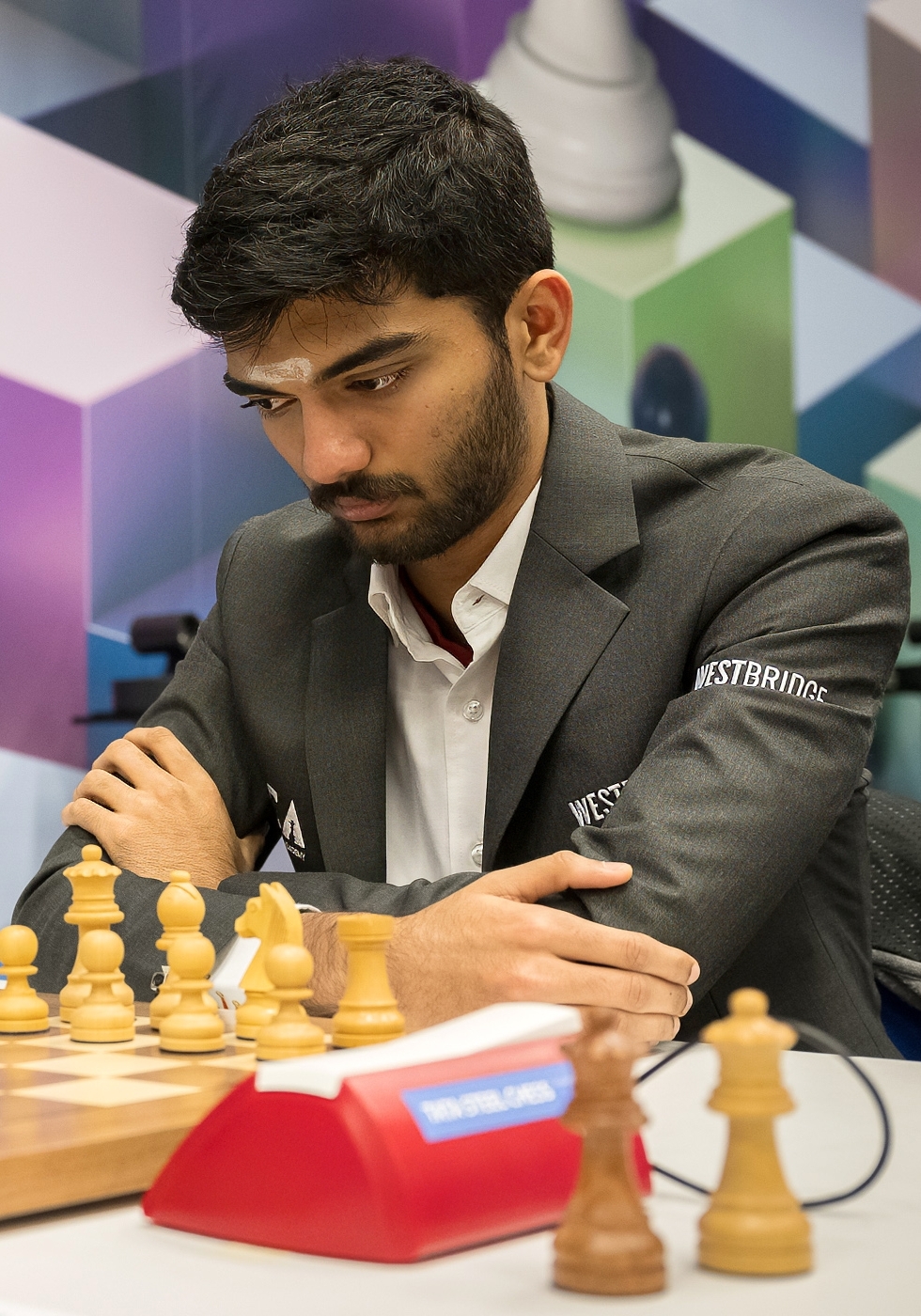
2024: Gukesh
The 2024 championship in Singapore ran November 25 to December 12. Gukesh Dommaraju was 18 years old; Ding Liren was the defending champion who had visibly struggled since winning in 2023.
The match was close. Gukesh won three games; Ding won two; nine were drawn. Going into Game 14 tied 6.5–6.5, whoever won the game won the championship.
Game 14 was heading toward a draw. Then Ding moved his rook to f2 on move 55, a blunder in a position that had been dead even. Gukesh converted the resulting king-and-pawn endgame. Ding resigned. Gukesh became the youngest undisputed world chess champion in history, younger than Tal was in 1960 (who had been the benchmark for decades).
The result continues India’s chess dynasty. Anand was the first Indian world champion. Gukesh is the second, a generation later, beating the youngest he had to beat.
Game 14: the title-deciding moment
The position was equal for most of the game. On move 55, Ding played Rf2, a move that looks natural but loses the resulting king-and-pawn endgame by a single tempo. Gukesh converted precisely. The board below shows the critical moment.
Ding Liren White Gukesh D Black


Sources
- FIDE World Chess Championship official history
- World Chess Championship 2024: FIDE official results
- World Chess Championship 2023: FIDE official results
- Brady, Frank. Endgame: Bobby Fischer’s Remarkable Rise and Fall. Crown, 2011. (affiliate)
- Kasparov, Garry. My Great Predecessors, Part 1. Everyman Chess, 2003. (affiliate)
This page contains affiliate links. As an Amazon Associate, DiscussChess earns from qualifying purchases.
Sources
Further reading
- Endgame: Bobby Fischer's Remarkable Rise and Fall, Frank Brady ASIN verified via Open Library 2026-05-02. The definitive account of Fischer, the 1972 match, and the aftermath.
- Garry Kasparov on My Great Predecessors, Part 1, Everyman Chess, 2003 ASIN verified via Open Library 2026-05-02. Covers the first six world champions through Botvinnik, with annotated games.