Anatoly Karpov: 10 Years as World Champion
Karpov won the title in 1975 without playing Fischer, defended it six times across two grueling matches with Viktor Korchnoi, and held it for a decade before losing to Kasparov in 1985. His positional style, and the record 160+ tournament wins behind it, defined a generation of professional chess.
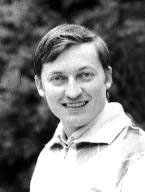
Anatoly Karpov became World Chess Champion in 1975 without playing a single championship game. Bobby Fischer refused to defend his title under FIDE’s match conditions and was stripped of it. Karpov, who had qualified as challenger through the Candidates cycle, was awarded the title by default. He was 23 years old.
What followed was 10 years of championship dominance. Karpov defended the title six times between 1978 and 1985 across two grueling matches with Viktor Korchnoi, won tournaments at a rate that rivals any period in chess history (his tournament win total, north of 160 first-place finishes, has never been approached), and developed a positional style so precise that it reshaped how serious players thought about accumulating small advantages. He lost the title to Garry Kasparov in 1985.
Born May 23, 1951, Zlatoust, USSR
Karpov learned chess at four. He was a prodigy in the Soviet chess system, becoming a grandmaster at 19, and by the early 1970s was widely regarded as the most talented player below Fischer. His 1974 Candidates Final win against Viktor Korchnoi earned him the title match opportunity Fischer ultimately declined.
The Soviet chess program was systematic and intensive. Players were supported by seconds, trained with coaches, and studied opponents’ games comprehensively. Karpov benefited from this system and embodied it: meticulous preparation, no weaknesses in any phase of the game, minimal risk-taking.
Playing style
Karpov’s signature was the accumulation of minor positional advantages. He didn’t attack aggressively or sacrifice pieces for tactical complications. He maneuvered pieces to optimal squares, applied pressure to small weaknesses, created favorable pawn structures, and ground opponents down in endgames. Opponents often described losing to Karpov as watching your position gradually suffocate.
His endgame technique was exceptional even by championship standards. He converted drawn-looking positions more consistently than any predecessor since Capablanca. His Caro-Kann Defense games are often cited as models. The opening suits his style because it produces the solid structures his technique was built for.
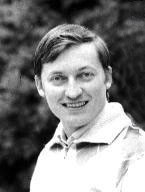
Defending the title against Korchnoi
Karpov’s first two title defenses weren’t against Kasparov, they were against Viktor Korchnoi, a Soviet defector whose matches with Karpov carried genuine political weight on top of the chess.
1978 (Baguio, Philippines): Karpov won +6-5=21, a match that stretched to 32 games. He took an early lead, winning game 8 after seven consecutive draws, and held on despite a hard Korchnoi comeback that briefly threatened to level the score in the closing games.
1981 (Merano, Italy): A different story entirely. Karpov won +6-2=10, a result so lopsided it’s remembered in chess history as the “Massacre in Merano.” The gap between his 1978 survival and his 1981 dominance is one of the clearer illustrations of how completely he controlled the position when his preparation and form both peaked.
Between the two Korchnoi matches, Karpov produced one of the great single-tournament results in chess history: the 1979 Montreal “Tournament of Stars,” where he tied for first with Mikhail Tal at +7-1=10, ahead of a field that included Kasparov, Boris Spassky, and Jan Timman. It remains one of the strongest round-robins ever assembled, and Karpov treated it like any other event on his schedule.
The Kasparov matches
Karpov and Kasparov played five World Chess Championship matches between 1984 and 1990: more championship matches than any other pairing in history.
1984 match (Moscow): The format was first to six wins, draws not counting. The match lasted 48 games: the longest in championship history. Karpov led 5–3 in wins with 40 draws after 48 games. FIDE President Campomanes suspended the match citing player fatigue. Kasparov, who had won three of the last four decisive games, objected publicly. No result was declared.
1985 match (Moscow): New format: 24 games, standard scoring. Kasparov won 13–11, becoming world champion at 22. Karpov had held the title for 10 years. Game 16, where Kasparov launched a pawn storm that overwhelmed Karpov’s positional hold, was later voted the best game of Chess Informant’s first 64 issues.
Karpov, Anatoly White Kasparov, Garry Black


1986, 1987, 1990: Three more title matches. Kasparov won two and drew one, defending his title each time, and Karpov failed in every attempt to reclaim it. The rivalry was genuine and close; the total match score across all five championships was nearly even in games played.
After 1990, Karpov held the FIDE world title separately from 1993 to 1999 during the period when Kasparov left FIDE. He lost that title to Anand in 1998 in a FIDE knockout championship.
Life after the crown
Karpov didn’t retire quietly. In 2003 he opened his first American chess school, in Lindsborg, Kansas, later renamed after him. He built one of the largest private chess libraries in the world, roughly 9,000 books, and became a serious philatelist, assembling an extensive collection of Belgian and Belgian Congo stamps spanning 1742 to 1980 that he auctioned off between late 2011 and 2012. He’s also a dedicated backgammon player.
He entered Russian politics in earnest in December 2011, taking a State Duma seat representing Tyumen Oblast as a United Russia member; he has since served across three successive Dumas. He’s sat on Russia’s Public Chamber since 2005 and has chaired its Commission for Ecological Safety and Environmental Protection since 2006. His public positions have occasionally created friction with Western institutions: visa difficulties kept him out of the United States for scheduled teaching engagements in 2019, and following Russia’s 2022 invasion of Ukraine, the EU and UK placed him under sanctions and FIDE suspended the “Ambassador for Life” title it had given him. That November, Karpov was placed in an induced coma after a head injury his daughter and the Russian Chess Federation described as accidental; he made a full recovery.
Legacy
Karpov won over 160 first-place finishes in major tournaments, a record that has never been approached. His peak FIDE rating was 2780 in 1994, nearly a decade after he lost the title to Kasparov, proof he stayed at the sport’s summit long after the crown left his hands. He played over 900 rated games at the super-GM level and maintained a positive score against nearly every opponent he faced.
The historical debate about his place relative to Kasparov is complicated by the 1984 match suspension. If that match had been completed under its original format, the championship history looks different. What isn’t contested: for the decade before Kasparov, Karpov was the strongest player in the world by any available measure, and the two Korchnoi matches that opened that decade remain some of the most politically charged title defenses the sport has ever staged.
Kasparov’s My Great Predecessors (affiliate) is the most detailed analytical record of the championship era. Kasparov annotates Karpov’s games with notable honesty about what he was doing right.
Sources
- FIDE Rating Profile: Anatoly Karpov
- Karpov, Anatoly. My Best Games. Batsford, 1996.
- Anatoly Karpov, Wikipedia
- Kasparov, Garry. My Great Predecessors, Part 1. Everyman Chess, 2003. (affiliate)
- Silman, Jeremy. How to Reassess Your Chess. Siles Press, 4th ed. 2010. (affiliate)
This page contains affiliate links. As an Amazon Associate, DiscussChess earns from qualifying purchases.
Sources
- FIDE Rating History, Anatoly Karpov
- Karpov, Anatoly. My Best Games. Batsford, 1996.
- Kasparov, Garry. My Great Predecessors, Part 5 (Karpov). Everyman Chess, 2006.
- Anatoly Karpov, Wikipedia (cross-checked against tournament and news reports)
Further reading
- Garry Kasparov on My Great Predecessors, Part 1, Everyman Chess, 2003 ASIN verified via Open Library 2026-05-02. Volume 1 covers the era leading to Karpov. The Karpov volume (Part 5) covers their rivalry specifically.
- How to Reassess Your Chess, Jeremy Silman ASIN verified via Amazon 2026-05-02. Karpov's positional technique, imbalance accumulation over multiple moves, is the practical application of Silman's framework.