Viswanathan Anand: India's First World Chess Champion
Anand won world titles in three different formats: knockout in 2000, tournament in 2007, and match play through 2013. Peak rating 2817. His speed of calculation, he processes positions faster than almost anyone who has ever played, is why he held a title through his mid-40s.
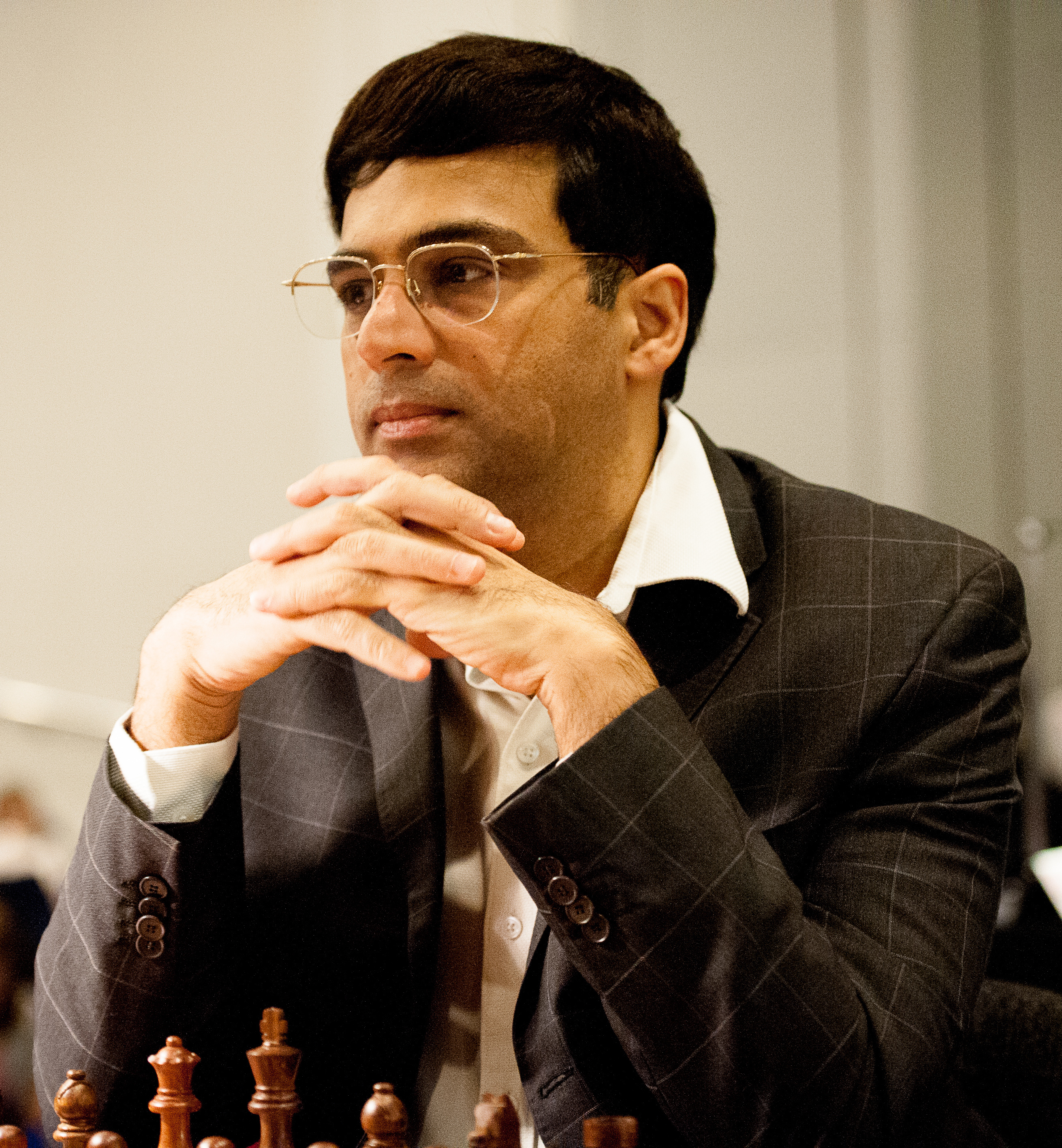
Viswanathan Anand was born December 11, 1969, in Madras, now Chennai, India. He became India’s first grandmaster in 1988, won a world championship in three different formats across his career, knockout in 2000, tournament in 2007, and match play through 2013, and defended the unified title four times after 2007, against Kramnik, Topalov, Gelfand, and nearly against Carlsen. His peak FIDE rating was 2817 in March 2011, a mark only Magnus Carlsen’s 2882 (set in 2014) has since topped. No other player in chess history has won the world championship under three separate formats.
What makes Anand exceptional, and what made him a champion into his mid-40s, is speed. He processes chess positions faster than nearly anyone who has played the game. At the board he sees patterns other players have to calculate. In rapid and blitz, where that advantage compounds, he dominated his era so thoroughly that he broke speed records previously set by players younger than him.
Early career: India’s chess revolution
Chess was not a major sport in India when Anand was a child. He learned the game at six from his mother, was rated among India’s strongest players as a teenager, and became a grandmaster at 18, extraordinary in any era, more so given India’s limited access to the international tournaments and training resources available to Soviet players. In 1987, at 18, he won the World Junior Chess Championship, held that year at the Shakti Finance International tournament in Coimbatore, defeating Russian grandmaster Efim Geller along the way, a result that put India on the sport’s map for the first time.
He reached the top 10 in the world by his mid-20s. His style (tactical sharpness at high speed, comfortable in asymmetric positions, willing to take risks) was shaped partly by necessity: he wasn’t in the Soviet training system, so he couldn’t rely on deep theoretical preparation in the way Karpov or Kasparov could. He had to calculate.
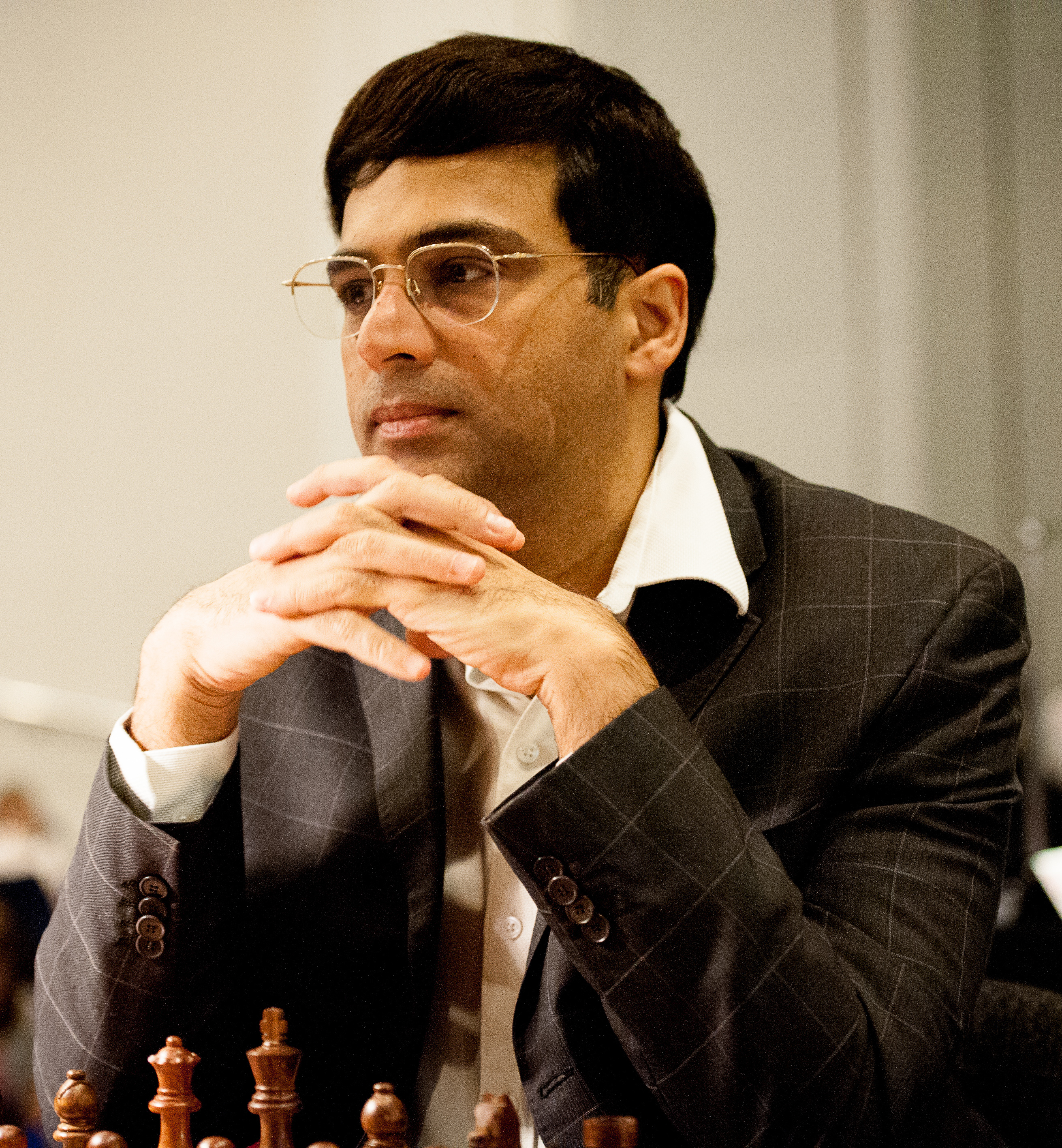
The 1995 title match that got away
Anand’s first shot at a world title came in 1995, against Garry Kasparov, on the 107th floor of the World Trade Center in New York. The PCA World Championship match ran September 10 to October 16, a 20-game format that opened with eight consecutive draws, an unusually cautious start for two attacking players feeling each other out. Anand broke through first, winning Game 9 with an exchange sacrifice that briefly put him ahead in the match. Kasparov responded by winning four of the next five games and closed out the match 10.5-7.5. Kasparov later suggested Anand simply wasn’t playing with the psychological intensity a world championship match demands, a critique Anand would spend the next decade and a half answering.
2000: world champion, first format
Anand’s first world title came under FIDE’s knockout format, a 100-player single-elimination bracket held across New Delhi and Tehran from November 25 to December 27, 2000. He went through the entire event undefeated, eight wins and twelve draws, and beat Alexei Shirov in the final, 3.5-0.5. It won him roughly $528,000 and India’s Padma Bhushan civilian honor. The knockout format was controversial within the chess world (critics argued a single bad round could eliminate the strongest player, and it often did), but the win stood: Anand was FIDE World Champion, seven years before he’d win the version of the title most fans remember.
World Chess Champion: 2007–2013
He won the reunified title in Mexico City in 2007, in tournament format (eight players, double round-robin), and became the sport’s first undisputed champion since the FIDE/PCA split of 1993. He defended it four times:
2008 vs. Kramnik (Bonn): 6.5–4.5. Anand was sharper in the critical games. Kramnik’s solid approach, which had beaten Kasparov, couldn’t stop Anand’s preparation.
2010 vs. Topalov (Sofia): 6.5–5.5, one of the most dramatic title defenses in championship history. Anand played an improvised pawn sacrifice in Game 5 that he had calculated over the board against home preparation. Won that game, won the match. Game 4 was the other clean win, a piece sacrifice that forced resignation in 32 moves.
Anand, Viswanathan White Topalov, Veselin Black


2012 vs. Gelfand (Moscow): Tied after classical games, Anand won the rapid tiebreaks. Narrow.
2013 vs. Carlsen (Chennai): Lost 6.5–3.5. Magnus Carlsen was sharper and more precise throughout. Anand was 43; the loss marked a generational transition.
2014 rematch and post-championship career
Anand played Carlsen again in 2014 in Sochi, losing 6.5–4.5. He was no longer champion.
What’s notable about his career after the title: he kept playing at the elite level. Anand won the Tata Steel Tournament in 2017 at 47, beating a field of players 20 years younger. He won Candidates qualifying events into his late 40s. His FIDE rating stayed above 2750 for years after he stopped being champion. He’s also chess’s most decorated rapid and blitz player of his generation: World Rapid Champion in 2003 and again in 2017, at 47, and World Blitz Champion in 2000. He won the (knockout-format) Chess World Cup twice, in 2000 and 2002, and holds the record for Mainz Chess Classic titles at 11. He was the first player to win all three of the sport’s marquee round-robin supertournaments: Corus (five times), Linares (three times), and Dortmund (three times).
He remains active as of 2026, competing on the Grand Chess Tour and in elite rapid and blitz events, and playing a strong role in developing Indian chess through the WestBridge Anand Chess Academy, which he founded to mentor the country’s next generation of prospects. Gukesh Dommaraju, the current world champion, trained within the ecosystem Anand helped build, alongside a broader wave of Indian talent that includes Praggnanandhaa and Nihal Sarin.
Playing style
Anand plays everything. He’s used the Sicilian Defense and solid defenses like the Nimzo-Indian interchangeably as Black. As White he’s played 1.e4 and 1.d4. His preparation is deep enough that opponents can’t easily predict what he’ll play next.
The distinguishing trait: his speed produces decision-making in time trouble that looks like intuition but is calculation. He doesn’t blunder under pressure the way slower processors do when time runs short. This makes him particularly dangerous in rapid and blitz, where he was a multiple world champion separately from his classical title, and it’s the same trait that let him keep beating players half his age well into his late 40s.
Sources
- FIDE Rating Profile: Viswanathan Anand
- Anand, Viswanathan. Mind Master: Winning Lessons from a Champion’s Life. Hachette India, 2019.
- Viswanathan Anand, Wikipedia
- Lichess study: Anand vs Topalov, World Championship 2010 Game 4, annotated by IM Mihail Marin
- Silman, Jeremy. How to Reassess Your Chess. Siles Press, 4th ed. 2010. (affiliate)
This page contains affiliate links. As an Amazon Associate, DiscussChess earns from qualifying purchases.
Sources
- FIDE Rating History, Viswanathan Anand
- World Chess Championship 2010, FIDE official results
- Anand, Viswanathan. Mind Master: Winning Lessons from a Champion's Life. Hachette India, 2019.
- Viswanathan Anand, Wikipedia (cross-checked against tournament reports)
- Lichess study PGN, Anand vs Topalov, World Championship 2010 Game 4 (annotated by IM Mihail Marin)
Further reading
- How to Reassess Your Chess, Jeremy Silman ASIN verified via Amazon 2026-05-02. Anand's rapid calculation is built on positional assessment speed, Silman's framework explains the underlying evaluation process.
- My 60 Memorable Games, Bobby Fischer ASIN verified via Open Library 2026-05-02. Fischer's analytical annotation style influenced Anand's game preparation methodology.