José Raúl Capablanca: Only 34 Career Losses
Capablanca was World Chess Champion from 1921 to 1927 and lost just 34 games in his career. His endgame mastery was so complete that opponents called it supernatural, and a Cuban diplomatic post let him play the world without ever needing to grind for a living. The biography of the most naturally talented player chess has ever seen.
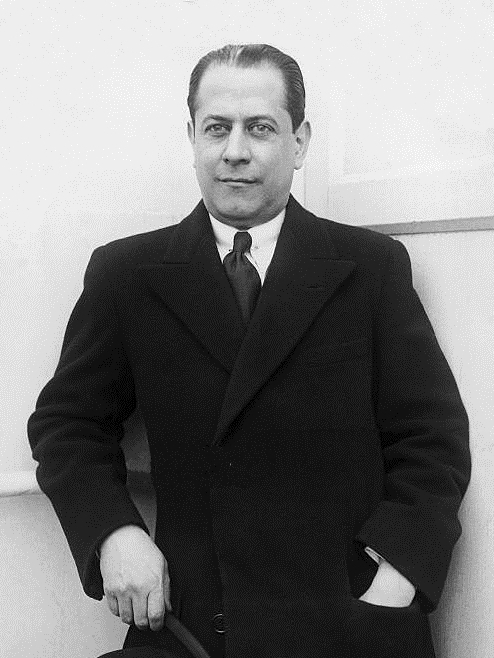
José Raúl Capablanca was born November 19, 1888, in Havana, Cuba, and died March 8, 1942, in New York. He was World Chess Champion from 1921 to 1927, lost only 34 games in his entire career, and went nearly eight years, from February 1916 to February 1924, without losing a single game. His endgame technique was so precise that Emanuel Lasker, who beat nearly everyone, called it “supernatural.”
He learned chess at four by watching his father play. At 12 he beat the Cuban national champion. He never had a coach. Everything in his game came from an intuitive understanding of positions that other players had to calculate. His writing (particularly Chess Fundamentals (1921), still in print and available free at Project Gutenberg) explained chess ideas in plain language that remains instructive 100 years later.
The diplomat who never had to work for a living
In September 1913, the Cuban Foreign Office created a position for Capablanca that had no fixed duties beyond one: travel the world and put Cuba on the map. As chess historians Hooper and Whyld describe it, he was “expected to act as a kind of ambassador-at-large, a well-known figure who would put Cuba on the map wherever he travelled.” His first posting sent him to Saint Petersburg, home to one of the era’s major tournaments, and the arrangement effectively funded a life of nonstop international competition without the financial precarity that shadowed most of his rivals. It’s a detail that explains a lot about his career: while Alekhine and others ground through their theoretical preparation partly out of financial necessity, Capablanca could afford to trust his instincts.
That confidence, and the results behind it, hadn’t come without pushback. At the 1911 San Sebastián tournament, Ossip Bernstein and Aron Nimzowitsch protested his entry outright, arguing the 22-year-old hadn’t met the event’s own qualification standard of a top-three finish in two prior master tournaments. Capablanca answered on the board: six wins, one loss, seven draws, finishing ahead of Akiba Rubinstein, Milan Vidmar, Frank Marshall, Carl Schlechter, and Siegbert Tarrasch, several of the strongest players alive. The objection was never raised again.
Career
Capablanca won the Cuban championship at 17. He traveled to New York, played matches against American masters in 1906, and began dismantling the European chess establishment systematically through the 1910s. In the 1914 St. Petersburg super-tournament, he finished second to Lasker but ahead of every other top player in the world. By 1921, when Lasker agreed to a title match, Capablanca was the clear challenger and clear favorite.
He won the 1921 championship in Havana convincingly: 4 wins, 10 draws, 0 losses. Lasker was 52 years old and withdrew on grounds of ill health after game 14. The chess world had waited years for this match and it was surprisingly one-sided.
Playing style
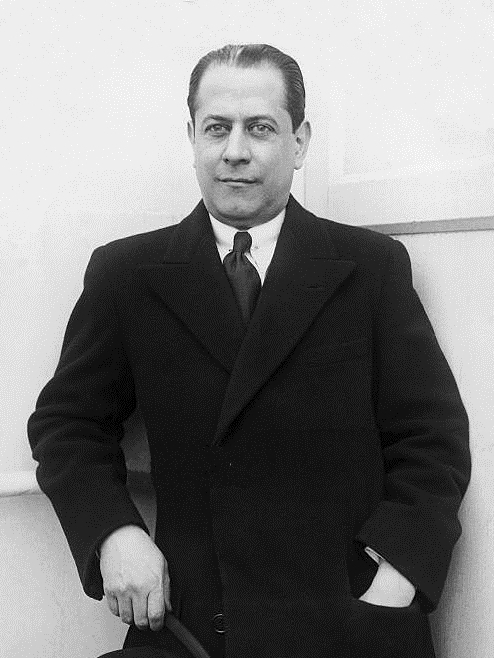
Capablanca’s style was economy. He made no unnecessary moves, created no weaknesses he didn’t need to create, and converted small advantages into wins with a consistency that looked mechanical. His games don’t have the fireworks of Tal or the deep preparation of Kasparov. They have an almost clinical quality where the position gradually becomes won and then is won, without any apparent turning point.
His endgame mastery specifically: he understood king activity in the endgame at a depth other players couldn’t match. The king in the endgame is a powerful piece that most players activate too late; Capablanca activated it earlier and used it more effectively than anyone of his era. This alone converted positions that should have been drawn.
His Chess Fundamentals, free at Project Gutenberg, explains his approach to the endgame in plain language. The endgame sections hold up completely as instructional material today, still one of the first recommendations in our guide to the best chess books for beginners. Kasparov’s My Great Predecessors Part 1 (affiliate) annotates Capablanca’s games in detail and places them in historical context.
The 1927 loss to Alekhine, after an undefeated warmup
A month before he lost his title, Capablanca gave no hint it was coming. The February 19 to March 23, 1927 New York tournament, a quadruple round-robin against Alekhine, Rudolf Spielmann, Milan Vidmar, Aron Nimzowitsch, and Frank Marshall, was a rehearsal for the championship match later that year, and Capablanca finished it undefeated at 14/20, two and a half points clear of second-place Alekhine, picking up the tournament’s best-game prize for a win over Spielmann along the way.
Then the championship match itself, in Buenos Aires, format first-to-six-wins, went the other way entirely: 6–3 with 25 draws to Alekhine. Capablanca had gone eight years between losses. The result shocked the chess world precisely because of what had just happened in New York.
Alekhine had prepared systematically. He worked on openings Capablanca hadn’t encountered. He varied his style from game to game. Capablanca, who had rarely needed to prepare extensively, found himself without answers to problems he hadn’t faced before.
Capablanca demanded a rematch every year for the rest of his life. Alekhine refused consistently. When Alekhine died as champion in 1946, Capablanca had been dead for four years. He died during a tournament in New York without ever getting the rematch. It remains one of the more contested administrative decisions in chess history.
Capablanca vs. Tartakower, New York 1924
The most celebrated endgame demonstration in chess history. Played in Round 6 of the 1924 New York tournament on March 23, the game reached a pure rook ending after the last minor pieces came off around move 34, and Capablanca spent the next twenty-plus moves demonstrating exactly the kind of technique his Chess Fundamentals tried to teach: activate the king, push the connected passed pawns, force the rook into a passive defense it can never escape. Tartakower, one of the leading players of his era and no pushover in a technical ending, had no practical chances once Capablanca’s king and pawns started marching together.
Capablanca, Jose Raul White Tartakower, Savielly Black


Where does that leave him against the rest of history’s greats? Consistently top three or four in nearly every serious retrospective ranking, not the outright number one spot people sometimes hand to Kasparov or Carlsen on raw peak strength. Bobby Fischer, who came up idolizing Capablanca’s games at the Manhattan Chess Club decades later, admired what he called his “real light touch,” the ability to find the best move almost instantly in positions other players had to grind through. But no one else combines Capablanca’s tournament dominance, his 34-loss career total, and eight years without a defeat. Among players who actually sat across the board from each other, that record hasn’t been matched.
Death at the Manhattan Chess Club
Capablanca’s death was as sudden as his chess looked effortless. On March 7, 1942, he collapsed at the Manhattan Chess Club while watching a casual skittles game and chatting with friends, asking for help removing his coat moments before he went down. A physician on hand, Eli Moschcowitz, administered first aid and had him rushed to Mount Sinai Hospital, where he died at 6:00 a.m. the next morning, March 8, from a thalamic cerebral hemorrhage brought on by severe hypertension. He was 53.
Sources
- Hooper, David, and Kenneth Whyld. The Oxford Companion to Chess. Oxford University Press, 1992.
- Capablanca, José Raúl. Chess Fundamentals. Harcourt Brace, 1921. Public domain, free at Project Gutenberg.
- José Raúl Capablanca, Wikipedia
- Lichess study: Capablanca vs Tartakower, New York 1924, Round 6
- Kasparov, Garry. My Great Predecessors, Part 1. Everyman Chess, 2003. (affiliate)
- Chernev, Irving. Logical Chess: Move by Move. Batsford. (affiliate)
This page contains affiliate links. As an Amazon Associate, DiscussChess earns from qualifying purchases.
Sources
- Hooper, David, and Kenneth Whyld. The Oxford Companion to Chess. Oxford University Press, 1992.
- Capablanca, José Raúl. Chess Fundamentals. Harcourt Brace, 1921. (Public domain, available free at Project Gutenberg.)
- Winter, Edward. Capablanca: A Compendium. McFarland, 1989.
- José Raúl Capablanca, Wikipedia (cross-checked against tournament records)
- Lichess study PGN, Capablanca vs Tartakower, New York 1924, Round 6
Further reading
- Garry Kasparov on My Great Predecessors, Part 1, Everyman Chess, 2003 ASIN verified via Open Library 2026-05-02. Kasparov's analysis of Capablanca's games with annotations, covers the 1927 match with Alekhine and Capablanca's endgame technique in detail.
- Logical Chess: Move by Move, Irving Chernev ASIN verified via Open Library 2026-05-02. Several of Chernev's 33 annotated games feature Capablanca's structural approach to chess.