Vladimir Kramnik: The Player Who Solved Kasparov
The complete biography of Vladimir Kramnik: his rise in Tuapse, the Berlin Defense that ended Kasparov's 15-year reign, the toilet scandal in 2006, and why his contribution to chess theory is permanent.
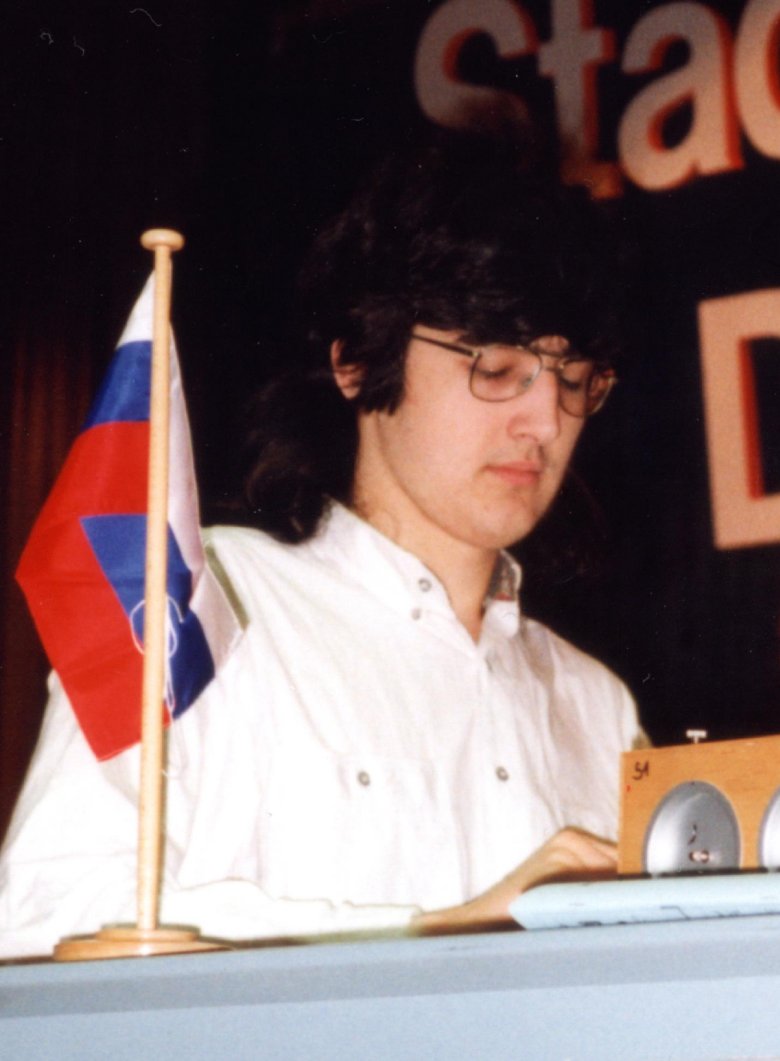
Vladimir Kramnik is a Russian chess grandmaster and the 14th World Chess Champion. He held the Classical World Chess Championship from 2000 to 2006, then the reunified title from 2006 until he lost it to Anand in 2007. Born June 25, 1975, in Tuapse, Russia, he defeated Garry Kasparov in October 2000 with a match score of 8.5–6.5: winning two games, losing zero, drawing thirteen. His weapon was the Berlin Defense in the Ruy Lopez, a variation so precisely prepared that Kasparov had no answer for it. Kramnik’s peak FIDE rating of 2817 placed him among the all-time elite, and he didn’t reach it during his championship years. It came in October 2016, nine years after he’d already lost the title.
He didn’t just beat Kasparov. He solved a specific problem in a specific match. The preparation was so complete that an opening previously considered a minor curiosity became the most popular drawing weapon in 1.e4 theory within twelve months.
Tuapse and the Botvinnik School
Kramnik was born June 25, 1975, in the Black Sea port city of Tuapse, Krasnodar Krai. His father was a painter and sculptor; chess was self-taught. By 11, he was at the Central Chess Club in Moscow. By 16, he was invited into Garry Kasparov’s training group. The same elite preparation circle Kasparov had formed after leaving the Botvinnik school. Kasparov trained his own future rival.
He earned the grandmaster title in 1991 at 16 and reached the top 10 in 1993. His classical playing style (patient, technically precise, endgame-focused) was evident from early in his career. He rarely sacrificed material speculatively; he outmaneuvered opponents in the middlegame until small advantages became large ones. His play had the quality of inevitability.
The match that changed everything
The 2000 World Chess Championship match was held in London in October. It was outside FIDE’s formal structure, Kasparov had split from FIDE in 1993, and organized by Braingames Network as a Classical World Chess Championship.
Kasparov was the heavy favorite. He had held the title for fifteen years. His preparation ran 25–30 moves deep in the major Ruy Lopez variations. Kramnik spent two years preparing a specific answer: the Berlin Defense, 1.e4 e5 2.Nf3 Nc6 3.Bb5 Nf6 4.0-0 Nxe4 5.d4 Nd6 6.Bxc6 dxc6 7.dxe5 Nf4 8.Qxd8+ Kxd8. The resulting endgame (early queen trade, Black’s king in the center but the position solid) was considered theoretically balanced but slightly preferable for White.
Kramnik’s team prepared the Black position exhaustively. Every time Kasparov played 1.e4, Kramnik responded with the Berlin. Kasparov won zero games. He drew them all. He tried White repeatedly; he couldn’t find a way through. The match ended 8.5–6.5 without Kasparov winning a single classical game.
The full account of Kramnik’s preparation for that match (the training process, the specific Berlin analysis, the psychological strategy) is in Vladimir Kramnik: The Inside Story of a Chess Genius by Carsten Hensel (Quality Chess, 2018). Hensel was Kramnik’s manager for years and wrote from direct knowledge of the preparation process.
The reign: 2000–2007
Kramnik held the Classical WCC title after the 2000 match. He defended it against Peter Leko in 2004, a match that went to the final game with Leko needing only a draw to take the title. Leko played for the win and lost. Kramnik retained on the narrowest possible margin: 7–7.
The most famous moment of his reign outside the 2000 match was the 2006 reunification with FIDE. Kramnik played Veselin Topalov in Elista, Kalmykia, in September 2006. The match produced the episode the chess world calls “Toiletgate”: during Game 5, Topalov’s manager filed a complaint alleging Kramnik was visiting the bathroom an unusual number of times, implying he was receiving computer assistance. FIDE ruled partially in Topalov’s favor, locking Kramnik out of a private bathroom adjacent to his rest room. Kramnik forfeited Game 5 in protest. He then won the match 8.5–7.5 and won the rapid tiebreaks after a 6–6 classical tie.
Kasparov’s reflections on the 2000 match appear in How Life Imitates Chess (Bloomsbury, 2008), how he understood the Berlin strategy only after the match, and what it revealed about the limits of preparation that outpaces the game’s actual resources.
The 2007 loss to Anand
The 2007 World Chess Championship was FIDE’s first fully unified championship in years and was organized as an eight-player double round-robin in Mexico City rather than a match. Viswanathan Anand won the tournament with 9/14, a full point ahead of Kramnik and Gelfand in second and third. Kramnik lost the title without a match against the champion: the format meant no single-game defense. He returned in 2008 to challenge Anand in a proper match (Bonn, Germany) and lost 6.5–4.5.
He never held the championship again. He retired from professional chess in January 2019, at the conclusion of the Tata Steel Masters in Wijk aan Zee, saying he’d decided a couple of months earlier and wanted to make it official after his last tournament.
Playing style
Kramnik was the most technically precise defender of his era. His endgame technique ranked among the best in history. Positions that other grandmasters held or lost on a knife-edge, Kramnik converted or saved with apparent clarity.
His opening preparation was distinctive for its logic rather than its volume. Where Kasparov prepared 30 moves deep in every sharp variation, Kramnik identified one or two structural solutions, like the Berlin, and prepared them to the point of theoretical completeness. He prepared fewer variations more deeply.
His middlegame approach was patient. He avoided unnecessary complications, accumulated minor advantages, and converted them over 50–70 moves. The style was described as “boring” by critics who mistook technical precision for lack of ambition. His win percentage in the endgame against top opposition was exceptional.
Legacy
The Berlin Defense is Kramnik’s permanent contribution to chess theory. Before 2000, it appeared occasionally. After 2000, it became the most popular and most analyzed defensive system in 1.e4 theory. Every subsequent World Championship involving 1.e4 required both players to prepare Berlin-specific endgame analysis. The entire theoretical balance of 1.e4 shifted because of one match.
He retired from professional chess in 2019 after a career spanning nearly 30 years at the elite level. His final classical rating was 2753.
Kramnik vs. Kasparov, World Championship 2000, Game 2
The Berlin Defense in action. After the queens come off on move 8, Kramnik and Kasparov navigate a rook endgame that runs 37 more moves. This is what the Berlin Wall looks like from the inside, Kramnik’s piece coordination is superior throughout, and Kasparov resigns when the queenside pawns are unstoppable.
Kramnik, Vladimir White Kasparov, Garry Black


Sources
- FIDE official rating history for Vladimir Kramnik
- World Chess Championship 2000 game scores, Chessgames.com
- Hensel, Carsten. Vladimir Kramnik: The Inside Story of a Chess Genius. Quality Chess, 2018.
This page contains affiliate links. As an Amazon Associate, DiscussChess earns from qualifying purchases.
Sources
Further reading
- Vladimir Kramnik: The Inside Story of a Chess Genius, Carsten Hensel (Quality Chess, 2018) ASIN verified via Open Library 2026-05-02. Quality Chess 2018 edition. Written by Kramnik's longtime manager, this is the most complete account of his career including behind-the-scenes preparation for the Kasparov match.
- How Life Imitates Chess, Garry Kasparov (Bloomsbury, 2008) ASIN verified via Open Library 2026-05-02. Bloomsbury paperback edition. Includes Kasparov's own reflections on his 2000 loss: the other side of the Berlin Defense story.