Sicilian Defense: Why It Works Against 1.e4
A complete guide to the Sicilian Defense: its 16th-century origins, why it creates asymmetric counterplay, the six main variations, and what White's attempts to avoid it reveal about the theory.
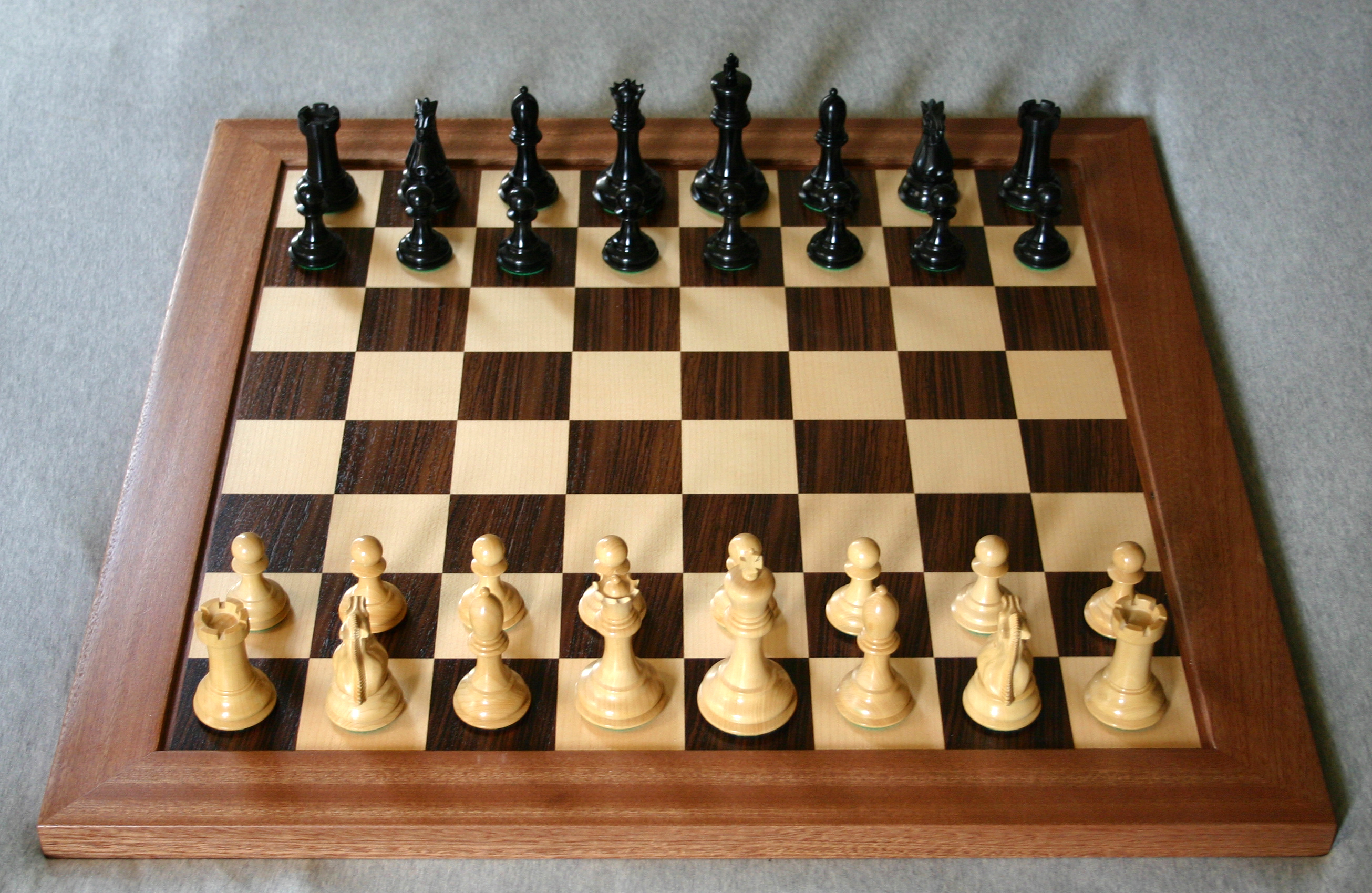
The Sicilian Defense starts with 1.e4 c5. It’s Black’s most popular response to king’s pawn at every level of serious chess because it gives both sides real winning chances from move one. White usually attacks on the kingside. Black counterattacks on the queenside. Nobody is playing for a draw.
After 1.e4 c5, White typically plays 2.Nf3 and 3.d4 (the Open Sicilian), trading pawns in the center. That exchange produces the asymmetric pawn structure the whole opening is built around: White gets space and kingside attacking chances; Black gets the open c-file and a queenside pawn majority. Neither side can win passively.
A 400-year-old idea
The earliest documented appearance of the Sicilian is in a manuscript by Giulio Polerio, an Italian chess writer working in the late 16th century. The name comes from that same manuscript tradition, tied to Sicilian players and texts of the era, and “defense” stuck because Black isn’t contesting the center on move one, they’re setting up to undermine it later. The opening was known but not taken seriously: dominant theory preferred direct central pawn occupation, and 1…c5 looked like Black was giving White a free hand.
It stayed a minority choice for two more centuries. Carl Mayet, Louis Paulsen, and Adolf Anderssen developed it systematically in the mid-1800s, but it didn’t become theoretically mainstream until the 20th century, when players like Mikhail Tal demonstrated that Black could court genuine complications rather than just play for equality.
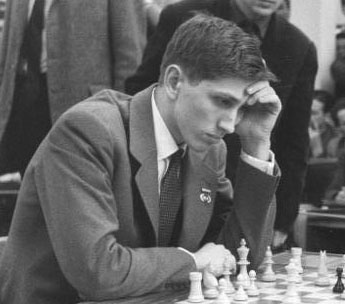
Bobby Fischer changed everything. His adoption of the Najdorf Sicilian throughout his career, calling it “best by test” among all Black defenses to 1.e4, put the opening on the map for a generation of players. His annotations in My 60 Memorable Games (1969) remain the clearest available explanation of Black’s ideas in the Najdorf, written by the player who understood them better than anyone. Garry Kasparov played the Najdorf through all four of his Karpov matches.
The structural logic
After 1.e4 c5 2.Nf3 Nc6 (or 2…d6 or 2…e6) 3.d4 cxd4 4.Nxd4, White has traded the d-pawn for Black’s c-pawn. White now has a pawn on e4 and nothing on d4. Black has no central pawns but has an extra queenside pawn. That’s the asymmetry the whole opening lives in.
White attacks on the kingside, often with f4-f5 or g4-g5 pawn thrusts. Black counterattacks on the queenside, pushing …b5-b4 and pressuring down the open c-file. Both sides are racing. If White’s attack runs out of steam, Black’s queenside majority and c-file activity make them better. If Black’s counterplay is too slow, White delivers checkmate.
This is why the Sicilian produces decisive results more often than symmetrical openings. Both sides are playing for a win from move one.
The six main variations
Najdorf (5…a6). After 1.e4 c5 2.Nf3 d6 3.d4 cxd4 4.Nxd4 Nf6 5.Nc3, Black plays 5…a6. The move prevents Nb5, keeps White’s pieces off b5, and prepares …b5-b4 counterplay. The most popular and most deeply analyzed variation in all of chess. Mainline theory runs 30+ moves deep in several lines. Fischer played it his entire career; Kasparov played it through his world championship years.
Dragon (5…g6). Black fianchettoes the dark-squared bishop, building a powerful diagonal aimed at White’s queenside. The Yugoslav Attack (9.0-0-0 for White) is a direct attempt to attack Black’s king before that bishop becomes dominant. Games in the Dragon often feature both sides castling opposite and racing to deliver checkmate. A single tempo decides the outcome.
Classical (5…Nc6): Black develops normally and keeps options open. Less committal than the Najdorf or Dragon, which means less theory but also less counterplay.
Scheveningen (5…e6). Black builds a pawn wall on d6 and e6, solid but limiting. Kasparov used the Hedgehog setup from the Scheveningen structure to demonstrate that Black’s compact position could coil and strike when White overextended.
Kan / Taimanov (various move 5 setups with …e6): Flexible systems where Black delays committing the pawns. The Kan often leads to the Hedgehog: pawns on a6, b6, d6, e6, and g6 with pieces behind them, ready to expand when White overstretches.
Alapin (2.c3): White’s most common attempt to sidestep the Open Sicilian. Rather than 2.Nf3 and 3.d4, White prepares d4 supported by c3. Black has several equalizing approaches: 2…d5, 2…Nf6, or 2…e6 3.d4 d5. The Alapin gives White a solid center but avoids deep tactical theory at the cost of less dynamic tension.
Other Anti-Sicilians worth knowing: the Closed Sicilian (2.Nc3 and 3.g3), the Grand Prix Attack (2.Nc3 and 3.f4), and the Smith-Morra Gambit (2.d4 cxd4 3.c3). None of them have refuted the Sicilian.
Why White keeps trying to avoid it
The existence of half a dozen Anti-Sicilian systems is itself evidence of how strong the Sicilian actually is. A player who knows the Open Sicilian deeply can still switch to the Alapin against specific opponents. Not because it’s better, but because the Open Sicilian requires Black to know 30 moves of theory in multiple variations, and when White is short on preparation time, reducing that risk matters.
At the World Championship level, it doesn’t help. In the 2018 match between Carlsen and Caruana, Black played the Sicilian in multiple games. Both players knew the theory deeply enough that the variation choice mattered less than the quality of play after the theory ran out.
Practical advice for club players
Pick one variation and understand it deeply before expanding. The Kan is the most forgiving starting point for club players: less memorization than the Najdorf, none of the Dragon’s sharpest tactical lines, and still real counterplay. The Scheveningen is the next step. Once the e6-d6 structure is internalized, the Classical and eventually the Najdorf become logical progressions rather than isolated bodies of memorization.
The Dragon requires serious tactical preparation. The Yugoslav Attack involves lines where both sides can be checkmated before move 30. Going in without knowing the critical defensive moves loses games to preparation, not to over-the-board thinking.
For book recommendations on the Sicilian and chess improvement generally, see our best chess books guide. For how the Sicilian fits into a broader improvement plan, see our chess improvement guide.
A Sicilian Defense at elite level
Caruana vs. Firouzja, Candidates Tournament 2024, Round 10. Caruana entered a sharp English Attack line where Firouzja sacrificed the queen early for active piece play. Caruana’s technique converted the material advantage precisely, 47 moves.
Caruana, Fabiano White Firouzja, Alireza Black


Sources
- Emms, John. The Sicilian Defence. Everyman Chess, 2004.
- Nunn, John. Nunn’s Chess Openings. Everyman Chess / Gambit, 1999.
- ChessBase Opening Encyclopedia: ECO codes B20–B99 (Sicilian Defence)
- Fischer, Bobby. My 60 Memorable Games. Simon and Schuster, 1969.
This page contains affiliate links. As an Amazon Associate, DiscussChess earns from qualifying purchases.
Sources
- Emms, John. The Sicilian Defence. Everyman Chess, 2004.
- Nunn, John. Nunn's Chess Openings. Everyman Chess / Gambit, 1999.
- ChessBase Opening Encyclopedia, Sicilian Defence ECO codes B20–B99
- Fischer, Bobby. My 60 Memorable Games. Simon and Schuster, 1969.
Further reading
- My 60 Memorable Games, Bobby Fischer (Batsford/Pavilion edition) ASIN verified via Open Library 2026-05-02. Fischer's own annotations of his Najdorf games remain the clearest explanation of Black's ideas available.