Alexander Alekhine: Champion Until His Death
Alexander Alekhine won the world championship in 1927, lost it in 1935, won it back in 1937, and held it until his death in 1946. A biography and analysis of the fastest miniature he ever played.
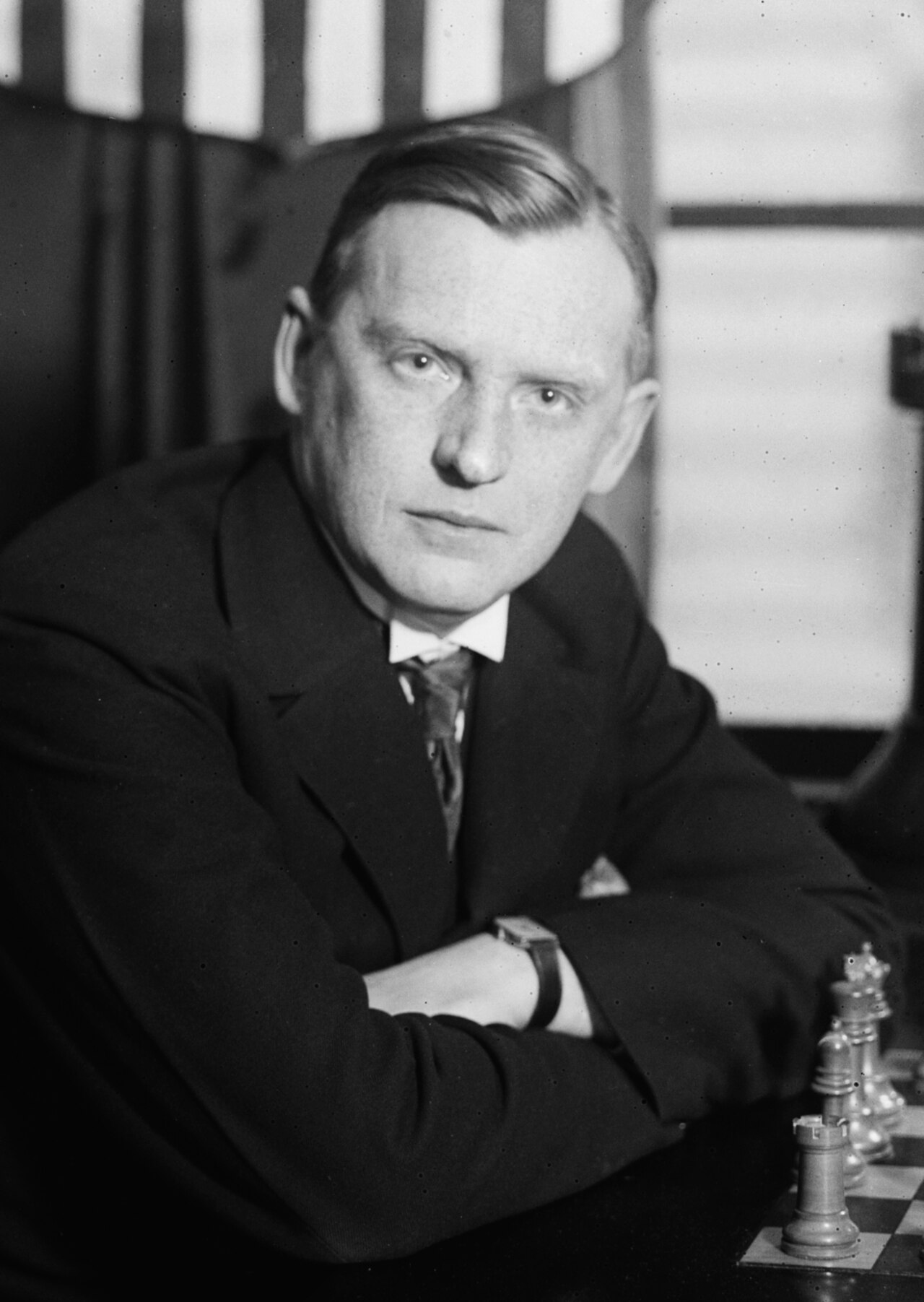
Alexander Alekhine was born in Moscow on October 31, 1892, and died in Estoril, Portugal on March 24, 1946, alone in a rented room, still holding the world championship he had never agreed to relinquish. He held the title for nearly two decades total, interrupted by a two-year period when Max Euwe of the Netherlands outplayed him, and then took it back when Euwe outright asked for a rematch. He is one of the few world champions to have died while holding the title.
The chess was extraordinary. The life, complicated. Alekhine emigrated from Russia after the 1917 revolution, became a French citizen, and spent the remainder of his life as a professional player of no fixed address. He was brilliant at chess and difficult as a person, and both facts are documented clearly enough not to be in doubt.
Career and the 1927 Championship
Alekhine came to international prominence in the early 1910s, finishing third at the 1914 St. Petersburg tournament behind Lasker and Capablanca in what remains one of the strongest fields ever assembled before the Second World War. After years of top-level tournament play through the 1920s, he secured the right to challenge Capablanca for the world title in 1927.
The 1927 match in Buenos Aires remains one of the most remarkable chess events in history. Capablanca was the favorite. He hadn’t lost a match in a decade, hadn’t lost a tournament game since 1914, and most experts expected him to win comfortably. The match went to 34 games. Alekhine won six, Capablanca won three, and twenty-five were drawn. When the match ended, Capablanca had been beaten at every phase of the game he was supposed to dominate: endgames, positional play, technique.
What Alekhine had prepared in that match, specifically the depth of his opening preparation and his understanding of the specific endgame types that would arise, was not fully understood until decades later, when chess historians analyzed his preparation files.
The playing style
Alekhine’s games are the most studied collection of tactical chess in the literature. He saw combinations at depths that his contemporaries found startling, calculated variations with astonishing accuracy, and constructed attacks from positions that appeared balanced. His endgame technique was first-rate; he didn’t rely on attacks alone.
His annotations, collected in My Best Games of Chess (two volumes, 1908-1923 and 1924-1937), show a player who understood exactly why his combinations worked. The annotations are not post-hoc analysis. They read as the thinking of someone who saw the combinations during the game and is explaining what he saw. Studying Alekhine’s annotated games is one of the most direct ways to improve tactical vision.
The Dover combined edition, still in print, covers the full run of 1908 to 1937.
The Banja Luka miniature, 1931
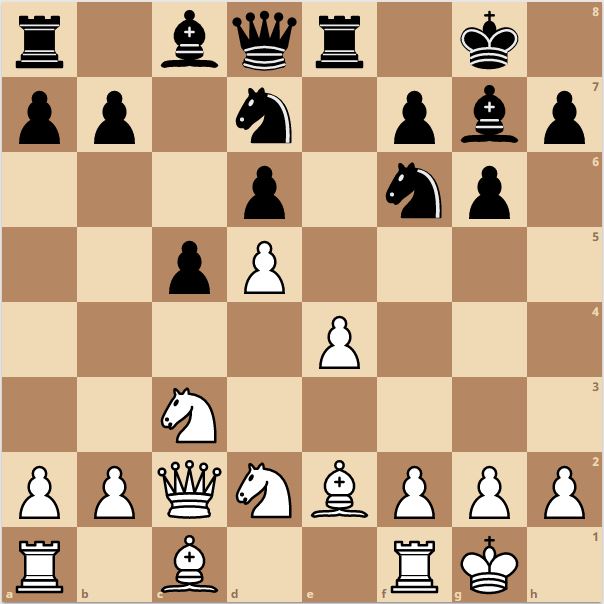
The game below is one of the fastest decisive games Alekhine ever played. It ended in 11 moves, with checkmate. That alone makes it unusual. Forcing checkmate against any reasonably alert opponent in 11 moves requires a sequence of mistakes from Black that Alekhine helped provoke.
Black’s error was playing 4…Bxc3+ early, trading the bishop for the knight on c3. This eliminated Black’s own good bishop and gave White the bishop pair in an open position. The follow-up 5…h6 was a waste of tempo on a move that doesn’t do anything useful in the early game. By move 6, Black was already in trouble. By move 10, Alekhine had a queen sacrifice that ended the game immediately.
Alekhine White Vasic Black


The move 10.Qxe6+ is the kind of combination that looks impossible the first time you see it. The queen goes to e6 where it can be captured immediately by the f-pawn. If Black accepts (and there’s no reason not to, the queen is just hanging), then 11.Bg6# is checkmate, because the bishop controls h7, the king has no escape to d6 or f6 or anywhere useful, and the entire e-file is blocked by Black’s own pieces.
If Black had refused with 10…Ke7 instead, White is up material and positionally dominant after 11.Qxf6+. Either way, the game is over on move 10.
The rematch and the end
Alekhine lost the world championship to Euwe in 1935, 15.5 to 14.5 in a 30-game match. He was reportedly in poor health and drinking heavily during the match. Euwe was a legitimate world-class player, a mathematics professor who studied chess with systematic precision, and the result wasn’t a fluke.
Alekhine cleaned up, prepared thoroughly, and beat Euwe 15.5 to 9.5 in the rematch two years later. He then held the championship without a successful challenge until he died. Capablanca had been seeking a rematch since 1927; Alekhine consistently refused the terms. Capablanca died in 1942, still without the rematch. Alekhine died in 1946, still holding the title.
The title he’d defended since 1927, minus that one interruption, had no built-in succession plan. FIDE took over organizing the world championship the following year, and Mikhail Botvinnik won the first FIDE-run title in 1948. Botvinnik is generally considered his successor.
His legacy is the tactical imagination. No player before or since approached chess combination with quite the same spatial audacity, the sense that pieces were not so much placed on squares as launched across the board at trajectories his opponents couldn’t trace. Mikhail Tal captured something of that spirit, but he was explicit that Alekhine was the model.
For other World Chess Champions, see profiles of Capablanca, Kasparov, and the World Chess Championship history.
Sources
This page contains affiliate links. As an Amazon Associate, DiscussChess earns from qualifying purchases.
Sources
Further reading
- My Best Games of Chess 1908-1937 by Alexander Alekhine ASIN verified via Open Library 2026-06-10. Dover 1979, combining the two original Bell volumes (1927 and 1939). Alekhine's own annotations of his best work. Essential for understanding his tactical thinking.