Magnus Carlsen: The Greatest Chess Player of All Time
A complete profile of Magnus Carlsen: his record GM title at 13, five world championship cycles, the 2882 peak that no one has matched, and why he walked away from the title in 2023.
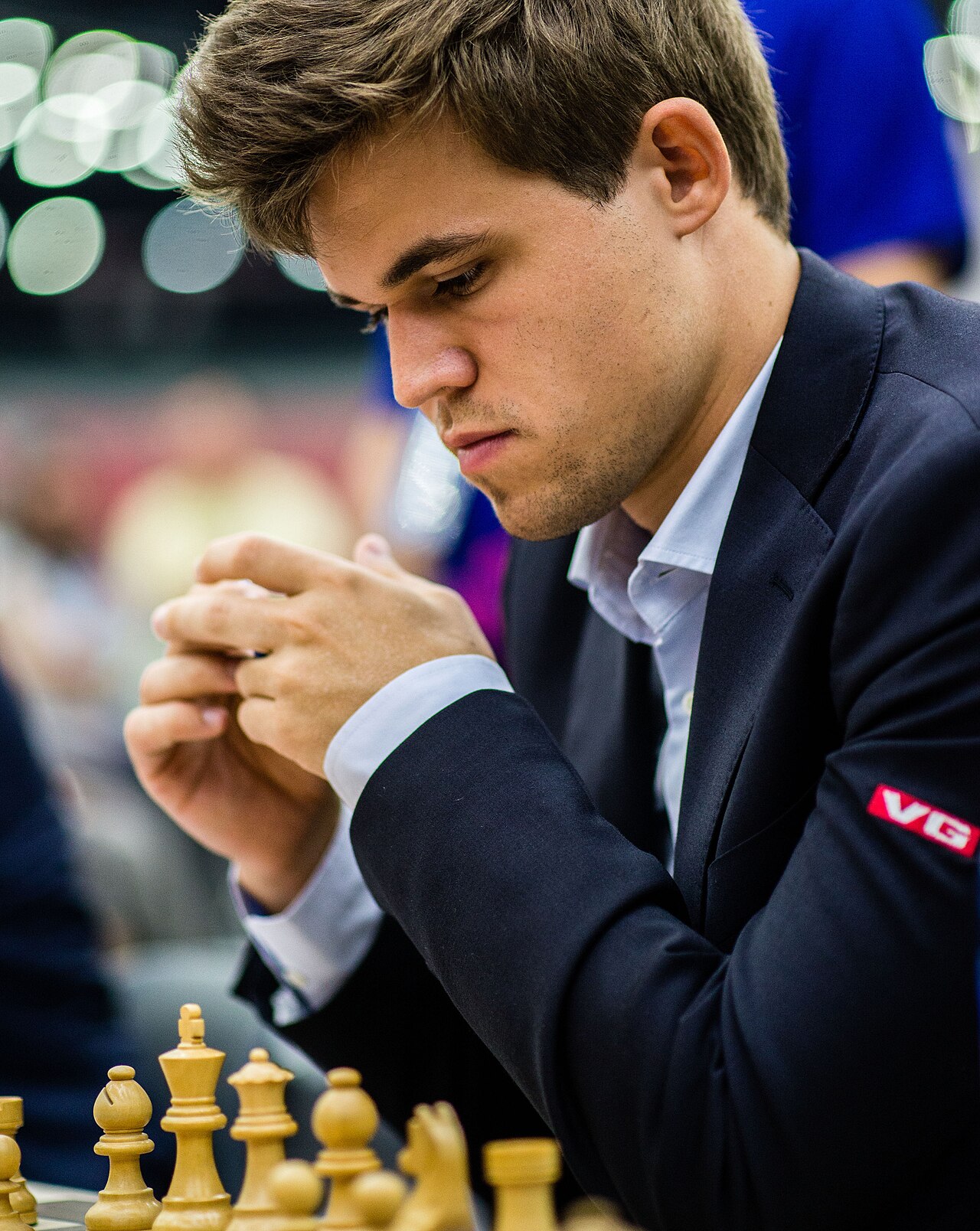
Magnus Carlsen is the strongest chess player in recorded history. Born November 30, 1990, in Tønsberg, Norway, he became a grandmaster at 13 years and 148 days: at the time the third youngest in history. He won five World Chess Championships from 2013 to 2021, set the all-time FIDE rating record of 2882 in May 2014 that no player has approached since, and walked away from the title in 2023 rather than defend it. He remains active in rapid, blitz, and online chess.
He was rated 2848 at 18. By 25, he hit 2882. The gap between his peak and the next player on the all-time list isn’t a matter of timing or sample size. He was that much better than his contemporaries.
The five world championship cycles
Carlsen won his first World Chess Championship in Chennai in November 2013, beating Viswanathan Anand 6.5–3.5. The match wasn’t close. He outplayed Anand in positions that should have been drawn, patient technical squeezing that became his signature.
He defended successfully four more times:
2014 Sochi vs. Anand: 6.5–4.5. Anand played better the second time but still lost. Game 6 is worth looking at. Carlsen walked into a theoretically dangerous variation, absorbed the pressure, and won on move 45.
2016 New York vs. Sergey Karjakin: Tied 6–6 in classical, won the tiebreaks. The most dramatic match of his reign. Karjakin missed several winning chances in Game 8.
2018 London vs. Fabiano Caruana: 6–6 in classical (all 12 games drawn, a World Championship record), won the tiebreaks 3–0. The quality of the classical games was exceptional; the tiebreak result looked lopsided.
2021 Dubai vs. Ian Nepomniachtchi: 7.5–3.5. Nepo collapsed in Game 6 after losing a 136-move marathon. The remaining games were functionally over after that.
Game 6, the longest game in World Championship history at 136 moves, is below. Carlsen defended through complex rook-and-pawn endgames for hours, then found the technique to win. After this game Nepomniachtchi lost his psychological composure and dropped the next four.
Carlsen, Magnus White Nepomniachtchi, Ian Black


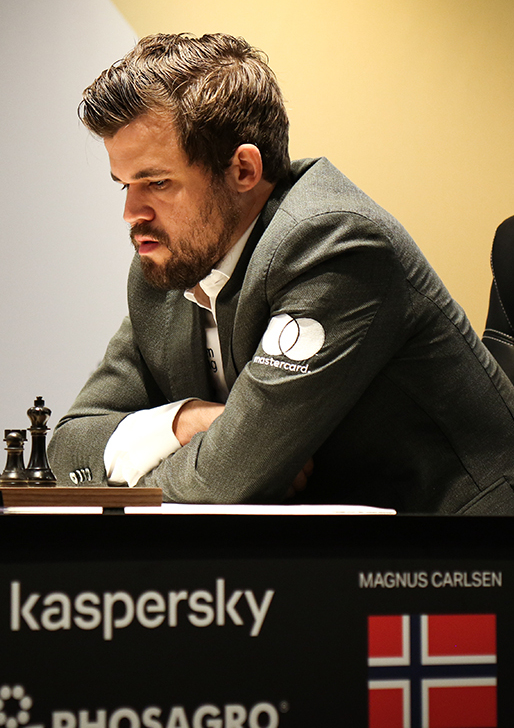
Playing style
Carlsen is classified as a universal player, which means he plays everything well. That description understates what’s actually happening. Most grandmasters are strong in the phase of the game that matches their natural thinking: Tal calculated attacks, Petrosian suffocated opponents positionally, Anand solved tactical puzzles at speed. Carlsen does all of them, at the same level, and exploits whichever the position demands.
His specific edge shows up in endgames. He wins positions that engines evaluate as drawn with a regularity that suggests the evaluation is incomplete rather than correct. He understands that a forced draw and a technically drawn position are different things if one side has to play accurately for 60 more moves and the other doesn’t.
His opening preparation has been deliberately unpredictable. He plays 1.e4 and 1.d4 interchangeably. He’ll open with the Reti or the London and follow it with the Nimzo-Indian or the King’s Indian on the black side. The goal isn’t a theoretically favorable position. It’s a complex position where the other player has to think first.
As Black, Carlsen has used the Sicilian Defense at the championship level throughout his career, for the same reasons Bobby Fischer did: imbalance, counterplay, winning chances from move one.
The 2882 peak
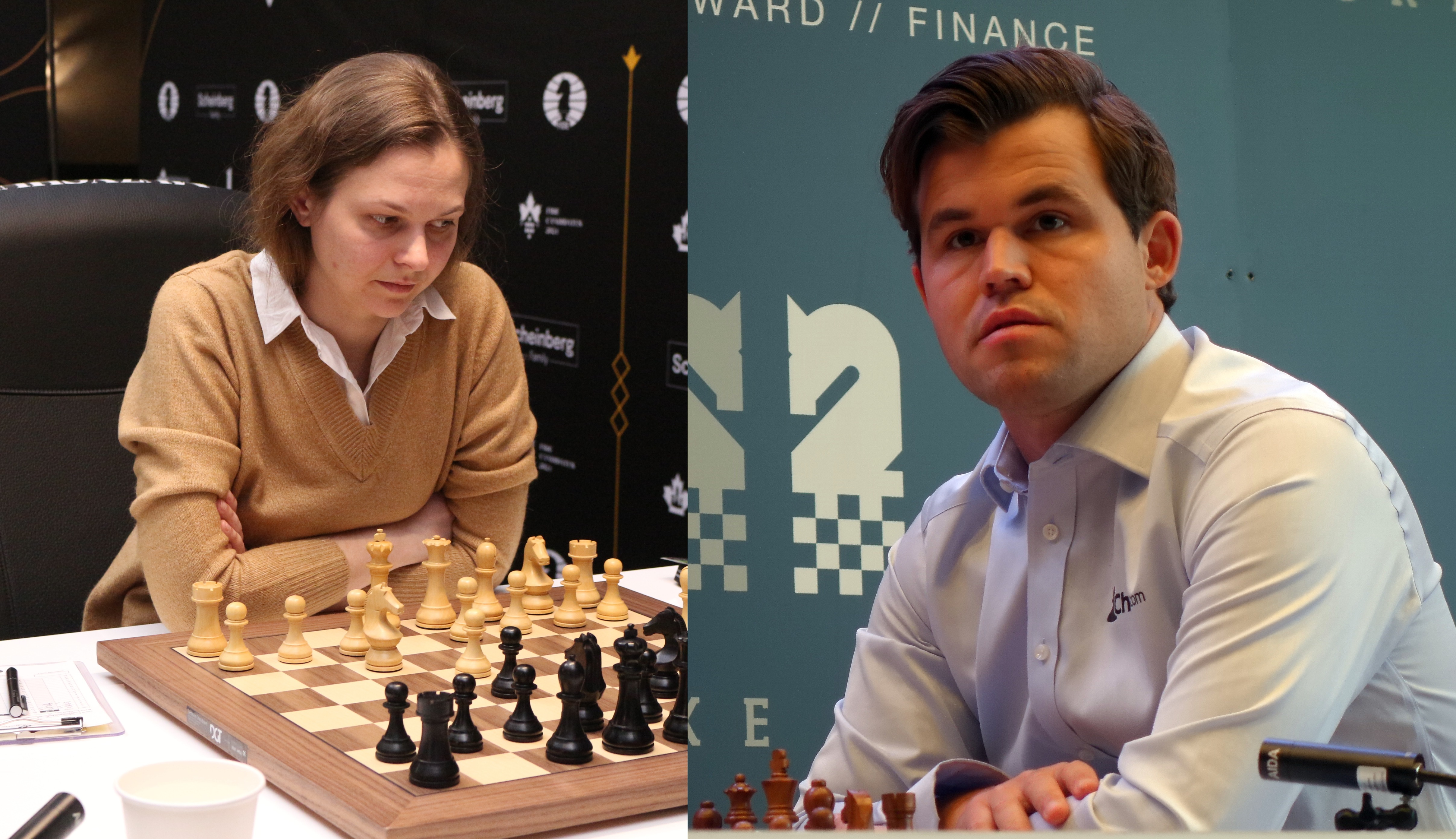
The rating record was set on the May 2014 FIDE list. At that point Carlsen was 28 rating points ahead of Fabiano Caruana in second place. The gap between second and approximately fifteenth place was about the same size. The record has stood since: no player has come within 22 points of 2882 in the more than a decade since Carlsen set it.
Peak rating comparisons between eras are methodologically contested. Garry Kasparov’s peak of 2851, set in January 1999, was arguably more dominant relative to the field at the time. The raw number comparison is interesting but not definitive. What isn’t in dispute: 2882 is the highest number ever on an official FIDE list.
Walking away in 2023
In July 2022, Carlsen announced he would not defend his title in the 2023 World Chess Championship. His stated reason: the match format no longer interested him, and winning again wouldn’t push chess forward.
The title match went ahead between Ding Liren and Ian Nepomniachtchi. Ding won 7.5–6.5 in a match decided by the final tiebreak game. Carlsen’s abdication handed Ding a world title he might not have won in a head-to-head with Carlsen. A counterfactual the chess world has argued about ever since.
Carlsen stayed active at the elite level: World Rapid and Blitz championships, online tournaments, the Grand Chess Tour circuit. Just not the classical championship cycle.
See our chess improvement guide for the study principles behind the endgame technique that defines his play.
Books worth reading
Three angles: the biography of his formation, the game collections he spent his teenage years studying, and Kasparov’s account of the Deep Blue era he stepped into.
Wonderboy: How Magnus Carlsen Became the Greatest Chess Player in the World: Simen Agdestein (New in Chess, 2013). Written by the trainer who coached Carlsen from age 8. The only first-hand account of how the 2882 was built: what he studied, how he trained, and what made his development different from every other junior prodigy of his generation. (affiliate link)
My Great Predecessors, Vol. 1: Garry Kasparov (Everyman Chess, 2003). The series Carlsen has cited as his primary teenage study material. Five volumes of deeply annotated games from every world champion through Spassky. Start with Volume 1 and read them in order. (affiliate link)
Deep Thinking: Where Machine Intelligence Ends and Human Creativity Begins: Garry Kasparov (PublicAffairs, 2017). Kasparov on the Deep Blue matches, artificial intelligence, and what chess reveals about the limits of human cognition. Essential context for the world Carlsen competed in, and for understanding why the game changed so dramatically between Fischer’s era and his. (affiliate link)
Sources
- FIDE official rating history for Magnus Carlsen
- World Chess Championship 2013: FIDE official results
- World Chess Championship 2018: FIDE official page
- World Chess Championship 2021, full results and game scores
- Agdestein, Simen. Wonderboy: How Magnus Carlsen Became the Greatest Chess Player in the World. New in Chess, 2005.
This page contains affiliate links. As an Amazon Associate, DiscussChess earns from qualifying purchases.
Sources
- FIDE Rating History, Magnus Carlsen
- World Chess Championship 2013, Official FIDE
- World Chess Championship 2021, Official FIDE
- Agdestein, Simen. Wonderboy: How Magnus Carlsen Became the Greatest Chess Player in the World. New in Chess, 2005.
Further reading
- Wonderboy: How Magnus Carlsen Became the Greatest Chess Player in the World, Simen Agdestein ASIN verified via Open Library 2026-05-02. New in Chess, 2013 edition. The only inside account of Carlsen's development from age 8 through the 2700 barrier, written by his trainer.
- My Great Predecessors, Vol. 1, Garry Kasparov ASIN verified 2026-05-02. Everyman Chess, 2003. The five-volume series Carlsen studied obsessively as a teenager. Annotated games from every world champion through Spassky.
- Deep Thinking: Where Machine Intelligence Ends and Human Creativity Begins, Garry Kasparov ASIN verified 2026-05-02. PublicAffairs, 2017. Kasparov on the Deep Blue matches, chess and AI, and what it means to compete at the edge of human cognition.