Aaron Nimzowitsch: The Hypermodern Who Rewrote Chess Theory
Aaron Nimzowitsch invented the strategic concepts modern chess runs on: prophylaxis, blockade, overprotection. He played some of the most instructive games in chess history. Full biography and the Immortal Zugzwang.
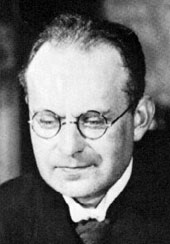
Aaron Nimzowitsch was born in Riga on November 7, 1886, and died in Copenhagen on March 16, 1935. In those 48 years, he played serious competitive chess for roughly 25 of them, never became world champion, and wrote the book that changed how chess is understood more than any other. That gap between competitive results and theoretical impact defines his legacy.
He was the first major player to argue, with rigor, that controlling the center didn’t require occupying it with pawns. That indirect control through pieces was equally valid, or superior. That prophylaxis, the discipline of preventing your opponent’s plans before they materialize, was a strategic category as important as attack. That passed pawns were dangerous precisely because they restricted the opponent’s mobility. He was calling the strategic positions he created “blockades” and explaining the mechanism behind them while his contemporaries were still playing 1.e4 e5 and expecting open games.
Career
Nimzowitsch came up through Riga’s strong chess culture and became a professional player in Berlin in the early 1900s. He finished a career-high second at San Sebastián 1912, behind José Raúl Capablanca, in one of the strongest tournaments of that era. He won Breslau 1925, won Marienbad 1925, won Carlsbad 1929. For a stretch through the mid-1920s, he was generally considered the best active player after Capablanca and Alekhine.
His rivalry with Emanuel Lasker, Siegbert Tarrasch, and later Alekhine defined much of his public chess life. He never got a world championship match despite finishing ahead of Alekhine on tiebreak in the 1927 FIDE rankings, which contributed to a persistent public complaint about being denied his rightful place. The complaints were partly justified and partly self-dramatizing (Nimzowitsch was difficult company), but the rating evidence supported his view.
The theoretical system
My System, published in 1925, is divided into two parts. The first covers the theory of the pawn: passed pawns, the blockade, the isolated pawn, doubled pawns, pawn chains, and the “mysterious rook move” (moving a rook to a file before the file is open). The second covers what Nimzowitsch called the theory of overprotection: the idea that strong central points should be protected more than necessary, so that even if one defender is removed, the point remains held.
The system sounds dry listed this way. In the book, it reads as a coherent theory of chess strategy, illustrated with games that were specifically chosen because they proved the point. Nimzowitsch wrote it with the voice of a man who knew he was right and expected to be contested, which made the argument sharper.
Chess Praxis, published in 1929, extended the system with additional examples and refinements. Together, the two books constitute the hypermodern school’s theoretical foundation.
The openings he gave his name to (the Nimzo-Indian Defense, 1.d4 Nf6 2.c4 e6 3.Nc3 Bb4, and the Nimzowitsch Defense, 1.e4 Nc6) are direct applications of the hypermodern principle: control the center indirectly, provoke weaknesses, operate from a distance. The Nimzo-Indian Defense is still played at the highest level because the strategic ideas underlying it remain sound.
The Immortal Zugzwang: Saemisch vs. Nimzowitsch, Copenhagen 1923
The game below is the most famous example of zugzwang in serious competitive chess. Zugzwang is the condition in which a player would prefer to pass: their position is fine if they can simply do nothing, but every available move makes things worse. It appears most often in endgames. Nimzowitsch achieved it in the middlegame.
Fritz Saemisch had a playable position through the opening. He followed conventional development, avoided obvious tactical mistakes, and reached a position that looked approximately equal. Then, over a sequence of moves from 16 to 26, Nimzowitsch placed each piece on exactly the right square, until the position became one where Saemisch had no useful move available. When Nimzowitsch played 26…Re2, Saemisch resigned. Every white piece and pawn was paralyzed.
Saemisch White Nimzowitsch Black


The precision of Black’s play from move 15 onward is the point. Each move tightened the bind. The knight came to h5, restricting White’s f-pawn options. The bishop went to b5, then to d3, cutting through White’s structure. The f-pawn pushed to f5, secured, then the rook slid to f2 as a tactical threat. Every element was placed before the decisive moment.
When Saemisch eventually had to move, any move he made created a new weakness. That is zugzwang.
Legacy
Nimzowitsch died at 48, probably from the effects of repeated illness over the previous decade. He never had the world championship match he deserved. Alekhine won the title in 1927, Capablanca lost it, and Nimzowitsch, despite his 1929 Carlsbad win and strong play through the early 1930s, was not among the candidates given serious consideration for a match.
The books are the legacy. My System is in print in algebraic notation and actively studied, though its opening analysis reads like a museum piece now. Engines have picked apart nearly every specific line Nimzowitsch worked out by hand. None of that touches the strategic content: prophylaxis and overprotection don’t decay the way opening theory does. The Nimzo-Indian Defense is played in every world championship cycle. The concepts appear in almost every serious coaching framework for intermediate players. A century on, the ideas are so absorbed into standard chess education that players learn them without knowing they’re learning Nimzowitsch.
That’s what it means to have genuinely changed something.
For biographical profiles of other world-class players, see the chess players index. For a full treatment of the Nimzo-Indian Defense including its strategic foundations, see Nimzo-Indian Defense.
Sources
This page contains affiliate links. As an Amazon Associate, DiscussChess earns from qualifying purchases.
Sources
Further reading
- My System by Aron Nimzowitsch ASIN verified via Open Library 2026-06-10. Batsford 21st century algebraic edition. Nimzowitsch's complete strategic system: prophylaxis, blockade, overprotection, passed pawns, open files. The most influential chess book written.