Berlin Defense: The Berlin Wall Endgame
The Berlin Defense (1.e4 e5 2.Nf3 Nc6 3.Bb5 Nf6) trades queens on move 8 and hands Black a king that cannot castle. Why that structure holds, and how Kramnik used it to take Kasparov's title in 2000.
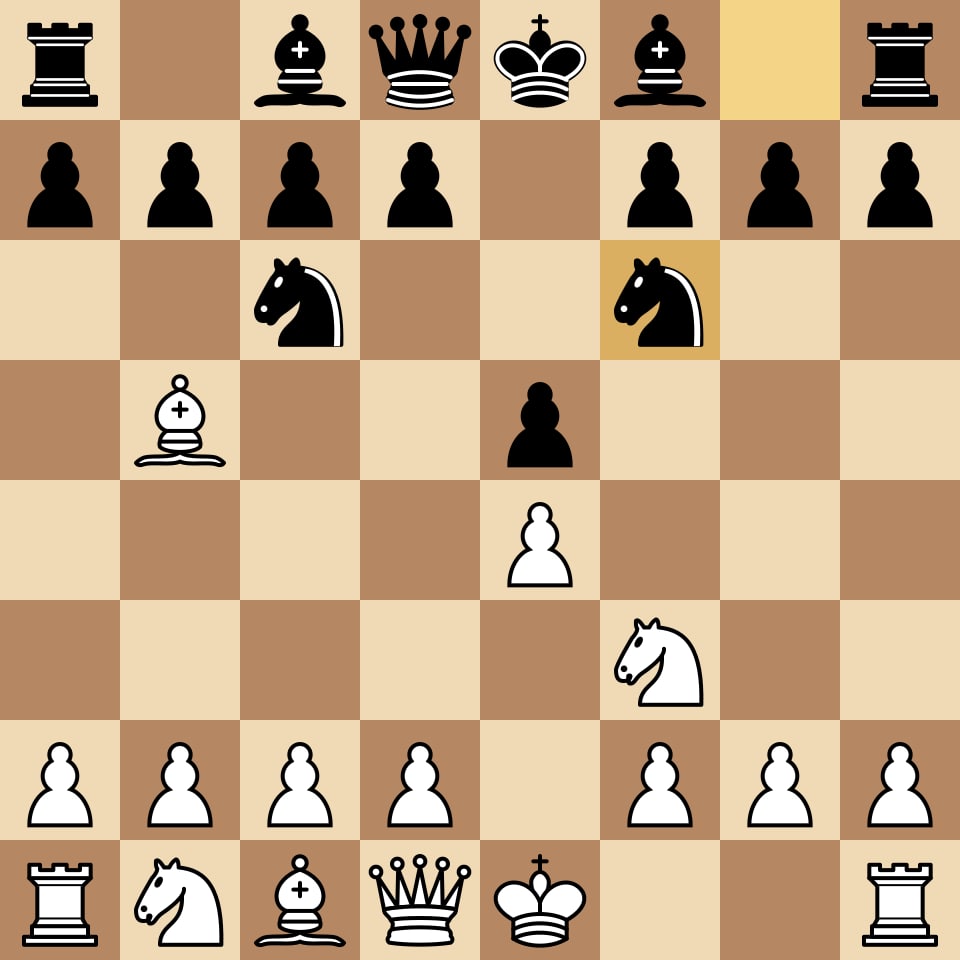
The Berlin Defense is 1.e4 e5 2.Nf3 Nc6 3.Bb5 Nf6, a branch of the Ruy Lopez where Black answers the bishop by attacking the e4 pawn instead of defending. Its main line reaches an endgame by move 8, with queens traded and Black’s king stranded on d8 with no castling rights left. That position, the Berlin Wall, is hard to break because Black’s weaknesses are static and White has no pawn lever to open lines against them.
That is the whole opening in a sentence: Black accepts an ugly-looking position with no dynamic problems in it. Vladimir Kramnik built a world championship match around exactly that trade in 2000, and beat Garry Kasparov without losing a game.
What is the Berlin Defense?
Three moves in, White’s bishop on b5 is aiming at the knight that guards e5. The three most common replies deal with that bishop directly: 3…a6 asks it to declare itself, 3…d6 props up the pawn, 3…Bc5 develops and defends indirectly. The Berlin does none of them. 3…Nf6 hits e4 and dares White to take on c6.
The opening carries ECO codes C65 to C67, and the name comes from the Berlin school of players who analysed it seriously in the 19th century. It was not a sideline back then. The Berlin appeared eight times in the 1886 Steinitz versus Zukertort match, the first official world championship, and three more times in their 1892 rematch, with Steinitz taking six of those eleven games. Emanuel Lasker played it often. Then it fell out of fashion for most of a century, dismissed as passive, and stayed there until 2000.
After 4.O-O, Black’s whole point is 4…Nxe4. White’s e-pawn goes, and White plays 5.d4 to open lines against the knight before Black consolidates. Black retreats 5…Nd6, White captures 6.Bxc6 dxc6, and now 7.dxe5 attacks the knight again. It goes to 7…Nf5, where it stares at the queen on d1. And White takes: 8.Qxd8+ Kxd8.
What happens in the Berlin Wall endgame?
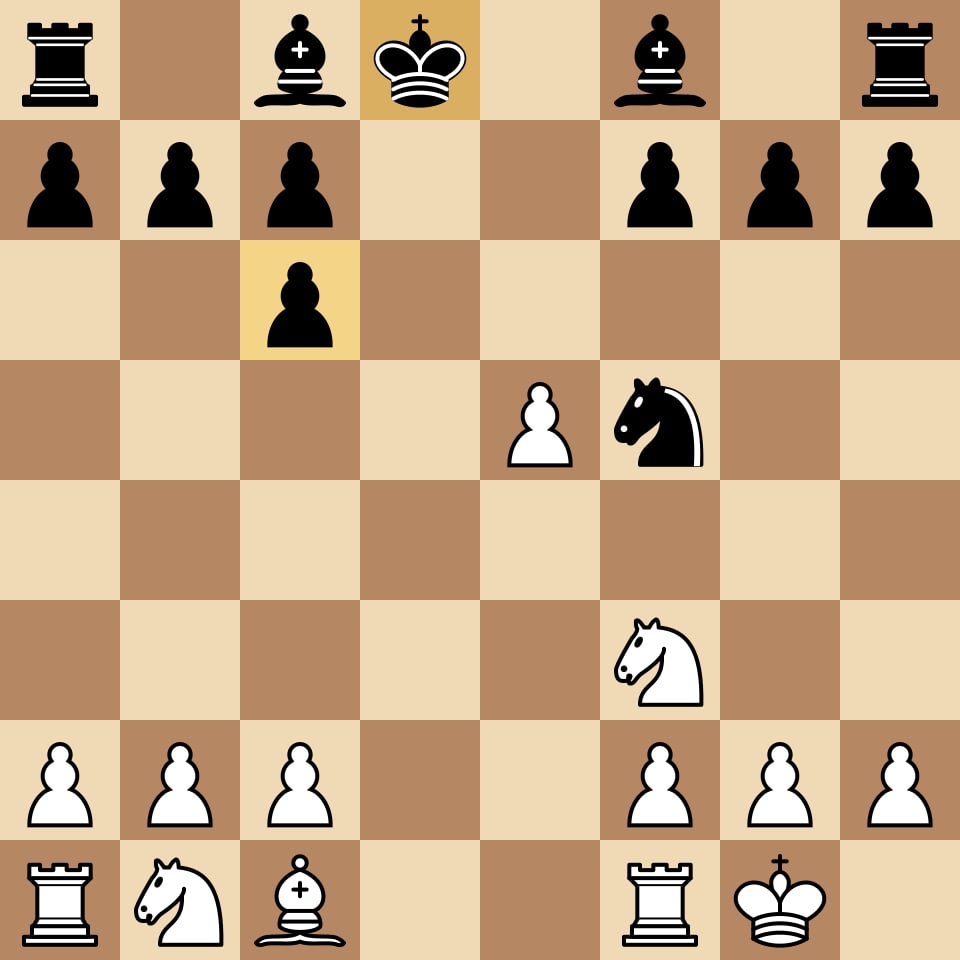
Count the damage honestly. Black has doubled c-pawns, which is a permanent structural fault. Black’s king cannot castle, which normally costs a full tempo and a rook. White has a four-against-three pawn majority on the kingside, the side of the board where Black has no pawn majority to answer with. Every one of those is a real, lasting advantage, and none of them expires.
Now count what Black got. Two bishops against bishop and knight, in a position that will open up over the next twenty moves. A queenside pawn mass of four pawns against three, which is the mirror image of White’s kingside majority. And, quietly, the most important item on the list: no queens.
Why is the Berlin so hard to break down?
The king on d8 looks like a catastrophe until you notice what is missing from the board. A king in the centre is only in danger from pieces that can generate threats faster than the king can walk away, and the piece that does that better than any other has already been exchanged. Without queens, White’s remaining army has to organise a mating net out of a rook, a bishop, two knights and some pawns. That takes many moves. Black’s king has time to use them.
So it walks. In practice Black plays …Bd7 and …Kc8, and often …b6 and …Kb7 after that, and within about five moves the king is standing behind its own pawn wall in a corner. It is not a liability there. In an endgame it is a fighting piece.
That leaves White the question every Berlin game turns on: how do you actually attack the doubled c-pawns? The answer is that you mostly cannot. Black’s pawn on c6 is defended by b7. The c7 pawn is defended by the king itself, which is standing right beside it. To attack either one, White needs an open file or a pawn lever, and the position offers neither without concessions. Try b4 and c4 and you loosen your own structure. Try to force f4 and e5 forward on the kingside and Black’s bishops cover the entry squares.
The kingside majority is the same story. Four against three is a winning ratio in a pure pawn endgame and a slow grind everywhere else, because turning it into a passed pawn takes a sequence of pawn moves, and each one hands Black a target or a square. Meanwhile Black’s own four-against-three on the queenside is doing the same work in the other direction.
None of this makes the Berlin equal by force. White keeps a small, nagging pull in most lines, and Black has to know what to do. It makes the Berlin holdable, which is a different claim and a much more useful one if what you want from a game as Black is not to lose it.
How did Kramnik use it to take Kasparov’s title?
The 2000 Braingames World Championship ran from 8 October to 2 November at Riverside Studios in Hammersmith, London. Best of 16. Kramnik was the challenger, Kasparov had held the title since 1985, and almost nobody expected the match to be close.
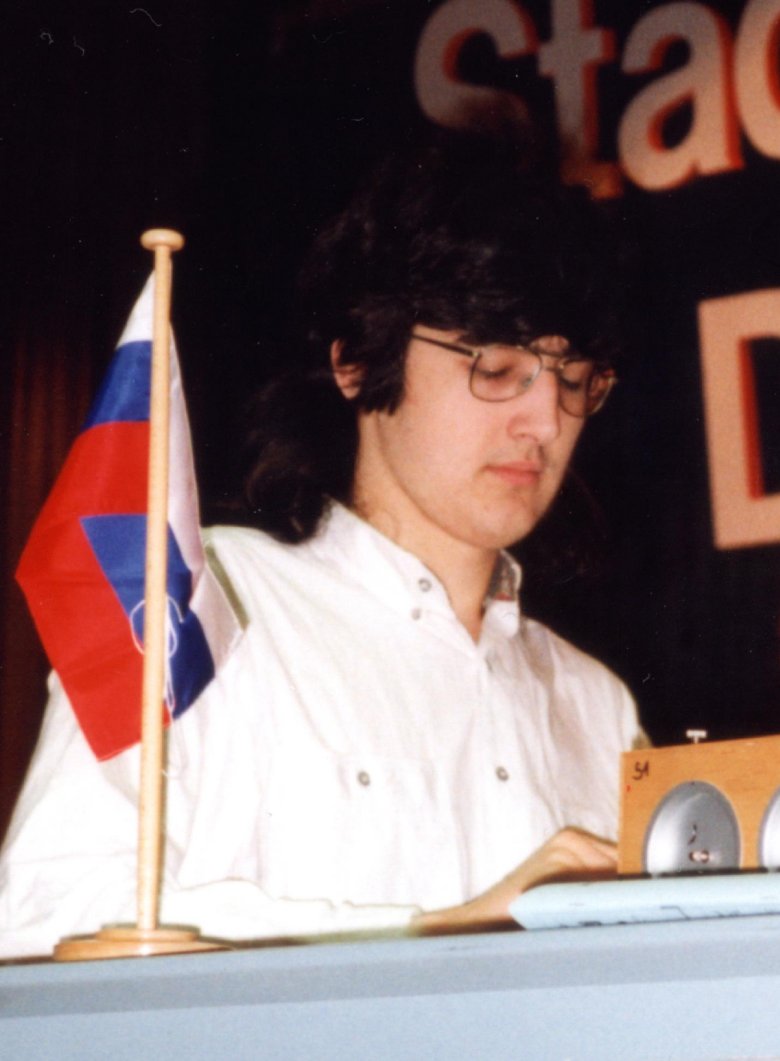
Kramnik played the Berlin as Black in games 1, 3, 9 and 13. He drew every one of them. Kasparov, playing White with the most feared opening preparation in the sport, could not find a way through, and by the middle of the match he had stopped trying to. The final score was 8½–6½ to Kramnik: two wins, thirteen draws, and not a single loss. Kasparov did not win a game. The match ended after game 15, one short of the scheduled sixteen, because he could no longer catch up.
Game 1 set the pattern.
Kasparov, Garry White Kramnik, Vladimir Black


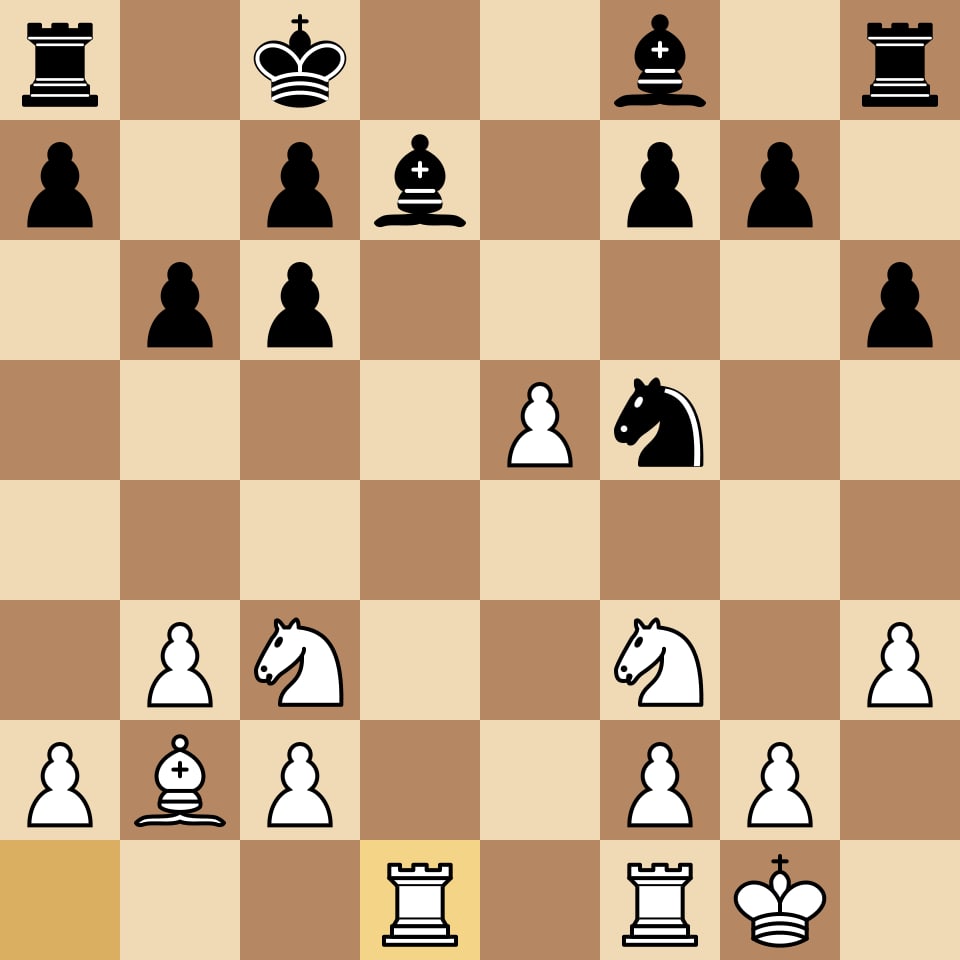
Watch the king. It reaches c8 on move 11, takes a walk to b7 on move 20 when White’s knight arrives on d5, and comes back to c8 on move 23. It is never in danger on any of those squares. Meanwhile the h8 rook, the piece that castling normally activates, gets into the game a completely different way: 15…h5 and 21…Rh5, along the fifth rank. That manoeuvre is a Berlin signature and it is worth memorising on its own.
The strategic point of the match was not that the Berlin is unbeatable. It is that Kasparov’s edge came from preparation in sharp positions, and Kramnik removed the sharp positions from the board on move 8, four times. For more on how championship matches get decided by opening choice rather than by tactics, see our World Chess Championship overview and the profiles of Kramnik and Kasparov.
What is the Anti-Berlin, and why do strong players prefer it?
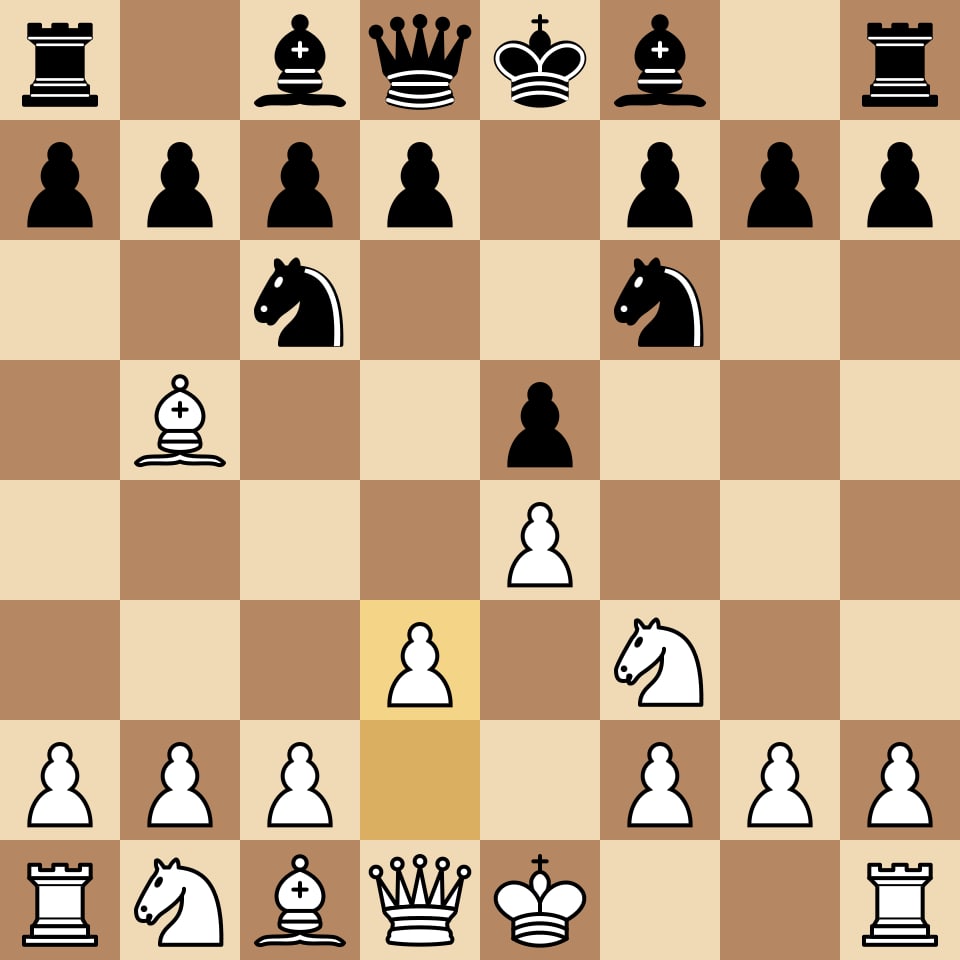
If you cannot beat a fortress, do not build the gate for it. 4.d3 defends the e-pawn, so 4…Nxe4 is simply losing a piece, and the game continues as a slow Spanish with queens on the board and all four results live. White gives up any claim to an opening advantage by force. What White gets instead is a middlegame, which is what a stronger player usually wants.
This is the honest state of things in 2026: the Berlin endgame is famous, and the Anti-Berlin is what actually gets played. If you take up the Berlin as Black, budget most of your study time for positions after 4.d3, not for the endgame in the diagrams above.
Is the Berlin only a drawing weapon?
No, and there is a clean counterexample in the other direction. At Sochi in November 2014, Magnus Carlsen and Viswanathan Anand went into game 11 with Carlsen leading. Anand needed a win with Black. He played the Berlin, the game went into the same 8…Kxd8 endgame, and Carlsen won it with White, taking the match 6½–4½ and retaining the title. The Berlin Wall lost a world championship that day.
That is the corrective to the folklore. The endgame is not a draw; it is a position, and positions get won by whoever plays them better. Carlsen has made a career of grinding out results from exactly this kind of dry material, and Anand had to defend it for fifty-odd moves under match pressure. Under 2400, the same thing happens far more often, in both directions.
Where the Berlin genuinely does behave like a drawing weapon is in the specific case Kramnik used it for: you are Black, your opponent is better prepared than you, and you want to reach a position where preparation stops paying. That is a narrow and completely legitimate reason to play an opening.
Should you play the Berlin at club level?
Probably not as your first answer to 1.e4, and here is the specific reason. The Berlin transfers almost all of the difficulty from the opening to the endgame. You will reach a technical position at move 9 with a small structural deficit and a long defensive job ahead of you, on the clock, every game. That is a fair trade for a grandmaster who converts endgames for a living. It is a bad trade if endgames are the weakest part of your game, which for most players under 1800 they are.
If you want the Berlin anyway, invert the usual study order. Spend your time on rook-and-minor-piece endings and on the bishop pair rather than on move-order theory. 100 Endgames You Must Know by Jesus de la Villa (affiliate) covers the actual endings these positions collapse into, and How to Reassess Your Chess (affiliate) explains why two bishops in an open position are worth a broken pawn structure. Ten moves of Berlin theory plus real endgame technique beats thirty moves of theory without it.
And if you want a solid answer to 1.e4 that keeps the queens on, the Caro-Kann does a similar job with a much shorter path to a normal middlegame. The Sicilian does the opposite job, unbalancing from move one. Our guide to chess openings lays out how those choices fit together, and the improvement guide covers when opening study is worth the hours at all.
Sources
- Wikipedia. “Berlin Defence.” Move order, ECO C65 to C67, the Steinitz and Zukertort match games, and the 2000 revival.
- Wikipedia. “Classical World Chess Championship 2000.” Riverside Studios venue, 8 October to 2 November 2000, final score 8½–6½, Berlin played in games 1, 3, 9 and 13.
- Wikipedia. “World Chess Championship 2014.” Sochi, 8 to 23 November 2014, game 11 Berlin, final score 6½–4½.
- Garry Kasparov vs Vladimir Kramnik, London 2000, game 1, chessgames.com Game score, cross-checked against the Kramnik collection at PGN Mentor.
- de la Villa, Jesus. 100 Endgames You Must Know. New In Chess. (affiliate)
- Silman, Jeremy. How to Reassess Your Chess, 4th edition. Siles Press, 2010. (affiliate)
This page contains affiliate links. As an Amazon Associate, DiscussChess earns from qualifying purchases.
Sources
- Wikipedia. "Berlin Defence." (move order, ECO C65-C67, Steinitz-Zukertort match usage, Kramnik revival)
- Wikipedia. "Classical World Chess Championship 2000." (venue, dates, 8.5-6.5 final score, Berlin in games 1, 3, 9 and 13)
- Wikipedia. "World Chess Championship 2014." (Sochi, game 11 Berlin, 6.5-4.5 final score)
- Garry Kasparov vs Vladimir Kramnik, Braingames World Championship, London 2000, game 1 (game score)
- PGN Mentor, Kramnik game collection (game score cross-check for the 2000 match)
Further reading
- 100 Endgames You Must Know, Jesus de la Villa (New In Chess) ASIN verified via Open Library 2026-08-07 (record returns 100 Endgames You Must Know, Jesus De La Villa, New In Chess). The Berlin is an endgame opening, so endgame technique matters more here than opening theory does.
- How to Reassess Your Chess (4th ed.), Jeremy Silman (Siles Press, 2010) ASIN verified via Open Library 2026-08-07 (record returns How to reassess your chess, Jeremy Silman, Siles Press, 2010). Silman's treatment of the bishop pair and of static pawn weaknesses is the framework the Berlin endgame runs on.