Vaishali Rameshbabu: Ju Wenjun's Challenger
Vaishali Rameshbabu won the 2026 Women's Candidates Tournament with 8½/14 and will challenge Ju Wenjun for the world title. She is a two-time Women's Grand Swiss champion and, with her brother Praggnanandhaa, half of the first brother-and-sister pair to both hold the grandmaster title. A biography.
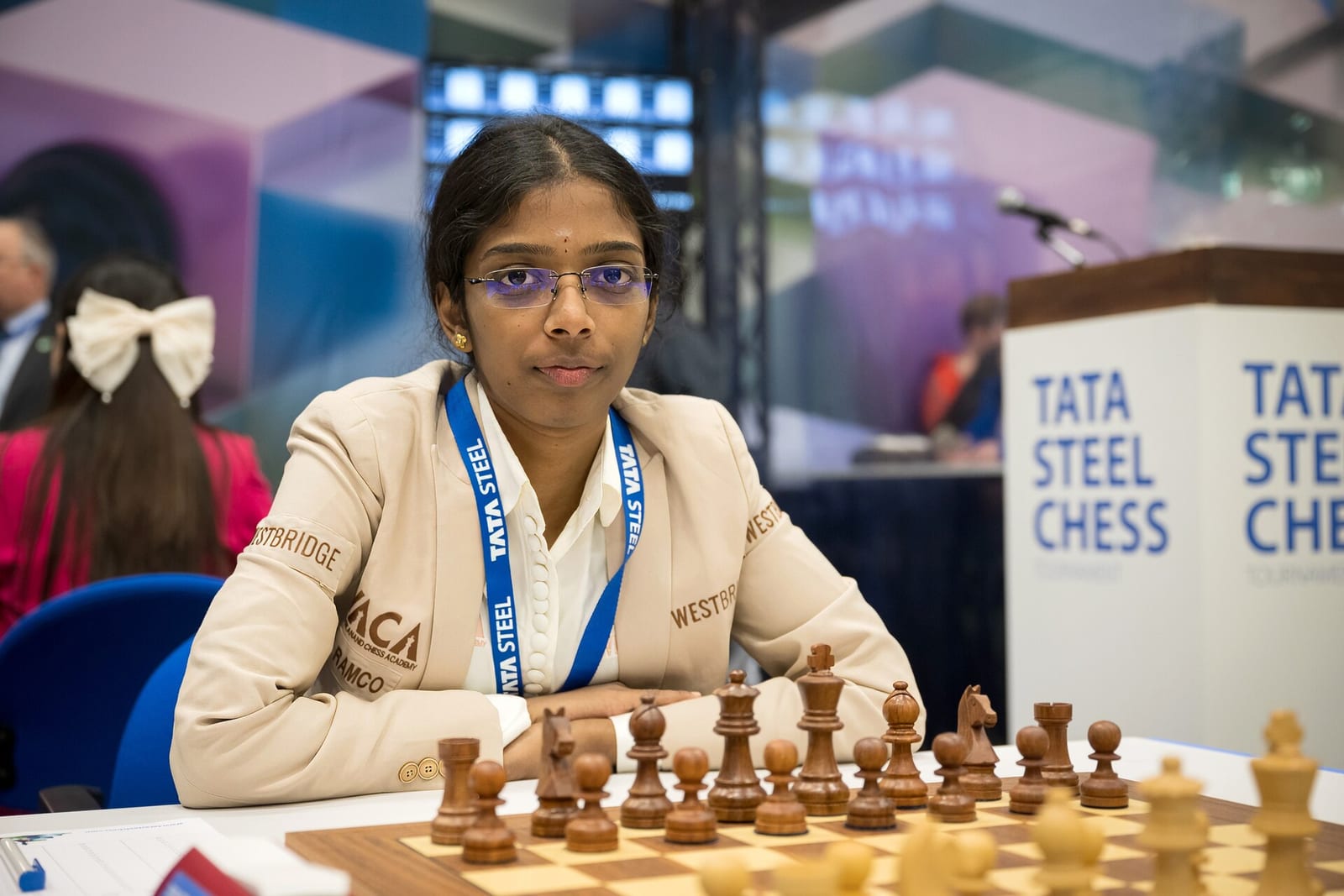
Vaishali Rameshbabu won the 2026 Women’s Candidates Tournament in Pegeia, Cyprus, finishing on 8½ out of 14, half a point clear of Bibisara Assaubayeva. That result makes her the challenger for the Women’s World Championship against Ju Wenjun, a match FIDE has not yet dated or sited. Born June 21, 2001 in Chennai, she is rated 2489 as of August 2026, with a peak of 2506 in August 2024.
She is also, with her younger brother R Praggnanandhaa, one half of the first brother-and-sister pair in history to both hold the grandmaster title. That fact gets repeated so often it has stopped meaning anything, so here is the version that does: their mother Nagalakshmi sat in the playing halls of both their careers, and in 2023 both siblings qualified for the same World Cup. Vaishali is the elder by four years and was the first of the two to play seriously.
Eight years from WIM to GM
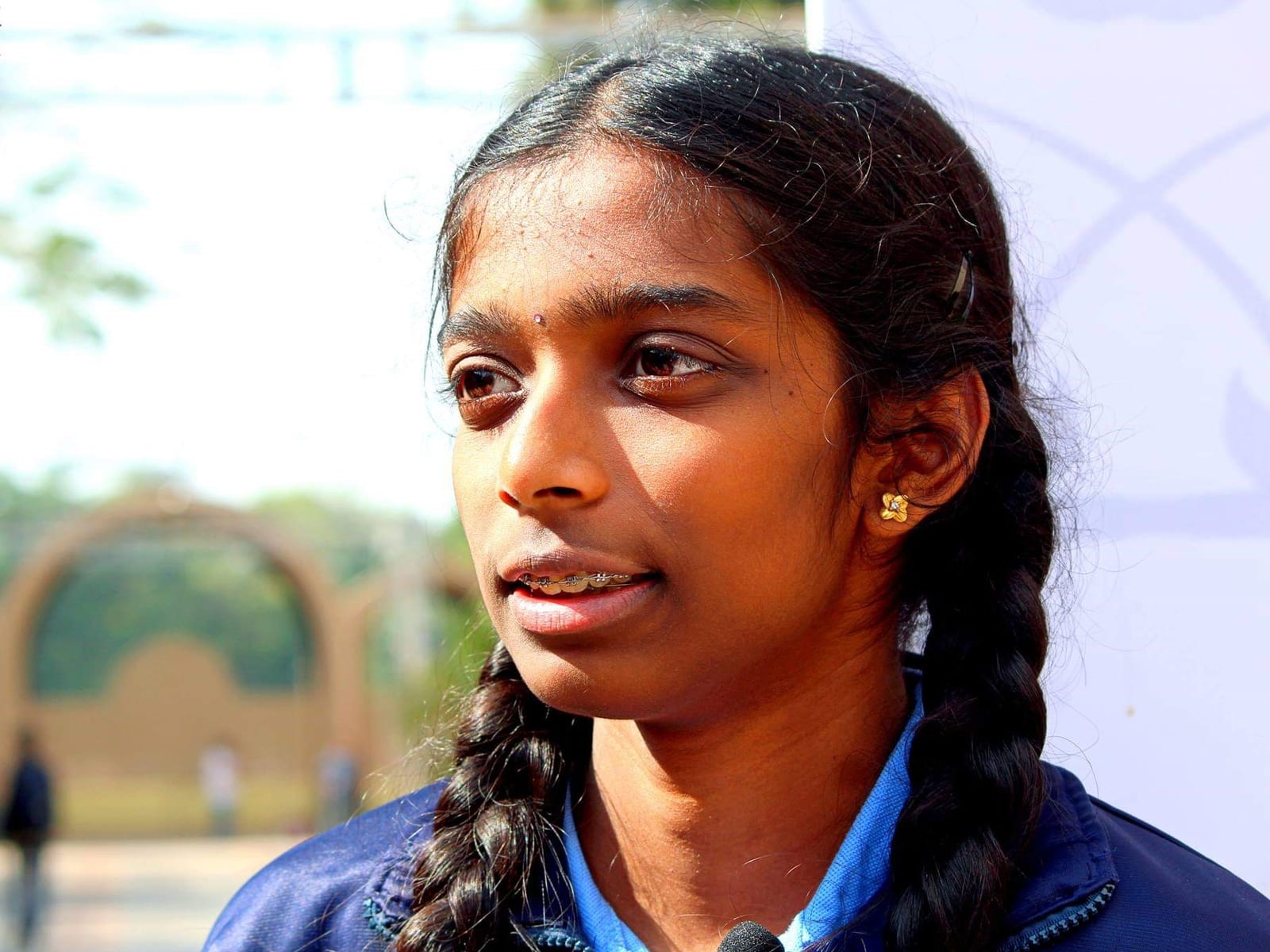
Chennai in the 2010s was the densest concentration of chess talent on earth, and Vaishali came up inside it. She won the Girls’ World Youth Championship at under-12 in 2012 and again at under-14 in 2015. In 2013, aged 12, she beat Magnus Carlsen in a simultaneous exhibition, which is the kind of line that belongs in a biography with the caveat attached: a simul is not a game, but a 12-year-old taking a point off the world number one in any format is a signal.
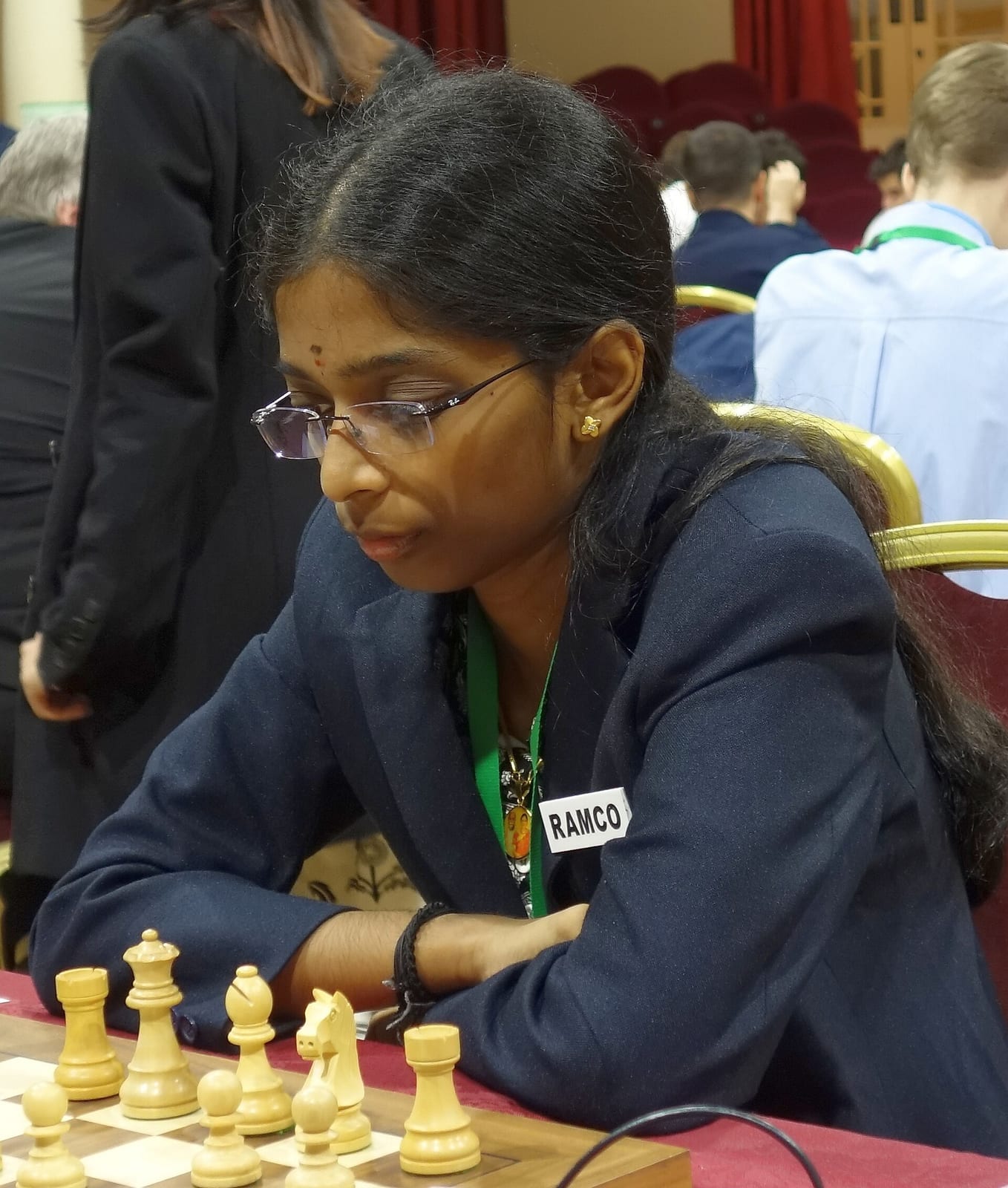
The title progression was steady rather than explosive: Woman International Master in 2016, Woman Grandmaster in August 2018, International Master in 2021, and the full grandmaster title in 2024 after crossing 2500 in December 2023. That is eight years from WIM to GM. Her brother took a much shorter road and gets much more coverage for it, and the comparison flatters neither of them, because they are different players who arrived by different routes.
The Grand Swiss is where she has been most consistently dangerous. She won it in 2023 with 8½/11 undefeated, then defended it in 2025 with 8/11, and that second win is what qualified her for the Candidates.
The 2026 Candidates
Eight players, double round-robin, fourteen rounds, three weeks in Cyprus from March 28 to April 16. The field included Assaubayeva, Zhu Jiner, Goryachkina, Muzychuk, Lagno, Tan Zhongyi and Divya Deshmukh.
Vaishali finished on 8½/14, five wins, seven draws, two losses. She went into the final round needing a result against Kateryna Lagno while Assaubayeva, half a point behind, had Black against Divya. Assaubayeva drew. Vaishali won. The tournament was decided in that pairing, on the last day, which is as close as a fourteen-round event gets to a finish.
Playing style: theory, then patience
Vaishali is an opening-preparation player. She arrives with deep lines in sharp systems and she is willing to play the most theoretical positions on the board rather than sidestep them, which is unusual, because the mainlines are where a well-prepared opponent hurts you most. Against the Sicilian she plays the Yugoslav Attack, the sharpest anti-Dragon system there is, and she plays it with White as a fighting weapon rather than a drawing one.
What is easy to miss is what comes after the preparation runs out. Her Candidates-winning game is not a theoretical knockout. It is thirty moves of manoeuvring in a position where nothing obvious was happening, and then a single opponent error that she converted without hesitation. That combination, sharp openings and patient middlegames, is why she wins events rather than individual brilliancies.
A signature game: Vaishali vs. Lagno, Women’s Candidates 2026
Round 14, April 15, 2026, Cyprus. Vaishali had White against Kateryna Lagno, rated thirty-eight points above her. A win took the tournament outright.
She played the Yugoslav Attack against Lagno’s Dragon, the mainline where White castles queenside and both sides race at opposite kings. Lagno hit back with 9…d5, the Dragon’s standard central counter, and the queens and minor pieces started coming off almost immediately. By move 20 it was a heavy-piece position with an unbalanced pawn structure and no forcing lines for either side.
Then nothing happened for fifteen moves. Vaishali shuffled her bishop between b2 and c3, repositioned her rooks, and waited. On move 38 Lagno moved her second rook to a4, and the position collapsed: 39.Rd8+ forced the king to h7, 40.c4 attacked the rook that had just arrived, and after 41.Qxc4 White was simply winning material with an attack still running. Lagno played on to move 48 and resigned.
Vaishali, Rameshbabu White Lagno, Kateryna Black


The fifteen quiet moves are the point. A player who needed a win to take the Candidates had every incentive to force matters, and she did the opposite: kept the position balanced, gave her opponent room to be the one who committed, and pounced when it happened.
If you want to follow a game like this rather than admire it, the barrier is not tactics, it is understanding why a player moves a bishop from b2 to c3 and back. Logical Chess: Move by Move by Irving Chernev explains every single move of every game in the book, which is exactly the right instrument for quiet positions where the moves look arbitrary and are not. For the Yugoslav Attack itself, The Life and Games of Mikhail Tal covers the era when this system was being worked out over the board. Our full list is at the best chess books for beginners.
A title match with no date
The world championship match against Ju Wenjun is the whole of her near future, and it has no date. FIDE has confirmed the pairing and nothing else. Ju has held the title since 2018 and has defended it four times without losing a match; Vaishali will be the fifth challenger and, at 25 to Ju’s 35, the younger player by a decade.
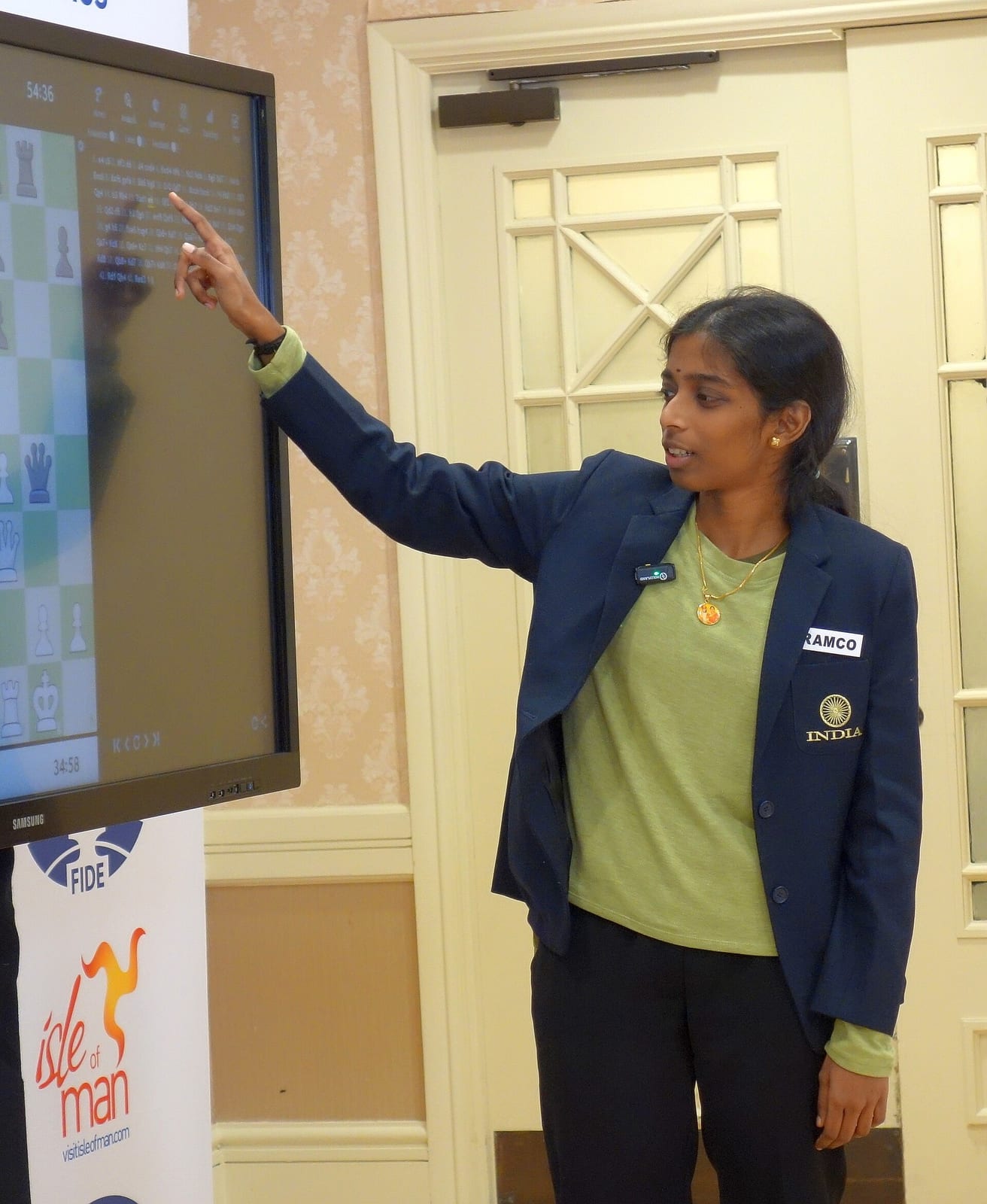
For the history of the title she is playing for, see the Women’s World Chess Championship, and for the wider Indian context, the Indian chess generation.
Sources
This page contains affiliate links. As an Amazon Associate, DiscussChess earns from qualifying purchases.
Sources
- FIDE, Vaishali conquers Women's Candidates to set up world title showdown against Ju Wenjun
- Rameshbabu Vaishali, Wikipedia (cross-checked against FIDE records)
- Women's Candidates Tournament 2026, Wikipedia (final standings and round 14 results)
- Lichess broadcast PGN, FIDE Candidates 2026 Women, Round 14
Further reading
- Logical Chess: Move by Move, Irving Chernev, Batsford edition ASIN verified via Open Library 2026-08-15. Every move of every game explained, which is the right level for understanding the slow squeeze Vaishali played against Lagno.
- The Life and Games of Mikhail Tal, Mikhail Tal ASIN verified via Open Library 2026-08-15. Everyman Chess, 1997. The Yugoslav Attack against the Dragon is the sharpest mainline in chess, and Tal is its natural literature.