Ju Wenjun: Five Women's World Championships
Ju Wenjun has held the Women's World Championship since 2018 and defended it four times, most recently a 6½–2½ win over Tan Zhongyi in 2025. In 2024 she beat Alireza Firouzja, rated 210 points above her, in a rook endgame.

Ju Wenjun has been the Women’s World Chess Champion since May 2018. She has defended the title four times since, against four different challengers, in four different formats, and she has never lost a match. Born January 31, 1991 in Shanghai, she reached a peak FIDE rating of 2604 in March 2017, making her the fifth woman in history to cross 2600. Her rating in August 2026 is 2553. She is, by the plain measure of titles held and matches won, the most successful women’s world champion of the modern era.
The number that says more about her strength than any of that: 210. That was the rating gap when she sat down against Alireza Firouzja at Tata Steel in January 2024, 2549 against 2759, the reigning women’s champion against the world No. 6. She won. Not on a blunder, and not in a wild tactical mess, but by grinding an extra pawn through a rook endgame across forty moves while Firouzja’s clock ran down.
Shanghai, and a long apprenticeship
Ju learned chess at 7 and came up through the Shanghai system, which by the 2000s was producing more top-level Chinese players than anywhere else in the country. She was an adult competitor early. In December 2004, aged 13, she tied for second at the Asian Women’s Championship in Beirut. By 2006 she was playing her first Women’s World Championship, going out in round three.
Then came a decade that most biographies skip past, and it is the most interesting part of her career. Between 2008 and 2017, Ju played in five world championship cycles and won none of them. She was consistently among the strongest women in the world and consistently not the champion. She finished her degree at Shanghai University of Finance and Economics in 2015. FIDE awarded her the full Grandmaster title in the fourth quarter of 2014, at 23, which is late by the standards of the players who dominate the game now.
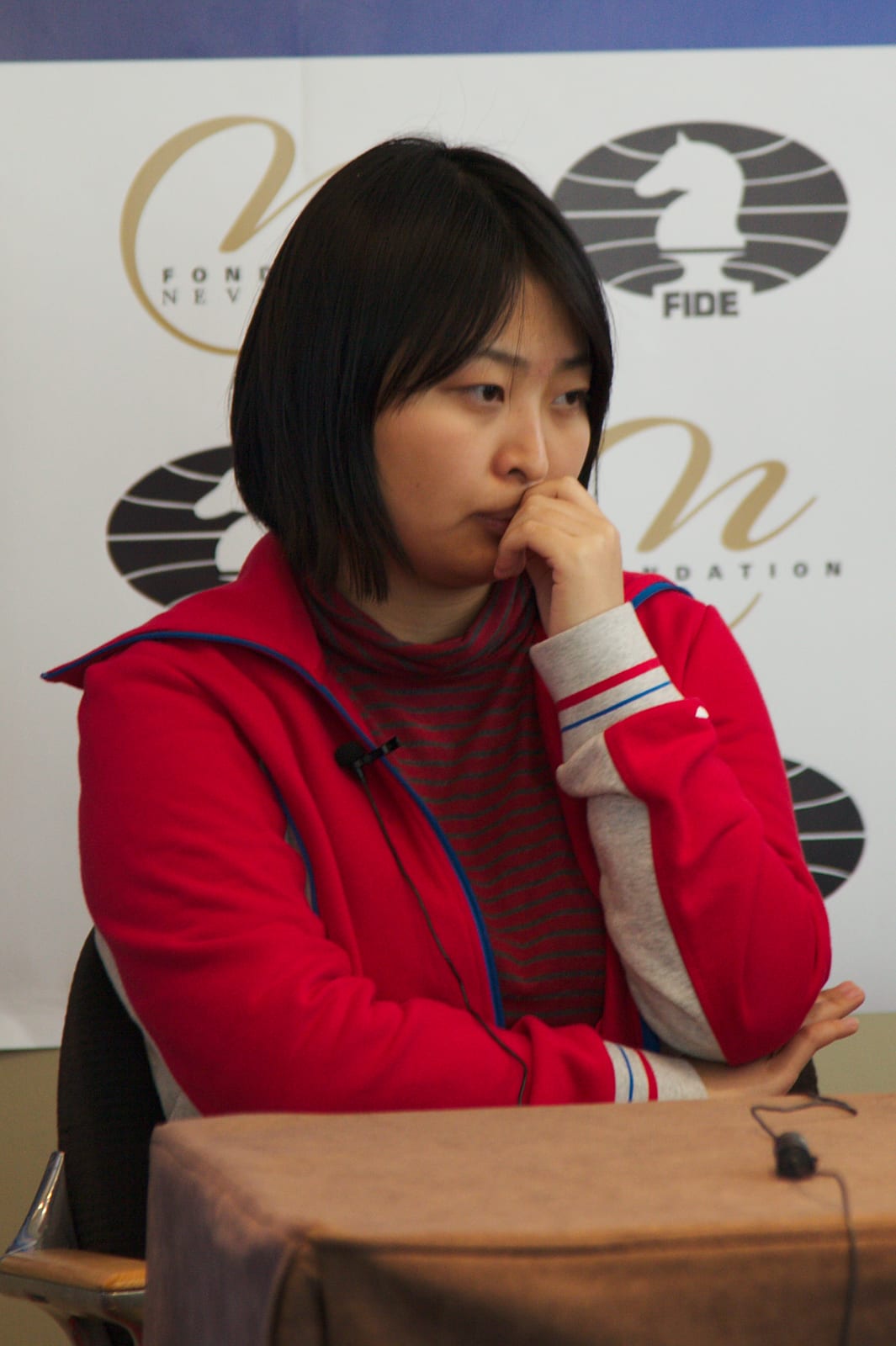
What changed was not a sudden leap in strength. Her rating curve through those years is a slow climb, not a jump. What changed is that she stopped losing the deciding games.
Five titles, four formats
The Women’s World Championship has been the least stable title in chess. FIDE has cycled it between match play and knockout tournaments repeatedly, sometimes within the same year, which means defending it has required winning under rules that kept changing. Ju has won it five times under three different systems.
2018, match. She beat Tan Zhongyi 5½–4½ in a ten-game match to take the title for the first time. She was 27.
2018, knockout. Six months later FIDE ran the championship as a 64-player knockout. Ju entered as the sitting champion and won it again, which meant defending a title she had won by match play against a completely different structure and a field of sixty-three.
2020, match. Aleksandra Goryachkina took her to 6–6 across twelve classical games. Ju won the rapid tiebreak 2½–1½. This is the only one of her defenses that genuinely went to the wire.
2023, match. Lei Tingjie pushed her to 6½–5½, decided in the final games.
2025, match. Tan Zhongyi, the same opponent she had beaten for the title seven years earlier, challenged again after winning the 2024 Candidates. The match ran April 1 to 23 across Shanghai and Chongqing and it was not close. Ju clinched with a draw in game nine, final score 6½–2½, three games before the scheduled finish.
She has also won the Women’s World Rapid Championship twice, in 2017 and 2018, and the Women’s World Blitz Championship in December 2024. She holds nine Olympiad medals, three of them gold, including team golds with China in 2016 and 2018.

Playing style: the pawn, then the technique
Ju is not an attacking player and has never pretended to be. She plays for small structural advantages and converts them. Watch enough of her games and the pattern is obvious: she gets a pawn, or a better minor piece, or a healthier structure, and then she refuses to let go of it for fifty moves.
Her opening repertoire is built for this. She plays 1.d4 and 1.e4 both, and against the French Defense she has repeatedly chosen the Exchange Variation, which has a reputation among club players as the drawing line and among strong players as a way to reach a symmetrical position where the better technician wins. That reputation is the whole point. She is usually the better technician.
The other half of her style is time. She is a fast player relative to the elite field, and she uses that as a weapon in long endgames, where the side with forty minutes makes better decisions than the side with four.
A signature game: Ju vs. Firouzja, Tata Steel Masters 2024
Round 5 at Wijk aan Zee, January 18, 2024. Ju was the lowest-rated player in the Masters field at 2549. Firouzja was 2759 and fighting for the tournament. She had White.
She chose the French Exchange, the line that is supposed to lead nowhere, and then immediately did the thing that makes it lead somewhere: 5.c4 and 6.c5, grabbing space on the queenside and locking Black’s light-squared bishop out of the game. The position stayed roughly balanced for twenty moves. Firouzja had the bishop pair after a series of trades and pushed for something on the kingside with 19…f5 and 20…f4.
Then he pushed once too far. On move 22 he shoved the pawn to e2, betting that a passed pawn one square from queening would be worth more than the position around it. It was not. The pawn was not going anywhere, and defending it cost him the coordination he needed. Watch the evaluation at that moment, and then watch what Ju does with the extra tempo: she trades the queens off, collects the pawn on move 26, and from there the game is a technical exercise that lasts another thirty-eight moves.
Ju, Wenjun White Firouzja, Alireza Black


Firouzja resigned on move 64. It was the highest-rated win of Ju’s career, and it is the game to point at when someone asks how the women’s world champion would do against the open field. She finished 10th in that Tata Steel, which is a fair answer to the same question in the other direction: one great win, a hard tournament. Both things are true.

If you want the technique rather than the trivia, the endgame is where the rating points actually are, and there are two books that cover exactly what happened on that board. 100 Endgames You Must Know by Jesus de la Villa is the shorter and more practical of the two, built around positions that recur constantly, including the rook-and-pawn structures Ju converted. Silman’s Complete Endgame Course is organized by rating band, so you can read only the chapter for your level and stop, which is why it tends to actually get finished. Our full breakdown is in the best chess endgame books.
What comes next
Ju’s next defense is against Vaishali Rameshbabu, who won the Women’s Candidates Tournament in Pegeia, Cyprus in April 2026 with 8½/14. FIDE has not announced dates or a venue. When it is played, Ju will be defending the title for the fifth time, against an opponent a decade younger.
Her rating has drifted from the 2604 peak to 2553, which at 35 is normal and is not the story. The story is that across eight years and five championship cycles, under match rules and knockout rules and tiebreak rules, nobody has taken the title off her. Judit Polgar was a stronger player and never entered this arena. Ju entered it six times before she won it, and has not let go since.
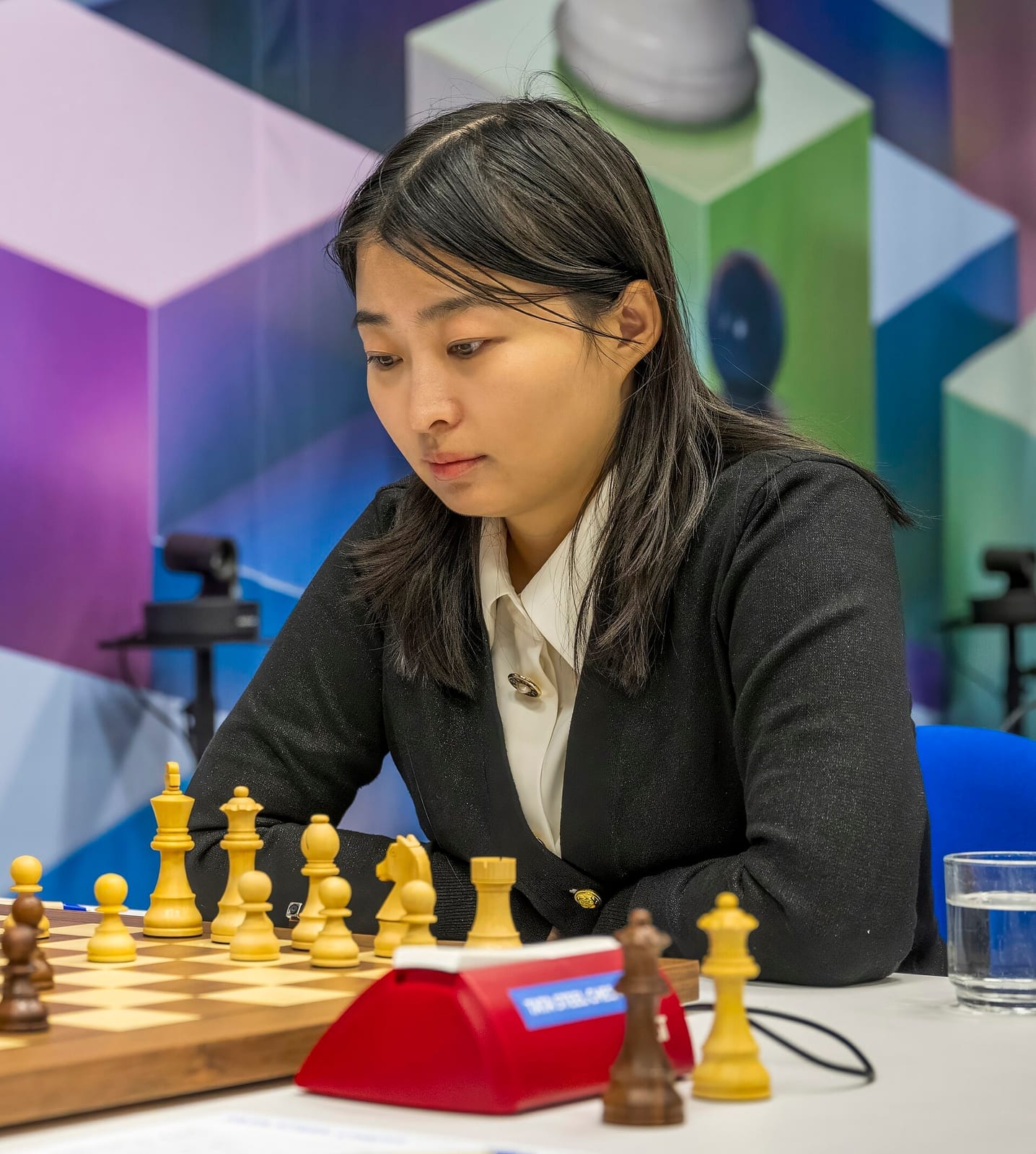
She played that 2025 event at Tata Steel, where she also beat Firouzja the year before. For the wider history of the title and how the men’s championship has run alongside it, see our guide to the World Chess Championship.
Sources
This page contains affiliate links. As an Amazon Associate, DiscussChess earns from qualifying purchases.
Sources
Further reading
- Silman's Complete Endgame Course, Jeremy Silman ASIN verified via Open Library 2026-08-15. Siles Press. Ju's game against Firouzja was decided by rook endgame technique, which is the section of Silman's course most players skip and most need.
- 100 Endgames You Must Know, Jesus de la Villa ASIN verified via Open Library 2026-08-15. New In Chess. The rook-and-pawn positions Ju converted against Firouzja are covered directly.