India Won Everything in Chess. Here's Why It Happened.
In 2024 and 2025, Indian chess players won the World Chess Championship, double gold at the Chess Olympiad, and the Tata Steel Masters. Gukesh, Praggnanandhaa, Arjun Erigaisi, and Nihal Sarin are all under 22. This isn't a coincidence. Here's what built them.
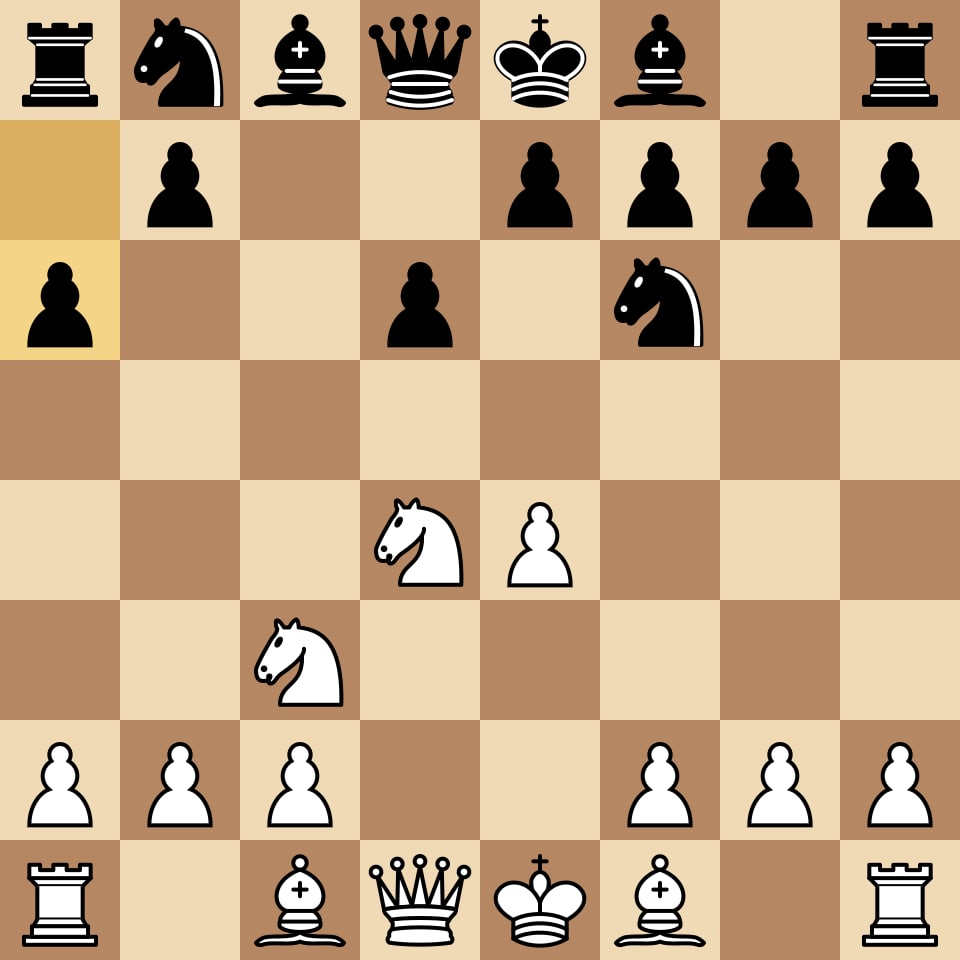
In 18 months, Indian chess players won the world championship, both gold medals at the Chess Olympiad, and the Tata Steel Masters. Gukesh Dommaraju is 18. Praggnanandhaa R is 19. Arjun Erigaisi is 21. Nihal Sarin is 20.
All four are grandmasters. All four are in the world top thirty. The oldest, Erigaisi, has an individual game score over Magnus Carlsen. None of them were born before 2003.
This doesn’t happen by accident. It also doesn’t happen by luck. Something specific built these players.
The Anand effect
The obvious starting point is Viswanathan Anand. India’s first grandmaster (1988) and five-time world champion (2000, 2002, 2007, 2008, 2010) changed what a young Indian chess player believed was possible. That’s not a metaphor: it’s a specific structural effect. Before Anand, an Indian player trying to become a grandmaster was doing something almost nobody in India had done. After Anand, Indian players had proof that the highest level was achievable.
Anand also mentored directly. He ran the Westbridge Anand Chess Academy in Chennai, which became a training center for younger Indian grandmasters. Several members of the current generation trained through programs connected to Anand or to coaches he influenced. R.B. Ramesh, Gukesh’s longtime coach, is one of the most respected chess trainers in India, and his methods are part of the same Chennai ecosystem.
Why Chennai specifically
Chennai produces an outsized number of Indian chess players. Anand is from there. Gukesh is from there. Praggnanandhaa is from there. The reasons aren’t mysterious: there’s a critical mass of coaches, tournament infrastructure, and a peer group of serious players. Once that mass exists, it reproduces, talented players arrive to train together, and the competition among them accelerates development.
The players also grind rated games. Indian grandmasters in this cohort play substantially more rated games per year than their Western peers, in part because there are more accessible tournaments, and in part because the culture prioritizes competitive volume as a training method. Classical game experience at a high level, starting young, is one of the most reliable predictors of elite development.
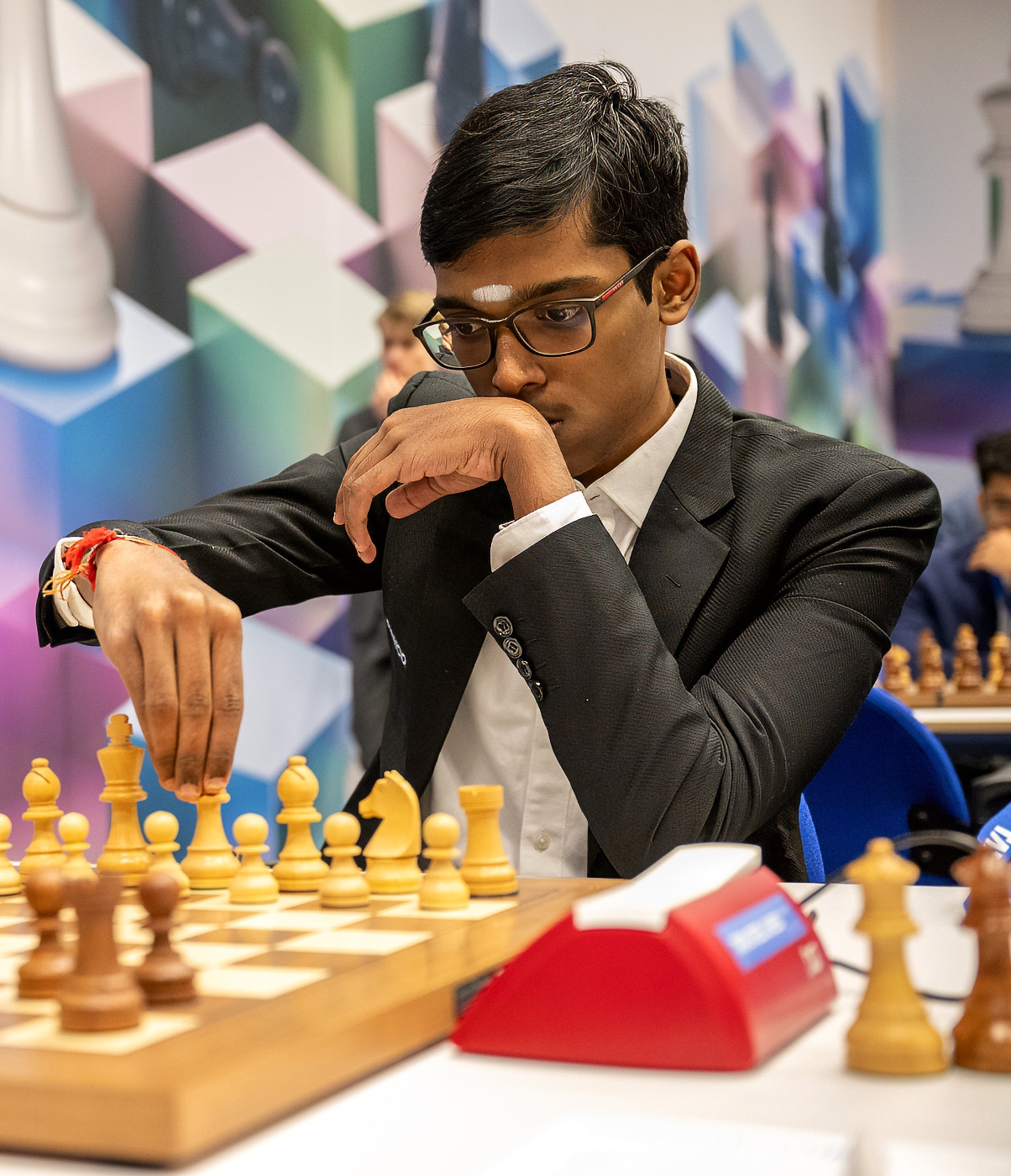
What each player does
Gukesh Dommaraju: Born 2006. The most technically complete of the group. His endgame precision is his signature: winning positions that engines evaluate as drawn. He won the 2024 Candidates at 17, the world title at 18. His chess is quiet and deep rather than flashy.
Praggnanandhaa R: The attacker. Sharp, risky, willing to sacrifice material for initiative. His 2023 World Cup run to the final, where he pushed Carlsen to tiebreaks, established his ceiling. His 2025 Tata Steel win was the first classical super-tournament title for the group.
Arjun Erigaisi: Born 2003. The most underrated internationally, despite cracking the world top 10 by rating. He’s had better results against Carlsen in individual games than either Gukesh or Pragg. His Board 2 performance at Budapest 2024, including a Round 13 win over Gukesh in 31 moves, was the tactically sharpest individual result of the Olympiad.
Nihal Sarin: Born 2004 in Kerala, slightly outside the Chennai center of gravity. His blitz and rapid results are exceptional. His classical results have been developing more slowly, but he’s the same age as the others and still building his classical record.
The critical mass question
Four players in the world top thirty under 22, from the same country. That’s close to the Soviet benchmark at peak, the USSR regularly had five or six players in the world top ten simultaneously in the 1970s and 1980s. The comparison isn’t exact: the Soviets had deeper top-list penetration, more players inside the top ten rather than the top thirty. But measured by results instead of raw list-penetration, this generation is already delivering what the Soviets delivered: a teenage world champion, Olympiad double gold, and a super-tournament title, at comparable ages.
It won’t continue at this concentration indefinitely. The Soviet dominance came partly from state support that no longer exists. India’s current wave is coming from private coaching, parental investment, and a national culture that has absorbed chess deeply since Anand’s rise. That’s a resilient foundation, but it doesn’t guarantee the next generation will be as concentrated.
What it does guarantee: Indian chess has structural depth that other federations are now benchmarking against. The training methods, coaching pedigree, and competitive culture that produced Gukesh and Pragg are documented and replicable. India’s chess system has become one of the most studied in the world.
For study that matches the technical level this generation demonstrated, the reading order that makes sense: start with Logical Chess: Move by Move by Chernev for game-reading fundamentals, add Silman’s Complete Endgame Course when your technical play needs sharpening, and read The Life and Games of Mikhail Tal to understand the attacking instincts Pragg embodies. Our chess improvement guide maps these resources to specific development stages.
Related: how the 2024 Chess Olympiad double gold happened, and Gukesh’s world title in Singapore.
Sources
- Viswanathan Anand: Wikipedia
- India wins historic double gold at FIDE Chess Olympiad 2024. Al Jazeera
- Gukesh Dommaraju, Britannica
- Chernev, Irving. Logical Chess: Move by Move. Batsford.
- Silman, Jeremy. Silman’s Complete Endgame Course. Siles Press, 2007.
This page contains affiliate links. As an Amazon Associate, DiscussChess earns from qualifying purchases.
Sources
Further reading
- Logical Chess: Move by Move, Irving Chernev ASIN verified via Open Library 2026-05-02. Batsford edition. The foundational text the Indian generation studied, Anand recommended game collections over opening books for development.
- Silman's Complete Endgame Course, Jeremy Silman ASIN verified via Open Library 2026-05-02. Siles Press 2007. The endgame precision this generation demonstrates, particularly Gukesh and Arjun, requires exactly this kind of structured study.
- The Life and Games of Mikhail Tal, Mikhail Tal ASIN verified via Open Library 2026-05-02. Everyman Chess 1997. Praggnanandhaa's attacking style draws the same comparisons.