Yagiz Kaan Erdogmus: The Youngest Player Ever to Reach 2700
Yagiz Kaan Erdogmus became a grandmaster at 12, broke Judit Polgar's 35-year record for youngest player to 2600 at 13, and crossed 2700 in May 2026 at 14, beating the previous record by nearly a year. He is rated 2716 in August 2026. Magnus Carlsen calls him the best 14-year-old the world has seen.
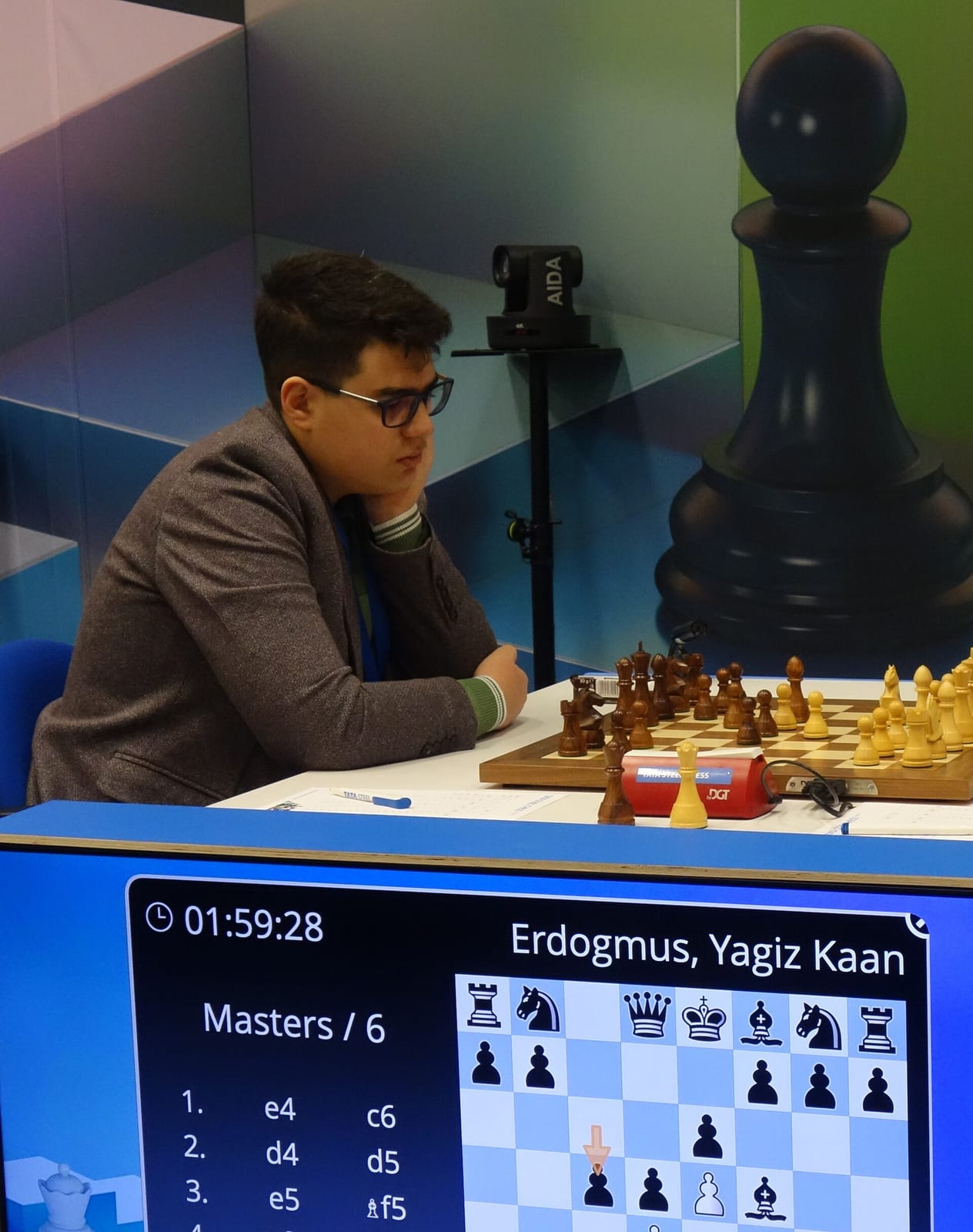
Yagiz Kaan Erdogmus was born June 3, 2011 in Bursa, Turkey. He became a grandmaster in April 2024, aged 12, the fourth-youngest in history. In October 2024, at 13 years, 3 months and 28 days, he crossed 2600, breaking a record Judit Polgar had held for thirty-five years. In May 2026 he crossed 2700 at 14, beating the previous record for that milestone by close to a year. He is rated 2716 in August 2026, which is also his peak.
Records for youngest-to-X are usually a poor guide to how good a player actually is, because rating milestones are partly a function of how many strong opponents a federation can put in front of a teenager. So here is the result that is not a milestone: in January 2026, aged 14, he played the Tata Steel Masters, drew with Abdusattorov, Keymer and Praggnanandhaa, and beat Arjun Erigaisi, then rated 2775, with the black pieces.
The records, and what they are worth
Magnus Carlsen, who holds a reasonable claim to being the best judge of prodigies alive, has said Erdogmus is “really, really good, at almost unprecedented levels at that age” and called him the best 14-year-old the world has ever seen.
That is a strong claim and it is worth stating the counter-case: Carlsen has been generous about young players before, prodigy trajectories flatten more often than they continue, and 2716 at 15 is not yet 2800 at 25. The honest position is that the trajectory so far has no modern parallel and the destination is unknown.
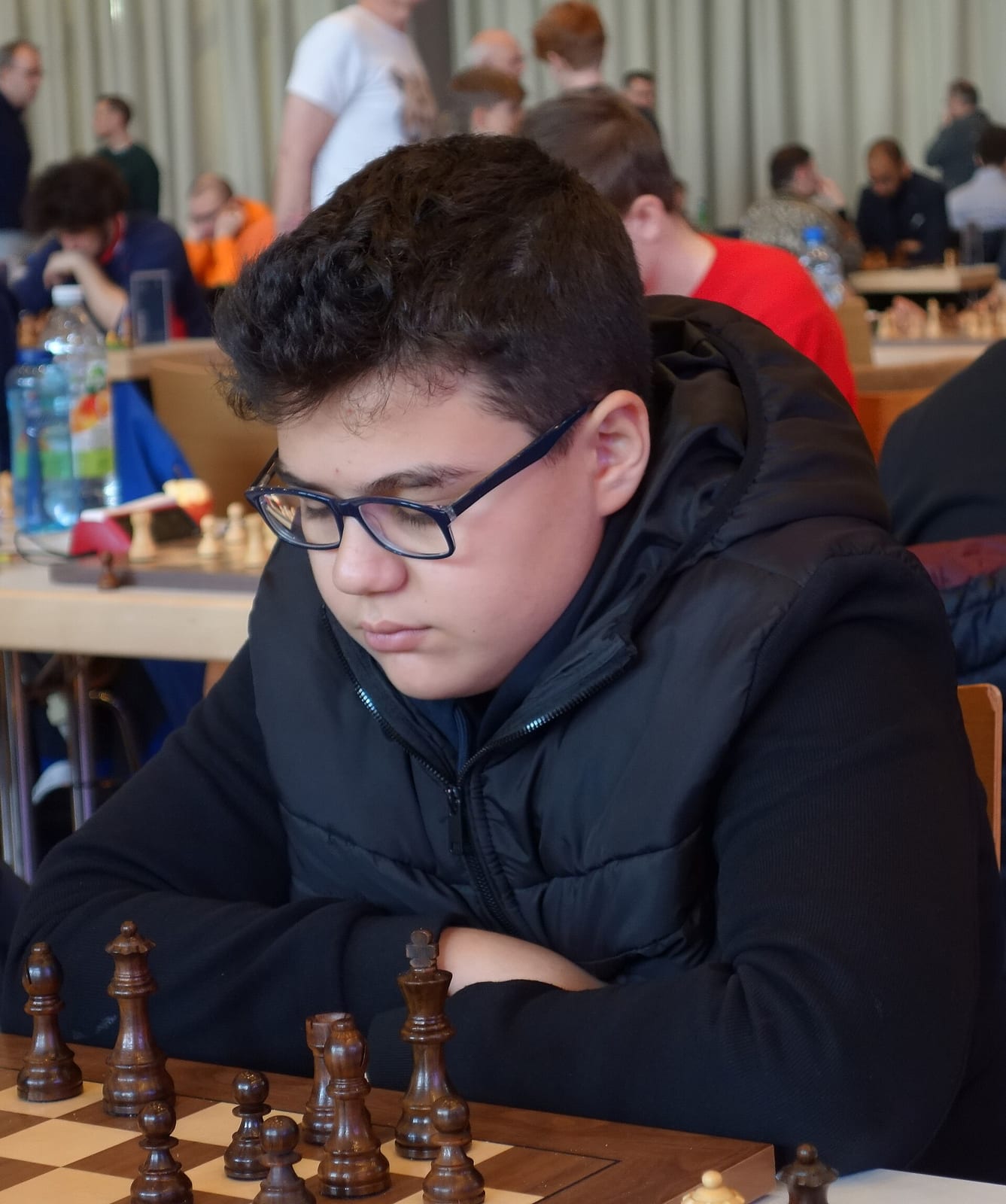
His match record against established grandmasters is the more useful measure, because matches remove the variance a single tournament game carries. He beat Peter Svidler 4–2 in classical chess in July 2025, when Svidler was a former world championship candidate with eight Russian titles.
In May 2026 he played Carlsen in classical chess for the first time, at the TePe Sigeman tournament. He lost that game, and drew every other game in the event.
Tata Steel 2026
Wijk aan Zee in January is the hardest field a 14-year-old has ever been invited into. Erdogmus was the youngest player in the history of the Masters group.
He finished on 7/13, tied for sixth in a thirteen-round event, with four wins, six draws and three losses. The four wins were over Jorden van Foreest, Arjun Erigaisi, Thai Dai Van Nguyen and Vladimir Fedoseev. The three losses were to Javokhir Sindarov, Gukesh and Anish Giri. He drew with Abdusattorov, Aravindh Chithambaram, Hans Niemann, Vincent Keymer, Matthias Blübaum and Praggnanandhaa.
A plus score in that company, at that age, is the whole argument.

Later in 2026 he took third at the Biel Chess Festival in July, beating Jose Martinez Alcantara. On the August 2026 FIDE list he sits at 2716, ranked 27th in the world.
Playing style: complications, early
Erdogmus does not play like a careful teenager protecting a rating. He plays sharp, committal moves in the opening, often before move ten, and he is comfortable in positions where the evaluation swings on a single calculation. The game below opens with him jamming a pawn onto e3 on move eight against a top-ten player, a move that either works or loses on the spot.
The other half is endgame stamina, which is rarer at his age. Three of his four Tata Steel wins were decided after move forty. Prodigies usually win with tactics and lose long games to adults who out-grind them; his profile is the opposite of that and it is the reason the trajectory looks different from previous ones.
A signature game: Erigaisi vs. Erdogmus, Tata Steel 2026
Round 7, January 24, 2026. Arjun Erigaisi was rated 2775 and among the top ten players in the world. Erdogmus was 2658, 14 years old, and had Black.
Erigaisi opened with the English, 1.c4, and Erdogmus answered 1…e5 and started pushing. By move four his e-pawn was on e4; by move eight it was on e3, wedged into White’s position where it could not be taken cleanly, and his knight followed it in with 9…Nf2 and 10…Nh3+, forcing off White’s light-squared bishop. Queens came off on move 15 and the game turned into an endgame with an unbalanced structure and Black’s pieces better placed.
Then it stayed level for fifteen moves, and Erigaisi cracked first. 31.Nd4 handed Black a real edge, and 42.Re1 lost outright: the rook left the square it needed to hold, Black’s queenside pawns ran, and by move 50 there was a pawn on b2 that could not be stopped.
Erigaisi Arjun White Erdogmus, Yagiz Kaan Black


Erigaisi resigned on move 52. Erdogmus was 14 years, 7 months old.
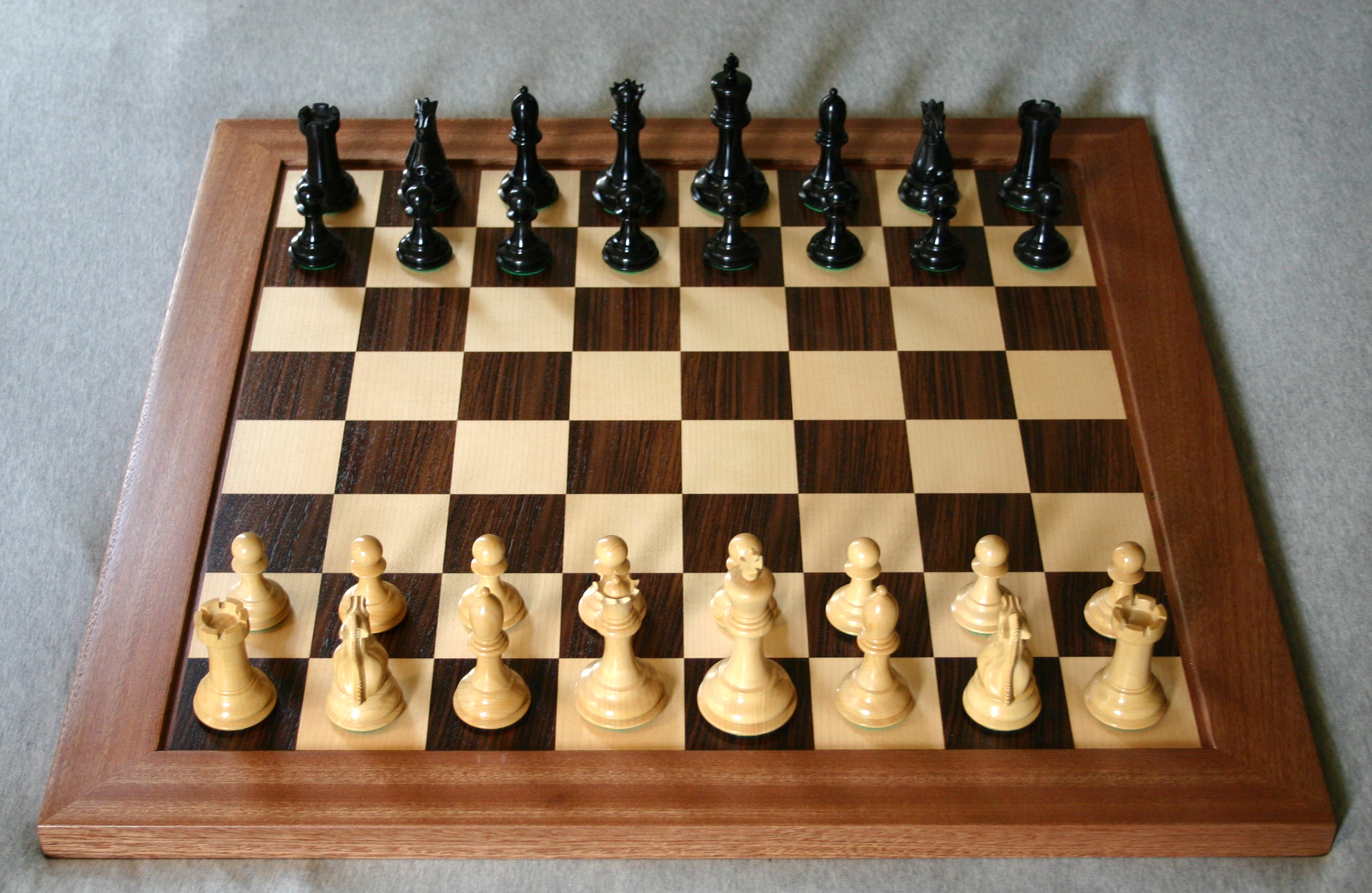
The calculation load in a position like the one after 8…e3 is where most players below master level simply cannot follow. The standard training answer is not new tactics but faster recall of known ones, which is what The Woodpecker Method is built to produce: the same puzzle set, repeated on a shrinking schedule, until the patterns are instant. For the quieter half of his game, the fifteen moves where nothing happened before Erigaisi cracked, Logical Chess: Move by Move explains every move of every game it covers, which is the only way those phases stop looking arbitrary. Our full list is at the best chess tactics books.
Above the world champion, at fifteen
He is 15. On the August 2026 FIDE list he sits above Gukesh, the reigning world champion, which is a sentence that will either look ordinary in five years or look like the peak of a curve that flattened.
The measurable near-term questions are whether he qualifies for a Candidates cycle and whether the endgame stamina holds as opponents stop underestimating him. He has already played Carlsen, Gukesh, Erigaisi, Praggnanandhaa, Keymer and Abdusattorov in classical chess. He has beaten Erigaisi, drawn with Praggnanandhaa, Keymer and Abdusattorov, and lost to Carlsen and Gukesh, which at 15 is a better return than the trajectory alone would predict.
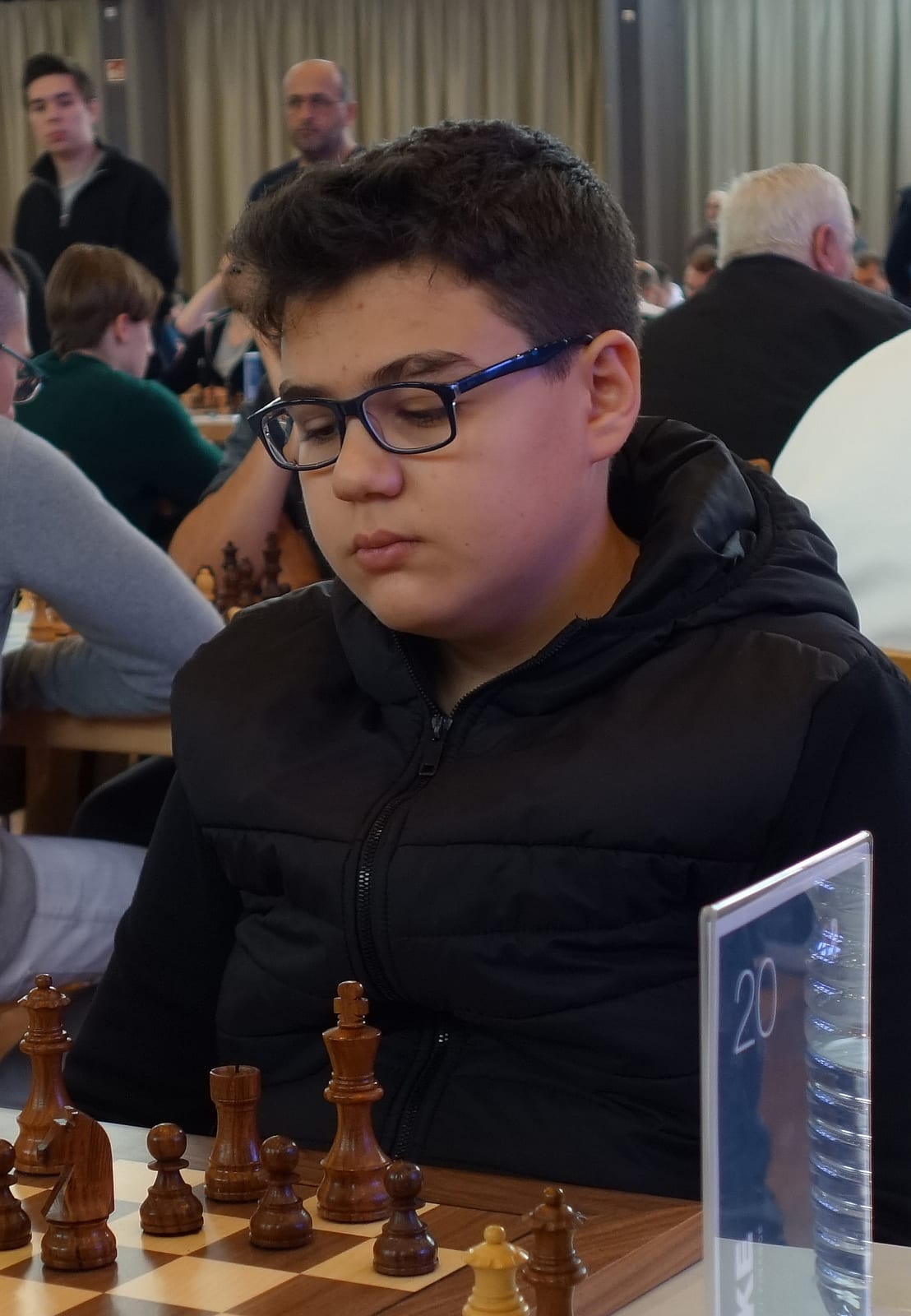
For the generation he is measured against, see the Indian chess generation and our profile of Gukesh Dommaraju, who was himself the youngest world champion in history at 18.
Sources
This page contains affiliate links. As an Amazon Associate, DiscussChess earns from qualifying purchases.
Sources
Further reading
- The Woodpecker Method, Axel Smith and Hans Tikkanen ASIN verified via Open Library 2026-08-15. Quality Chess, 2019. The calculation-training method that underpins the pattern speed prodigies rely on.
- Logical Chess: Move by Move, Irving Chernev, Batsford edition ASIN verified via Open Library 2026-08-15. The entry point for understanding the quiet manoeuvring phases that decided Erdogmus's win over Erigaisi.