English Opening: The Flexible 1.c4 Explained
The English Opening (1.c4) controls d5 without committing to e4 or d4, and transposes freely into Queen's Gambit, reversed Sicilian, or King's Indian structures. Kasparov used it to win the deciding game of the 1987 World Championship.
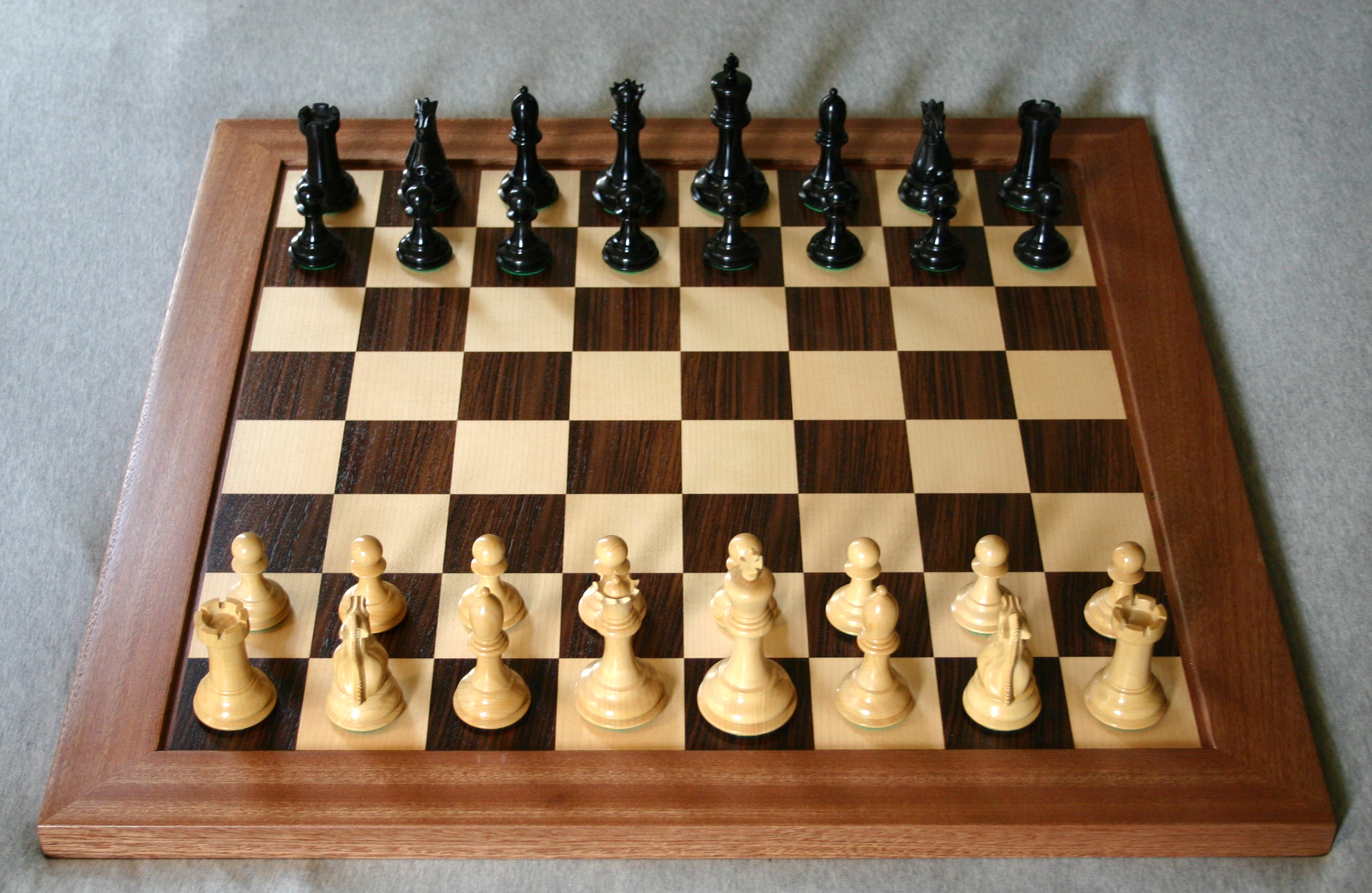
The English Opening is 1.c4. White controls the d5 square without committing to 1.e4 or 1.d4. The first move is flexible by design. It can transpose into Queen’s Gambit positions after 1.c4 d5 2.d4, into reversed Sicilian positions if Black plays …e5, into King’s Indian structures with g3 and Bg2, or stay independent.
Where the name comes from
The opening is named for Howard Staunton, the strongest English player of the 1840s, who prepared and played 1.c4 in his 1843 match against the Frenchman Pierre Saint-Amant in Paris, and again at the London tournament of 1851, the first international chess tournament ever held. Staunton won the Saint-Amant match 13 games to 8, and the opening took his nationality as its name even though the match itself was played in France. What’s less well known: 1.c4 barely caught on among Staunton’s own contemporaries. It sat mostly dormant for the rest of the 19th century and only became a serious weapon in the 1920s, when Aron Nimzowitsch, Richard Réti, and Akiba Rubinstein, the same generation building hypermodern opening theory more broadly, worked out why controlling the center from the flank could be just as effective as occupying it with pawns.
Main variations
Symmetrical English (1…c5): Black mirrors White’s first move. After 2.Nc3 Nc6 3.Nf3 Nf6 4.g3 d5 5.cxd5 Nxd5, both sides fight for piece activity. The positions are genuinely balanced and complex. No clear advantage for either side, which is why it’s chosen by players confident in their chess over their opponents’ preparation.
Reversed Sicilian (1…e5 2.Nc3): Black plays …e5 and the position resembles a Sicilian Defense with colors reversed, White has the extra tempo. White’s extra move is a genuine advantage, but Black can contest it actively. Rich and fighting.
King’s Indian Reversed: White plays g3, Bg2, Nf3, and castles: building a solid setup before deciding on a central plan. Resembles the King’s Indian Defense from White’s perspective.
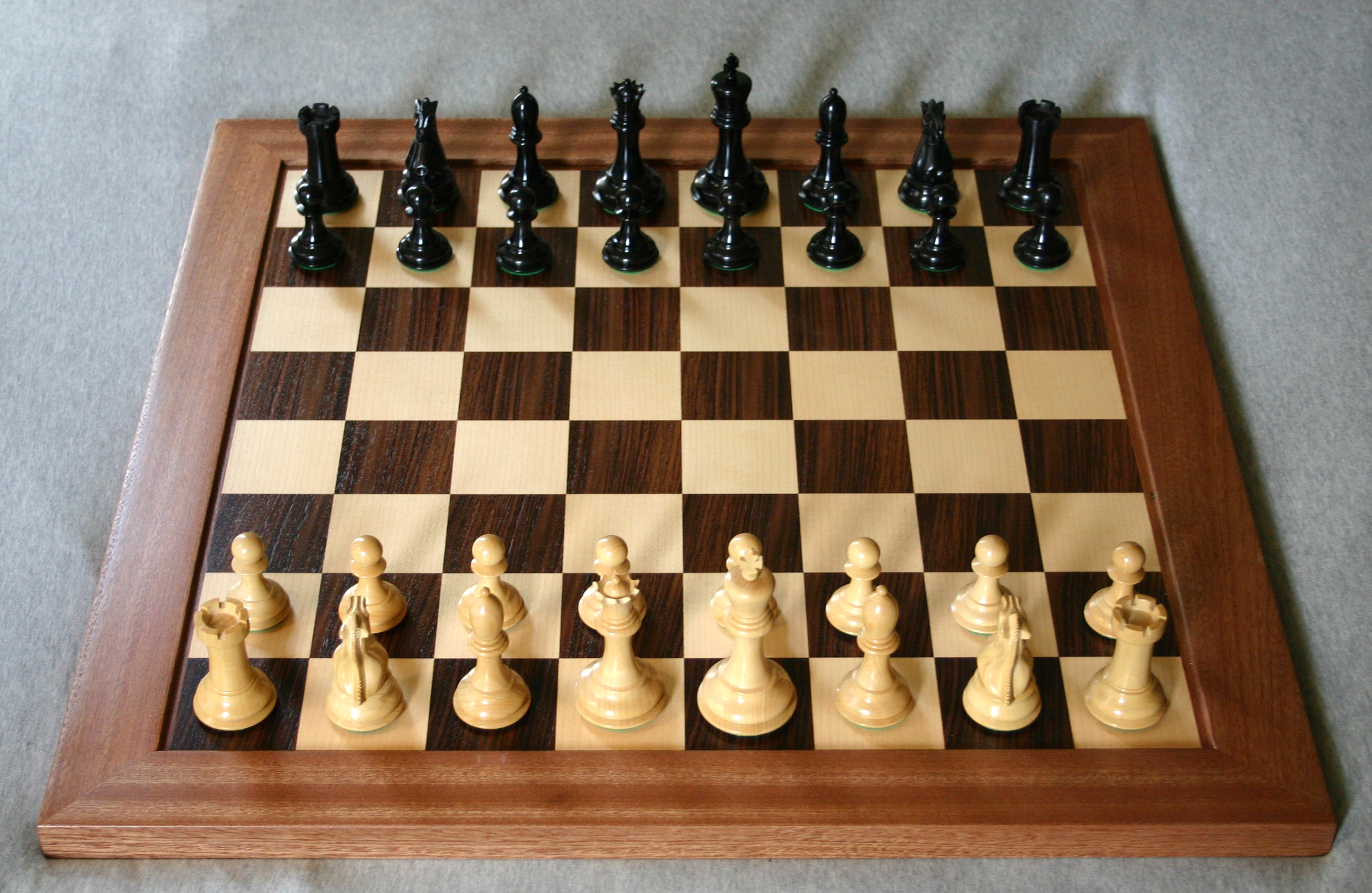
Why it’s used at top level
The English’s primary value is flexibility and preparation avoidance. A 1.d4 player can play the English without changing their overall repertoire: many English positions transpose naturally. The transposition possibilities create problems for opponents who have specialized in specific d4 responses.
Garry Kasparov used the English strategically against Anatoly Karpov across their five World Championship matches, and it produced the single highest-stakes moment of his career: the 24th and final game of their 1987 match in Seville.
The game that decided a world championship
Kasparov arrived at Game 24 needing a win. He was down 11-12 in a 24-game match; a draw would hand Karpov the title outright. Kasparov chose 1.c4, reaching a King’s Indian-style structure with colors reversed, sacrificed a pawn for long-term pressure, and ground the position for 64 moves through two playing sessions separated by an overnight adjournment. Karpov, under mounting time pressure, missed the most precise defense; by the resumption Kasparov had consolidated a winning technical advantage, and Karpov resigned on move 64. The win leveled the match at 12-12, which under the match rules meant Kasparov retained the title as the reigning champion. It’s one of the most famous must-win performances in chess history, and the fact that Kasparov reached for the flexible, preparation-light English rather than a sharper, more theoretical opening says something about how he read the moment: he wanted a fight he could out-think Karpov in over many hours, not a memorized forced sequence either player might have prepared to a draw.
Kasparov, Garry White Karpov, Anatoly Black


For club players
The English is reasonable for club players who want solid play without heavy memorization. The positions aren’t tactically explosive, which limits both brilliant wins and catastrophic losses, and the strategic ideas (control d5, build with g3-Bg2-Nf3-0-0) are clear.
It doesn’t generate the same winning chances as aggressive 1.e4 or 1.d4 systems but produces fewer losses. Below roughly 1400 ELO, sharper openings usually serve players better, since tactics decide most games at that level and the English’s subtlety doesn’t pay off yet. Past that point, the positional judgment the opening rewards starts to matter, and it becomes a sensible long-term choice. For players focused on positional improvement, Silman’s How to Reassess Your Chess (affiliate) covers the center-control concepts the English relies on.
Sources
- Hooper, David, and Kenneth Whyld. The Oxford Companion to Chess. Oxford University Press, 1992.
- Kasparov, Garry, vs. Karpov, Anatoly. World Chess Championship 1987, Game 24, Seville, December 18 1987.
- Silman, Jeremy. How to Reassess Your Chess. Siles Press, 4th ed. 2010. (affiliate)
- Kasparov, Garry. How Life Imitates Chess. Bloomsbury. (affiliate)
This page contains affiliate links. As an Amazon Associate, DiscussChess earns from qualifying purchases.
Sources
- Hooper, David, and Kenneth Whyld. The Oxford Companion to Chess. Oxford University Press, 1992.
- Kasparov, Garry, vs. Karpov, Anatoly. World Chess Championship 1987, Game 24, Seville, December 18 1987.
Further reading
- How to Reassess Your Chess, Jeremy Silman ASIN verified via Amazon 2026-05-02. The positional concepts of center control and piece coordination that Silman's framework builds are directly applicable to English Opening positions.
- How Life Imitates Chess, Garry Kasparov ASIN verified via Open Library 2026-05-02. Kasparov's own account of the pressure and decision-making behind matches like Seville 1987.