Judit Polgar: The Best Chess Player Hungary Ever Produced
Judit Polgar broke Fischer's record for youngest grandmaster at 15 years and 5 months, reached a peak of 2735, and beat 11 world champions during her career, including a childhood Olympiad performance that outrated the field at 12. She retired in 2014 without ever winning the world championship. A biography.
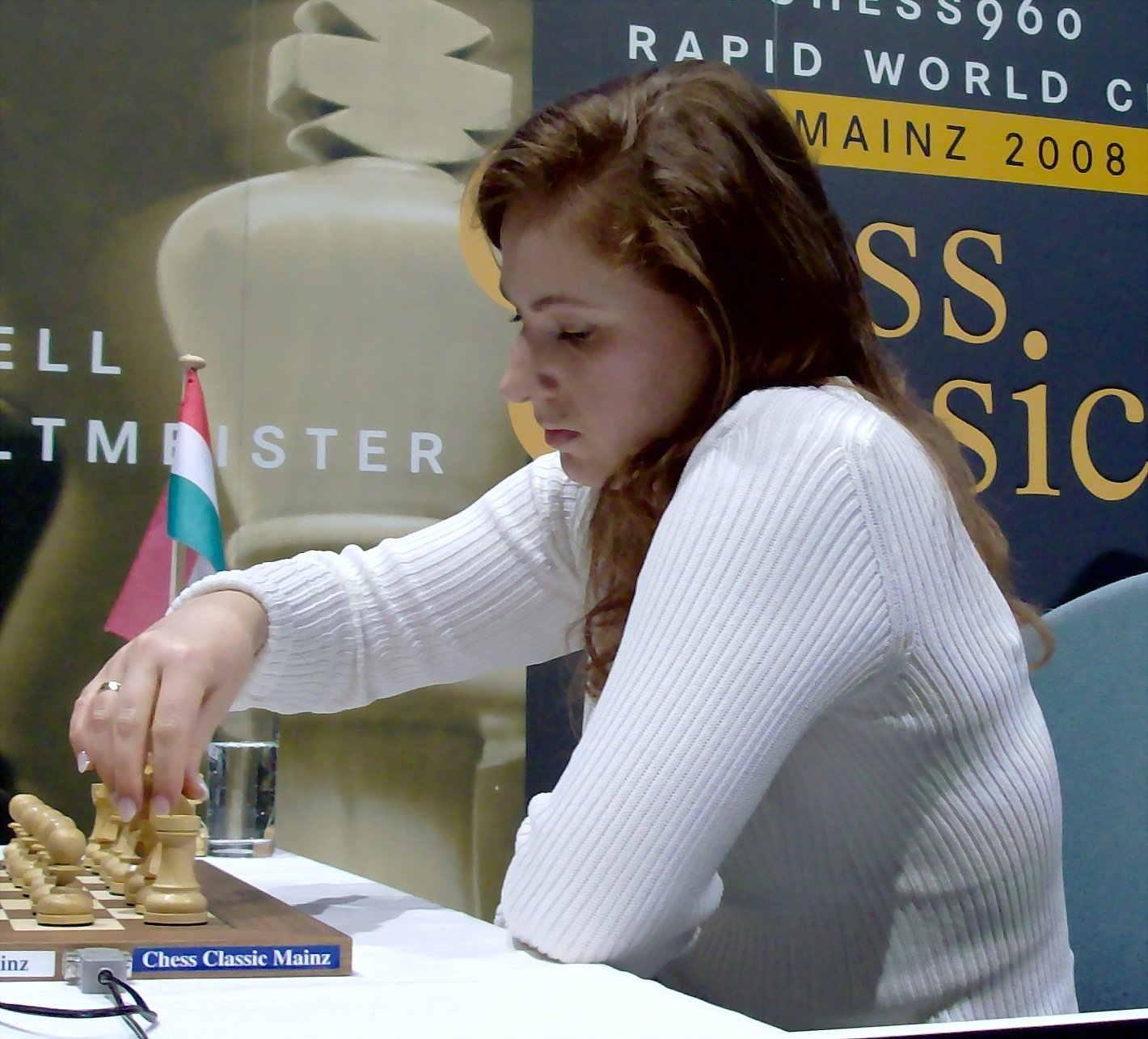
Judit Polgar is the strongest female chess player in recorded history and, by most serious measures, one of the strongest players of any gender in the modern era. Born July 23, 1976, in Budapest, she became a grandmaster on December 20, 1991, at 15 years, 4 months, and 28 days, breaking Bobby Fischer’s record for youngest grandmaster in history by 33 days. She reached a peak FIDE rating of 2735 in July 2005, the highest ever recorded for a woman, and a peak world ranking of No. 8 in January 2004, still the only woman ever to have cracked the world’s top 10. She beat eleven world champions in her career. She retired in August 2014.
She never played in a Women’s World Championship. She competed in open tournaments against men her entire career and was clear that she wanted no other arrangement.
László Polgar’s experiment
Judit’s father, László Polgar, was a Hungarian educator who believed that geniuses are made, not born. That early specialization in any demanding subject, combined with proper training, would produce exceptional ability. He and his wife Klára homeschooled their three daughters, Zsuzsa (Susan), Zsófia, and Judit, with chess as the primary subject from early childhood.
This was unconventional enough in 1970s Hungary that the government initially refused to permit the homeschooling. László appealed and eventually won the right to educate his daughters outside the state system.
Zsuzsa became the Women’s World Champion in 1996. Zsófia became an International Master. Judit exceeded both.
She learned chess before age 5. At 10, she was rated among the top players in Hungary regardless of age or gender. She was giving simultaneous exhibitions and drawing serious attention by the time she was 12, the same year the family’s experiment produced its first unmistakable proof of concept on the biggest stage available to them.
Gold at 12: the 1988 Thessaloniki Olympiad
In November 1988, all three Polgar sisters represented Hungary on the women’s team at the 28th Chess Olympiad in Thessaloniki, alongside Ildikó Mádl. Judit, barely 12 years old and playing board two, scored 12.5 out of 13, a performance rating of 2694 at an age when only two players in the entire world, Kasparov and Karpov, were even rated above 2700. All three sisters won individual gold medals on their respective boards, and Hungary swept the team gold as well, the first time any non-Soviet team had won the women’s Olympiad. It ended a streak of Soviet dominance that had defined the event since its creation, and it did it with a 12-year-old carrying board two.
Breaking the record
Fischer had become a grandmaster on August 17, 1958, at 15 years, 6 months, and 1 day. That record stood for 33 years.
On December 20, 1991, Judit completed the final grandmaster norm required for the title. She was 15 years, 4 months, and 28 days old. The record fell by 33 days.
The chess world’s response was, by modern standards, mixed. Some commentators suggested she was a product of her father’s experiment rather than a natural talent. Others pointed out that the result of the experiment was a 15-year-old who had just broken one of chess’s most enduring records.
Competing at the highest level
Between 1992 and her retirement in 2014, Polgar competed in major open tournaments (Linares, Wijk aan Zee, the Grand Prix circuit) against the strongest players in the world. She was ranked among the top ten players globally for significant stretches of her career.
The world champions she is credited with defeating in classical or rapid games include Boris Spassky, Anatoly Karpov, Garry Kasparov, Ruslan Ponomariov, Rustam Kasimdzhanov, Veselin Topalov, Viswanathan Anand, Vladimir Kramnik, Magnus Carlsen, and others. The exact count depends on which games and time controls are included. Eleven is the commonly cited figure.
The Kasparov win deserves a specific note. At Linares in 1994, Polgar beat Kasparov, then the strongest player in the world, in a classical game. Kasparov won the tournament; the Polgar game was one of his losses. He had previously beaten her consistently in their encounters. She was 17 at the time of the Linares win.
Retirement and after
Polgar retired from competitive chess in August 2014, announcing that she wanted to focus on chess promotion and education. She was 38. Her FIDE rating at retirement was still above 2685. She was still a world-class player by any standard. She left while she was still near the top.
She’s written three books drawn from her own career: How I Beat Fischer’s Record (1997), From GM to Top Ten, and A Game of Queens, each published in English, German, French, and Hungarian editions. Since retiring, she has run the Judit Polgar Chess Foundation in Hungary, which built two flagship educational programs, “Chess Palace” for primary schoolers and “Chess Playground” for pre-school children, both aimed at using chess to teach problem-solving rather than at producing the next generation of grandmasters. The Chess Palace curriculum won a special prize at the 2015 Frankfurt Book Fair’s BELMA awards for European learning materials. She has served as a chess ambassador and participated in various world-record simultaneous exhibition events.
She has not played in the women’s world championship circuit during or after her career. Whether she would have won it is a hypothetical that no one can answer.
Polgar vs. Kasparov, Russia vs. The Rest of the World 2002
The game that made the sports pages, and it wasn’t a quick knockout. Polgar, playing White, met Kasparov’s Berlin Defense, the same rock-solid Ruy Lopez line that would later become famous for its drawing reputation in Kramnik’s hands. The queens came off early after 7…Nf5 8.Qxd8+ Kxd8, and what followed was a long, patient squeeze rather than a firework show: Polgar’s kingside pawn majority against Kasparov’s bishop pair, worked out over 40-plus moves into a rook ending where her structural edge finally cashed in. Her rooks doubled on the seventh rank in the final stretch, picking off pawns until Kasparov’s position simply came apart. He resigned soon after her second rook joined the raid on move 42. It remains one of the most famous individual results in women’s chess history and a clear statement about where Polgar stood relative to the world’s best, delivered the patient way rather than with a single knockout blow.
Polgar, Judit White Kasparov, Garry Black


Sources
- FIDE official rating history for Judit Polgar
- Polgar, Judit. How I Beat Fischer’s Record. Everett House Publishers, 1997.
- Polgar, László. Bring Up Genius! Kossuth Kiadó, 1989.
- Judit Polgar, Wikipedia
- Game record: Polgar vs Kasparov, Russia vs Rest of the World 2002
This page contains affiliate links. As an Amazon Associate, DiscussChess earns from qualifying purchases.
Sources
- FIDE Rating History, Judit Polgar
- Polgar, Judit. How I Beat Fischer's Record. Everett House Publishers, 1997.
- Judit Polgar, Wikipedia (cross-checked against tournament records)
- Lichess broadcast/game record, Polgar vs Kasparov, Russia vs Rest of the World 2002
Further reading
- My 60 Memorable Games, Bobby Fischer, Batsford/Pavilion edition ASIN verified via Open Library 2026-05-02. Fischer's record Polgar broke, and the attacking chess she played drew more comparisons to Fischer than to any other player.