Tata Steel Chess: History, Format, Winners
Held annually in Wijk aan Zee, Netherlands since 1938, the Tata Steel Chess Tournament is the most prestigious regular-calendar chess event in the world. 14-player round-robin, all the top grandmasters, unbroken tradition since the Hoogovens era.
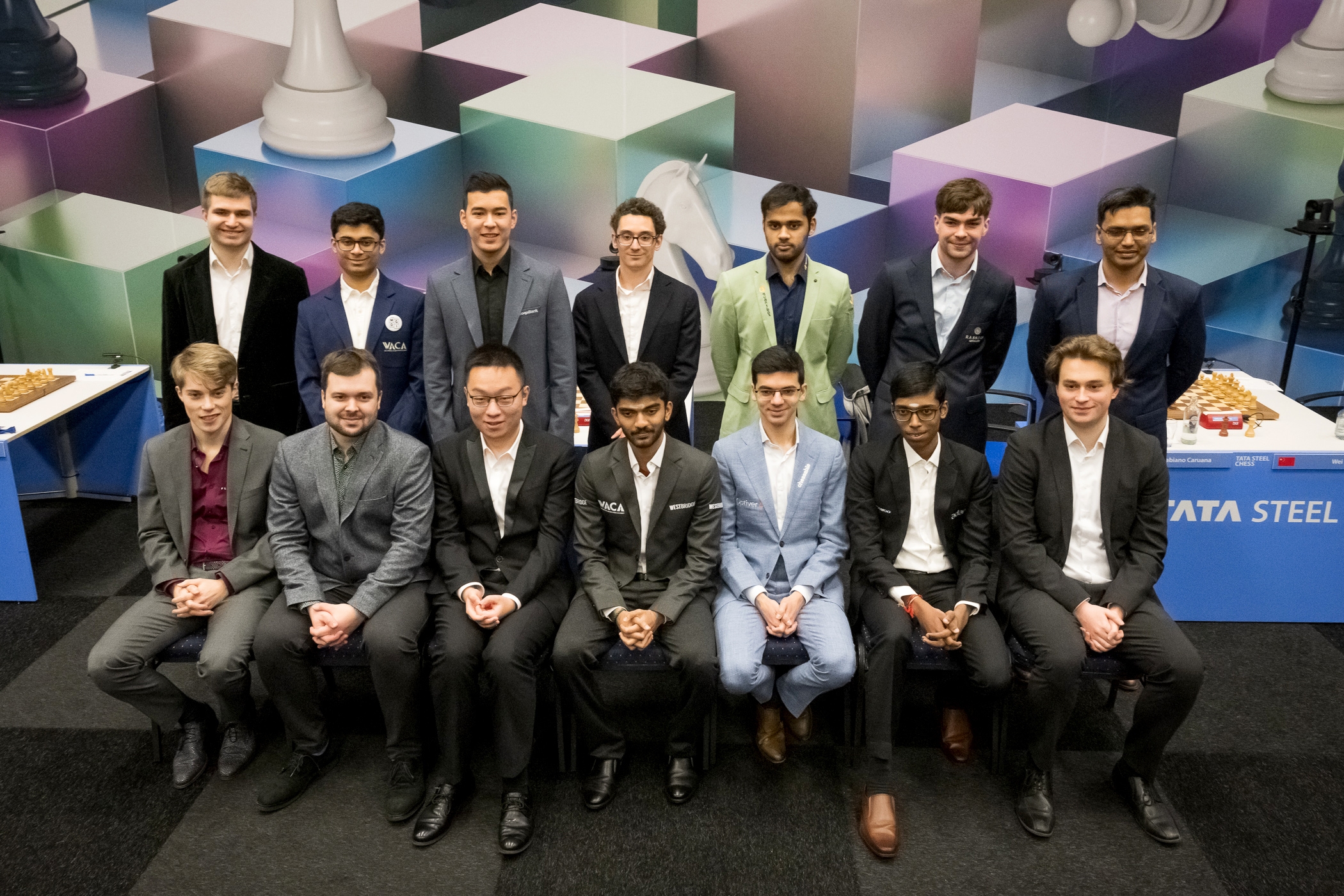
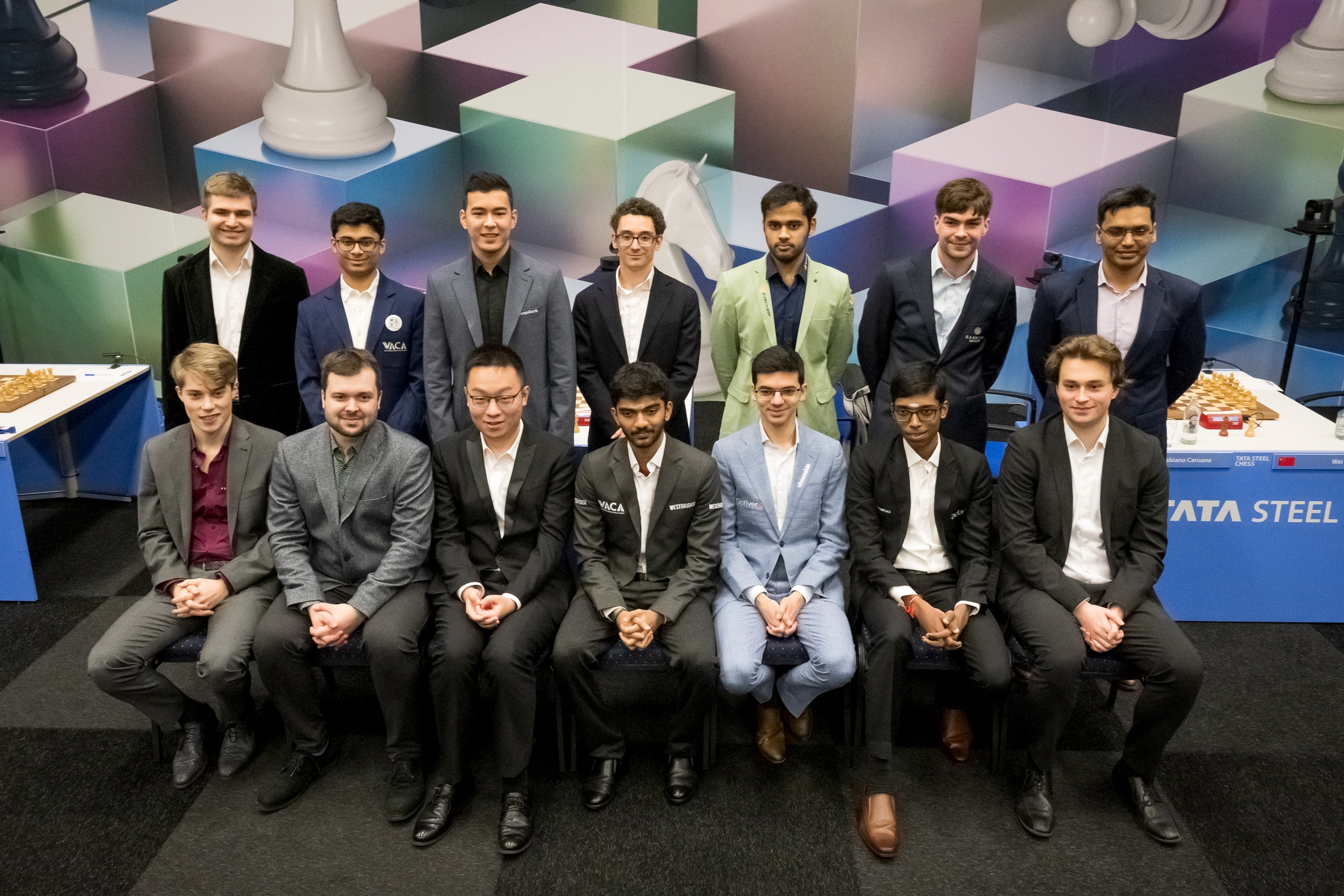
The Tata Steel Chess Tournament runs every January in Wijk aan Zee, a coastal village in the Netherlands 30 kilometers northwest of Amsterdam. It has run continuously since 1938, first as a small event for Dutch players called the Hoogovens Tournament, named for Koninklijke Hoogovens, the steel company that sponsored it. The 2026 edition was the 88th, a run of consecutive years that no other major chess event can match.
The format is 14 players, round-robin, 13 rounds, classical time controls. The world’s top grandmasters are invited and nearly all attend. Magnus Carlsen has won it eight times, the tournament record. It’s the most prestigious regular-calendar tournament in chess.
From Hoogovens to Tata Steel: three names, one tournament
The event started in 1938 in Beverwijk, a small event for Dutch players sponsored by the steel firm Koninklijke Hoogovens. It moved to the neighboring village of Wijk aan Zee in 1968 and has stayed there ever since. In 1999, Hoogovens merged with British Steel to form the Corus Group, and the tournament became the Corus Chess Tournament for the next decade. Tata Group, the Indian conglomerate, acquired Corus in 2007, and the event took its current name in 2011. Through three sponsors and three names, the organizers kept the sequential numbering running from 1938 without interruption, which is how a January chess tournament in a Dutch fishing village can casually call its 2026 edition the 88th.
One tradition survived every name change. Since 1946, the concluding banquet has opened with pea soup, described at the time as “inexpensive fare of the common people,” served in the lean postwar years and never dropped once the tournament’s budget stopped requiring it.
Why Wijk aan Zee
The village is small enough that players are genuinely isolated together during the three-week event. They eat in the same restaurants, see each other in the evenings, focus on chess without the distractions of a major city. Grandmasters who play it describe it as the most sustained chess environment in the calendar, more concentrated than a World Championship match because the field depth demands it across 13 rounds.
The playing hall is a large sports complex converted for the event. Multiple boards are played simultaneously, the Masters and Challengers groups share the space, giving junior players direct exposure to elite games in progress.
Format
Masters: 14 players, single round-robin, 13 rounds. Participants selected by organizers based on rating and competitive profile. The top 14 rated players in the world are typically invited; wild cards and sponsor selections appear occasionally.
Challengers: A parallel 14-player round-robin of top juniors and players just below Masters level. The Challengers winner earns promotion to the Masters the following year, creating a meaningful competitive ecosystem where junior talent competes directly for access to the top field.
Until 2018, a tie at the top of the standings meant a shared title, the way it still works at most round-robin tournaments. Starting with the 2018 edition, organizers added a blitz playoff (sudden death if that’s also tied) specifically to produce a single, undisputed champion every year.
Notable results
Virtually every significant modern champion has won at Wijk aan Zee, with one notable exception: of the fifteen undisputed World Champions since 1938, only Alexander Alekhine, Vasily Smyslov, Bobby Fischer, Ding Liren, and Gukesh Dommaraju have never won it. Everyone else on that list, Botvinnik, Tal, Petrosian, Spassky, Karpov, Kasparov, Kramnik, Anand, and Carlsen, has a Wijk aan Zee title.
Carlsen’s eight wins, spread across 2008, 2010, 2013, 2015, 2016, 2018, 2019, and 2022, are the all-time record. Viswanathan Anand is next with five, won across three different decades (1989, 1998, 2003, 2004, 2006), a span that says something about how long Anand’s prime actually lasted. Max Euwe, Levon Aronian, Viktor Korchnoi, and Lajos Portisch each have four. Garry Kasparov won three straight, 1999 through 2001. In recent years, young Indian players (Pragg, Arjun Erigaisi, Gukesh) have been consistent top finishers, part of the broader shift in chess dominance toward that generation: Praggnanandhaa won outright in 2025, and Nodirbek Abdusattorov took the 2026 title, with Wei Yi (2024) and Anish Giri (2023) also breaking through in the years just before them.
Garry Kasparov’s games at Wijk aan Zee include several of his most celebrated wins. The Topalov game (1999) being the most famous. My Great Predecessors Part 1 (affiliate) covers the championship era games that include Wijk aan Zee context.
Why it matters
Tata Steel is the benchmark for individual tournament performance at the elite level. A result here, especially a win, is more prestigious than nearly any other event because the field depth is greater than most alternatives and the round-robin format produces a more reliable result than knockout or rapid events.
All major chess platforms (chess24, chess.com, Lichess) broadcast it with grandmaster commentary. The 13-round format lets viewers follow player arcs across the entire event (rivalries, slumps, comebacks) in a way knockout events don’t.
Sources
- Tata Steel Chess official website
- Kasparov, Garry. My Great Predecessors, Part 1. Everyman Chess, 2003. (affiliate)
This page contains affiliate links. As an Amazon Associate, DiscussChess earns from qualifying purchases.
Sources
Further reading
- My Great Predecessors, Part 1, Garry Kasparov ASIN verified via Open Library 2026-05-02. Kasparov won at Wijk aan Zee multiple times; the tournament features prominently throughout his annotations.