French Defense: The Complete Opening Guide
A complete guide to the French Defense: its structural logic, why Black's e6-d5 setup creates a pawn chain White must attack correctly, the five main variations, and the Winawer's reputation as the sharpest line in chess.
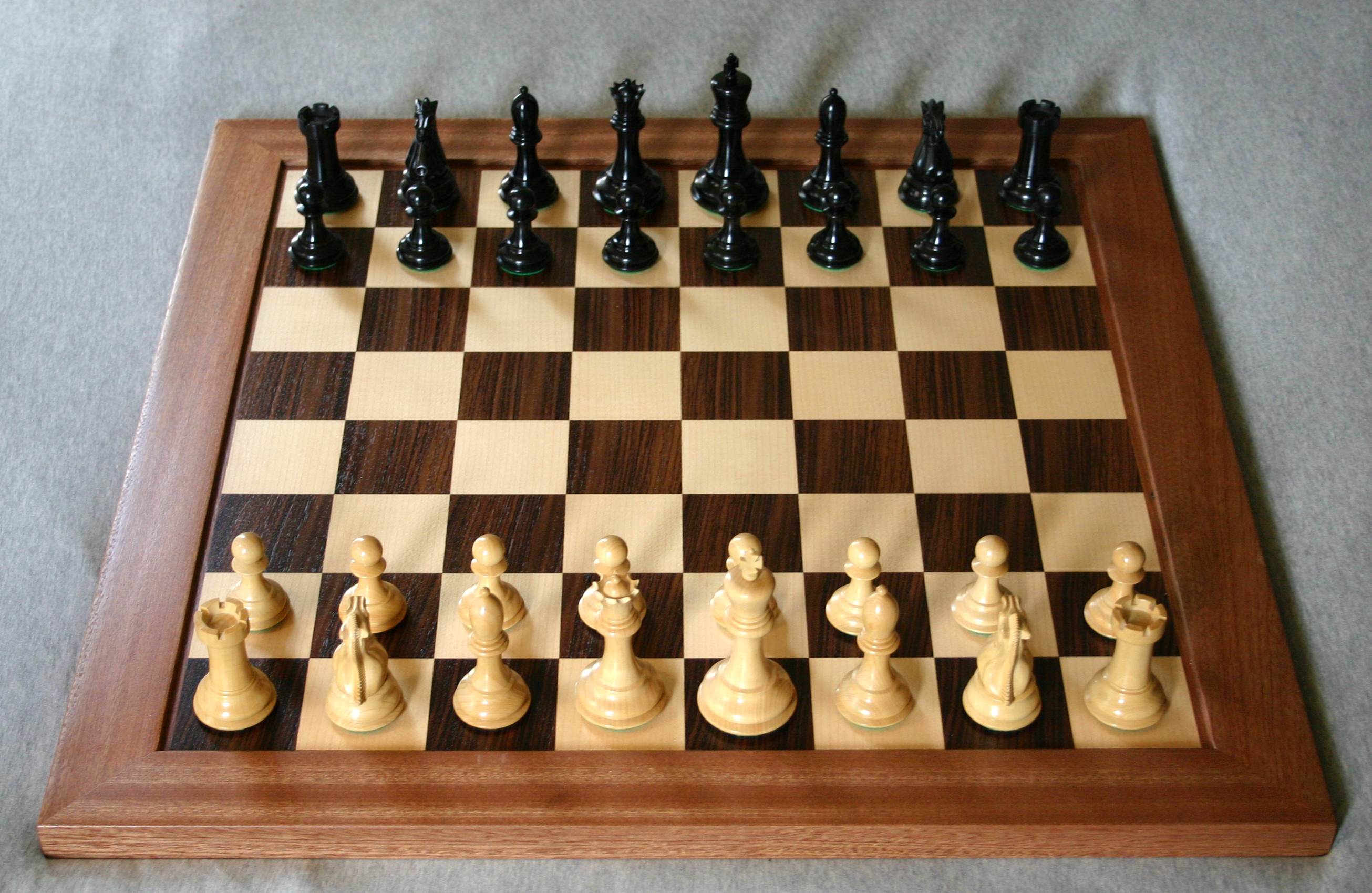
The French Defense begins 1.e4 e6. Black prepares to challenge White’s e4 pawn with d5 on the next move, creating a compact defensive structure before committing to where the pieces will go. After 1.e4 e6 2.d4 d5, the central tension defines everything: will White exchange, advance, or maintain? Each answer produces a different type of game with different pawn structures, different plans, and different weaknesses.
The French has one structural liability that every player who picks it must confront: the bishop on c8. After 1.e4 e6, that bishop is behind the e6 pawn. If the central structure produces an e6-d5 pawn chain, the bishop stays blocked. The French’s strategic challenge (for Black, not White) is doing something useful with that piece. Several variations handle this differently, and the opening’s rich history is largely a story about creative attempts to solve the bad bishop problem.
Bobby Fischer once called the French “a mediocre defense.” He played it himself occasionally. Botvinnik, Uhlmann, Korchnoi, and Short used it extensively at the championship level. Viswanathan Anand’s former second Peter Heine Nielsen has played it. It’s not a mediocre defense, it’s a defense with a concrete structural challenge, which is a different thing.
The structural logic
After 2…d5, White has three responses:
3.Nc3 or 3.Nd2: Maintaining the e4 pawn with a piece. The tension stays. Both the Classical (3.Nc3) and Tarrasch (3.Nd2) arise from this.
3.e5: The Advance Variation. White pushes forward, creating a locked pawn chain. Black gets a compact, difficult-to-attack structure; White gets space and an attack. The bad bishop problem is acute in some Advance lines. Black’s c8 bishop behind the e6 pawn needs a plan (…f6…a5-a4-a3, or queenside piece play).
3.exd5 exd5: The Exchange Variation. White trades the central pawn immediately, reaching a symmetrical d-pawn position. It’s not dangerous for Black, the resulting positions are roughly equal, but it removes most of the French’s character. Often played to avoid theory.
The French’s dynamism comes from the locked or semi-locked pawn chain positions. Black’s kingside may look cramped. But the c5-c4-cxd4 and …f6 pawn breaks give Black real counterplay, and the c8 bishop, once developed (often via b7 after …b6 or through …Bd7-c6 maneuvers), becomes a strong piece.
The five main variations
Classical Variation (3.Nc3 Nf6 4.Bg5): White pins the f6 knight with the bishop. After 4…Be7 5.e5 Nfd7 6.Bxe7 Qxe7, the game enters rich territory. The pin creates immediate tension; Black must handle the pressure while planning the …c5 break. Botvinnik and Uhlmann developed the main lines.
Winawer Variation (3.Nc3 Bb4). The most theoretically rich and arguably sharpest variation in the French, possibly in all of 1.e4 theory. Black pins the c3 knight immediately, similar to the Nimzo-Indian Defense logic, and the critical lines after 4.e5 c5 5.a3 Bxc3+ 6.bxc3 Ne7 7.Qg4 lead to extremely sharp positions where both kings are under attack. White attacks the kingside with the queen on g4; Black counterattacks the queenside with …Qa5…cxd4…Nc6, and …b5. The Winawer is the French Defense’s fighting heart. It requires the most preparation and produces the most decisive results. Fischer avoided facing it; Korchnoi played it with the same attacking ferocity he brought to everything.
Tarrasch Variation (3.Nd2). White avoids the Winawer pin by using the d2 square instead of c3. The position is less sharp than the Classical and Winawer. Black’s main response is 3…Nf6 (solid) or 3…c5 (the gambit-style Open Tarrasch). The Tarrasch avoids the most theoretical complications at the cost of giving Black a comfortable game.
Advance Variation (3.e5 c5 4.c3 Nc6 5.Nf3): White pushes the pawn immediately to e5, claiming space. Black’s bishop problem is most acute here: the e6 pawn locks the c8 bishop directly. Black counterattacks with …c5-cxd4 and …Bd7-b5, trying to trade off White’s light-squared bishop and activate pieces. Modern high-level games in the Advance have become very theoretical; both sides have sharp, well-analyzed continuations.
Exchange Variation (3.exd5 exd5): Symmetrical and quiet. White has surrendered the tension for a non-committal game. Black equalizes without difficulty. Often used by players who want a predictable, drawish position rather than a theoretical battle.
Solving the bad bishop
The French’s structural challenge, the c8 bishop behind the e6 pawn, has several solutions:
…b6 then …Ba6 or …Bb7: The bishop leaves the e6 pawn through b6, often going to a6 to pressure c4 or White’s pawn structure. This works best when the pawn structure is semi-open.
…Bd7 then …Bc6: The bishop develops to d7 first (often necessary for development), then repositions to c6 where it can support the d5 pawn and sometimes go to b5.
…f6 pawn break: In the Advance Variation especially, Black plays …f6 to break up White’s pawn chain and open the diagonal. This frees the bishop at the cost of some structural weaknesses.
Trading it off: In the Classical variation, Black sometimes chooses to trade the bad bishop for a White knight or bishop to simplify the structural problem. The resulting positions may be slightly worse but the practical problem is resolved.
Practical advice for club players
The Tarrasch (3.Nd2) is the most accessible French for players who want to learn the defense without the sharpest theory. The critical …c5 break and the resulting pawn structures teach the French’s strategic logic without demanding Winawer memorization.
The Classical variation (3.Nc3 Nf6 4.Bg5) is the main line and worth learning if you play the French seriously. The pin creates tension that tests your ability to handle pressure.
The Winawer is specialist territory. If you want to play the Winawer competitively, prepare both sides, the 7.Qg4 g5 line (Black declines the kingside attack) and the …Qc7 systems require specific preparation. Going in without knowing the critical lines loses to preparation.
For the strategic foundations, How to Reassess Your Chess (Silman) covers pawn chains, the bad bishop concept, and the structural imbalances the French creates. Winning with the French by Wolfgang Uhlmann (Batsford) is written by a player who used the defense at the grandmaster level for decades.
See also our complete guides to the Caro-Kann Defense (the closest structural comparison) and the Sicilian Defense.
A French Defense at elite level
Nepomniachtchi–Ding, Game 7 of the 2023 World Chess Championship. Nepo played the French Tarrasch as White, maintained kingside pressure, and exploited a tactical miscalculation by Ding. The queen move on move 34 decided matters instantly.
Nepomniachtchi, Ian White Ding, Liren Black


Sources
- Uhlmann, Wolfgang. Winning with the French. Batsford, 1993.
- Nunn, John. Nunn’s Chess Openings. Everyman Chess / Gambit, 1999.
This page contains affiliate links. As an Amazon Associate, DiscussChess earns from qualifying purchases.
Sources
- Uhlmann, Wolfgang. Winning with the French. Batsford, 1993.
- Nunn, John. Nunn's Chess Openings. Everyman Chess / Gambit, 1999.
- ChessBase Opening Encyclopedia, French Defense ECO codes C00–C19
Further reading
- Winning with the French, Wolfgang Uhlmann (Batsford) ASIN verified via Open Library 2026-05-02. Batsford edition. Wolfgang Uhlmann played the French Defense at the highest level for decades. His explanations of the strategic ideas, particularly the Winawer and the pawn chain dynamics, are the clearest available from a player who lived in the positions.
- How to Reassess Your Chess (4th edition), Jeremy Silman (Siles Press) ASIN verified via Open Library 2026-05-02. Siles Press 4th edition. Covers the pawn chain structure and the bad bishop concept that defines the French's strategic challenges.