Chess Olympiad 2026: 400 Teams in Samarkand
The 46th Chess Olympiad runs September 15 to 27, 2026 in Samarkand, Uzbekistan, with a record 400 teams. The United States is top seed in the Open, India is top seed in the Women's and defends both titles.
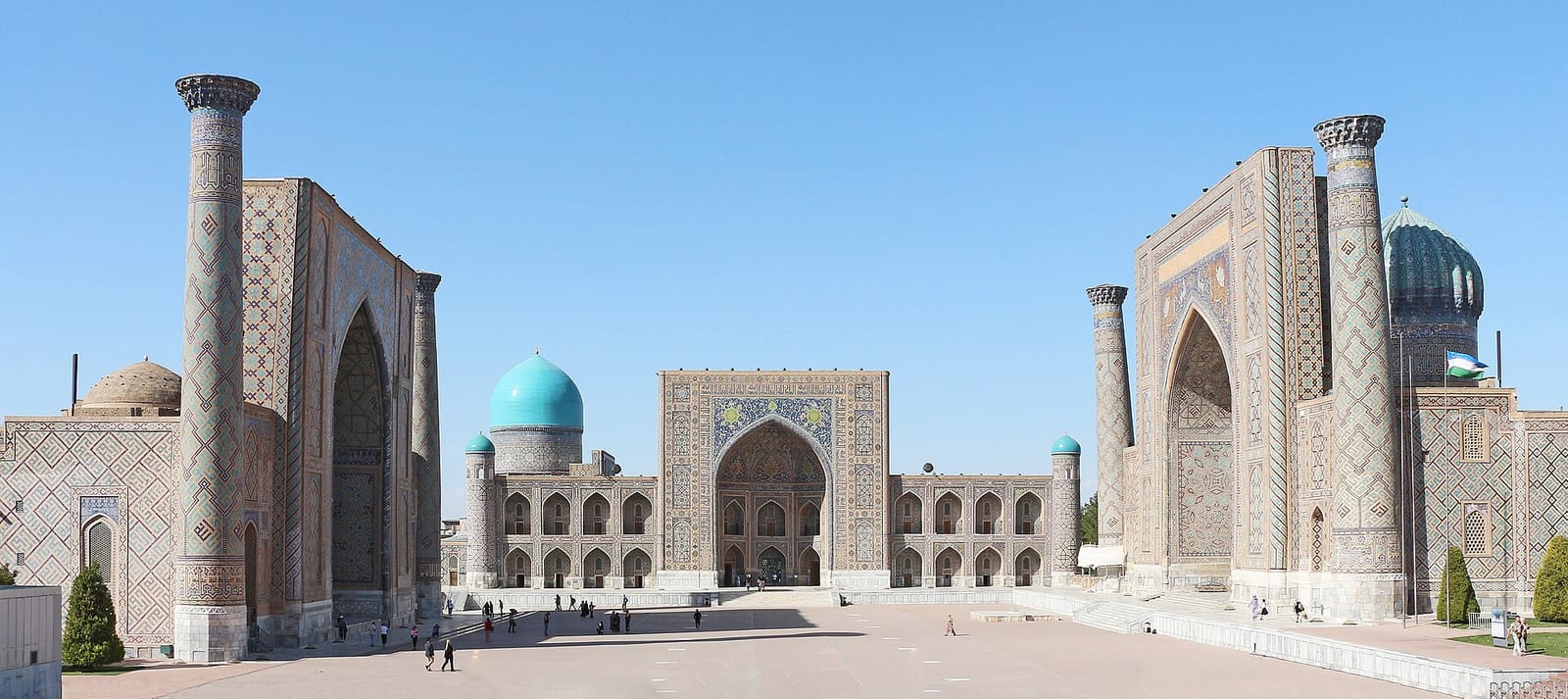
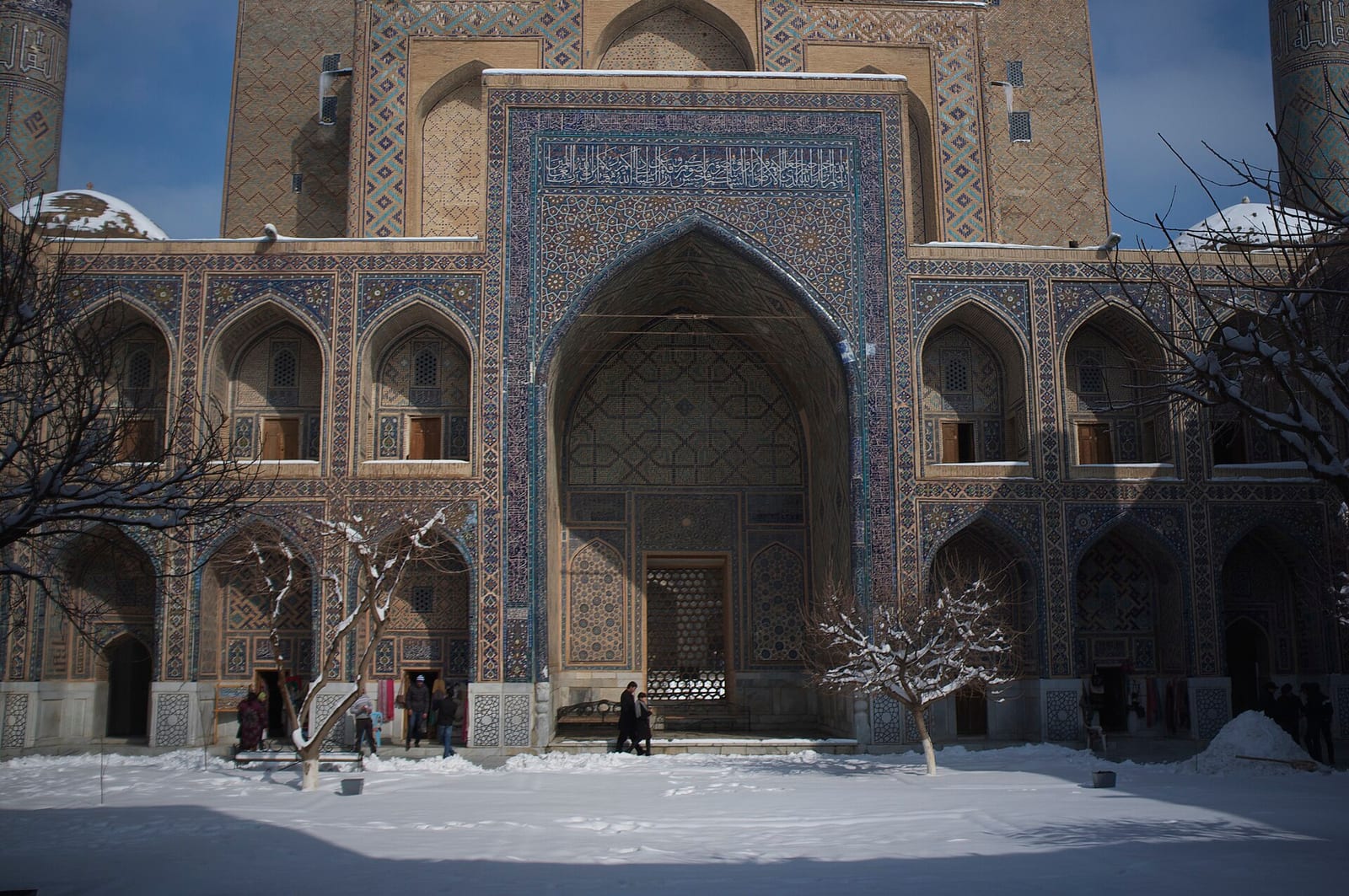
The 46th Chess Olympiad runs September 15 to 27, 2026 at the Silk Road International Exhibition Centre in Samarkand, Uzbekistan. There are 208 teams in the Open section and 192 in the Women’s, 400 in total, which breaks the record of 380 set at Budapest in 2024. By team count it is the largest Olympiad ever staged.
India are the defending champions in both sections, having won the double at Budapest. They are the top seed in the Women’s event. They are not the top seed in the Open, and the reason is worth a paragraph on its own.
The format
Eleven rounds, Swiss pairings by team, played over twelve days with a single rest day on September 22. Each team fields four players per match plus one reserve, so a squad is five and the captain picks four each round.
Match points decide the standings: two for a match win, one for a draw. This is the part that makes the Olympiad different from every other elite event. A team can win a match 2½–1½ and collect exactly the same two points as a team that wins 4–0, which means the tournament rewards squad depth rather than a single dominant board. A country with a 2790 on board one and a 2600 on board four will lose matches that a country with four 2700s wins.
The opening ceremony is September 15, round one is September 16, and round eleven and the closing ceremony are both September 27.
The Open section
The United States is the top seed: Fabiano Caruana at 2792, Wesley So at 2765, Hans Niemann at 2725, Levon Aronian at 2721, and Awonder Liang at 2690 on the reserve board, a top-four average of 2750.75. That is the deepest squad on paper by some margin, and depth is the thing the match-point system rewards.
India, the defending champion, is seeded second, and its board order is the most striking detail of the whole event. Arjun Erigaisi plays board one at 2759, Praggnanandhaa board two at 2750, Nihal Sarin board three at 2718, and Gukesh Dommaraju, the reigning World Champion, plays board four at 2703, with Vidit Gujrathi in reserve. A world champion on the fourth board is not a demotion; it is what happens when a federation has five players inside 60 rating points of each other, and it is arguably the single strongest argument for India’s chances, because board four is where matches are actually decided.
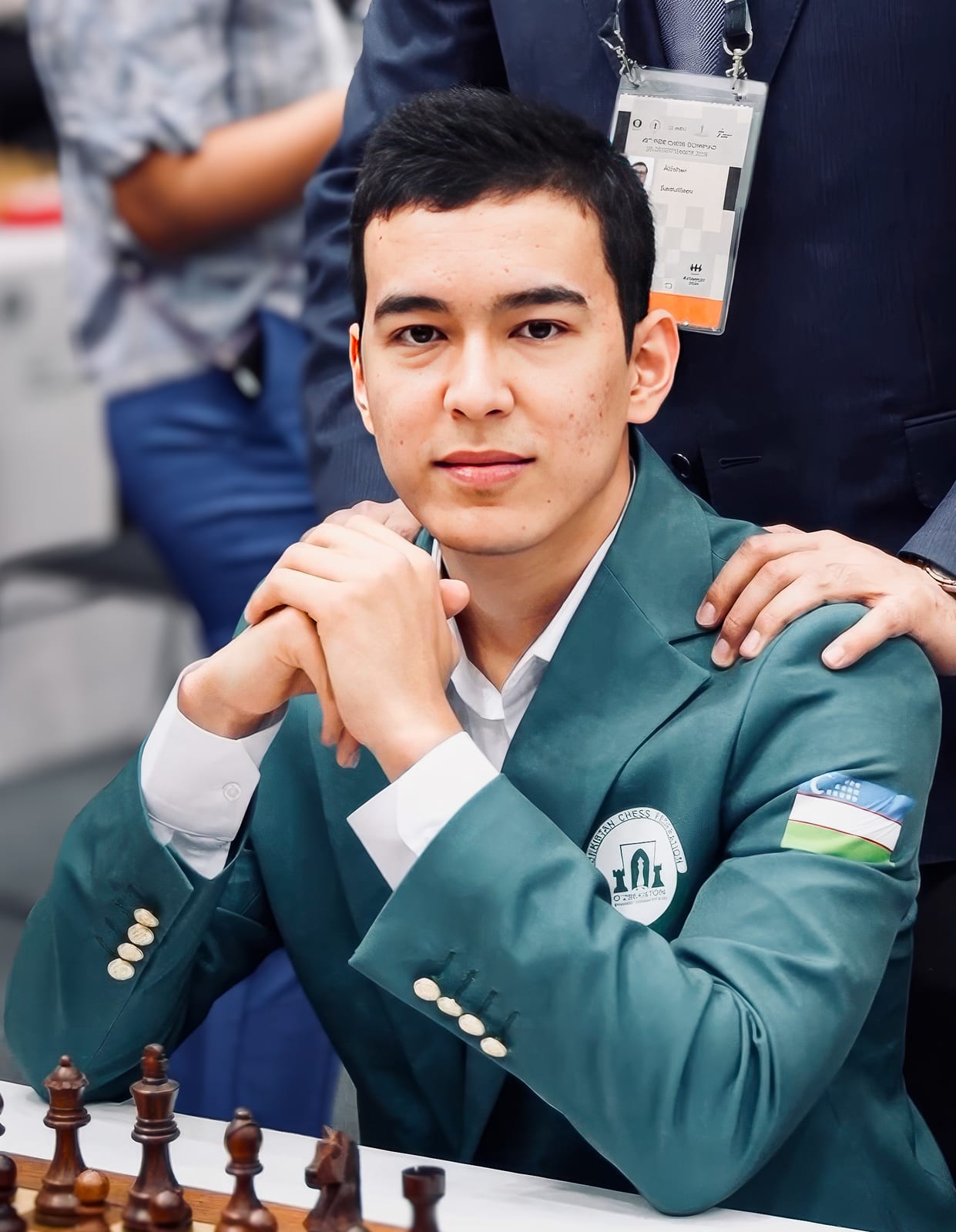
Uzbekistan is third and has home advantage plus the two highest-rated individual players in the top four seeds: Javokhir Sindarov at 2777, who won the 2026 Candidates and will play Gukesh for the world title later this year, and Nodirbek Abdusattorov at 2762. They won the Open section in 2022. China is fourth, with Wei Yi on board one and Ding Liren, the former world champion, on board two.
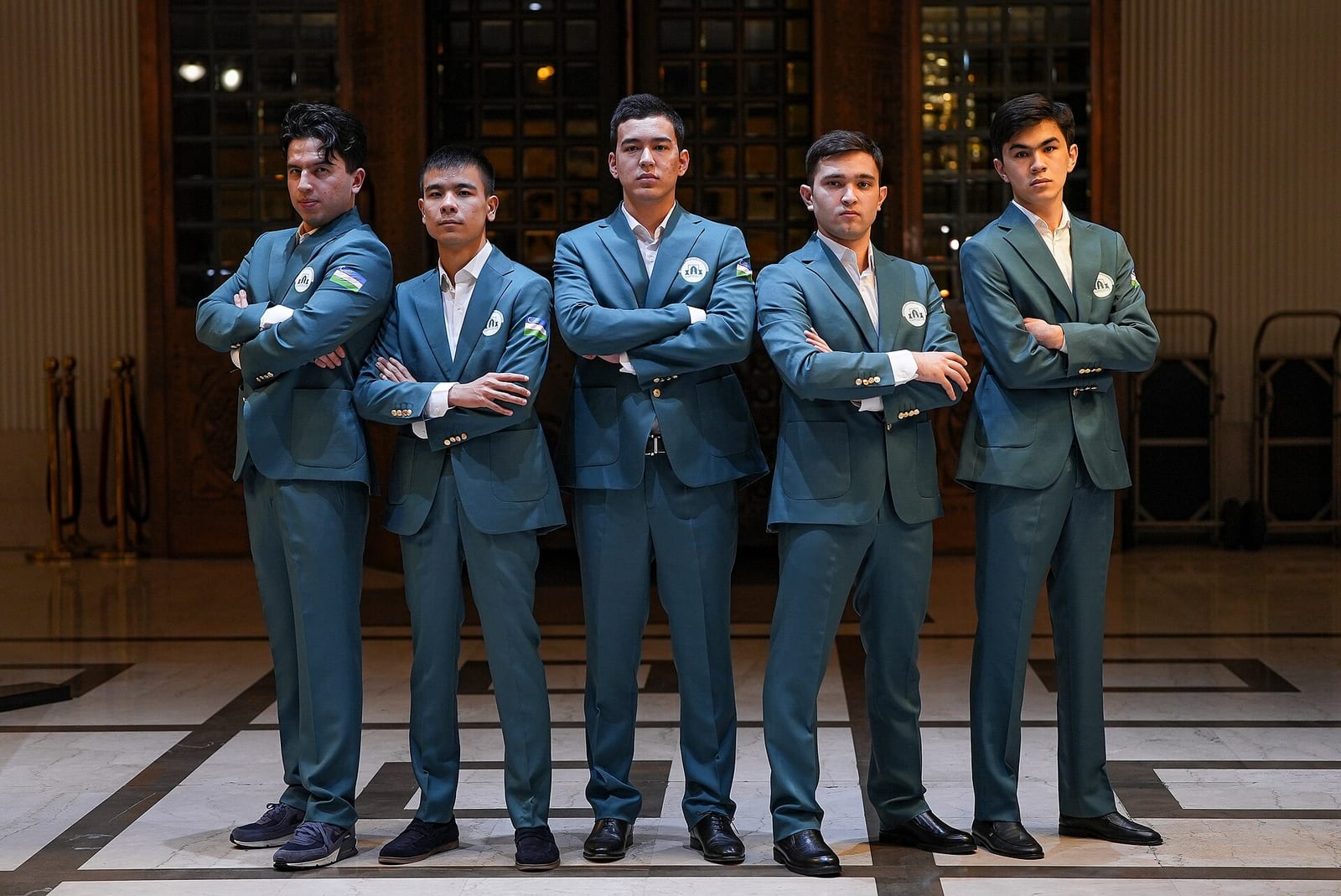
Four teams inside a narrow rating band, one of them at home, one of them defending, and a match-point system that flattens the gaps between them. The Open section is genuinely open.
The Women’s section
India is the top seed on an average of 2476, with Koneru Humpy on board one at 2524, Divya Deshmukh on board two at 2490 and Vaishali Rameshbabu on board three at 2489. That is the reigning Women’s World Cup champion and the reigning Women’s Candidates winner on boards two and three, behind the most decorated Indian woman player in history.
Georgia is second at 2449, China third at 2432, Kazakhstan fourth at 2421 and the United States fifth at 2413. India won this section at Budapest in 2024 and starts as the clear favourite, with the caveat that a 27-point average-rating gap is not much insurance across eleven rounds.
The wildcard is whether Vaishali’s world championship match against Ju Wenjun gets scheduled anywhere near September, since FIDE has confirmed the pairing without announcing dates. A challenger preparing for a title match is not usually available for eleven rounds of team chess.
What happened last time
India won both sections at Budapest in 2024, becoming only the third nation to do it, after the Soviet Union and China. The Open team scored 21 match points out of 22 and went unbeaten, dropping points in exactly one match, a 2-2 draw against Uzbekistan in round nine.
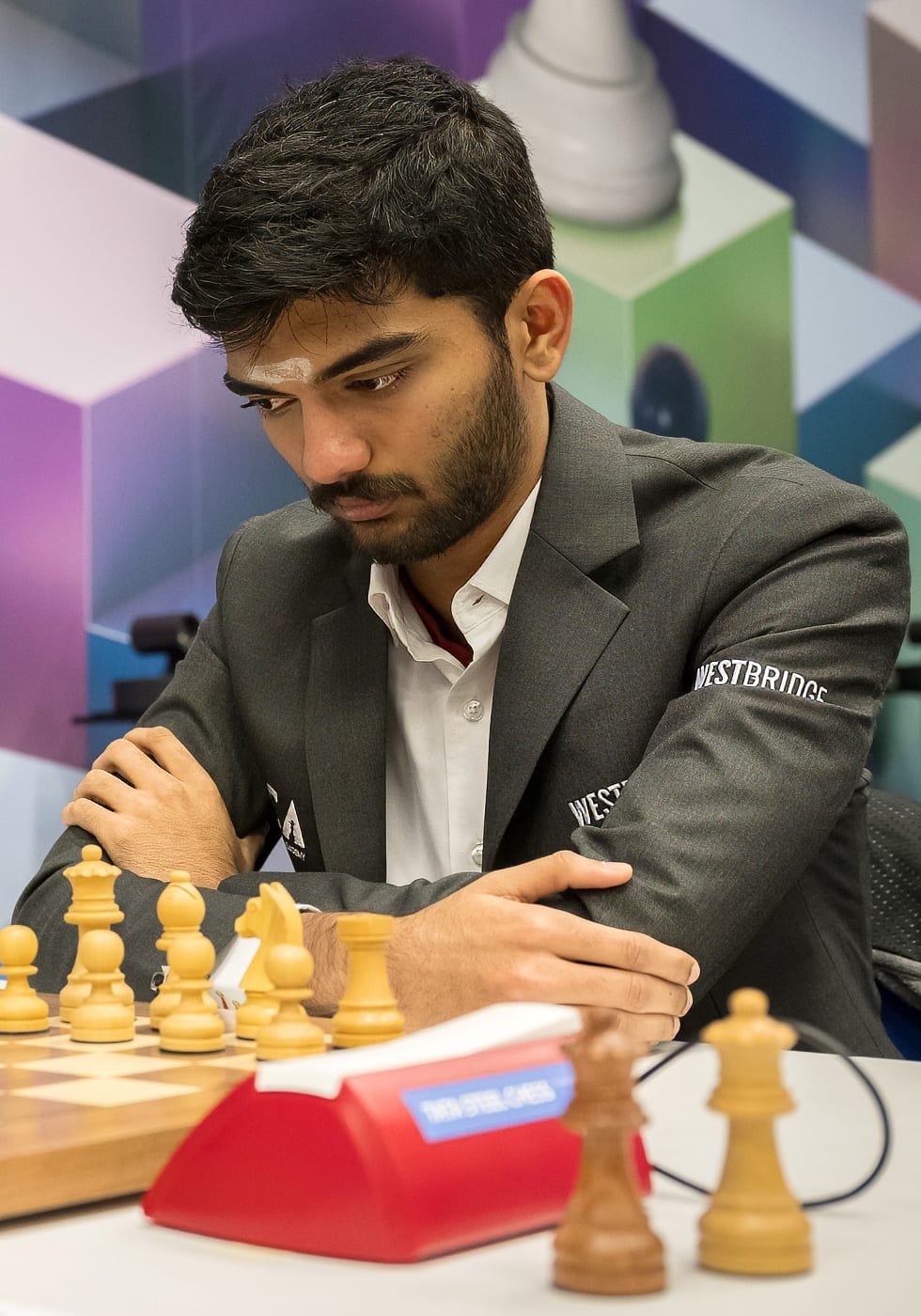
The game that shows what a top-board Olympiad match looks like
Round 10 at Budapest, September 21, 2024. India against the United States, the same two federations seeded first and second in Samarkand. Gukesh had White on board one against Fabiano Caruana, rated 2798 and thirty-four points above him.
It is a Catalan, which is the opening you choose when you want a small, permanent edge rather than a fight. Caruana played sharply in the middlegame and pushed a passed d-pawn all the way to d2 by move 30, which in most positions would be winning. Gukesh ignored it. He kept his queen and rook aimed at the black king and let the pawn sit there, correctly judging that it could not promote without help that Caruana did not have time to arrange.
The break came on move 34, when Caruana retreated his queen to g6 and gave up the coordination that had been holding the position together. Gukesh’s rook swung to f4, then h4 came, and by move 37 the d-pawn that had looked so dangerous simply fell. Caruana played nine more moves and resigned.
Gukesh D White Caruana, Fabiano Black


India won that match and went on to take gold. The same fixture, with different board orders, is the one most likely to decide Samarkand.
What to watch
The board-four matchups. With the match-point system flattening everything, the difference between gold and fourth is usually a couple of results on the bottom board, which is exactly where India has a world champion and most teams have their weakest player.
Whether Uzbekistan converts home advantage. They won in 2022 with a squad younger than anyone else’s and those players are now four years better.
And whether the record entry actually holds up logistically. Four hundred teams is roughly 2,000 players in one hall for eleven rounds, and the largest previous edition was twenty teams smaller.
For how India got here, see the Indian chess generation and our report on India’s 2024 Olympiad double gold. For the world championship cycle running alongside this, see Gukesh vs. Sindarov.
Sources
This page contains affiliate links. As an Amazon Associate, DiscussChess earns from qualifying purchases.
Sources
Further reading
- Logical Chess: Move by Move, Irving Chernev, Batsford edition ASIN verified via Open Library 2026-08-15. The clearest explanation of the slow positional squeeze that decides most team-match games.
- Silman's Complete Endgame Course, Jeremy Silman ASIN verified via Open Library 2026-08-15. Siles Press. Olympiad matches are routinely decided on the fourth board in an endgame, which is the phase most club players have never studied.