Queen's Gambit Declined: Plans and Main Lines
The Queen's Gambit Declined (1.d4 d5 2.c4 e6) is the most solid response to 1.d4, used by world champions from Capablanca to Carlsen. A complete guide to the plans, the main lines, and the endgame technique it requires.
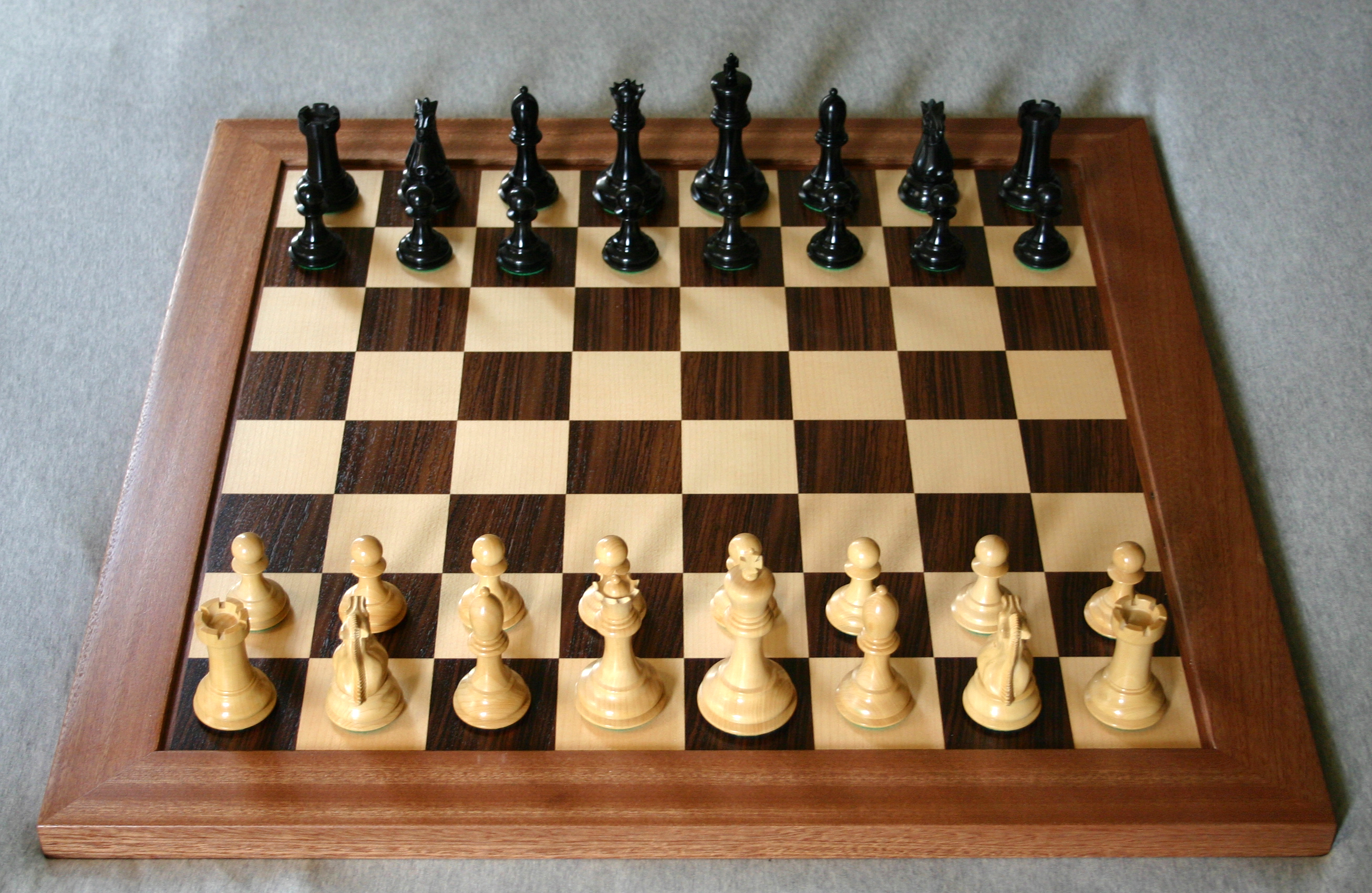
The Queen’s Gambit Declined begins with 1.d4 d5 2.c4 e6. Black declines White’s c4 pawn, reinforces the center with …e6, and accepts a slightly cramped but structurally sound position. Take the pawn instead with 2…dxc4 and you’re in the Queen’s Gambit Accepted: faster counterplay, less central control. The QGD trade is explicit: Black concedes space in exchange for solidity, no weaknesses, and a clear set of plans based on queenside counterplay with …c5 or central action with …e5.
That trade has appealed to some of the best defensive players in chess history. Capablanca used it. Petrosian used it. Kasparov used it against Karpov in the 1984-85 World Championship when he needed reliable structures in a match Karpov was leading. Carlsen has played it regularly throughout his career.
The core pawn structure
After 1.d4 d5 2.c4 e6 3.Nc3 Nf6 4.Bg5 Be7 5.e3 O-O 6.Nf3, the classical position is established. Black’s position contains no weaknesses. The d5 pawn is solidly supported, e6 protects it from the south, and the pieces can develop to their natural squares.
The question is what Black does next. Three main plans:
…dxc4 with counterplay. Black gives up the center temporarily and tries to exploit the resulting open lines and the backward c-pawn that sometimes arises. The position becomes more dynamic.
…c5 with central tension. Black challenges White’s d4 pawn directly. If White advances d4-d5, the position becomes semi-closed and Black operates on the queenside. If White trades dxc5, Black recaptures and fights for the center with piece activity.
…b6 with the Tartakower (Tartakower-Makogonov-Bondarevsky, or TMB). After 1.d4 d5 2.c4 e6 3.Nc3 Nf6 4.Bg5 Be7 5.e3 O-O 6.Nf3 b6, Black prepares …Bb7 to pressure the long diagonal, often combining with …c5 later. Kasparov favored this plan for much of his career because the bishop on b7 puts indirect pressure on d4 and the queenside without committing to a structural change.
The Exchange Variation
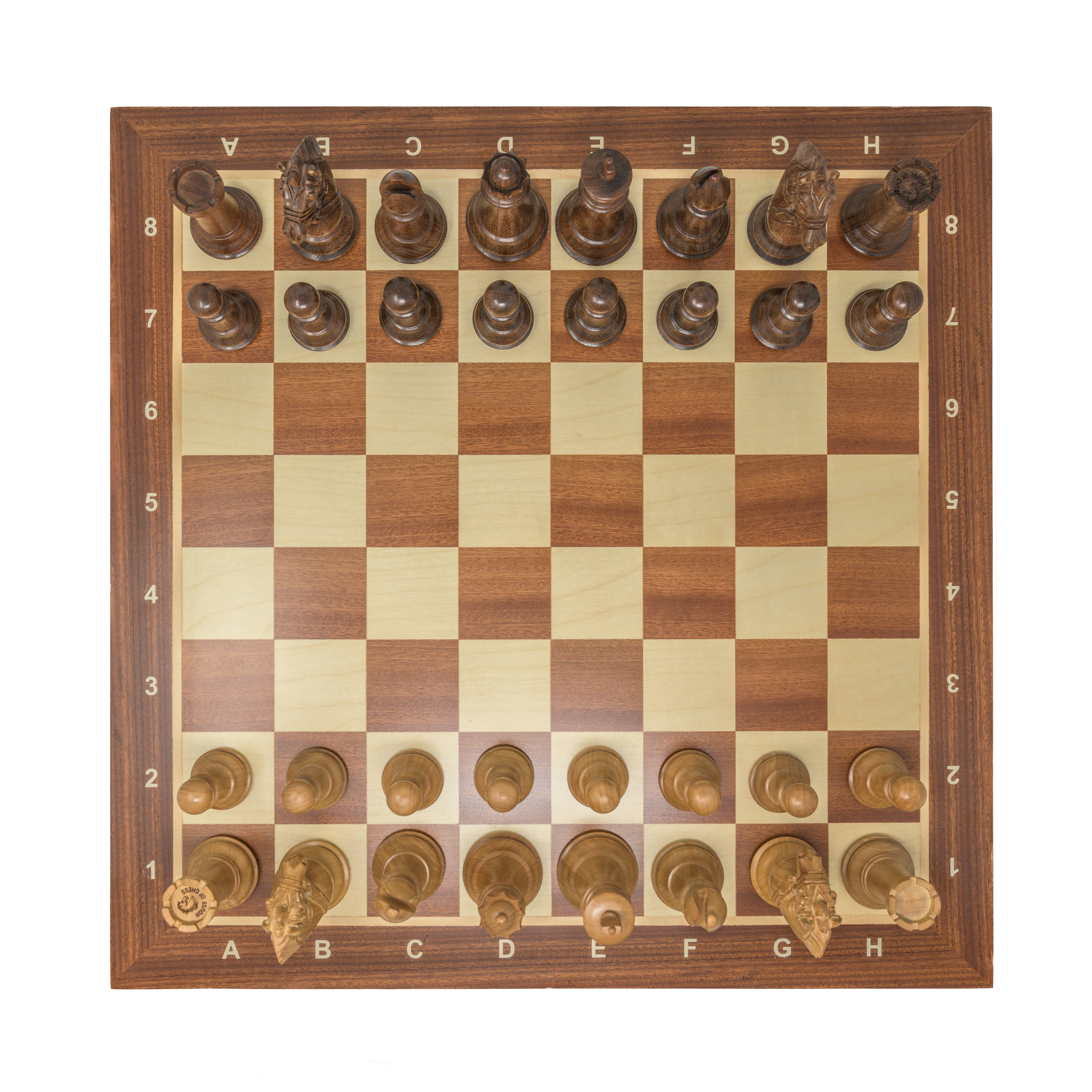
White can play 3.cxd5 exd5, reaching the Exchange Variation. White has exchanged center pawns, giving Black a symmetrical pawn structure. The opening has a reputation for being drawish, which is partly accurate. At the top level, White often tries to exploit the “minority attack” on the queenside: advancing b4-b5xc6, creating a weak isolated or backward c-pawn in Black’s structure.
The Exchange Variation requires specific endgame technique from Black to hold. Understanding how to neutralize the minority attack (timely …c5 breaks, keeping the bishop pair active, not allowing the c-pawn to become a permanent liability) is part of the QGD repertoire.
The Orthodox Defense
The main line runs 1.d4 d5 2.c4 e6 3.Nc3 Nf6 4.Bg5 Be7 5.e3 O-O 6.Nf3 Nbd7. This is the Orthodox Defense, the classical form of the QGD played throughout the 20th century. Black’s setup is compact: pawns on d5 and e6, knight on f6, bishop developed to e7 rather than a more active square. It looks passive. The point is that there are no targets. White has to find a plan to improve, which often involves opening the center with e4 (after careful preparation) or pressing on the queenside.
The resulting endgames are where QGD mastery shows. Petrosian, one of the greatest defensive players in chess history, turned Orthodox Defense endgames into art. The structure is simple enough that understanding who benefits from each exchange is the entire task.
Karpov vs. Kasparov, World Championship 1984-85
The game below is from the 1984-85 World Championship match in Moscow, one of the longest and most contested matches in chess history. Karpov had opened a commanding lead; Kasparov was fighting back. The position reached after the opening is a classic QGD endgame: pieces traded off, structure matters, both sides maneuvering for advantage in a rook ending.
Karpov’s 14.c6, a pawn sacrifice to gain a passed pawn and restrict Black’s bishop, is the kind of ambitious endgame decision the QGD frequently requires from White. The question isn’t whether the pawn sacrifice works tactically, but whether the resulting long-term pressure is enough to convert. The game lasted 59 moves.
Karpov White Kasparov Black


The QGD in the modern game
The QGD fell slightly out of fashion in the 1990s and early 2000s as more dynamic systems like the King’s Indian and the Nimzo-Indian gained popularity at top level. It came back as computer preparation matured, because computers showed that the “boring” QGD positions were actually very difficult to crack against accurate defense.
Carlsen has used it regularly precisely because its endgames are the kind where his technique shines. The QGD doesn’t win quickly; it wins in the 50th or 60th move when the opponent’s patience runs out. That suits Carlsen’s style exactly.
For club players, the QGD is an excellent practical choice: no forced memorization of sharp lines, clear plans (queenside counterplay, …c5 break, bishop activity on the long diagonal in the Tartakower), and endgame positions that reward understanding over memorization. It’s not the best first defense against 1.d4, though. A complete beginner does better with something more tactical, the Nimzo-Indian or King’s Indian give clearer targets to attack. The QGD rewards players roughly 1000-rated and up, once you can hold a cramped position without an obvious tactic to fall back on.
For the theory on the related Nimzo-Indian Defense and the King’s Indian Defense, both of which arise after 1.d4 Nf6, see the linked articles.
Sources
This page contains affiliate links. As an Amazon Associate, DiscussChess earns from qualifying purchases.
Sources
Further reading
- Queen's Gambit Declined by Matthew Sadler ASIN verified via Open Library 2026-06-10. Everyman Chess 2000. Still the clearest single-volume treatment of the QGD for club players.