The Grand Chess Tour: How the Circuit Works
The Grand Chess Tour is a five-event circuit with a $2 million prize fund, two classical tournaments and three rapid and blitz events, ending in a four-player knockout final in Saint Louis. Praggnanandhaa won the 2026 tour, finishing top of the standings on 35.5 points and beating Fabiano Caruana in the Finals. Format, scoring, standings and every event explained.
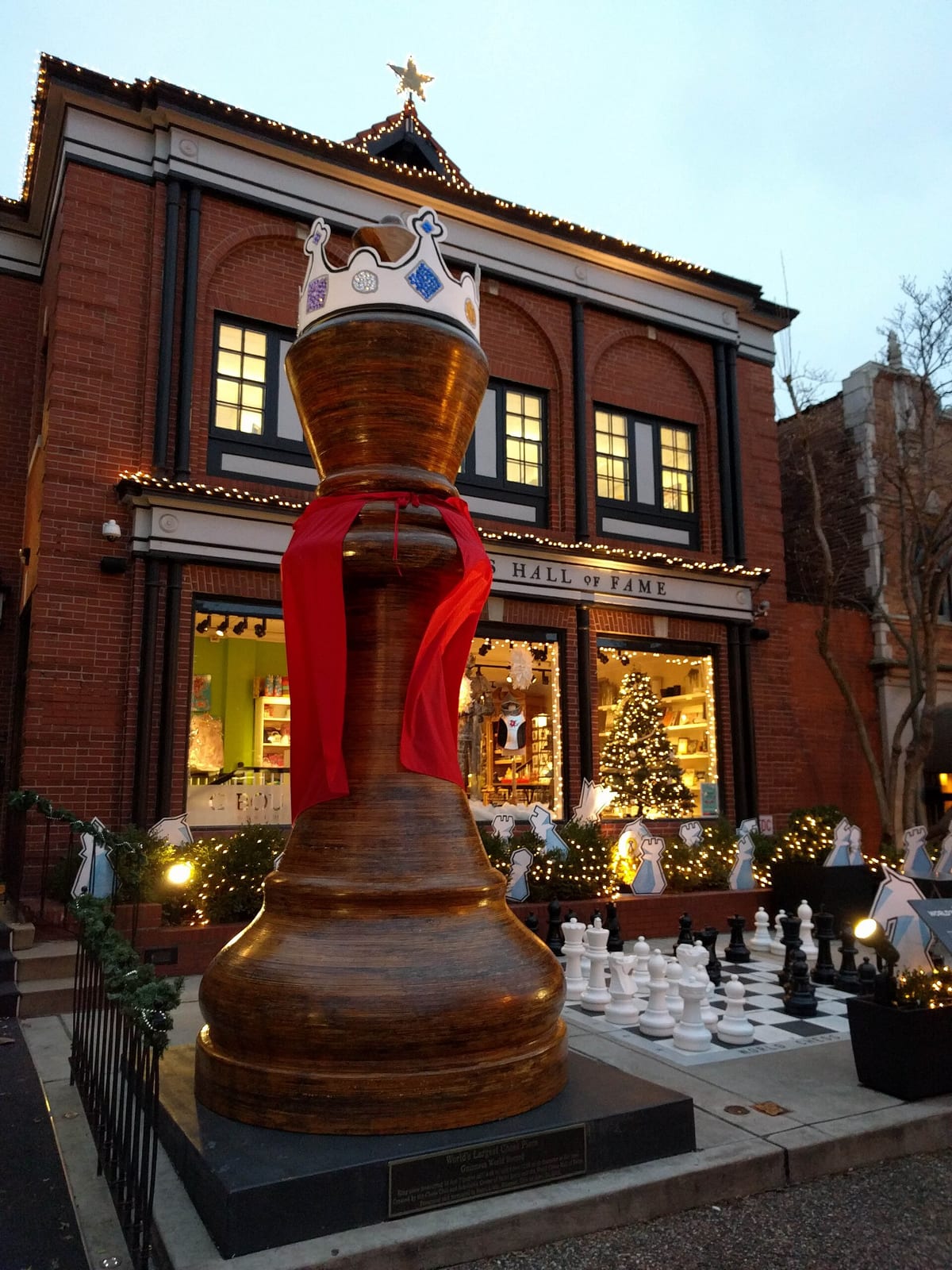
The Grand Chess Tour is an invitational circuit of five elite tournaments with a combined prize fund of two million dollars, run across Europe and the United States between May and August and finishing with a four-player knockout in Saint Louis. It exists because elite chess otherwise has no season: players accept individual invitations, results do not accumulate anywhere, and there is no standings table for a spectator to follow. The tour is the attempt to fix that.
Praggnanandhaa won the 2026 tour. He finished the five scoring events top of the standings on 35.5 points, then beat Vincent Keymer and Fabiano Caruana in the Saint Louis Finals.
The format
Five scoring events, then a final.
Two of them are classical: the Superbet Chess Classic in Romania and the Sinquefield Cup in Saint Louis. These are the traditional format, one long game a day, and they carry the most weight per game.
Three are rapid and blitz: Warsaw, Zagreb and the Saint Louis Rapid and Blitz. Each combines a rapid round-robin with a blitz double round-robin, and the two are added into one event score.
Tour points are awarded by finishing position at each event, not by the score inside it. A player’s tour total is the sum across the events they enter, and the top four after the five events qualify for the Finals, a knockout in which each match is two classical games, two rapid games and four blitz games.
That last detail is the one that makes the tour worth following. A player who is brilliant at classical and mediocre at blitz cannot win the tour, because three of the five scoring events are fast and every Finals match ends in blitz if it is close.
The 2026 calendar
| Event | Format | Location | Dates |
|---|---|---|---|
| Super Rapid and Blitz Poland | Rapid + blitz | Warsaw | May 3–10 |
| Superbet Chess Classic Romania | Classical | Bucharest | May 12–24 |
| SuperUnited Rapid and Blitz Croatia | Rapid + blitz | Zagreb | June 29 – July 6 |
| Saint Louis Rapid and Blitz | Rapid + blitz | Saint Louis | July 31 – August 7 |
| Sinquefield Cup | Classical | Saint Louis | August 10–19 |
| GCT Finals | Knockout | Saint Louis | August 22–27 |
We have covered several of these individually: GCT Warsaw 2026, where Hans Niemann won as a wildcard; Pragg ending Sindarov’s 53-game unbeaten run in Bucharest; and the SuperUnited Croatia 2026 preview.
The full-tour field
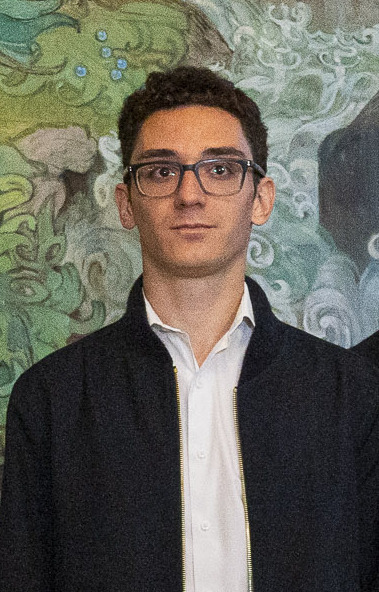
Nine players started the 2026 tour on full-tour contracts: Fabiano Caruana, Vincent Keymer, Anish Giri, Alireza Firouzja, Praggnanandhaa, Wesley So, Maxime Vachier-Lagrave, Javokhir Sindarov and Jorden van Foreest.
Eight of them finished it. On July 27 Firouzja withdrew from the Sinquefield Cup over a schedule clash with the Esports World Cup, and under the player agreement withdrawing from an event means withdrawing from the tour: all of his accumulated tour points were nullified. Samuel Sevian took his seat at the Sinquefield Cup as a wildcard. Seven full-tour players had signed an open letter in February asking for the schedule to be adjusted, and the tour declined.
Each event also seats wildcards, who play for prize money and can win the tournament outright but score no tour points. This is how Hans Niemann finished top of the field in Warsaw in May with 22.5 points and took zero tour points for it, an outcome that reads as strange until you understand the wildcard rule.
The 2026 standings
| Place | Player | Tour points | Finals |
|---|---|---|---|
| 1 | Praggnanandhaa | 35.5 | Winner |
| 2 | Wesley So | 34.5 | Third |
| 3 | Fabiano Caruana | 29.5 | Runner-up |
| 4 | Vincent Keymer | 28.5 | Fourth |
| 5 | Javokhir Sindarov | 28 | Did not qualify |
| 6 | Maxime Vachier-Lagrave | 19 | Did not qualify |
Final standings after the five scoring events. The last Finals seat was settled in the final round of the Sinquefield Cup. Keymer and Sindarov tied for third there and shared the tour points, so the half point between them going into the Sinquefield Cup was still there at the end of it, and Keymer qualified.
A tour game: Caruana vs. Aronian, Sinquefield Cup 2026
Round 5, August 14, 2026, Saint Louis. Caruana had White against Levon Aronian, a Sinquefield wildcard, in a game that mattered directly to the tour standings.
Aronian played the Petrov, the most solid answer to 1.e4 there is and the one you choose when a draw is an acceptable result. The opening still went Caruana’s way: by move 20 the Lichess engine had White about a pawn and a half better. Then on move 23 Aronian moved his queen to e7, that assessment nearly doubled, and the position stopped holding: Caruana forced the queens off two moves later on his own terms, and the resulting endgame had a passed d-pawn that reached d7 by move 27 and could not be blockaded.
What follows is nineteen moves of conversion, which is the real content of classical tour chess. Caruana wins the exchange for the pawn, trades into an ending of rook and knight against bishop and knight, and grinds it out to move 46.
Caruana, Fabiano White Aronian, Levon Black


How the Finals work
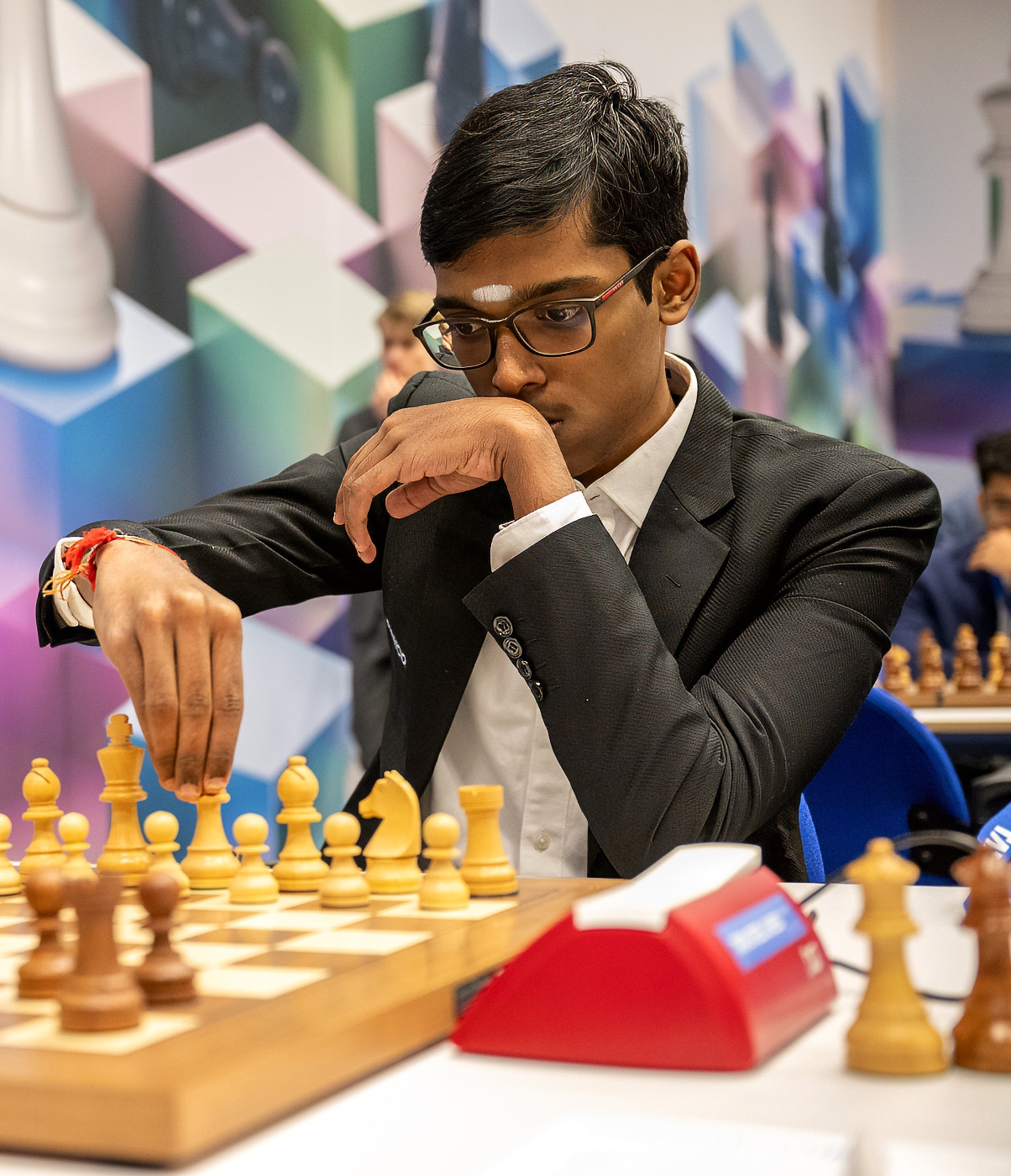
Four players, single elimination, in Saint Louis from August 22 to 27. Each match was two classical games, then two rapid, then four blitz, scored on a sliding scale: 6 points for a classical win, 4 for a rapid win and 2 for a blitz win, with half that for a draw. Both matches that were level after the classical games had a single blitz bonus game added, worth 2 points.
Praggnanandhaa beat Keymer 19–9 in the semifinals, winning both rapid games. Caruana beat So 18–12 in a match where all four classical and rapid games were drawn and the blitz decided everything. In the final Caruana won the first classical game, Praggnanandhaa won both rapid games, and the blitz split evenly, which gave Praggnanandhaa the title 15–13. So beat Keymer 18–12 for third: Keymer won the bonus blitz game, and So won all four regular blitz games.
Caruana won the 2025 Finals and the overall 2025 tour. The format rewards players who are strong at every time control, and the 2026 final showed it: Praggnanandhaa lost the classical portion 3–9 and won the match on rapid.
For the Sinquefield Cup specifically, see our 2026 Sinquefield Cup report. For the players, see Fabiano Caruana, Wesley So, Praggnanandhaa and Levon Aronian.
Sources
This page contains affiliate links. As an Amazon Associate, DiscussChess earns from qualifying purchases.
Sources
- Grand Chess Tour, official site (2026 standings and event calendar)
- Grand Chess Tour 2026, Wikipedia (format, scoring and participants)
- 2026 Sinquefield Cup, Grand Chess Tour official event page
- Lichess broadcast PGN, GCT Sinquefield Cup 2026, Round 5
- Lichess broadcast PGN, 2026 Grand Chess Tour Finals (semifinals and final)
Further reading
- Silman's Complete Endgame Course, Jeremy Silman ASIN verified via Open Library 2026-08-15. Siles Press. Tour events are decided by endgame conversion far more often than by opening preparation.
- The Woodpecker Method, Axel Smith and Hans Tikkanen ASIN verified via Open Library 2026-08-15. Quality Chess, 2019. Three of the five tour events are rapid and blitz, where pattern recall replaces calculation time.