Levon Aronian: 2830 Peak, Two World Cups
Levon Aronian reached a peak rating of 2830, the fourth-highest ever recorded, and stayed in the world's top 10 for over a decade. The Armenian-turned-American grandmaster won the 2005 World Cup and the 2017 World Cup, led Armenia to three Olympiad golds, and plays an attacking style built on deep preparation and tactical creativity.
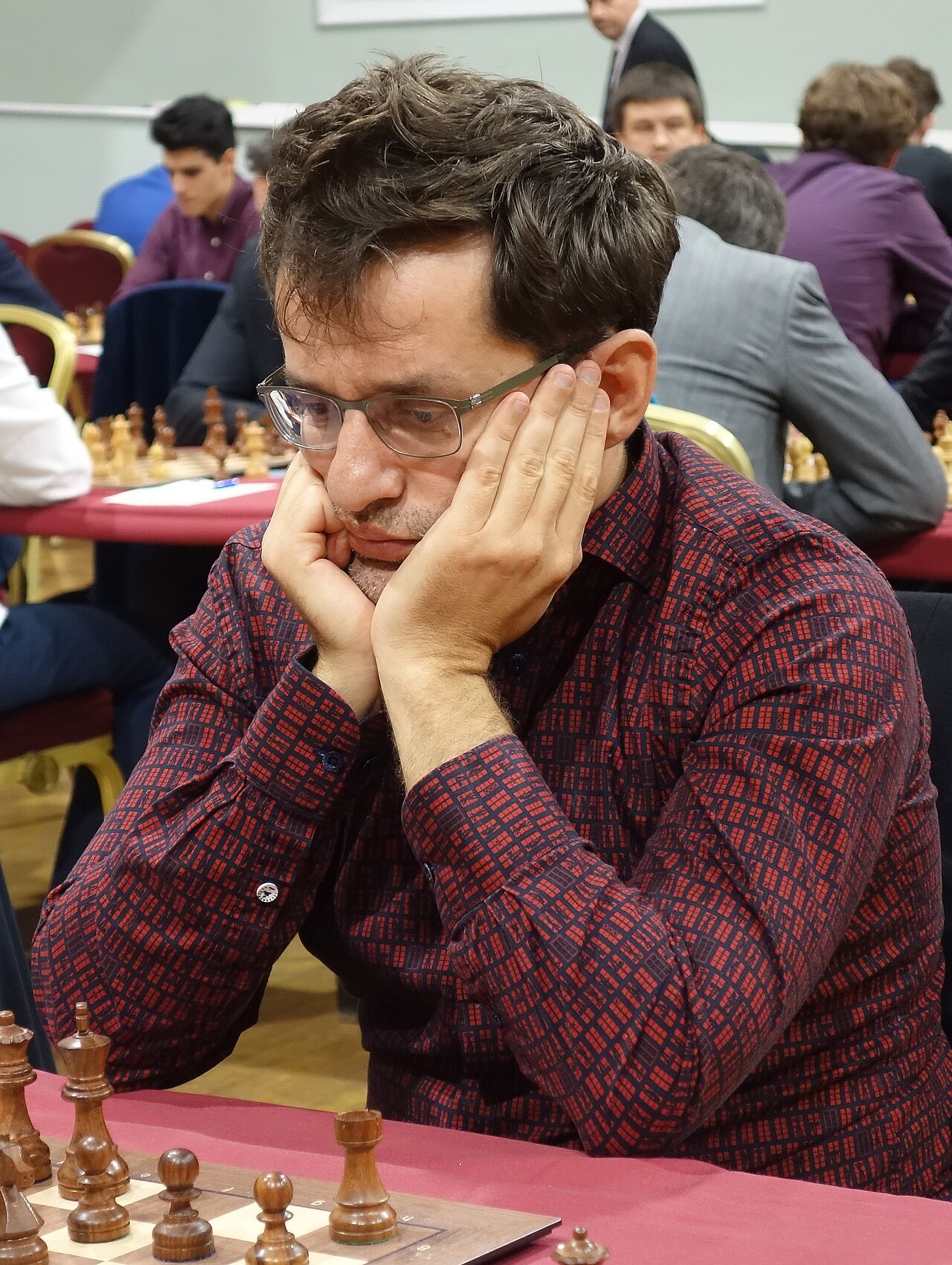
Levon Aronian was born October 6, 1982, in Yerevan, Armenia. He earned the grandmaster title in 2000 at 17 and has been ranked in the world’s top 10 for well over a decade, reaching as high as No. 2 in January 2012 and a peak rating of 2830 in March 2014, the fourth-highest rating ever recorded at the time. He represented Armenia from his junior days through 2021, then switched federations to the United States, where he now competes in the US Chess Championship and on the US Olympic team.
His career record includes two Chess World Cup titles, a decade of Grand Chess Tour results, three Olympiad gold medals leading Armenia’s team, and a rating peak matched by only a handful of players in history. He has never won the world championship, and the closest he came was not a title match but a mid-tournament collapse: at the 2014 Candidates, the same event where his rating peaked, he was in contention before scoring just 1.5 points from the final five rounds and finishing tied for second-to-last. Magnus Carlsen won that cycle and every cycle for a decade after, and Aronian’s chess was consistently good enough to be in the conversation without ever quite closing it out.
World Cup wins and the rise to the top
Aronian won the World Junior Championship in 2002, 10/13, and broke through at the top level with the 2005 FIDE World Cup in Khanty-Mansiysk, beating Ruslan Ponomariov in the final. That win earned him a place in the 2007 world championship tournament in Mexico City, where he finished seventh in an eight-player field, an early lesson in how much harder the very top of the game was than the level just beneath it. In between, he announced himself as a genuine elite player by winning Linares 2006, half a point ahead of Teimour Radjabov and the reigning World Champion, Veselin Topalov, one of the strongest single results of his career.
He crossed 2800 for the first time in November 2010 and kept climbing from there: a Tata Steel win in January 2012 with 9/13 and a 2891 tournament performance rating, a shared Corus 2008 title with a young Magnus Carlsen, and Chess960 World Championships in both 2006 (beating Peter Svidler 5–3) and 2007 (successfully defending against Viswanathan Anand). He added a World Blitz Championship in 2010. By early 2012 he was ranked second in the world, behind only Carlsen.
Playing style
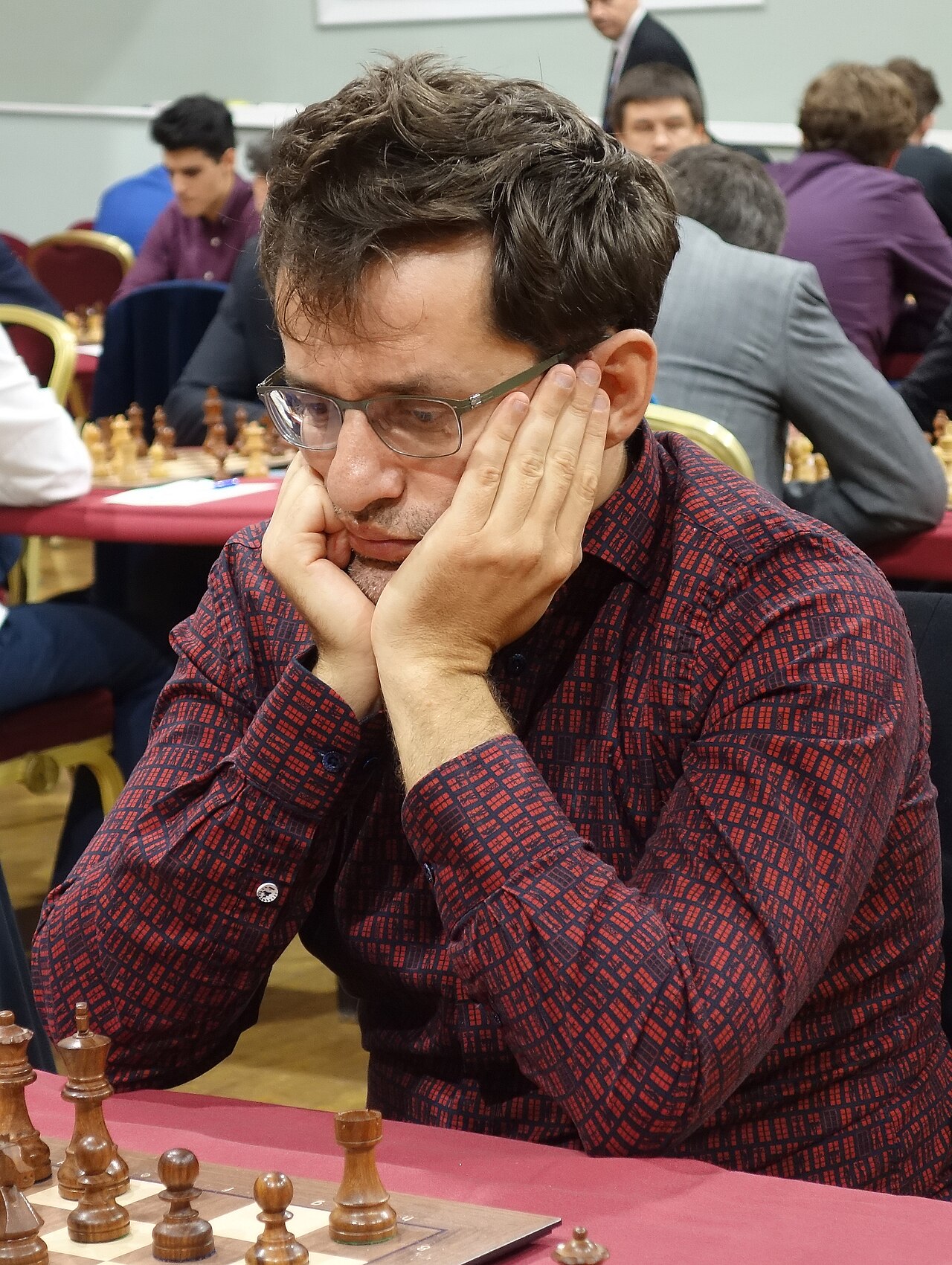
Aronian plays attacking, creative chess with a broad opening repertoire, and he’s willing to enter sharp positions that reward original thinking over memorized theory. His games against elite opponents frequently feature early piece sacrifices or unusual structural ideas that create the kind of complications his opponents find genuinely difficult to navigate at the board, whatever an engine says about them afterward. His preparation is deep, but his real strength is calculation rather than memorization: he understands positions well enough to deviate from known theory confidently and work out the consequences over the board rather than at home.
That willingness to invite complications cuts both ways, and the single most famous game of Aronian’s career is one he lost. As White against Anand at Tata Steel 2013, he offered a pawn on move 12 that Anand met with a counter-sacrifice, and Anand kept sacrificing, a bishop, then a knight, until Aronian’s king had no defense left. Chess.com later ranked it the third-best chess game ever played, behind only Kasparov’s Immortal and the Opera Game, and chess history simply calls it “Anand’s Immortal.” It’s Aronian’s game as much as Anand’s: nobody plays into a position like that against a prepared elite opponent unless attacking, imbalanced chess is exactly what they’re looking for.
Aronian, Levon White Anand, Viswanathan Black


Armenia and the 2014 Candidates collapse
Aronian led Armenia at first board through the country’s golden era in team chess, contributing to Olympiad gold medals in 2006 (Turin), 2008 (Dresden), and 2012 (Istanbul), plus an individual silver on board one at the 2010 Khanty-Mansiysk Olympiad. He also won gold with Armenia at the 2011 World Team Championship in Ningbo, with an individual silver on board one there as well. For a country of under three million people, fielding a team that beat Russia, the United States, and China to Olympiad gold three times in six years was a genuine achievement, and Aronian was its most visible face.
The 2014 Candidates Tournament in Khanty-Mansiysk should have been the crowning result of that era instead of its most painful one. Aronian arrived at his career-peak rating and was considered a serious threat to win the whole event. He was in contention through the middle rounds, then lost his footing entirely, scoring just 1.5 points across the last five games and finishing tied for second-to-last on a plus-zero record. Viswanathan Anand won the tournament undefeated, with three wins and eleven draws, and went on to challenge Carlsen in Sochi later that year. Aronian’s best Candidates finishes came in the tournaments around it: fourth in 2013, and third at other points in a career that circled the world championship without ever reaching a title match.
Switch to the United States
In February 2021, Aronian announced he was applying to switch federations to the United States, citing, in his own words, “the state’s absolute indifference towards Armenian chess” and a lack of government support for the sport in the country he had represented at the top level for two decades. The transfer completed in December 2021, and he immediately became the US federation’s number two ranked player. He relocated to St. Louis, Missouri, home to the US Chess Federation’s most active competitive scene and his wife’s family.
Recent form
Aronian has kept winning well into his 40s. He took the 2017 Chess World Cup, his second, qualifying for the 2018 Candidates, shared first at Norway Chess 2017, and tied for first at the 2018 Sinquefield Cup alongside Carlsen and Fabiano Caruana. Since the federation switch he has added the Goldmoney Asian Rapid (2021), WR Chess Masters in Düsseldorf (2023, on playoff), the inaugural Global Chess League with the Triveni Continental Kings (2023), and the American Cup (2024). In 2025, at 42, he won the Freestyle Chess Grand Slam event in Las Vegas for $200,000, then closed the year by beating Carlsen 1.5–0.5 in the Freestyle Chess Grand Slam Final in Cape Town for another $200,000, one of the largest single paydays of his career, two decades after his first World Cup title. As of July 2026 he holds a 2724 rating, ranked No. 22 in the world.
For more on the players who defined the era Aronian competed through, see Vladimir Kramnik’s championship reign, Fabiano Caruana’s parallel career at the top of US chess, and Magnus Carlsen’s decade of dominance that kept the title just out of Aronian’s reach.
Sources
- FIDE Rating Profile: Levon Aronian
- Levon Aronian, Wikipedia (cross-checked against cited primary sources)
- Anand’s Immortal, Wikipedia
- Silman, Jeremy. How to Reassess Your Chess. Siles Press, 4th ed. 2010. (affiliate)
This page contains affiliate links. As an Amazon Associate, DiscussChess earns from qualifying purchases.
Sources
Further reading
- How to Reassess Your Chess, Jeremy Silman ASIN verified via Amazon 2026-05-02. Aronian's positional judgment and piece coordination are developed through the kind of structural thinking Silman's framework addresses.