Norway Chess 2026: Praggnanandhaa Wins
R Praggnanandhaa won Norway Chess 2026 with 18.0 points after four straight classical wins, including two over Magnus Carlsen. Wesley So finished second (17.0), Firouzja third (15.5). Full report with featured game from Round 8.
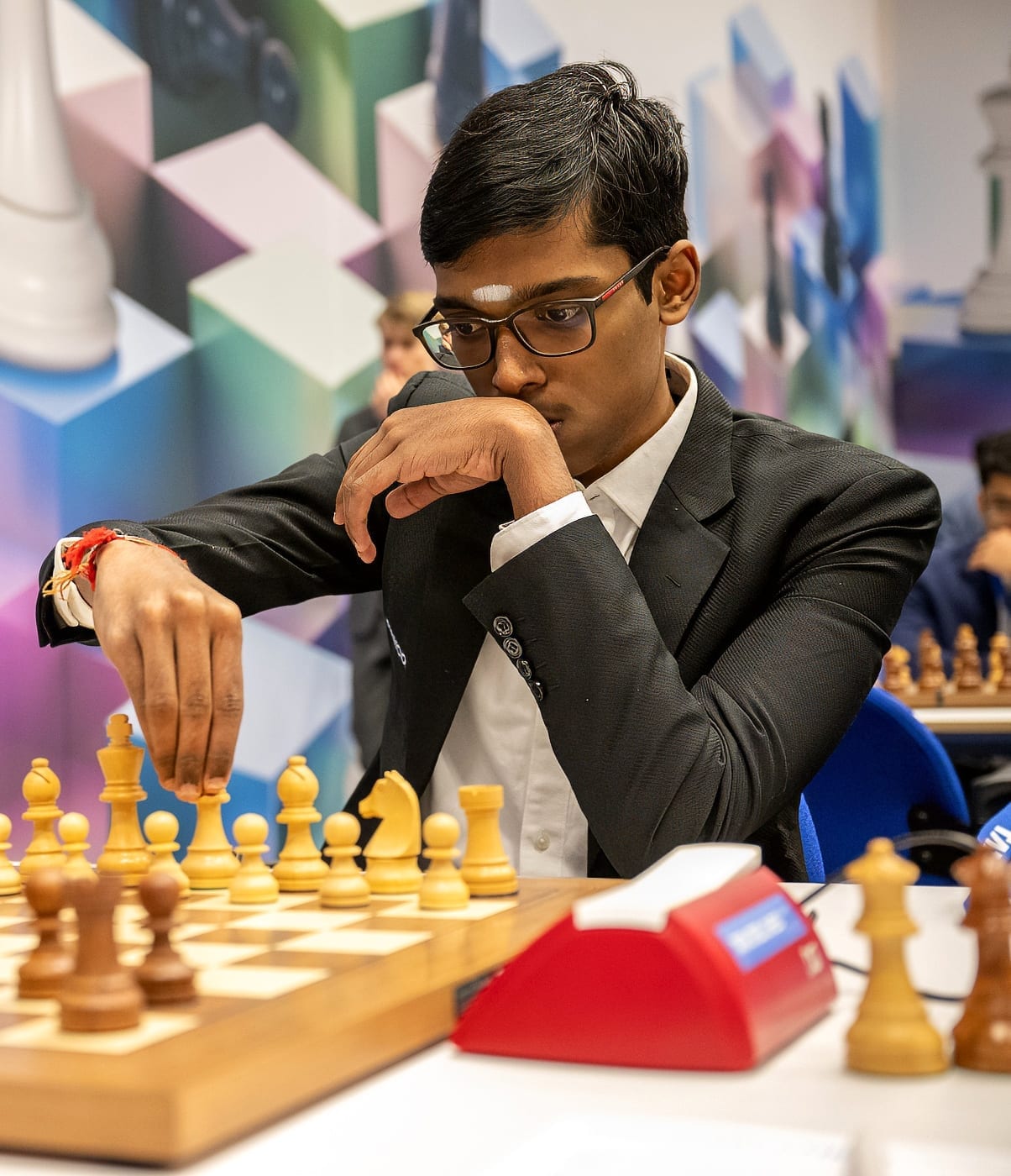
Praggnanandhaa R arrived in Oslo for the 14th edition of Norway Chess sitting outside the lead. He left as champion. Between those two facts sits one of the more striking closing runs in recent super-tournament history: four consecutive classical wins over Keymer, Gukesh, Carlsen, and Carlsen again, each worth three points in the Norwegian scoring system, reshaping the standings entirely across the final days.
He finished on 18.0 points. Wesley So was second at 17.0, Alireza Firouzja third at 15.5. Magnus Carlsen, who had been in contention through the middle rounds, ended fourth at 13.0. Gukesh Dommaraju, the reigning world champion, had a difficult week and finished last with 8.0.
Pragg is the first Indian player to win Norway Chess.
The format
Norway Chess runs a 6-player double round-robin with a scoring format that rewards decisive play: three points for a classical win, zero for a classical loss, and for a classical draw an Armageddon tiebreak decides it, 1.5 points for the winner, 1 for the loser. Decisive classical chess is still worth more per round than any Armageddon path: a player who wins five classical games straight finishes with 15 points from five rounds, the same total a player grinding out draws would need all ten rounds of Armageddon wins to match.
That context matters for understanding how completely Pragg’s final run reshapes the math. Four classical wins across four rounds is twelve points. From outside the lead, that’s the kind of spurt that overwhelms whatever cushion was there.
How the tournament unfolded
Norway Chess 2026 ran May 25 to June 5 at Deichman Bjørvika in Oslo. Firouzja led early. So was near the front through the middle section, and Carlsen, as usual, was a constant presence in the standings without running away with it.
Pragg dropped games early and found himself chasing. Then, starting around Round 7, everything changed. He stopped conceding. He started punishing. Keymer went down first, then Gukesh. In Round 8, Pragg played one of the cleanest games of the event, delivering a 98 accuracy score against Carlsen from the Black side of a French Defense. He beat Carlsen again in the final round to seal the title.
The closest historical comparison, for this site’s readers at least, is what happened at Tata Steel 2025: Pragg trailed, finished with a streak, won. The difference is that Norway Chess is the bigger event, and doing it twice in a row to the same opponent (Carlsen) is the kind of detail that sticks.
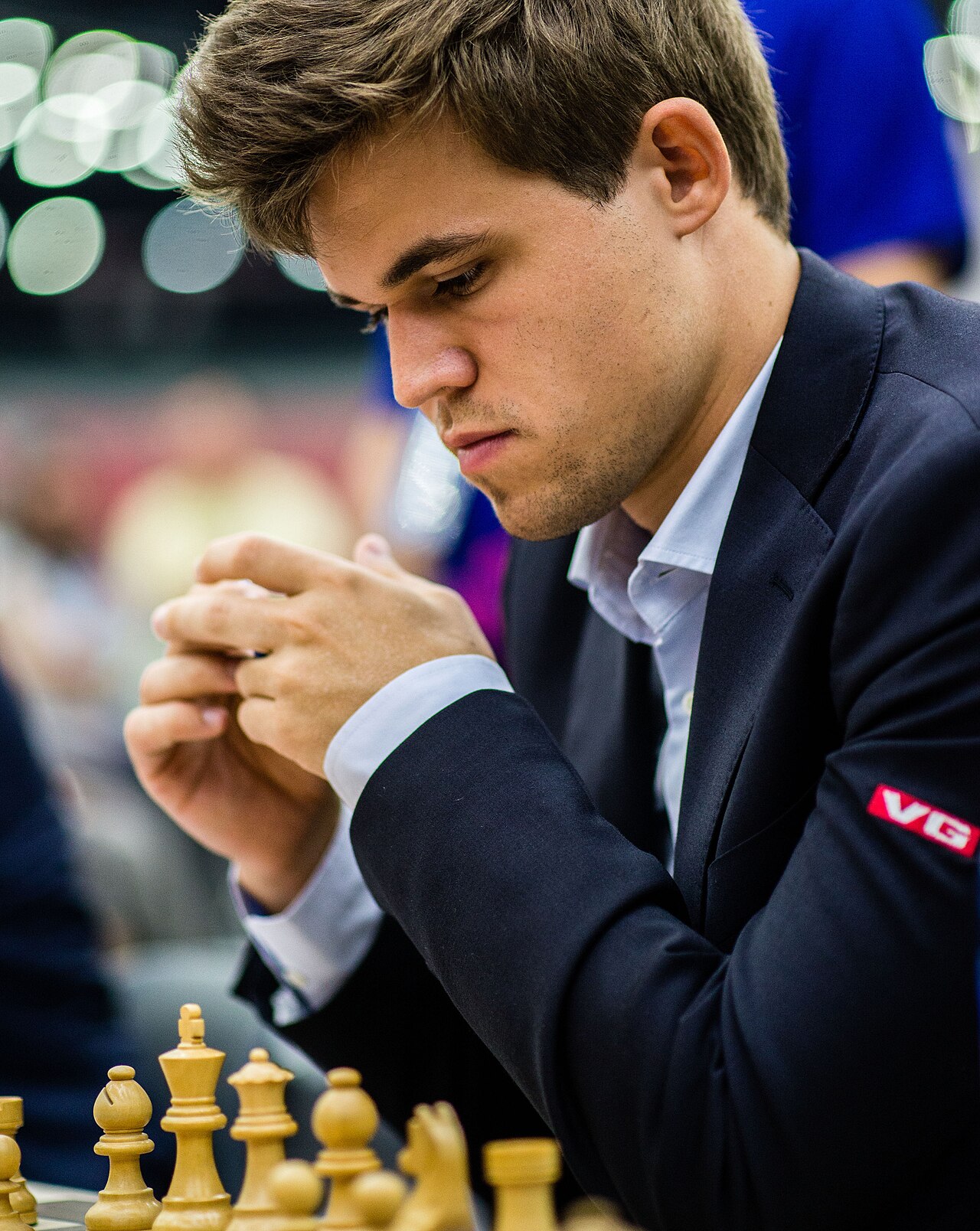
The game: Carlsen vs Praggnanandhaa, Round 8
This was the decisive blow. Carlsen had White and opened 1. e4. Pragg replied with the French Defense, an opening that signals intent from the first move. Carlsen went into the Advance Variation and tried the sideline 6. Na3, which isn’t the sharpest choice at that point in the game. Pragg accepted the resulting complications: 11…Nxd4, grabbing a central pawn at the cost of a knight-for-bishop imbalance.
The position that emerged was genuinely unbalanced. Carlsen had the bishop pair and structural trumps on the queenside. Pragg had active piece play and the initiative. The turning point was move 24: Pragg played 24…Rxf4, winning the f4 pawn with tempo and taking the initiative permanently. Over the next twenty-five moves, Carlsen tried everything: pushing queenside pawns, generating counterplay, keeping queens on the board. After 46…Bg6+, the bishop delivered a discovered attack that drove Carlsen’s king into a sequence of queen checks from which there was no escape. Carlsen resigned after 50…Qd2+.
The accuracy figure (98%) is remarkable but the game earns it. Pragg didn’t have easy options at any point. The decisions he made, particularly around move 24 and the endgame from move 38 onward, required concrete calculation rather than general principle.
Carlsen White Praggnanandhaa Black


After 46…Bg6+, the position is terminal for White. Carlsen’s king runs to e3, f4, f3, f2 in a series of queen checks that end with 50…Qd2+. Pragg picks up the a3 pawn next, his queenside pawns push, and the queen checks continue indefinitely. Carlsen resigned. The engine gives Black approximately +4 at that point, and Carlsen saw far enough into the queen-and-minor-piece endgame to know there was no defense.
Final standings
| Player | Points |
|---|---|
| Praggnanandhaa R | 18.0 |
| Wesley So | 17.0 |
| Alireza Firouzja | 15.5 |
| Magnus Carlsen | 13.0 |
| Vincent Keymer | 11.0 |
| Gukesh Dommaraju | 8.0 |

Wesley So’s silver finish
So’s 17.0 was real. Wesley So won the Armageddon against Firouzja in the final round to lock up second place. His classical play throughout the event was composed: he beat Carlsen in the middle section, kept his losses minimal, and converted his tiebreaks when it mattered.
This is what So’s career looks like right now. He’s been consistently in the top five or six players in the world for several years, never quite breaking through to the titles. At 32, he’s still among the most dangerous players alive in classical chess. Second at Norway Chess is a legitimate result. It also doesn’t feel like one when you know his ceiling.

Gukesh’s week
Gukesh Dommaraju came to Oslo as the reigning world chess champion, the title won in Singapore in December 2024. He left last. His 8.0 points will be analyzed for weeks: what openings failed him, where the preparation gaps were, whether the physical and mental load of carrying the title affected his play.
That analysis is worth waiting for before drawing conclusions. Kasparov lost tournaments as world champion. Karpov did too. Gukesh is 18 years old, a few months into the most demanding role in chess, and he still beat Ding Liren in a match for the ages to get there. One difficult Norway Chess is not a trend. His 8.0 points include Armageddon wins and some real fight in the games; he didn’t collapse entirely.

What comes next
Pragg heads to Zagreb for the GCT SuperUnited Rapid and Blitz Croatia 2026 starting June 29, fresh off his Norway Chess win. Gukesh is also in that field as a wildcard, giving him the chance to respond quickly. After Zagreb: St. Louis in August for the Sinquefield Cup and the Grand Chess Tour Finals.
For Praggnanandhaa R, Norway Chess 2026 is a second major classical title after Tata Steel 2025. Both times, the pattern was the same: a slow start, a mid-tournament reset, then a closing run that couldn’t be caught. That’s not random. It’s a playing style and tournament management approach that suits him particularly well.
The book that captures the attacking mindset Pragg brings when he needs classical wins on demand is The Life and Games of Mikhail Tal, annotated by Tal himself. The sensibility is the same: willing to create imbalances, willing to sacrifice material for activity, willing to trust calculation over safety. If you want the positional framework that makes these calculations sound from the start, Silman’s How to Reassess Your Chess remains the most practical foundation for players at every level. And every serious player practicing at the board needs a DGT 3000, the same clock used at every FIDE-rated event from Oslo to St. Louis.
Sources
This page contains affiliate links. As an Amazon Associate, DiscussChess earns from qualifying purchases.
Sources
Further reading
- The Life and Games of Mikhail Tal, Mikhail Tal ASIN verified via Open Library 2026-05-02. Everyman Chess 1997. The attacking confidence Tal brought to must-win moments maps directly onto how Pragg plays when he needs classical wins on demand. The best annotated game collection in chess literature.
- DGT 3000 Digital Chess Clock ASIN verified via Amazon 2026-05-02. FIDE-standard clock used at Norway Chess and every major classical event on the calendar.