Best Chess Board: Vinyl, Silicone, and Wood
The best chess board depends on how you'll use it: vinyl for tournaments, wood for home, silicone for outdoors. A direct comparison of what works and why.
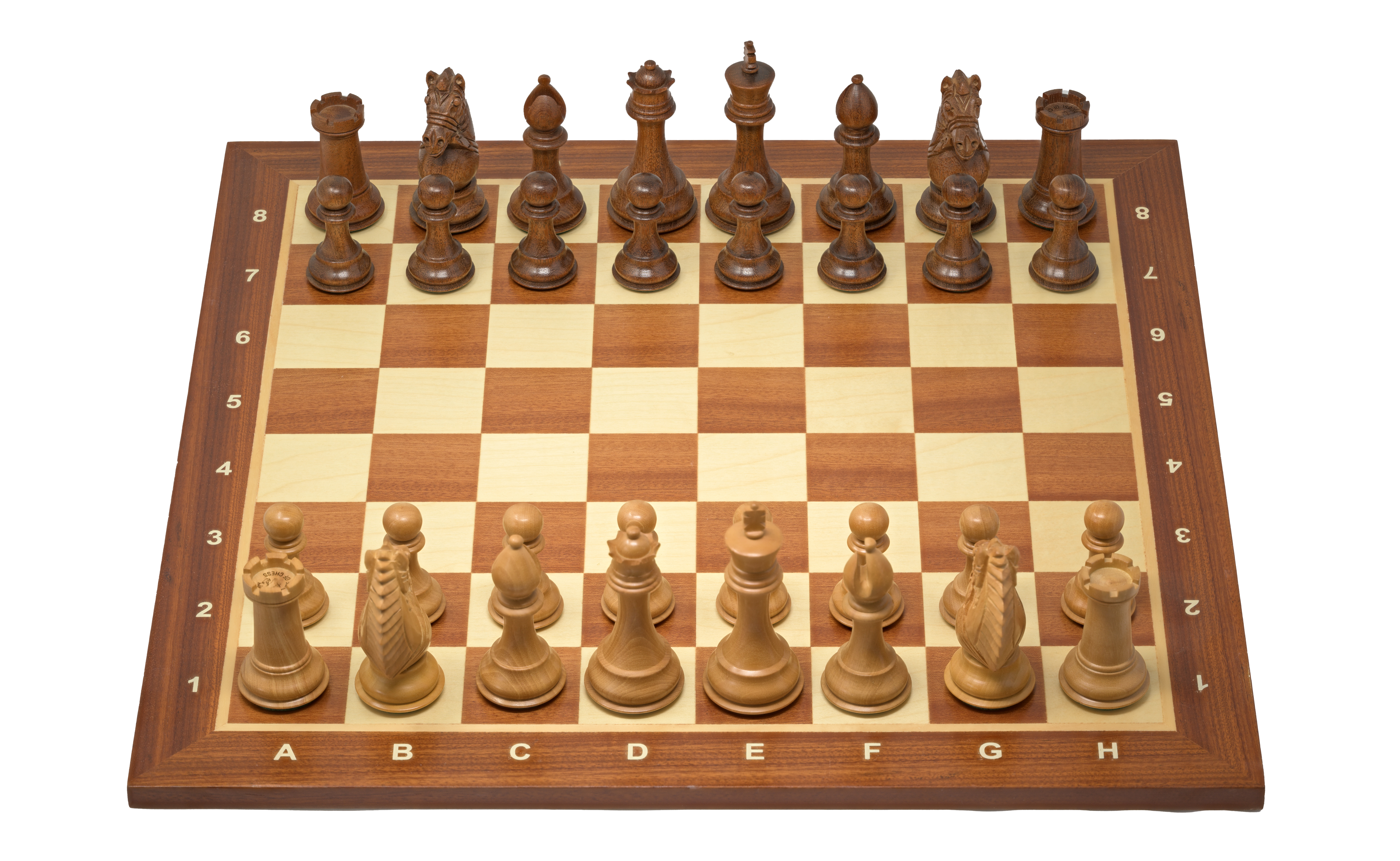
Most players already have pieces. The board that came with them was probably undersized, warped within a year, or just doesn’t feel right under the pieces they’ve since upgraded. Buying a board separately is how serious club players operate. Here is what to choose and why.
The three materials that matter
Vinyl. The standard for tournament chess at every level below grandmaster. Rolls up, doesn’t warp, wipes clean, and lies flat after being stored rolled for months. FIDE’s own Standards of Chess Equipment specifies a square side of 5 to 6 cm (about 2” to 2.36”) for tournament-legal boards; US Chess’s rulebook allows a slightly different range of 2” to 2.5”, with 2.25” (5.7 cm) treated as the de facto standard size at most rated events in North America. A good vinyl board costs $10 to $20. The chess house brands (Chess House, USCF Sales) make the ones you’ll see at rated tournaments across North America. The main downside is aesthetic: vinyl looks like vinyl. If you care about how the board looks on a table, this isn’t your answer.
Silicone. The newer entrant. Thicker than vinyl, softer underfoot if you drop it, folds rather than rolls. Practically indestructible and comfortable for pieces. Some players find the texture slightly tacky. It’s excellent for outdoor or casual use where vinyl might slide on an uneven surface. Costs $15 to $35.
Wood. The right choice for home analysis and permanent setup. A maple-and-walnut or maple-and-rosewood board looks correct, feels correct, and has a solidity that no roll-up material replicates. The downsides: it warps in humidity, it scratches, and a good one costs $50 to $150. Don’t use it for tournaments. Don’t leave it in direct sunlight. For the study table at home, nothing else is as satisfying.
Sizing: the most common mistake
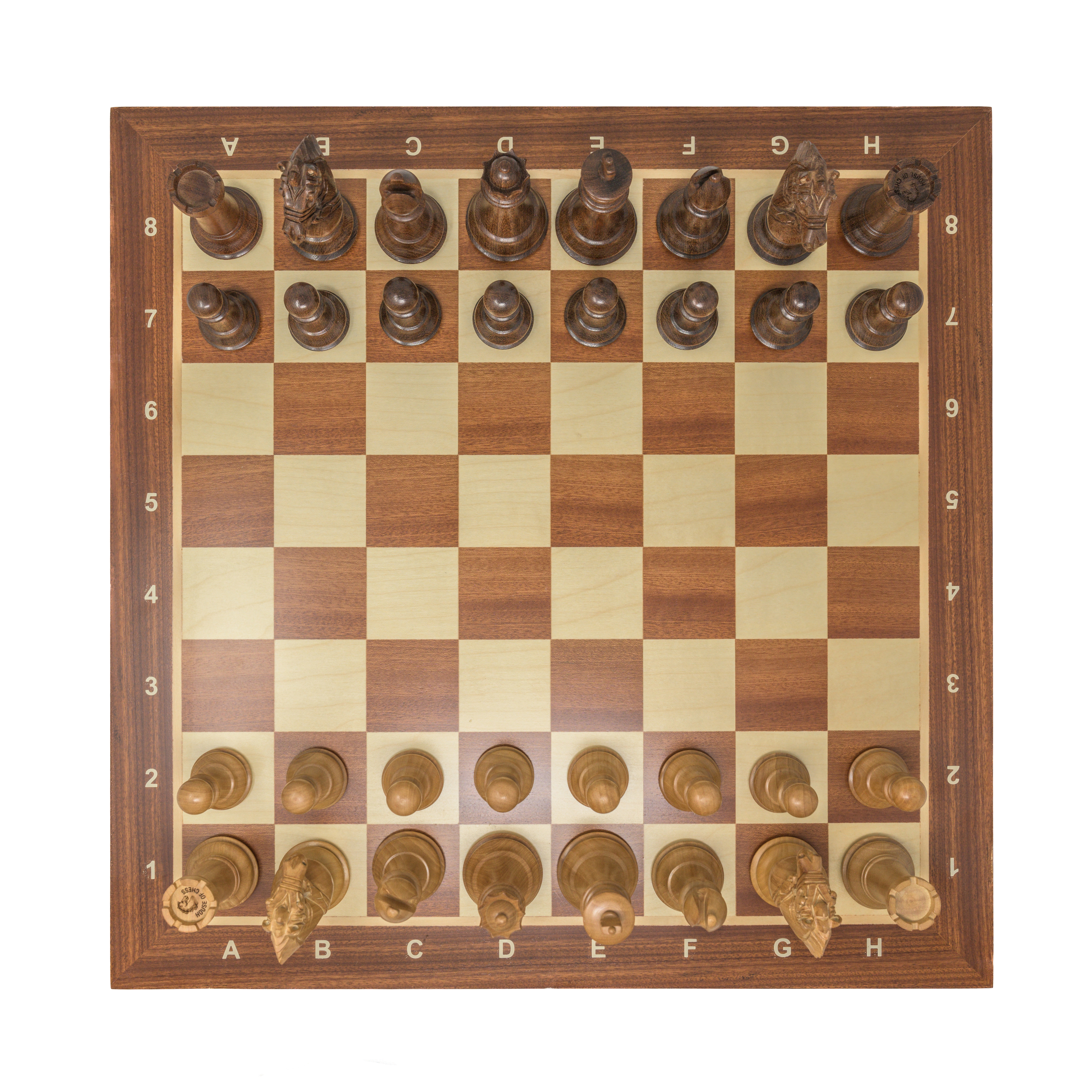
FIDE’s Standards of Chess Equipment document sets three real, official numbers that most sizing charts online paraphrase without citing: king height of 9.5 cm, though pieces may vary by up to 10% from that as long as the full set stays in descending height order; a square side of 5 to 6 cm; and a piece base diameter of 40% to 50% of the piece’s height. There’s also a practical check built into the standard itself: four pawns should be able to stand on a single square, which is really just another way of saying the square has to be roomy enough that pieces don’t feel like they’re spilling off the edges.
Tournament-legal boards have squares between roughly 2” and 2.36” (50-60mm) under FIDE’s numbers, or 2” to 2.5” under US Chess’s slightly wider allowance. The commonly repeated rule of thumb, that the king’s base should be 75% to 80% of the square size, isn’t the literal FIDE base-diameter rule above (that one relates the base to the piece’s own height, not to the square), but it lands in a similar practical place: with a standard 3.75” king, the target square size works out to 55mm to 57mm. A 19” or 20” board (measured along the edge, not including border) with 8 squares typically has 57mm to 60mm squares. This is what most club sets use.
What you’ll find on Amazon labeled “large chess board” is often a 21” or even 23” board with 64mm squares. That’s oversized. Pieces wander, the board looks sparse, and it doesn’t fit a standard table setup well. Stick to 19” to 20” boards unless you’re specifically using oversized pieces.
Mouse pads sold as chess boards typically have 57mm squares and run $10 to $15. They’re functionally identical to vinyl: they lie flat, don’t slide on most surfaces, and are easy to clean. The rubber-backed ones are noticeably better for hard surfaces than the foam-backed ones. It’s the most underrated format for casual home play.
Color and finish, the part sizing guides skip
FIDE’s equipment standard also covers color and surface finish, and it’s worth knowing before you buy, especially online where product photos under studio lighting can hide a glare problem. The two square colors have to contrast clearly: FIDE’s approved combinations include brown or light tan paired with white, cream, off-white, ivory, or buff, and for wood boards specifically, a light wood like birch, maple, or European ash paired against a dark wood like walnut, teak, or beech. What’s explicitly against the standard is a glossy, reflective finish. Tournament boards are supposed to have a dull or matte surface, because a shiny board throws glare back under the overhead lighting most playing halls use, which is distracting during a five-hour game in a way it never is in a five-second product photo. If you’re buying a board for anything beyond casual home use, check the listing for “matte” or “satin” finish language, and be skeptical of boards photographed with a heavy shine.
Matching your board to your pieces
Plenty of serious players own several piece sets and only one board, and there’s nothing wrong with that. The only pairing requirement is size: the board’s square size should be matched to your king’s base diameter, not to any particular set. Approximate guidelines:
- King height 3.0” (75mm): use a board with 45mm to 50mm squares (15” to 17” board)
- King height 3.5” (89mm): use a board with 50mm to 55mm squares (17” to 19” board)
- King height 3.75” (95mm): standard club: use a board with 55mm to 57mm squares (19” to 20” board)
- King height 4.0” (100mm): use a board with 57mm to 60mm squares (20” board)
The House of Staunton Grandmaster set has a 4” king. It looks best on a 20” board with 57-60mm squares.
Where to buy
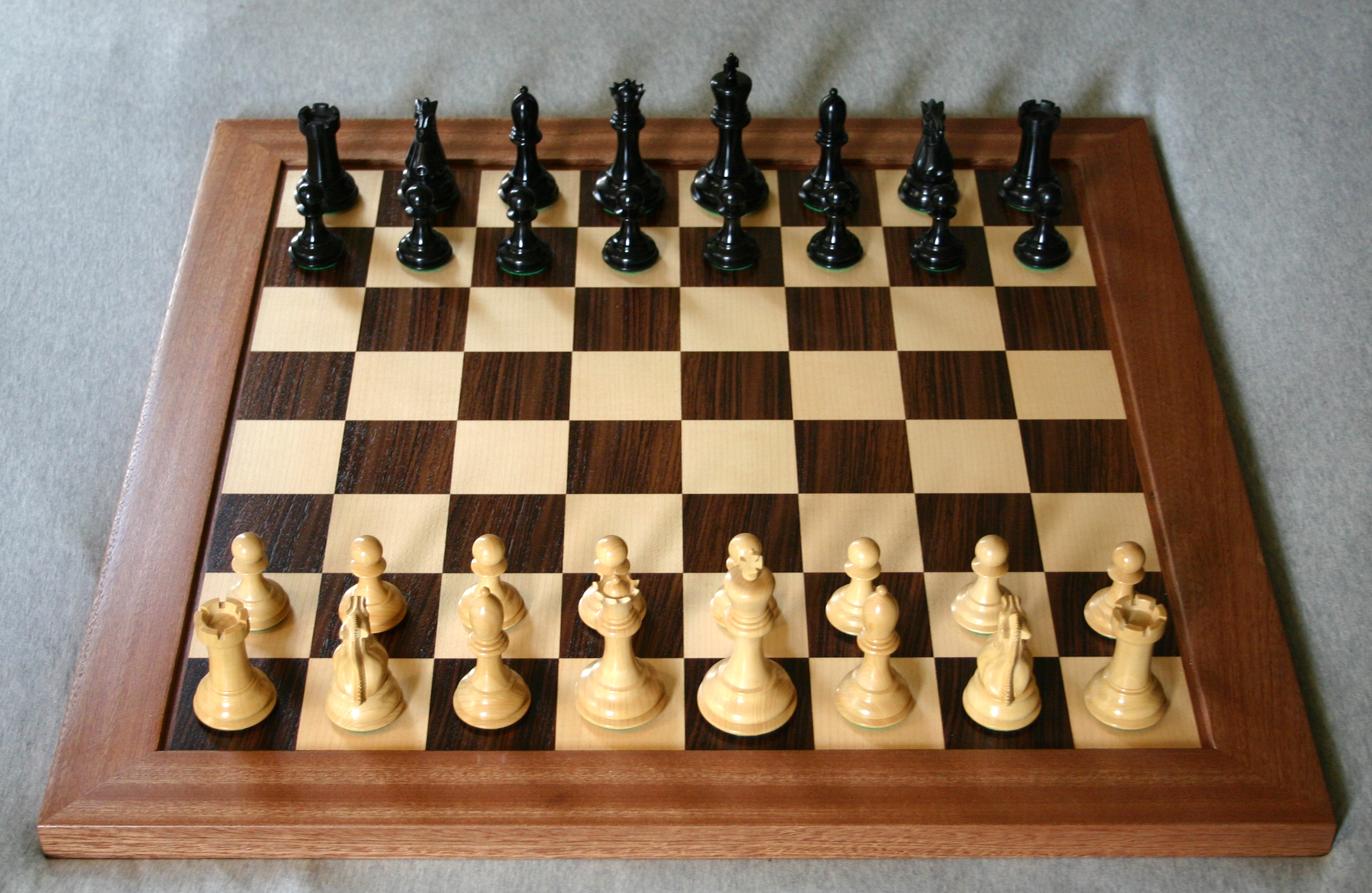
Tournament vinyl chess boards on Amazon. Filter for 19” or 20” and double-check the square size in the product description. The listings that state “55mm” or “57mm” squares explicitly are more reliable than ones that just list the board’s total size.
Wood chess boards (maple/walnut) on Amazon, for home analysis. Look for boards that specify the wood species; listings that say only “natural and dark wood” often have plywood cores.
House of Staunton (direct) sells matched board and piece sets with guaranteed sizing compatibility. Worth the premium if you’re spending $100 or more.
Sources
This page contains affiliate links. As an Amazon Associate, DiscussChess earns from qualifying purchases.
Sources
Further reading
- House of Staunton Grandmaster Chess Set (4-Inch Pieces) ASIN verified via Amazon 2026-05-02. If you're buying a standalone board, this is the matching piece set used by most US club players.
- WE Games Tournament Chess Set (19" Board and Pieces) ASIN verified via Amazon 2026-05-02. The combined set that most club players start with before upgrading boards separately.