Javokhir Sindarov: 2025 World Cup Winner
In November 2025, Javokhir Sindarov of Uzbekistan became the youngest FIDE World Cup winner in history at age 19, beating Wei Yi in tiebreaks in Goa. Five months later he won the 2026 Candidates Tournament with a record score. A breakdown of chess's most alarming new force.
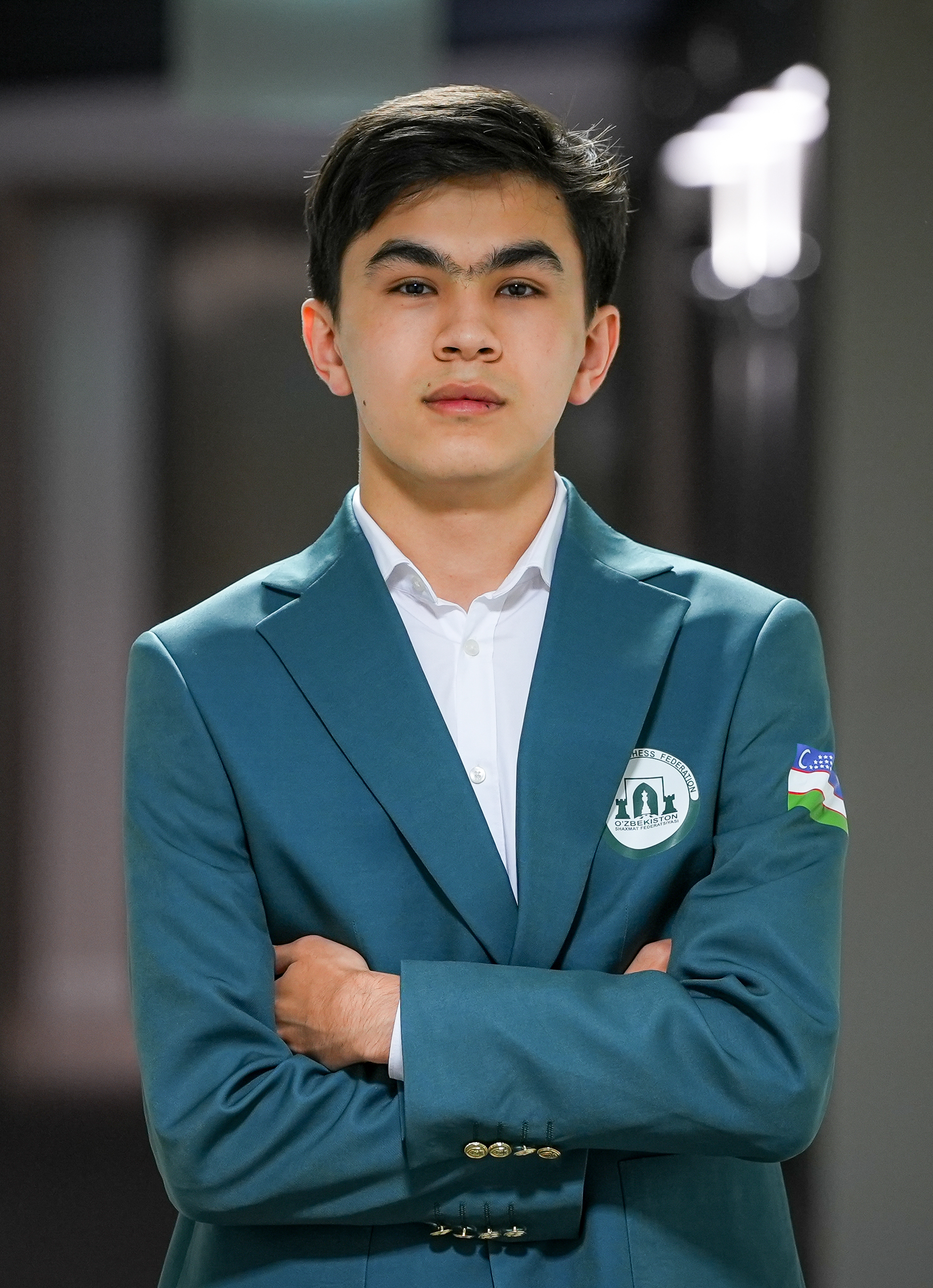
The 2025 FIDE World Cup, held in Goa from October 31 to November 27, was a 206-player knockout event that ended with a 19-year-old from Uzbekistan standing in the final. Javokhir Sindarov beat Wei Yi of China 1.5–0.5 in tiebreaks to claim the title, a $120,000 prize, and a record that had never been set before: youngest FIDE World Cup winner in history.
Born December 8, 2005, the same year as Praggnanandhaa, he was already a grandmaster, and had been for years. His grandfather Komil taught him chess at four and a half. He earned his first GM norm at the Alekhine Memorial in June 2018, his second at the World Junior Championship that September (finishing runner-up, which pushed his rating past 2500), and his third that October, becoming a grandmaster at 12 years, 10 months, and 8 days old, the second-youngest in history at the time. By 2021 he’d won Uzbekistan’s national championship twice and helped the national team win gold at the 44th Chess Olympiad. He’d already beaten top-twenty players in tournament play. But winning a 206-player knockout at 19, navigating eight rounds of chess against a field that included every elite player outside those seeded directly into the Candidates, put Sindarov in a category with very few precedents.
Five months later, he won the 2026 Candidates Tournament with a score nobody in the modern era had matched. He’ll face Gukesh Dommaraju for the world title later this year.
The path through Goa
The World Cup has run since 2005 as FIDE’s biennial knockout championship, originally with a 128-player field and expanded to 206 starting in 2021. Recent winners were exactly the kind of established names Sindarov’s win broke the mold on: Levon Aronian in 2017, Teimour Radjabov in 2019, Jan-Krzysztof Duda in 2021, and Magnus Carlsen himself in 2023, beating Praggnanandhaa in that final. None of them were teenagers. All of them were already fixtures near the top of the rating list. Sindarov winning at 19, as a strong grandmaster but not yet a top-ten player by rating, is the anomaly the “youngest ever” headline undersells.
The Chess World Cup format seeds the top fifty players directly into the second round, giving them a bye past the first. From Round 2 onward, it’s single-elimination across two classical games, with tiebreaks if those split. Every loss ends your tournament.
Sindarov entered as a high seed and advanced round by round. The final against Wei Yi went to tiebreaks after two drawn classical games. Wei Yi is a top-fifteen player who’d been one of the most consistent competitors in international chess for years. Sindarov won the tiebreak 1.5–0.5.
Finals Game 1, Petrov Defense
The first classical game of the final saw Sindarov hold the White pieces in a Petrov Defense that simplified early. Both players neutralized each other through a long bishop-and-pawn endgame. By move 50 the position was drawn, setting up the tiebreaks that Sindarov ultimately won.
Sindarov, Javokhir White Wei, Yi Black


Andrey Esipenko finished third. Gukesh, the reigning world champion, was eliminated in the third round by Frederik Svane, a German grandmaster ranked well below him. That result, barely mentioned in the same breath as Sindarov’s win, is its own data point about what knockout chess does to rankings.
Uzbekistan’s chess rise
Sindarov isn’t an anomaly: he’s part of a pattern. Uzbekistan has built a remarkably deep chess talent pool. Nodirbek Abdusattorov, born 2004, is Uzbekistan’s other elite player and has been competing at the world level since his teens. Both Abdusattorov and Sindarov came up through a national training system that has consistently produced grandmasters with tactical sharpness and strong endgame technique.
The broader context: chess talent used to be concentrated in Russia, the Soviet states, and a handful of Western countries. The last five years have redistributed that significantly. India is the most dramatic example. Uzbekistan, Vietnam, and Iran have also produced elite-level players at an unusual rate.
What came next for Sindarov
In March–April 2026, Sindarov won the FIDE Candidates Tournament in Cyprus with 10/14: the highest score in modern Candidates history. He went undefeated. He clinched with a round to spare.
He was still 20 years old.
He’ll play Gukesh for the world title in the 2026 World Chess Championship, a match between two players who were essentially unknown outside serious chess circles eighteen months ago. Carlsen has no role in it. Caruana finished third in the Candidates. Nakamura fourth. The old guard is still competing, but the match at the top is between two players who broke through recently and fast.
For study in the Uzbek style of technically precise, tactically aggressive chess, Fischer’s My 60 Memorable Games remains the standard for understanding how a player with similar attacking instincts thinks at depth. Silman’s Complete Endgame Course covers the endgame precision that elevates good tactical players into world-title contenders. Our improvement guide maps which resources match which stage of development.
Sources
This page contains affiliate links. As an Amazon Associate, DiscussChess earns from qualifying purchases.
Sources
Further reading
- My 60 Memorable Games, Bobby Fischer ASIN verified via Open Library 2026-05-02. Batsford 1995 edition. The foundational annotated game collection, the kind of study material that produces players like Sindarov.
- Silman's Complete Endgame Course, Jeremy Silman ASIN verified via Open Library 2026-05-02. Siles Press 2007. Endgame precision is what distinguishes elite tactical players from merely strong ones.
- DGT 3000 Digital Chess Clock ASIN verified via Amazon 2026-05-02. Used at World Cup and all FIDE-rated events.