Sergey Karjakin: GM at 12, Carlsen Challenger
Karjakin set the youngest grandmaster record at 12 years, 7 months in 2002, challenged Magnus Carlsen for the world title in 2016, and tied the classical match 6–6 before losing the rapid tiebreaks. His career since 2022 has been complicated by public statements about Russia's war in Ukraine.
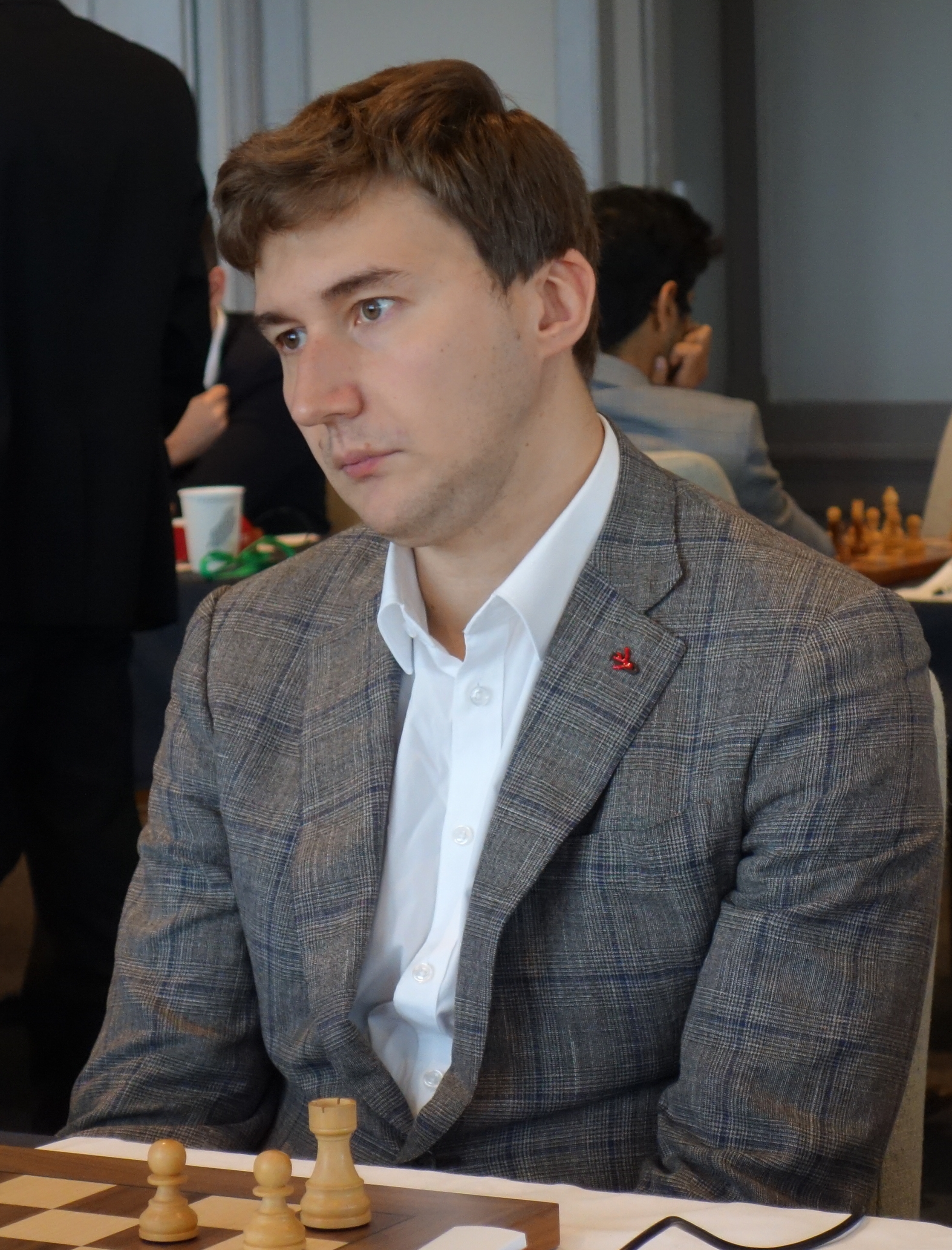
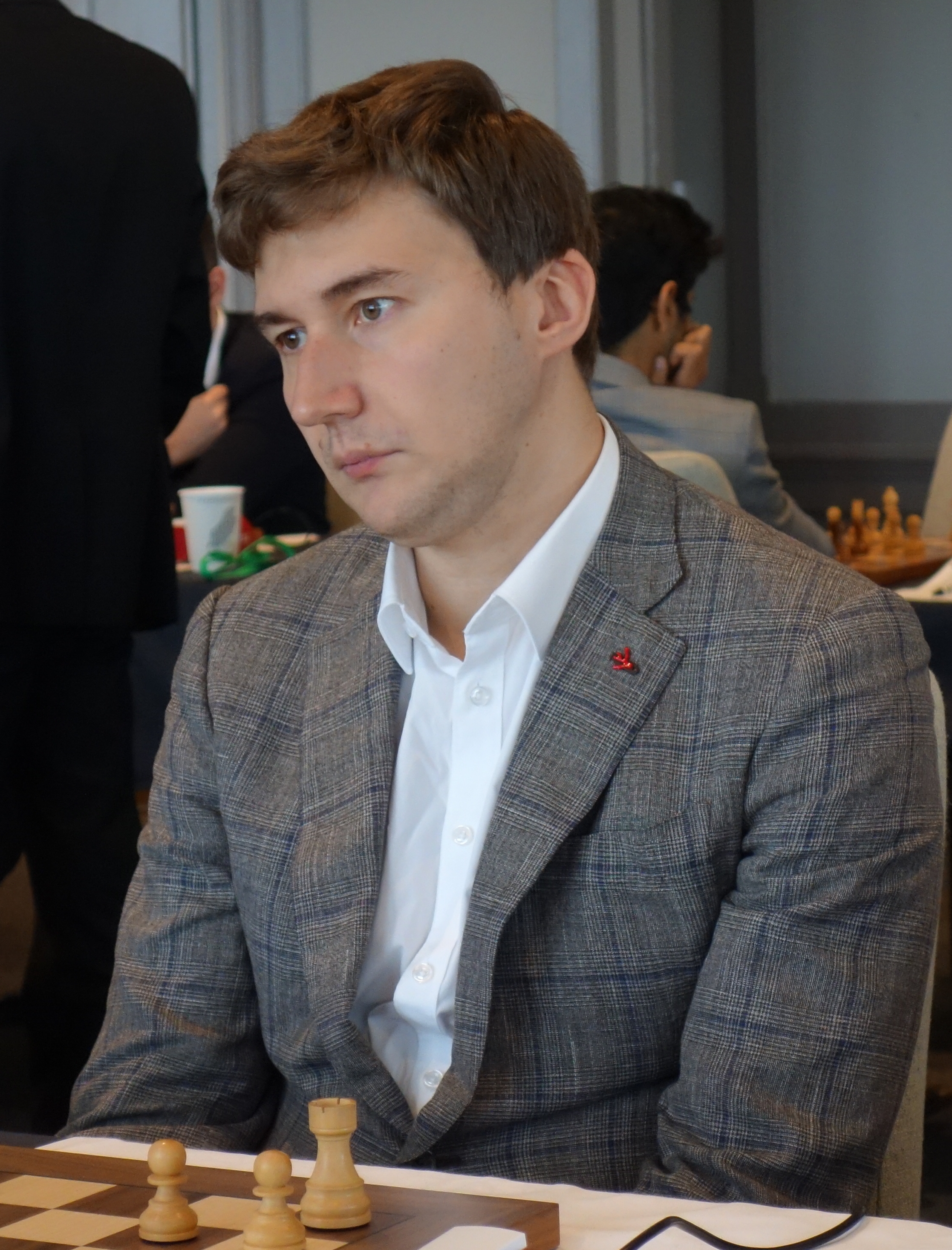
Sergey Karjakin was born January 12, 1990, in Simferopol, Crimea, then part of Ukraine. He became a grandmaster on August 12, 2002, at 12 years, 7 months, 0 days, the youngest in chess history at the time, a record that stood for nearly two decades. He challenged Magnus Carlsen for the World Chess Championship in 2016 in New York, tied the 12-game classical match 6–6, and lost the rapid tiebreaks 1–3. His peak FIDE rating, 2788, reached in July 2011, made him the world’s No. 4 player at the time.
He represented Ukraine until 2009, then switched federations to Russia. In February 2022 he publicly endorsed Russia’s invasion of Ukraine, which led the Grand Chess Tour to ban him from its events and FIDE’s Ethics Commission to suspend him from FIDE-rated competition for six months. He has played almost no classical chess since; his career record before 2022 is a genuinely elite one, and the years since are a separate, well-documented chapter of it.
The youngest grandmaster record
Karjakin was already a serial youth champion before the GM record: European Under-10 champion in 1999, World Under-12 champion in 2001, and an International Master at 11. He earned his final grandmaster norms in 2002, breaking the previous record by a wide margin, and the mark stood until 2021, when Abhimanyu Mishra beat it by roughly two and a half months. Achieving grandmaster norms at 12 requires performing above 2500 Elo in qualifying tournaments against titled opposition, at an age when most players are still developing basic tactical vision.
He made his senior international mark quickly. At the 2004 Calvià Olympiad he was Ukraine’s youngest team member and won individual gold on board two with 6.5/7. He won the Corus (now Tata Steel) Group B section in 2005, switched federations to Russia in July 2009, and immediately won the Corus A group that same year with 8/13, a result that announced he belonged in the tournament’s top flight, not just its feeder groups.
Peak years: rapid titles, a World Cup, and the 2016 Candidates
Karjakin’s 2010s were his best decade. He won the ACP World Rapid Cup in May 2010, beating Dmitry Jakovenko 4–3 in the final, and reached his career-peak 2788 rating in July 2011. In 2012 he won the World Rapid Championship in Astana, finishing a full point ahead of Carlsen. In 2015 he won the Chess World Cup, the gauntlet 128-player knockout that is one of the hardest single events in chess to win, beating Peter Svidler 6–4 in blitz tiebreaks after trailing 0–2 in the classical portion of the final. Later that year he beat five different Chinese grandmasters in sequence, Wei Yi, Ding Liren, Ni Hua, Yu Yangyi, and Wang Yue, in a Russia-China challenge match.
The 2016 Candidates Tournament in Moscow was the result that mattered most: Karjakin won it outright with 8.5/14, a point clear of Fabiano Caruana and Viswanathan Anand, earning the right to challenge Carlsen. It was his second Candidates appearance; in 2014 at Khanty-Mansiysk he had finished second behind Anand.
The 2016 World Championship
The match was 12 classical games in New York. Karjakin won Game 8 after a long positional squeeze, converting a queenless middlegame into a king-and-pawn structure where his technique told. Carlsen equalized in Game 10 with one of the most spectacular moves of his championship reign, 26.Qb8+!, a move several commentators initially misread live as a blunder before realizing it won on the spot. Going into the tiebreaks tied 6–6, Karjakin had delivered the most dangerous challenge to Carlsen’s title since it began in 2013.
Game 8, the decisive moment of his challenge, is below. Karjakin as Black steadily accumulated queenside counterplay through the endgame, won the a-pawn, marched it down the board, and forced resignation.
Carlsen, Magnus White Karjakin, Sergey Black


The rapid tiebreaks went to Carlsen 3–1. The gap between the two players in rapid chess was decisive; Carlsen is among the strongest rapid players in history, and Karjakin couldn’t close it under tiebreak pressure. His defensive preparation, particularly his Berlin Defense repertoire and his ability to hold endgames that looked lost on the surface, made the match the closest anyone came to unseating Carlsen over 12 classical games. He backed it up a month later by winning the World Blitz Championship in Doha, edging Carlsen on Elo tiebreak with 16.5/21.
Playing style: “Minister of Defense”
Karjakin’s chess press nickname, “Minister of Defense,” describes his game precisely. His greatest strength was never a specific opening weapon; it was an almost unnaturally reliable ability to hold difficult, even objectively worse positions, wearing opponents down over long games rather than seeking early complications. The Berlin Defense against 1.e4, the same drawing-oriented structure Kramnik used to dismantle Kasparov’s attacking chess in 2000, became his primary tool as Black against the world’s most aggressive players, and by 2016 he had turned it into a wall Carlsen couldn’t find a way through across six classical games. He paired that defensive solidity with real tactical sharpness when the position called for it, evident in his blitz-tiebreak nerve at the 2015 World Cup and his ability to grind out technical wins, like Game 8 of the 2016 match, once an opponent’s position cracked even slightly.
Later career, the Ukraine war, and the 2022 suspension
Karjakin remained a Candidates regular through the late 2010s, finishing third at the 2018 Candidates and reaching the final of the 2021 Chess World Cup before losing to Jan-Krzysztof Duda. Then, in February 2022, days after Russia’s full-scale invasion of Ukraine, Karjakin publicly endorsed the war. The Grand Chess Tour announced it was banning him from all upcoming and future events; Chess.com barred him from its prize events; and in March 2022 FIDE’s Ethics and Disciplinary Commission suspended him from FIDE-rated competition for six months. That June, Vladimir Putin awarded him the Order “For Merit to the Fatherland.” His suspension technically expired in September 2022, but with Russian players barred from competing under their national flag at FIDE events, Karjakin has largely stayed away: he played only two classical FIDE-rated games between January 2022 and mid-2023, and FIDE dropped him from its rating list entirely in June 2024. Ukraine’s government stripped his state honors by presidential decree in January 2025. He is now a Russian senator representing Crimea in the Federation Council, a position he assumed in September 2024.
The chess record and the politics sit side by side rather than replacing one another: a genuine two-time challenger for the World Rapid crown, a World Cup winner, a Candidates Tournament winner, and the man who took Magnus Carlsen to a tiebreak in a classical world championship match, whose competitive career effectively ended at 32 over a decision that had nothing to do with the board.
Sources
- FIDE Rating Profile: Sergey Karjakin
- FIDE World Chess Championship 2016
- Sergey Karjakin, Wikipedia (cross-checked against cited primary sources)
- Kasparov, Garry. How Life Imitates Chess. Bloomsbury. (affiliate)
This page contains affiliate links. As an Amazon Associate, DiscussChess earns from qualifying purchases.
Sources
Further reading
- How Life Imitates Chess, Garry Kasparov ASIN verified via Open Library 2026-05-02. Kasparov's account of competitive pressure and preparation: the dynamics Karjakin deployed in the 2016 match.