Scandinavian Defense: The Straightforward Answer to 1.e4
The Scandinavian Defense (1.e4 d5) immediately challenges White's center pawn. After 2.exd5, Black recaptures with the queen or a knight. Simple to learn, harder to play well. Here's how the main variations work.
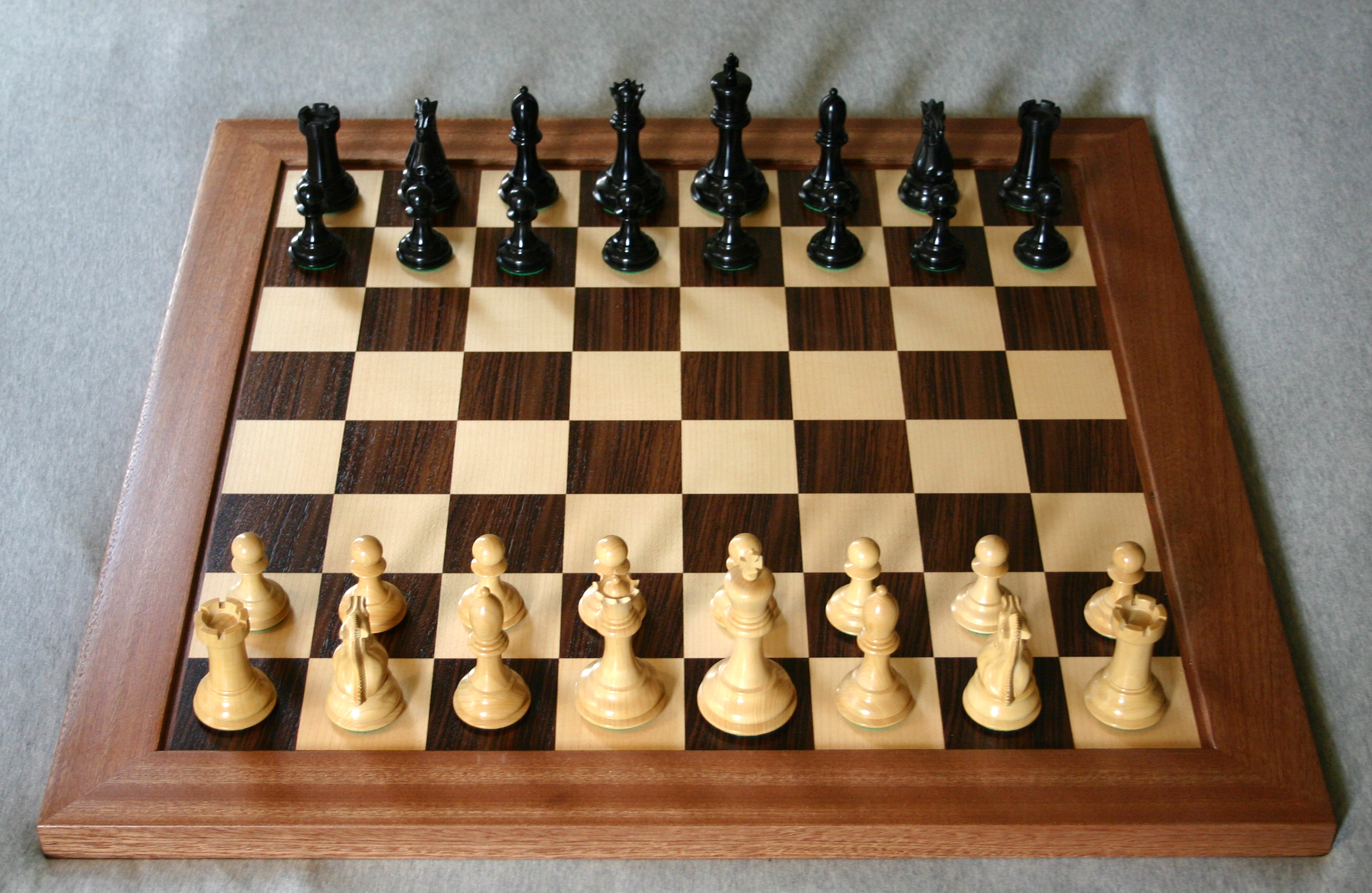
The Scandinavian Defense begins 1.e4 d5. Black immediately challenges White’s center pawn rather than developing first. After 2.exd5, Black can recapture with the queen (2…Qxd5, the main line) or with a knight (2…Nf6, the Modern Scandinavian). The opening is also called the Center Counter Defense.
It’s one of the oldest responses to 1.e4 in recorded chess history, it appears in Luis Ramírez de Lucena’s 1497 manuscript, which is the earliest printed chess book. The opening principle is direct: challenge the center immediately, don’t wait for complications to develop.
Why bringing the queen out early doesn’t just lose time
The standard opening rule, don’t move your queen early, exists because an exposed queen gets chased around the board by developing pieces, losing time that the opponent converts into a lead in development. The Scandinavian appears to violate that rule on move 2. What actually happens is more specific: White does gain tempo by attacking the queen with Nc3 and sometimes d4, but Black spends those tempo-losing queen moves landing on squares (a5, d6, d8) that turn out to be useful anyway, then catches up in development immediately afterward with …Nf6, …c6, …Bf5 or …Bg4, and castling. The position that results isn’t a Black player who’s behind in development; it’s a Black player who traded a slightly awkward queen for a completely resolved central pawn structure with no weaknesses. That trade is the entire argument for the opening.
Main lines
2…Qxd5 3.Nc3 Qa5 (Mieses Variation): Black recaptures with the queen immediately, then retreats to a5 where it avoids harassment but is slightly passively placed. Black develops normally with …Nf6…c6…Bf5, and castles. The resulting positions are solid and slightly passive for Black: playable but not sharp.
2…Qxd5 3.Nc3 Qd6 (Portuguese-influenced modern main line): The queen retreats to d6 instead of a5, an idea popularized at grandmaster level by Sergei Tiviakov starting in late 2005. The point of d6 over a5: the queen stays more centralized and doesn’t get shut out of the game on the rim, and it eyes d4 and the long diagonal in some lines. Tiviakov built an entire career weapon around this single square, going unbeaten in 110 classical games between October 2004 and September 2005 while road-testing it, and it has since become the more commonly recommended version of the Scandinavian at club and master level alike.
2…Nf6 (Modern Scandinavian): Black doesn’t recapture immediately and instead develops the knight. After 3.d4 Nxd5 4.Nf3, Black can continue with a Grunfeld-like setup (fianchettoed bishop on g7) or more classical development. More complex and theoretically demanding than the queen recapture.
Who plays it
The Scandinavian is played at grandmaster level, it’s appeared in World Chess Championships and major tournaments, but is more common at club level. It’s a practical first choice for players who want to avoid mainstream 1.e4 theory without learning a complex defense like the Sicilian: simple to understand, no long lines to memorize, and the plans stay clear from the first few moves.
The opening’s most important modern advocate is Sergei Tiviakov, a Russian-Dutch grandmaster who turned the 3…Qd6 line into his signature weapon and one of the most reliable, hard-to-beat repertoire choices in professional chess. His demonstration that the Scandinavian could hold up against elite opposition, not just survive but actively win, changed how seriously the opening is taken at the top level.
Tiviakov beats Kamsky at Wijk aan Zee
Kamsky vs. Tiviakov, Corus tournament (now Tata Steel), Wijk aan Zee 2006, is the clearest top-level demonstration of the Scandinavian’s soundness. Gata Kamsky, a former World Championship Candidate and one of the strongest players never to reach a title match, had White. Tiviakov played his trademark 3…Qd6, kept the position balanced through the middlegame, and ground out a 43-move win after Kamsky’s position collapsed under pressure on the queenside and kingside simultaneously.
Kamsky, Gata White Tiviakov, Sergei Black


For club players
The Scandinavian’s appeal for newer players isn’t just simplicity, it’s that the plans stay legible for both sides across the whole game. Black knows what the pieces are for from move 3: knight to f6, bishop out to f5 or g4 before …e6 closes the diagonal, castle, and use whichever open file the position offers. That clarity is worth more at club level than a theoretically sharper opening whose points only become clear 15 moves deep. See our chess improvement guide for more on when a low-maintenance opening like this one is the right training priority.
Sources
- Hooper, David, and Kenneth Whyld. The Oxford Companion to Chess. Oxford University Press, 1992.
- Kamsky, Gata, vs. Tiviakov, Sergei. Corus A, Wijk aan Zee, Round 13, January 29 2006.
- Chernev, Irving. Logical Chess: Move by Move. Batsford. (affiliate)
This page contains affiliate links. As an Amazon Associate, DiscussChess earns from qualifying purchases.
Sources
- Hooper, David, and Kenneth Whyld. The Oxford Companion to Chess. Oxford University Press, 1992.
- Kamsky, Gata, vs. Tiviakov, Sergei. Corus A, Wijk aan Zee, Round 13, January 29 2006.
Further reading
- Logical Chess: Move by Move, Irving Chernev ASIN verified via Open Library 2026-05-02. Chernev's annotated games demonstrate the structural principles that apply directly to Scandinavian positions.