Pirc Defense: Black's Fianchetto System Against 1.e4
The Pirc Defense (1.e4 d6 2.d4 Nf6 3.Nc3 g6) lets White build a large center and then attacks it with pieces. A hypermodern defense that's solid, flexible, and frequently used as a surprise weapon at all levels.
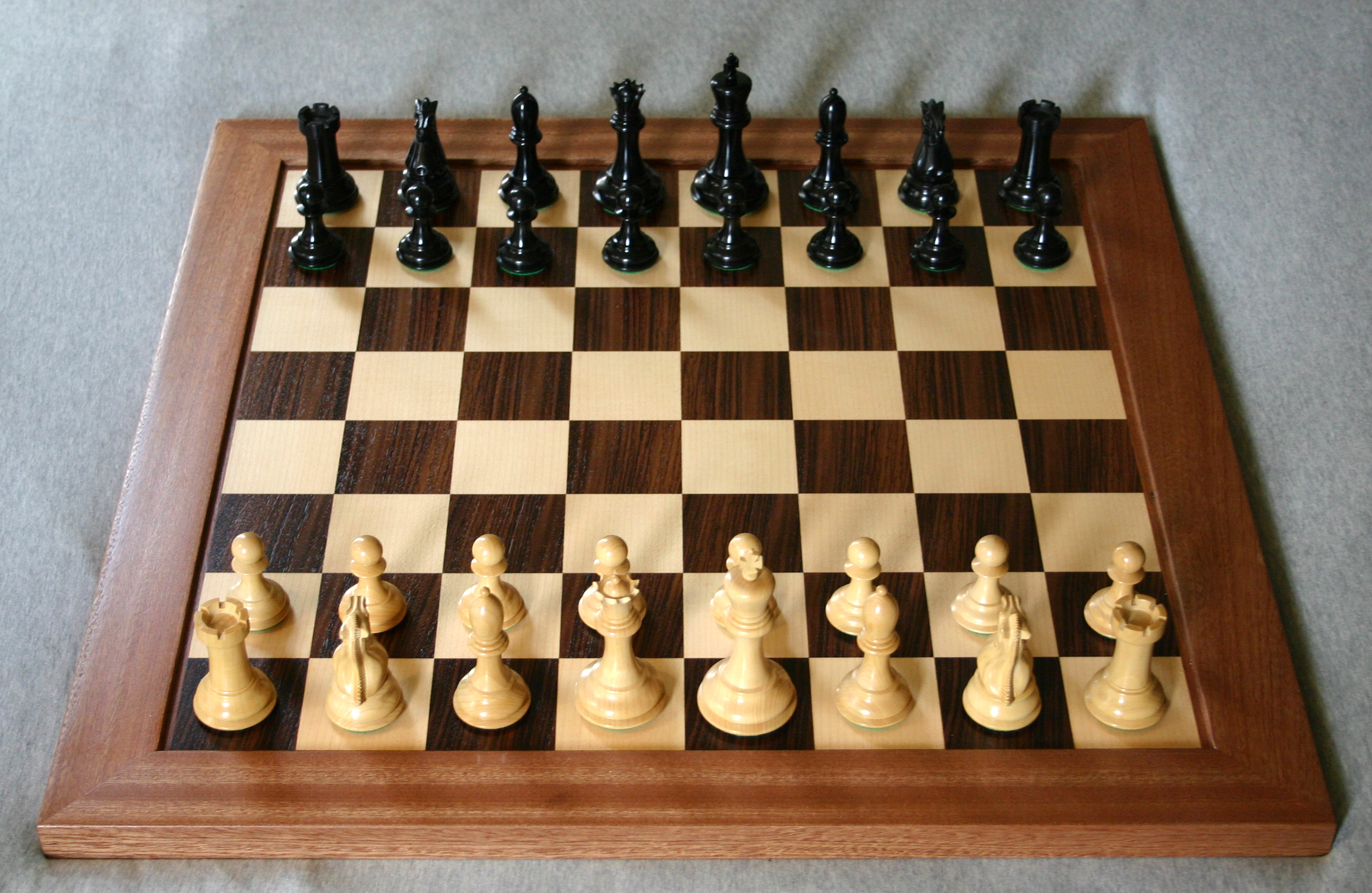
The Pirc Defense begins 1.e4 d6 2.d4 Nf6 3.Nc3 g6. Black’s plan is hypermodern: let White build a pawn center with d4 and e4, fianchetto the bishop to g7, and then attack the center with pieces. The result resembles the King’s Indian Defense against 1.d4, but the move order differences create meaningful distinctions.
Named for Vasja Pirc (1907–1980), a Slovenian grandmaster and five-time Yugoslav champion who championed the system through the 1930s to 1950s. A history and geography teacher in Ljubljana by profession, Pirc also edited two Yugoslav chess magazines and represented his country in six Olympiads, earning the grandmaster title in 1953. The opening has also been called the Ufimtsev Defense in some literature, after the Soviet player Anatoly Ufimtsev who explored similar ideas independently, or the Modern Defense, though today that name is reserved for the distinct 1.e4 g6 move order that skips …d6 first.
Giving up the center on purpose and trusting piece pressure to undermine it later isn’t an intuitive first opening. It rewards a player who already understands basic positional principles, not someone still learning why the center matters in the first place. The Pirc tends to click somewhere around 1200 and up, once a player can hold a cramped position under pressure without panicking and grabbing space back too early.
Main variations
Austrian Attack (4.f4): White plays f4 aggressively, building a broad pawn center (e4, d4, f4) and preparing to advance. The positions are sharp and tactical. Black must fight actively on the queenside and in the center before White’s kingside pawns become dangerous.
Classical System (4.Nf3 Bg7 5.Be2 0-0 6.0-0): White develops normally and castles without f4 aggression. Solid and flexible. The positions resemble King’s Indian structures where both sides build naturally before committing.
150 Attack (4.Be3 Bg7 5.Qd2 c6 6.f3): White prepares a kingside attack with h2-h4-h5, using f3-g4-h4 or h2-h4 as the attacking mechanism. The unusual name comes from English club rating: “150” refers to roughly 150 on the old English Chess Federation grading scale, about 1850 Elo. The idea was that even a modest club player rated 150 ECF could pick up this plan and get a dangerous attack without studying real theory, since the setup (Be3, Qd2, f3, long castle, pawn storm) doesn’t require memorizing anything, only understanding the pattern. That reputation for bluntness makes what happened with it at world championship level all the more remarkable.
How it compares to the King’s Indian
The King’s Indian Defense (against 1.d4) and the Pirc (against 1.e4) share structural themes (fianchettoed bishop, hypermodern center strategy) but the move orders create key differences. In the King’s Indian, Black plays …d6 after White has committed to d4 and c4. In the Pirc, Black plays …d6 before White necessarily commits to all four squares.
The Pirc is generally considered slightly more passive than the King’s Indian because Black’s pawn on d6 controls less central space than Black’s e5 counter in the King’s Indian Classical variation. What the Pirc trades for that passivity is flexibility: Black can steer toward several different pawn structures depending on how White commits, which is exactly why it’s proven such a durable surprise weapon across nearly a century of use.
Kasparov’s Immortal: the 150 Attack at its most devastating
The 150 Attack has a reputation as a blunt instrument for players who don’t want to study theory. Then Garry Kasparov picked it up against Veselin Topalov at the 1999 Hoogovens tournament in Wijk aan Zee and produced what Chess.com later ranked as the single greatest chess game ever played, a title now widely known simply as “Kasparov’s Immortal.” White sacrifices the exchange on move 24 with Rxd4, exposes Black’s king in the center, and chases it from queenside castling all the way to d1 across the following twenty moves, an attack that had to be calculated to the very end from the moment the sacrifice was made. It’s the definitive answer to anyone who dismisses the 150 Attack as unsophisticated: in the hands of a player capable of calculating twenty moves of forced complications, the “club player’s system” produced the most celebrated attacking game of the modern era.
Kasparov, Garry White Topalov, Veselin Black


Who plays it, and why the surprise value still works
The Pirc rewards preparation because so few opponents study it in depth. It doesn’t dominate elite repertoires the way the Sicilian or King’s Indian do, but it appears reliably at grandmaster level as a change-of-pace weapon precisely because most 1.e4 players spend far more preparation time on 1…e5 and 1…c5 than on 1…d6. That imbalance in study time, not the opening’s objective soundness, is the real source of its practical value: an opponent who has to think from move 4 instead of reciting memorized theory is an opponent more likely to make the kind of mistake Topalov made against Kasparov.
At club level, the appeal is different but related. The plans are short and legible on both sides (White chooses between quiet development, the Austrian pawn storm, or the blunt-force 150 Attack; Black fianchettoes, castles, and counters in the center or on the queenside depending on which system White picks), which means a player can learn the Pirc’s ideas in an afternoon in a way that’s simply not true of, say, the Ruy Lopez.
Sources
- Hooper, David, and Kenneth Whyld. The Oxford Companion to Chess. Oxford University Press, 1992.
- Kasparov, Garry, vs. Topalov, Veselin. Hoogovens Wijk aan Zee, Round 4, January 20 1999.
- Silman, Jeremy. How to Reassess Your Chess. Siles Press, 4th ed. 2010. (affiliate)
- Kasparov, Garry. My Great Predecessors, Vol. 1. Everyman Chess. (affiliate)
This page contains affiliate links. As an Amazon Associate, DiscussChess earns from qualifying purchases.
Sources
- Hooper, David, and Kenneth Whyld. The Oxford Companion to Chess. Oxford University Press, 1992.
- Kasparov, Garry, vs. Topalov, Veselin. Hoogovens Wijk aan Zee, Round 4, January 20 1999. ("Kasparov's Immortal.")
Further reading
- How to Reassess Your Chess, Jeremy Silman ASIN verified via Amazon 2026-05-02. The center control vs. piece activity dynamic that defines the Pirc is covered in Silman's imbalance framework.
- My Great Predecessors Vol.1, Garry Kasparov ASIN verified via Open Library 2026-05-02. Kasparov's own historical series covers the champions whose hypermodern ideas underpin defenses like the Pirc.