Paul Morphy and the Opera Game: Chess's First Genius
Paul Morphy dominated European chess in 1858–1859 at age 21 and retired before 25. His Opera Game, 17 moves of punishment for bad development, is still the clearest explanation of why piece activity beats material. A biography.
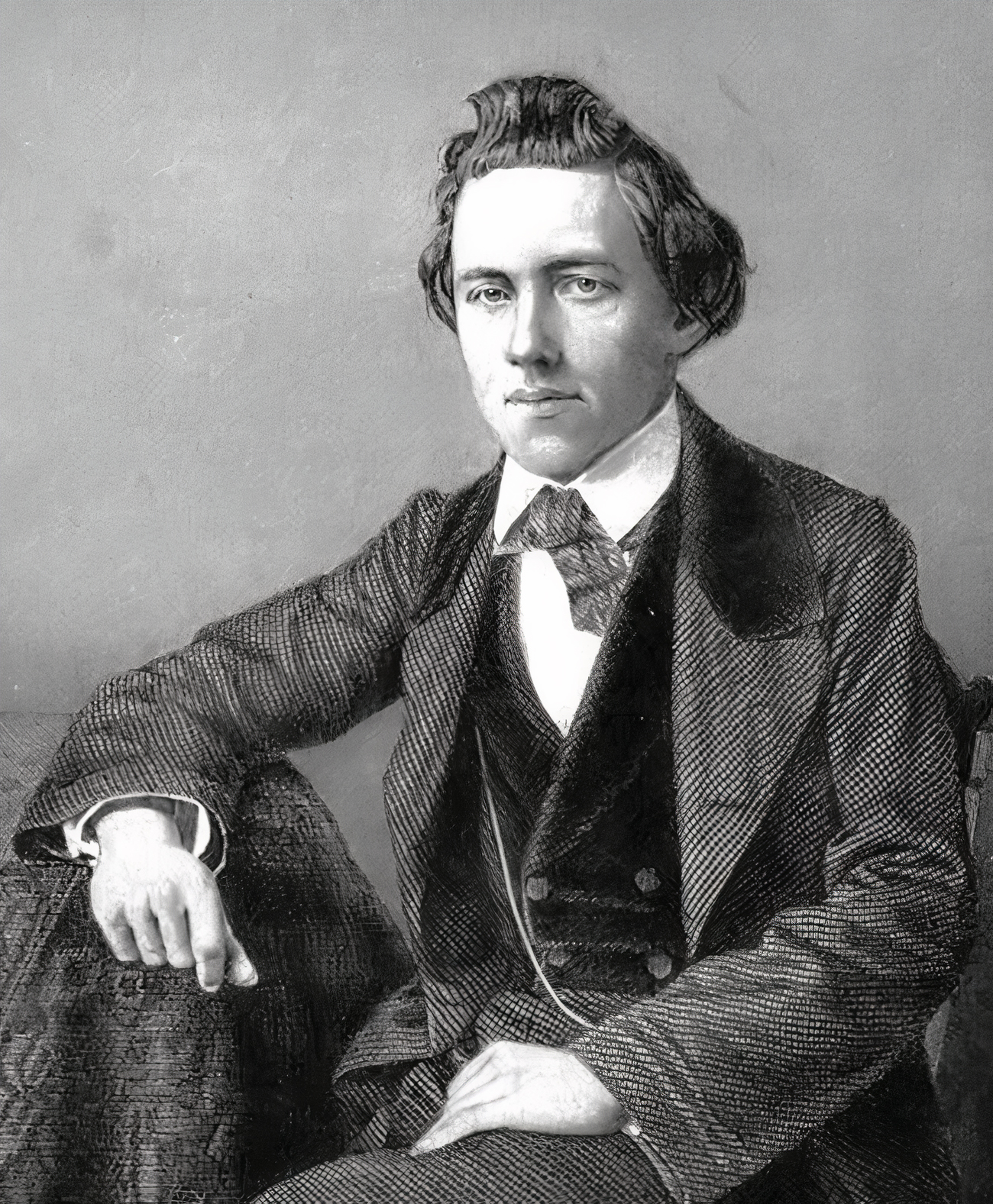
Paul Morphy was an American chess player from New Orleans who, in the space of about two years, became the strongest player in the world and then stopped playing. Born June 22, 1837, he won the First American Chess Congress in 1857 at 20, toured Europe in 1858–1859 and beat every strong player willing to face him, and retired from serious chess before he was 25. No one has adequately explained why. He died in New Orleans on July 10, 1884. He was 47.
The Opera Game, played in Paris in October 1858, is the piece that survived.
New Orleans and the chess prodigy
Morphy grew up in a prominent New Orleans family. His father was a judge, later a Louisiana Supreme Court justice. The household had books, culture, and a chess set. He learned the rules from watching his father and uncle play. By 12, he was playing well enough to beat the strongest player in New Orleans, Hungarian master Johann Löwenthal, in a match.
He graduated from Spring Hill College in Mobile and was admitted to the Louisiana Bar in 1857 at age 19, though he couldn’t practice until he turned 21. He had time on his hands. He used it to play chess.
The First American Chess Congress in October 1857 drew every serious American player to New York. Morphy won it convincingly, including a match against Louis Paulsen that he won 5–1. He was 20 years old and had effectively run out of competition in America.
The European tour
In June 1858, Morphy sailed for Europe with his secretary Frederick Edge, whose subsequent book The Exploits and Triumphs in Europe of Paul Morphy (1859) is the primary source account of the trip. The stated purpose was to play Johann Jacob Löwenthal and Howard Staunton. Staunton being widely considered the strongest English player and one of the best in Europe.
Staunton declined to play. He cited his own commitments repeatedly and eventually stopped responding. Morphy spent months waiting for a match that never happened. He played everyone else.
He beat Löwenthal 9–3. He beat Adolf Anderssen, the winner of the great 1851 London tournament and author of the Immortal Game, 7–2 in a formal match. He won simultaneous exhibitions against multiple strong players while blindfolded. He gave odds (material advantages to opponents) in countless informal games and still won.
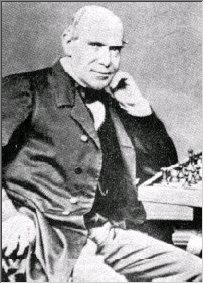
None of this made Morphy an official world champion, because the title didn’t exist yet. The world chess championship wasn’t formalized until 1886, when Wilhelm Steinitz beat Johannes Zukertort in a match nearly three decades after Morphy walked away from the game. Contemporary press called him the best player alive anyway, and nobody who actually sat across a board from him in 1858 argued the point.
The Opera Game
On October 23, 1858, during a performance of The Barber of Seville at the Paris Opera, Duke Karl of Brunswick and Count Isouard challenged Morphy to a game in their private box. Morphy played while watching the opera.
Morphy, Paul White Duke of Brunswick & Count Isouard Black


The combination at moves 16–17 is what made the game famous. Morphy sacrifices his queen on b8 with a check. The knight on b8 must capture. Rd8 is then a discovered checkmate by the rook, because the long diagonal is open and Black’s king has no squares. The whole game is a demonstration of what happens when one side develops every piece and the other develops none.
At the moment Morphy played 16.Qb8+, his rook on d1 was doing nothing obvious. It was waiting. Black had spent the game taking material while Morphy built the mechanism. The queen sacrifice works because all of Morphy’s pieces (bishop, rook, queen working together) are already coordinated. It is a performance, not a calculation.
Why this game still gets taught in 2026
The Opera Game is the clearest example available of the principle that piece activity beats material in the short term. The Duke and Count were happy to take the bishop on move 3 (3…Bg4, then 4…Bxf3) and trade it for Morphy’s knight. They had more material. Their pieces went nowhere. By move 10, Morphy was trading pieces to accelerate his development further, paying material to keep the tempo advantage. The queen sacrifice is just the endpoint of a process that started on move 3.
Bobby Fischer studied Morphy extensively. His annotations in My 60 Memorable Games show the same principle running through the Najdorf Sicilian in modern form: rapid development, open files, pieces that do concrete work versus pieces that don’t. The vocabulary changed between 1858 and 1958. The logic didn’t.
After chess
The European tour ended in April 1859. Morphy returned to New Orleans and gave up competitive chess. The reason is genuinely unclear. He had just turned 21, was eligible to practice law, and apparently considered chess beneath his professional standing. He offered to give any player pawn-and-move odds. No one accepted. Without competition, there was nothing to play.
He attempted to practice law but found little work. He traveled to Europe twice more for non-chess reasons. His mental health deteriorated in the 1870s; he became increasingly paranoid and withdrawn. He died on July 10, 1884, at 47, from apoplexy while taking a cold bath on a hot day.
He left no memoirs and almost no correspondence. What survives is the game scores. The Opera Game has been analyzed, annotated, and reprinted continuously for 165 years.
Sources
- Edge, Frederick Milnes. The Exploits and Triumphs in Europe of Paul Morphy. D. Appleton and Co., 1859.
- Sergeant, Philip. Morphy’s Games of Chess. Dover Publications, 1957.
- Opera Game complete score, chessgames.com
This page contains affiliate links. As an Amazon Associate, DiscussChess earns from qualifying purchases.
Sources
- Edge, Frederick Milnes. The Exploits and Triumphs in Europe of Paul Morphy. D. Appleton and Co., 1859.
- Sergeant, Philip. Morphy's Games of Chess. Dover Publications, 1957.
- Opera Game score, chessgames.com
Further reading
- My 60 Memorable Games, Bobby Fischer, Batsford/Pavilion edition ASIN verified via Open Library 2026-05-02. Fischer's annotations show how Morphy's principles (rapid development, open lines, piece activity over material) carried into the modern Najdorf Sicilian.