Norway Chess 2025: Carlsen Wins His Seventh
Magnus Carlsen claimed his seventh Norway Chess title in June 2025, but Round 6 belonged to Gukesh Dommaraju: who beat Carlsen in classical chess for the first time. Carlsen slammed the table, apologized, and left without doing media.

Magnus Carlsen won Norway Chess 2025. His seventh title at the event, in the city of Stavanger, where he’s been the best player in the room every summer for over a decade. Final standings across the ten-round double round-robin: Carlsen first with 16 points, Caruana second with 15½, Gukesh third with 14½, Nakamura fourth with 14, Arjun Erigaisi fifth with 13, and Wei Yi last with 9½.
But if you ask chess players what they remember from Norway Chess 2025, most of them will tell you about Round 6.
What happened in Round 6
Gukesh Dommaraju (the 18-year-old world champion, four months into his title reign) beat Magnus Carlsen in a classical game for the first time. The game went 62 moves over more than four hours. Gukesh found a precise counterattack in a position that had looked dangerous for him earlier in the game.
When Gukesh played his last move, Carlsen slammed the table. Then he apologized to Gukesh for the reaction. Then he left the venue without doing his media obligations.
The full game, Gukesh vs Carlsen, Round 6
Gukesh played the Anti-Berlin (3.Bb5 4.d3) and gradually built kingside pressure. Carlsen looked to be holding through move 26, but a series of trades after move 32 exposed his king. From move 41 Gukesh’s knight infiltrated, the exchange sacrifice on move 47 cleared the way, and the endgame was technically lost. Carlsen actually had chances to escape into a drawable, even favorable, ending for long stretches after that: his passed d-pawn was rolling, and for a while it looked like the pawn might get there before Gukesh’s pieces could stop it. The moment that decided the game was Carlsen’s 52…Ne2+, sacrificing his knight to try to force the pawn through by force rather than by defending it. It was a gamble that needed White’s king to be a tempo too slow. It wasn’t. Gukesh’s king made it back in time to blockade, and from there the technical win was academic.
Gukesh D White Carlsen, Magnus Black


That sequence tells you how seriously Carlsen takes losing to players who’ve theoretically surpassed him in the official hierarchy. He acknowledges, and has said publicly, that Gukesh is the world champion. But classical chess between them is a different question from the title, and Carlsen still measures himself by the games, not the organizational structure. Losing a classical game to Gukesh, at home in Stavanger, in front of a Norwegian crowd, wasn’t something he absorbed quietly.
The tournament format
Norway Chess has run every year since 2013, and 2025 marked its 13th edition. It uses a modified scoring system designed to produce more decisive games. Wins in classical play earn 3 points. If the classical game is drawn, players go to an Armageddon tiebreak: the winner of that gets 1.5 points, the loser gets 1. Classical losses give 0.
This system means a draw plus an Armageddon win (1.5 points) is worse than a classical win (3) but better than a draw with an Armageddon loss (1). Players take more risks in classical time controls because the draw reward is lower than at standard events.
Gukesh’s win over Carlsen came in classical time, worth the full 3 points, and more importantly, worth the conversation.
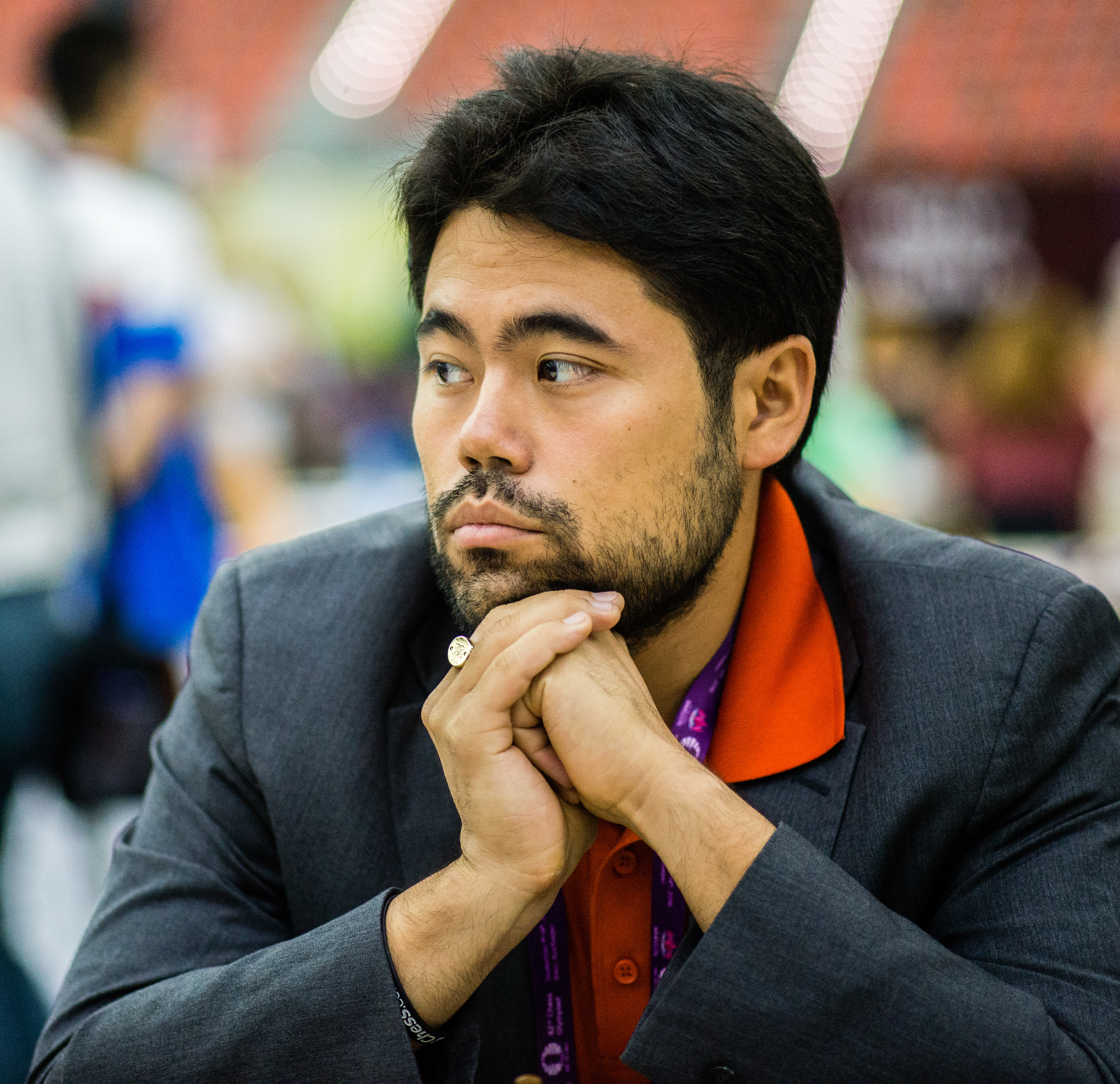
The six-player field
The 2025 field was six players: Carlsen (2837), Gukesh (2787, world champion), Caruana (2776), Nakamura (2804), Arjun Erigaisi (2782), and Wei Yi (2758). Average rating well above 2750. Every player in the top fifteen in the world.
Carlsen won with 16 points from a possible 30, which sounds unremarkable until you notice that only 1½ points separated him from Caruana in second. He didn’t blow the field away with one dominant stretch; he simply avoided the kind of multi-round collapse that dropped Wei Yi to 9½ points and last place. Caruana was the most consistent challenger, banking Armageddon points on drawn days rather than pressing for risky classical wins. Gukesh’s result, despite the Round 6 win over Carlsen, a career-best result against the format’s most dangerous player, was hurt by results elsewhere in the ten rounds that kept him at 14½, a point and a half off the pace.
Nakamura finished fourth on 14. He’s spoken publicly about the Norway Chess format as one of the most demanding on the tour, the Armageddon structure means you’re effectively playing two games on some days, and the small field means every result counts for standings immediately.
The women’s section
Norway Chess ran a women’s section alongside the open event, also six players, also the classical-plus-Armageddon scoring system. Ukraine’s Anna Muzychuk won it outright with 16½ points, her first Norway Chess title, ahead of China’s Lei Tingjie (16) and India’s Koneru Humpy (15) in third. Ju Wenjun, who had defended her Women’s World Championship title against Tan Zhongyi just six weeks earlier in April 2025 to become a five-time champion, finished fourth on 13½, a result that underlines how tight the modified scoring system keeps the standings even when one player is clearly the game’s most decorated active title-holder. Vaishali Rameshbabu, part of the Indian team that had swept both Olympiad golds the previous September, finished fifth.
Why the Carlsen-Gukesh dynamic matters going forward
Carlsen stopped defending the world title in 2023, handing the championship cycle to Ding Liren and then Gukesh. He’s been explicit that he doesn’t intend to re-enter. But he also hasn’t stopped winning.
Gukesh’s first classical win over him at Norway Chess established that the two players can now beat each other in long games. Before 2025, the record was almost entirely in Carlsen’s favor. That matters for how the chess world weighs Carlsen’s continued presence at the top of super-tournaments. He’s still number one on the FIDE list, still winning events, but the younger generation is landing results against him.
Magnus Carlsen’s full profile covers his five world title cycles, the 2882 peak, and the decision to step back from the championship. For the next match in the official cycle, see the 2026 Candidates Tournament.
Wonderboy by Simen Agdestein documents Carlsen’s development before any of this was predictable. When he was a Norwegian kid beating adults and nobody fully understood what was happening yet. That arc, from junior prodigy to dominant world presence, is what Gukesh is now beginning to write for himself. Fischer’s My 60 Memorable Games remains the best model for how a world-class player thinks about their own most important games.
Sources
- Norway Chess 2025: Wikipedia
- Magnus Carlsen and Anna Muzychuk triumph at Norway Chess 2025, FIDE
- Carlsen Survives Gukesh Drama To Win Norway Chess 2025, Chess.com
- Watch: Carlsen bangs table as Gukesh stuns him, Business Standard
- Norway Chess 2025 R6 PGN, Lichess broadcast
- Norway Chess 2025, Wikipedia (full standings, women’s section)
- Women’s World Chess Championship 2025, Wikipedia
- Agdestein, Simen. Wonderboy: How Magnus Carlsen Became the Greatest Chess Player in the World. New in Chess, 2005.
This page contains affiliate links. As an Amazon Associate, DiscussChess earns from qualifying purchases.
Sources
Further reading
- Wonderboy: How Magnus Carlsen Became the Greatest Chess Player in the World, Simen Agdestein ASIN verified via Open Library 2026-05-02. New in Chess, 2005 edition. The definitive account of Carlsen's early development.
- My 60 Memorable Games, Bobby Fischer ASIN verified via Open Library 2026-05-02. Batsford 1995 edition. The annotated game collection standard, useful context for analyzing elite competitive chess at this level.