Italian Game: The Opening Magnus Carlsen Made His Own
The Italian Game (1.e4 e5 2.Nf3 Nc6 3.Bc4) is one of the oldest openings in chess. After decades overshadowed by the Ruy Lopez, Carlsen made the Giuoco Pianissimo his primary White weapon. Here's how all the variations work.
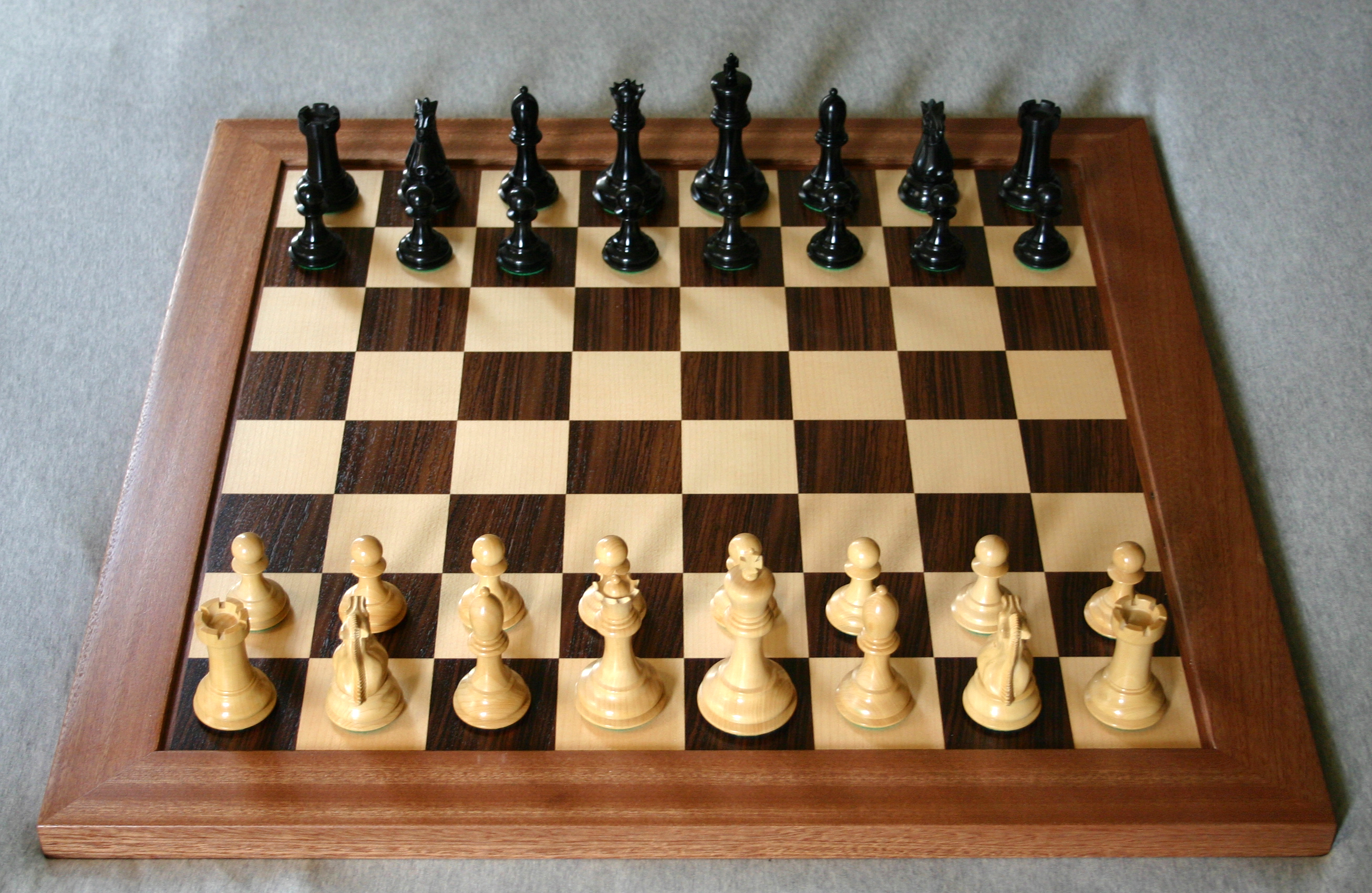
The Italian Game begins 1.e4 e5 2.Nf3 Nc6 3.Bc4. White’s bishop aims at f7 and the center, developing naturally while keeping multiple plans open. One of the oldest openings in recorded chess theory, documented in 15th-century manuscripts, it became Magnus Carlsen’s primary White weapon after modern analysis showed it could produce rich, imbalanced positions without the depth of preparation the Ruy Lopez demands.
The Ruy Lopez dominated e4-e5 openings for over a century. Carlsen shifted toward the Italian because it generated rich, less-mapped positions where his technical superiority matters more than prep depth.
Older than the printing press had time to catch up with
The Italian Game’s recorded history stretches back further than almost any other opening still played at elite level. Giulio Cesare Polerio, an Italian theoretician from Lanciano working between the 1580s and early 1600s, analyzed the opening’s core lines in a series of manuscripts that circulated among players long before formal publication existed. Gioachino Greco, the Calabrian player whose 1620 game collection is one of the foundational texts of chess literature, built directly on Polerio’s analysis and popularized many of the Italian’s sharpest tactical patterns, including the traps that still catch unprepared players today. Pedro Damiano’s earlier 16th-century writing also touched on the same central ideas. Four centuries later, the opening these Renaissance-era Italians worked out is still being played at the World Championship level, which makes it a rare case of an opening whose founding theory and modern theory are separated by roughly the same span of time as the printing press itself.
Legal’s Mate: the trap every Italian Game player learns to avoid
The Italian’s long history produced one of the most famous traps in all of chess, first played for real by the 18th-century French master Sire de Legal against an opponent named Saint Brie in Paris around 1750, and disguised with a piece of theater: Legal reportedly touched his knight on f3 first, let his opponent object that the knight was pinned and couldn’t move, then “reluctantly” played it anyway once the touch-move rule forced his hand. The trap itself: after 1.e4 e5 2.Nf3 Nc6 3.Bc4 d6 4.Nc3 Bg4, if Black pins the knight on f3 without noticing the tactical cost, White plays 5.Nxe5!, offering the queen. If Black obliges with 5…Bxd1??, White continues 6.Bxf7+ Ke7 7.Nd5#, a smothered mate delivered with two knights and a bishop while Black’s own queen sits uselessly on d1, having captured nothing of value. The pattern recurs in dozens of disguised forms throughout Italian Game theory, and understanding why it works, the bishop on c4 aiming at f7, the knight ready to leap into e5 or d5, is close to understanding the opening’s entire tactical DNA in miniature.
Giuoco Piano: 3…Bc5
Black mirrors White’s bishop development. After 4.c3, White prepares d4. The Giuoco Pianissimo (“very quiet game”) arises when White plays more slowly: 4.d3, building with Be3, Nbd2, h3 before committing to d4. Carlsen’s preferred path. The resulting positions are strategic battles over 40+ moves: exactly the terrain where he excels.
The Classical Giuoco Piano (4.c3 Nf6 5.d4 exd4 6.cxd4 Bb4+) leads to more open, tactical positions where both sides fight for central control.
Two Knights Defense: 3…Nf6
Black attacks e4 immediately. After 4.Ng5, White threatens f7. The most principled response is 4…d5 5.exd5 Na5. The Fried Liver Attack (4…d5 5.exd5 Nxd5 6.Nxf7!?) sacrifices a piece for a ferocious attack, objectively risky but devastating against unprepared opponents.
Hungarian Defense: 3…Be7
Solid and passive: Black develops to e7 rather than c5 or Nf6. White gets a slight space advantage; the positions are dull by Italian standards. Rarely seen at top level.
Why the Italian works at top level
The Ruy Lopez requires knowing 20+ moves of theory in its main closed variation. The Italian’s lines are shorter. Novelties are possible earlier. Carlsen’s Giuoco Pianissimo games often enter positions where both sides must actually think from move 12 onward, rather than recite prepared sequences. That suits players whose calculation exceeds their opponents’.
For club players: the Italian is excellent for the same reason. Structural ideas are clear (bishop aims at f7, control the center with c3-d4, castle safely), and the positions don’t require 25-move memorization. See our chess improvement guide on when opening study is worth prioritizing.
An Italian Game at elite level, GCT Warsaw 2026
Caruana vs. Vachier-Lagrave, Grand Chess Tour Warsaw 2026. The Giuoco Pianissimo played at its slowest for 16 moves, then Caruana’s Ncd5 establishes a permanent knight outpost. The rook sacrifice on move 35 tears open the Black king position and MVL resigned on move 41.
Caruana, Fabiano White Vachier-Lagrave, Maxime Black


Sources
- Hooper, David, and Kenneth Whyld. The Oxford Companion to Chess. Oxford University Press, 1992.
- Chernev, Irving. Logical Chess: Move by Move. Batsford. (affiliate)
- de la Villa, Jesús. 100 Endgames You Must Know. New in Chess. (affiliate)
This page contains affiliate links. As an Amazon Associate, DiscussChess earns from qualifying purchases.
Sources
- Hooper, David, and Kenneth Whyld. The Oxford Companion to Chess. Oxford University Press, 1992.
Further reading
- Logical Chess: Move by Move, Irving Chernev ASIN verified via Open Library 2026-05-02. Includes annotated Italian Game positions explaining the structural themes.
- 100 Endgames You Must Know, Jesús de la Villa ASIN verified via Amazon 2026-05-02. The technical endgames that Italian Game positions produce are covered in de la Villa's essential reference.