Grunfeld Defense: Main Lines and Key Plans
The Grunfeld Defense (1.d4 Nf6 2.c4 g6 3.Nc3 d5) lets White build a massive pawn center, then attacks it with pieces. Both Fischer and Kasparov used it as Black. The most theoretically complex d4 defense in chess.
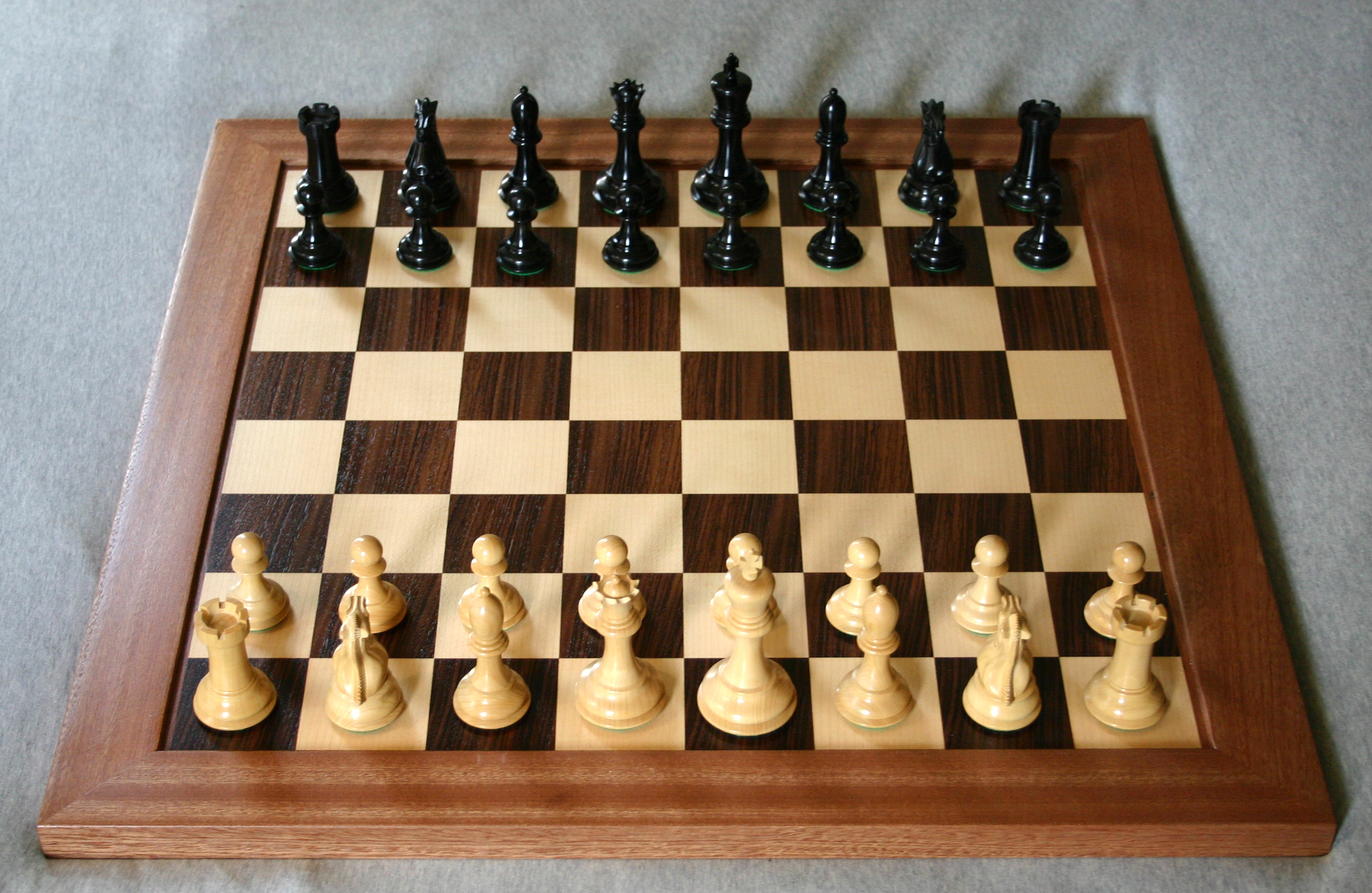
The Grunfeld Defense begins 1.d4 Nf6 2.c4 g6 3.Nc3 d5. Black immediately challenges White’s center with 3…d5, after 4.cxd5 Nxd5 5.e4, White has pawns on d4 and e4, a massive center. Then Black attacks it: 5…Nxc3 6.bxc3 Bg7, fianchettoing the bishop to press against d4.
The question: can Black demolish White’s impressive center with piece pressure? Bobby Fischer and Garry Kasparov both used it as their answer to 1.d4, both concluded yes often enough. It’s the most theoretically demanding d4 defense, every top player who plays 1.d4 has studied it in depth.
An Austrian theoretician’s one great invention
Ernst Grünfeld (1893–1962) was born in Vienna, lost a leg in early childhood, and grew up in poverty before finding chess at the Vienna Chess Club and becoming one of the era’s leading opening theoreticians. He introduced his eponymous defense at the Bad Pistyan tournament (modern Piešťany, Slovakia) in April 1922, drawing Friedrich Sämisch with it in round 7. Later that same year, on November 18, 1922, he used it to defeat Alexander Alekhine himself in Vienna, an early and immediate demonstration that the idea wasn’t just playable in theory but could beat a future world champion. Grünfeld went on to become one of the first players awarded the grandmaster title when FIDE formalized it in 1950, and he took clear first place at Margate 1923, a full point ahead of both Alekhine and Bogoljubow. But it’s the single defense bearing his name that made him permanently relevant to the game, adopted over the following decades by Vasily Smyslov, Viktor Korchnoi, and eventually Fischer and Kasparov.
Before him, most defenses against 1.d4 avoided the direct center challenge. The Grunfeld demonstrated that letting White build a large center and then attacking it with pieces was strategically valid: a hypermodern idea applied to d4 systems.
Exchange Grunfeld: 4.cxd5 Nxd5 5.e4
The most popular White response: accept the challenge, build the maximum center. After 5…Nxc3 6.bxc3 Bg7 7.Nf3 c5 8.Rb1 0-0 9.Be2 cxd4 10.cxd4 Qa5+, typical main-line positions arise. The g7 bishop presses against d4; Black looks for queenside counterplay with …b5-b4; White tries to advance the center before Black undermines it.
The Exchange Grunfeld is the most theoretical variation. Both sides study it to move 20 and beyond. It requires exact preparation. Which is precisely why Fischer and Kasparov used it, since both prepared deeply and wanted positions where home analysis mattered.
Russian System: 4.Nf3 Bg7 5.Qb3
White avoids the exchange and immediately attacks d5 and b7 with the queen. After 5…dxc4 6.Qxc4 0-0, Black gets active piece play in exchange for White’s actively placed queen. Sharp and theoretical, less committed to the massive center than the Exchange.
Why Fischer and Kasparov chose it
Both wanted fighting positions as Black against 1.d4. The Nimzo-Indian is solid but sometimes passive. The Grunfeld guarantees an imbalanced game, if the center collapses, Black wins; if it holds, White wins. That binary outcome suited players who believed their calculation exceeded their opponents’.
Kasparov’s use of it ran through his entire career at the very top, including his World Championship matches against Karpov in 1986, 1987, and 1990, and again against Vladimir Kramnik in their 2000 London title match. The opening hasn’t aged out of top-level use either. Carlsen and Anand have both reached for it as Black against modern 1.d4 specialists, for the same reason Fischer and Kasparov did: force a fight instead of absorbing a slow squeeze.
My 60 Memorable Games (affiliate) contains annotated Grunfeld games explaining the strategic logic. Silman’s How to Reassess Your Chess (affiliate) covers the center vs. piece activity dynamic that defines every Grunfeld position.
The Game of the Century, a Grunfeld at 13
Donald Byrne vs. Bobby Fischer, Rosenwald Memorial tournament, Marshall Chess Club, New York, October 17 1956. Fischer was 13 years old and playing in the tournament’s eighth round. He sacrificed his queen on move 17, took both of White’s rooks, and delivered checkmate with his remaining pieces. It remains the most famous game ever played in the Grunfeld Defense structure, and one of the most famous games in all of chess history, still the single game most often used to introduce new players to what a queen sacrifice can actually accomplish.
Byrne, Donald White Fischer, Bobby (age 13) Black


Sources
- Hooper, David, and Kenneth Whyld. The Oxford Companion to Chess. Oxford University Press, 1992.
- Sämisch, Friedrich, vs. Grünfeld, Ernst. Bad Pistyan (Piešťany), Round 7, April 1922.
- Byrne, Donald, vs. Fischer, Bobby. Rosenwald Memorial, New York, October 17 1956.
- Fischer, Bobby. My 60 Memorable Games. Batsford/Pavilion. (affiliate)
- Silman, Jeremy. How to Reassess Your Chess. Siles Press, 4th ed. 2010. (affiliate)
This page contains affiliate links. As an Amazon Associate, DiscussChess earns from qualifying purchases.
Sources
- Hooper, David, and Kenneth Whyld. The Oxford Companion to Chess. Oxford University Press, 1992.
- Sämisch, Friedrich, vs. Grünfeld, Ernst. Bad Pistyan (Piešťany), Round 7, April 1922.
- Byrne, Donald, vs. Fischer, Bobby. Rosenwald Memorial, New York, October 17 1956. ("The Game of the Century.")
Further reading
- My 60 Memorable Games, Bobby Fischer ASIN verified via Open Library 2026-05-02. Several of Fischer's annotated Grunfeld games are here, showing why he trusted it against the strongest d4 players of his era.
- How to Reassess Your Chess, Jeremy Silman ASIN verified via Amazon 2026-05-02. The pawn center vs. piece activity dynamic at the core of the Grunfeld is the central imbalance Silman's framework addresses.