GothamChess: Levy Rozman, Top Chess YouTuber
Levy Rozman is an International Master and the most-watched chess content creator on YouTube, with over 7.6 million subscribers and a New York Times bestselling book. His GothamChess channel runs game analysis, Guess the Elo, and beginner guides that made chess watchable for people who don't play.
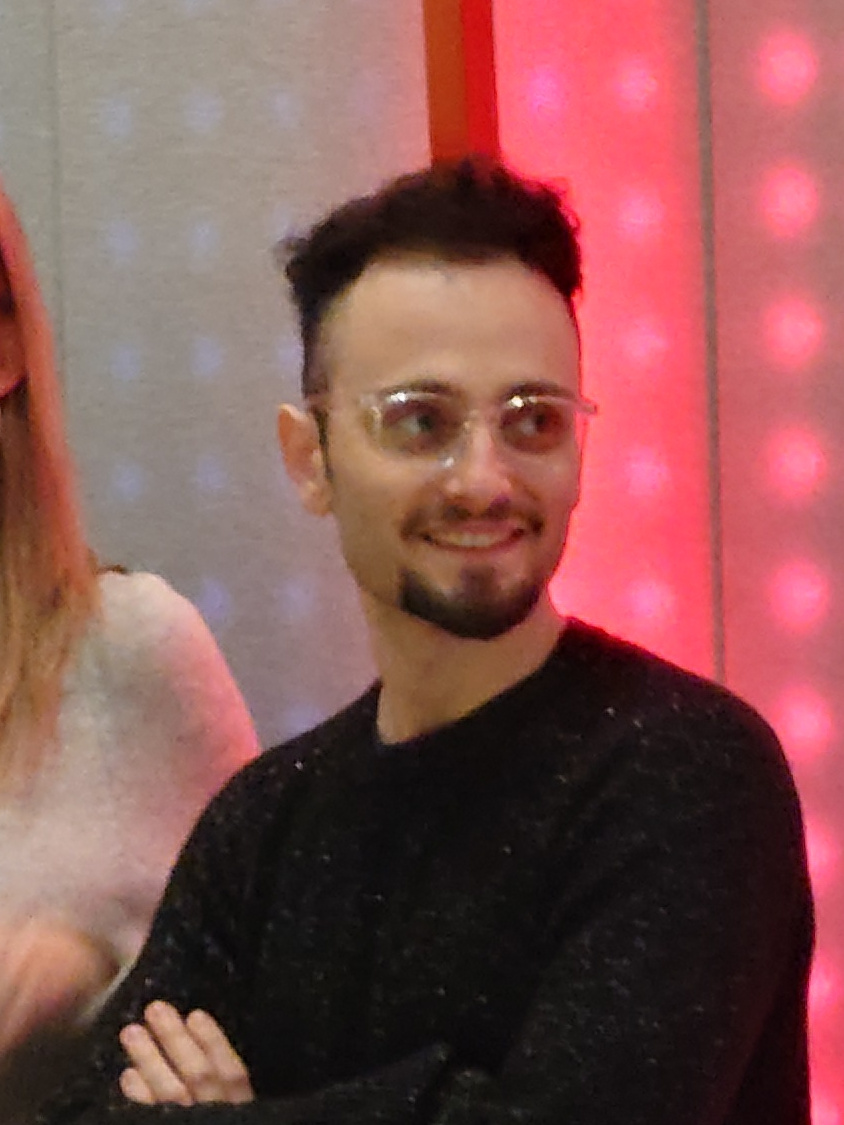
Levy Rozman is a FIDE International Master and the creator of GothamChess, the most-watched chess YouTube channel in the world. He was born December 5, 1995, in Brooklyn, New York. His channel passed 7.6 million subscribers and 5.2 billion total views in 2026, and covers grandmaster game analysis, the “Guess the Elo” series (where he rates games submitted by viewers), and content for players at every level. He makes chess watchable for people who don’t know a rook from a bishop.
The scale is worth stating directly. Chess content used to be aimed at chess players. Rozman built an audience where a significant percentage don’t regularly play the game. They watch because the commentary is engaging, the production is fast, and he explains things in real time the way a friend with board awareness might explain them.
Who Levy Rozman is
Rozman grew up between New Jersey and New York, the son of a Russian émigré mother and Ukrainian émigré father, and spoke Russian at home before learning English in preschool. His parents put him in chess classes at five partly to calm an energetic kid down; he entered his first tournament at seven, and by twelve had reached a FIDE rating of 2000. Progress stalled for three years after that, badly enough that he considered quitting, before he came back to the game seriously at fifteen.
The titles followed in order: National Master from the US Chess Federation in 2011 at 16, FIDE Master in 2016, and International Master in 2018, one level below Grandmaster in FIDE’s title system, requiring a rating over 2400 and performance norms in qualifying tournaments. His peak US Chess rating was 2520 and his peak FIDE rating was 2421, both reached in 2018, above 99.9% of rated players worldwide and just short of the 2500 line that defines grandmaster. As a competitive player he achieved solid results at the national level without reaching the grandmaster tier that players like Magnus Carlsen or Hikaru Nakamura occupy. What he is exceptionally good at: explaining chess positions. The analytical clarity he brings to game commentary (identifying what each side is trying to do, why a move is wrong, how the position evolved) is genuinely educational in a way that most coaching content isn’t.
From 10 Twitch followers to the biggest channel in chess
Rozman started streaming on Twitch on May 19, 2018, with exactly 10 followers. The channel grew slowly, got its first real bump during the November 2018 Caruana-Carlsen World Championship match, then stayed a niche hobby until 2020, when the pandemic and the Netflix series The Queen’s Gambit pushed online chess viewership up across the board. He went full-time that October, when his Twitch following crossed 100,000, up from roughly 17,800 at the start of the year. By January 2021 he was the third-largest chess streamer on Twitch with 200,000 followers, and his YouTube channel had reached 379,000 subscribers.
From there the growth compounded fast. He passed one million YouTube subscribers in mid-2021, became the platform’s largest chess creator that September, overtaking the long-running Agadmator channel, and in 2023 GothamChess became the first chess channel ever to cross one billion total views. By November 2023 he was at 4.3 million subscribers and 1.8 billion views; by May 2026 those numbers had grown to 7.6 million subscribers, 5.2 billion views, and 1.2 million Twitch followers. He’s since been dubbed, more or less accurately, “the internet’s chess teacher.”
What GothamChess covers
Guess the Elo. Viewers submit their game recordings. Rozman watches without knowing the players’ ratings and guesses their Elo based on move quality. The series works because the diagnosis is useful, he identifies patterns in how players at different rating levels make mistakes, and those patterns apply to anyone at a similar level. It’s game analysis with a specific audience in mind.
Grandmaster game analysis. Top-level games broken down for a non-expert audience. Major tournaments (the World Chess Championship, Tata Steel, Norway Chess) get same-day or next-day breakdowns. His analysis isn’t deep engine preparation; it’s explanation of what each side was thinking and why key moments mattered.
Beginner and intermediate instruction. Opening principles, tactical patterns, how to evaluate positions. The channel covers the same ground as a standard beginner chess curriculum but faster and more visually. For a player who learns better through watching than reading, this is a valid entry point. In October 2023 he turned that instruction into a book, How to Win at Chess: The Ultimate Guide for Beginners and Beyond, which reached #4 on the New York Times bestseller list in the Advice, How-To & Miscellaneous category, an unusual crossover for a chess title. A sequel aimed at intermediate players, How to Win at Chess, Next Level, is scheduled for October 2026.
Opening breakdowns. He’s covered most major openings (the Sicilian Defense, the Caro-Kann, the London System) with dedicated videos aimed at players trying to add them to their repertoire.
The Dewa Kipas cheating scandal
Not every controversy Rozman got pulled into was about him. In March 2021, he lost an online game to an Indonesian player using the handle Dewa_Kipas (“God of Fans”), suspected cheating, and reported the account to Chess.com’s Fair Play team. The account, belonging to a player named Dadang Subur, was subsequently closed for confirmed cheating, and Rozman covered the episode on stream. The backlash from Indonesian social media was severe enough that he made his accounts private and took a brief hiatus.
The story got a clean resolution a year later, when Subur agreed to play live, in-person games against Indonesian International Master Irene Kharisma Sukandar to settle the question of his real strength. He lost all three games with under 40% move accuracy, a performance Chess.com estimated at roughly 1127 Elo, against an online rating that had exceeded 3000. Rozman’s original read on the account held up completely.
The Nakamura dispute and chess community drama
Chess streaming has produced its share of intra-community tension. In 2023, a copyright dispute developed between GothamChess and Nakamura, also a major streaming personality, involving content claims on YouTube. The dispute played out publicly and drew attention beyond the chess community. The details of who was right are disputed and largely beside the point. What the episode illustrated: chess content creation at this scale operates with the same commercial tensions as any large media ecosystem. The creators are not just chess players; they’re competing media businesses.
Stepping back onto the board
Rozman announced his retirement from competitive over-the-board chess events in July 2022, citing the physical and mental toll after a rough performance at the New York Summer Invitational. It didn’t stick permanently: in April 2024 he announced a return to competitive OTB play with an explicit goal of eventually earning the grandmaster title he’d fallen short of as a full-time player. In July 2026, he competed in the inaugural Naroditsky Memorial Creator Invitational in Charlotte, North Carolina, an event honoring the late GM and fellow chess streamer Daniel Naroditsky and launching a $1 million-plus endowment in his name. Rozman finished second in the 10-player blitz round-robin with 7/9, two points behind IM John Bartholomew’s perfect score.
Off the board, he’s put some of the channel’s earnings into the game’s grassroots: in October 2021 he set up the Levy Rozman Scholarship Fund, a $100,000 donation administered through Chess.com’s ChessKid platform that awards individual school chess programs between $5,000 and $15,000 for training, tournament fees, and travel. It’s a smaller story than the subscriber counts, but it’s the same instinct behind the channel itself: use the audience to actually grow the game, not just monetize an audience that showed up on its own.
Why it matters for chess’s growth
Rozman has introduced chess to an audience that wasn’t previously interested. Whether his viewers convert to serious chess players isn’t the point. The pipeline matters: someone watches GothamChess, downloads a chess app, plays a few games, starts looking for how to improve. That path produces a portion of the people who end up buying chess books, chess sets, and chess subscriptions.
The chess.com and Lichess user bases expanded substantially during 2020–2022. Rozman’s channel was a visible part of the content that drove that expansion. The counterfactual, chess’s online growth without streaming commentary, probably looks significantly smaller.
Sources
- FIDE Rating Profile: Levy Rozman
- GothamChess YouTube channel
- Levy Rozman, Wikipedia
- Rozman, Levy. How to Win at Chess: The Ultimate Guide for Beginners and Beyond. Penguin Random House, 2023. (affiliate)
- Chernev, Irving. Logical Chess: Move by Move. Batsford. (affiliate: Rozman’s move-by-move format traces to this tradition)
This page contains affiliate links. As an Amazon Associate, DiscussChess earns from qualifying purchases.
Sources
Further reading
- How to Win at Chess: The Ultimate Guide for Beginners and Beyond, Levy Rozman ASIN verified via Open Library and Amazon 2026-07-12. Rozman's own New York Times bestseller, published October 24, 2023, hit #4 on the Advice, How-To & Miscellaneous list.
- Logical Chess: Move by Move, Irving Chernev (the annotated game format Rozman uses on his channel traces to this book) ASIN verified via Open Library 2026-05-02. Chernev's move-by-move annotation format is the structural ancestor of GothamChess's game analysis style.