The Evergreen Game: Anderssen vs. Dufresne
Anderssen vs. Dufresne, Berlin 1852: the Evans Gambit where White sacrificed both rooks and then his queen to force checkmate. Wilhelm Steinitz called it 'the Evergreen', it's been proving him right ever since.
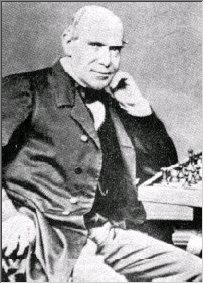
The Evergreen Game is a chess game played, most likely in Berlin, in 1852 between Adolf Anderssen (White), fresh off winning the 1851 London International Chess Tournament, and Jean Dufresne (Black), a German chess author and problem composer. Anderssen sacrificed two rooks across the middlegame and then delivered a queen sacrifice on move 21, forcing checkmate in three more moves against a king that had run out of hiding places. Wilhelm Steinitz named it “die immergrüne Partie”, the Evergreen, calling it “an evergreen in the laurel crown of the departed chess hero” in his 1889 analysis Die Moderne Schachpartie, a name the game has justified continuously for over 170 years.
Even the basic facts of the occasion are less certain than the game’s fame suggests. It was first published in the September/October 1852 issues of Deutsche Schachzeitung, without any details of where or exactly when it was played, only the players’ names and the moves. It’s remembered as a Berlin casual game because that’s the best available inference, not because anyone recorded it at the board.
Its companion piece, the Immortal Game, was played one year earlier and has one more famous sacrifice. The two games together established Anderssen as the dominant genius of the pre-Steinitz era.
The opening: an Evans Gambit
The opening is an Evans Gambit: White offers a pawn on b4 on move 4 to deflect Black’s bishop and seize a full tempo of development. The gambit is named for William Davies Evans, a Welsh sea captain, who first played it against Alexander McDonnell in London in 1827; it moved through 19th-century master practice via Anderssen, Paul Morphy, and Mikhail Chigorin before falling out of fashion for most of the 20th century. Garry Kasparov revived it briefly in the 1990s, most famously to beat Viswanathan Anand in 25 moves at Riga in 1995, proof that even a sacrifice this old still has bite against a defense that isn’t ready for it. The full theory, main lines, and modern assessment are in our Evans Gambit guide.
Dufresne accepted the pawn and spent the next fifteen moves collecting more material while Anderssen developed his pieces and opened the position. By move 11, Anderssen had left his a1 rook hanging with 11.Ba3, a move that looks like a blunder and isn’t: it develops the bishop to its most useful diagonal and dares Dufresne to grab material he can’t safely keep developing behind. Dufresne took it. By move 13, the h1 rook had entered the game by capturing on d7, further ripping open lines toward Black’s king. The board was open, White’s pieces were active, and the attack was coordinated before Dufresne realized how committed he was.
On move 20, Anderssen sacrifices the first rook (20.Rxe7+), removing the defender that was shielding the king. On move 21, he sacrifices his queen (21.Qxd7+). Dufresne’s king has to take it; the alternative, taking with the knight, walks into a different forced mate. Three moves later, 24.Bxe7# is checkmate.
Anderssen White Dufresne Black


How the queen sacrifice works
The move 21.Qxd7+ is forced. Dufresne has to take the queen with his king (21…Kxd7), because accepting it with the knight would allow a different mating line. After 21…Kxd7, Anderssen plays 22.Bf5+: a check from the bishop. The king retreats to e8. Then 23.Bd7+ forces the king to f8. And 24.Bxe7 is checkmate, because the bishop on e7 covers all escape squares and the rook on d1 controls the d8 square from behind.
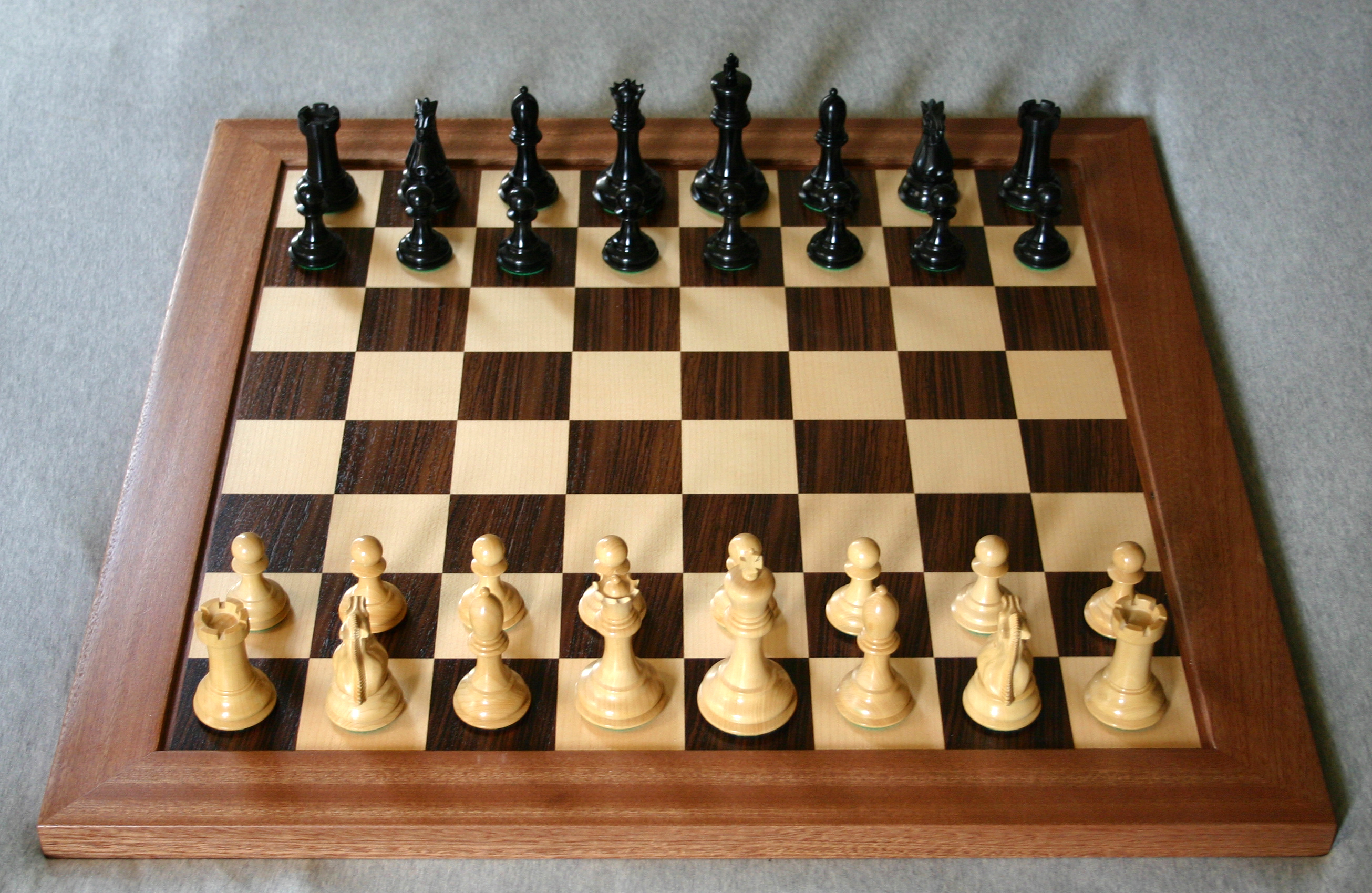
The mechanism that makes it work is piece coordination. By move 19, Anderssen’s bishops on a3 and d3, the rook on d1, and the knight on f6 (exchanged on move 17 to open the f-file) had collectively produced a position where Black’s king had no safe squares. The queen sacrifice is the trigger, not the idea. The idea was built from moves 10 to 19.
Dufresne’s error was strategic. He took material at every opportunity (the rook on a1 at move 11, the queen on f3 at move 19) instead of developing his pieces. He was a piece ahead at the end. He was mated.
The name and the comparison to the Immortal Game
Steinitz used the term “immergrüne Partie”, the Evergreen Game, in Die Moderne Schachpartie (1889), his analysis of key games in chess history. The name refers to the game’s enduring appeal: it stays fresh, remains instructional, and doesn’t age. Falkbeer coined “the Immortal Game” in 1855 for the Anderssen-Kieseritzky game from 1851. The two names, applied to two games by the same player one year apart, became the standard vocabulary for chess brilliancy.
The comparison between the two games is a minor industry in chess commentary. The Immortal Game has a more dramatic sacrifice count (both rooks and a bishop before the queen). The Evergreen Game has a longer combination. The coordination from move 15 to 24 is harder to see in its entirety than the Immortal’s climax. Which is “better” depends on what you find more beautiful: the spectacle or the construction.
Both were casual games. Neither was played in a tournament. Anderssen was, informally, the best player in the world in 1851 and 1852, and these two games are the reason anyone remembers it.
What club players can take from it
The Evergreen Game is useful to study not for its specific combinations, the Evans Gambit and the specific positions that arise are not standard tournament fare in 2026, but for the principle it illustrates: piece activity and coordination compound into decisive advantages faster than most players expect.
Dufresne had more material. Dufresne had pawns and pieces that were not working together. Anderssen had fewer material resources and a completely coordinated army. The queen sacrifice was available not because Anderssen calculated every line from move 1, but because he had arranged his pieces so that the queen sacrifice would always be available if the position developed the way he expected.
That planning habit, building coordination in advance, is what Logical Chess: Move by Move (Chernev, Batsford) teaches through 33 complete annotated games. Every move explained, including the quiet ones that set up the visible fireworks. See our chess improvement guide for more on how this kind of study integrates with tactical training.
Sources
- Steinitz, Wilhelm. Die Moderne Schachpartie. 1889. (First use of “Evergreen” designation for this game.)
- Hooper, David, and Kenneth Whyld. The Oxford Companion to Chess. Oxford University Press, 1992.
- Evergreen Game complete score, chessgames.com
- Evergreen Game, Lichess study (PGN source)
- Evergreen Game, Wikipedia (publication history, Steinitz naming quote)
- Evans Gambit, Wikipedia (opening origin and history)
This page contains affiliate links. As an Amazon Associate, DiscussChess earns from qualifying purchases.
Sources
- Steinitz, Wilhelm. Die Moderne Schachpartie. 1889. (First use of 'Evergreen' designation.)
- Hooper, David, and Kenneth Whyld. The Oxford Companion to Chess. Oxford University Press, 1992.
- Evergreen Game score, chessgames.com
- Evergreen Game, Lichess study (PGN source)
- Evergreen Game, Wikipedia (PGN cross-check, Steinitz naming quote, publication history)
- Evans Gambit, Wikipedia (opening history)
Further reading
- Logical Chess: Move by Move, Irving Chernev, Batsford edition ASIN verified via Open Library 2026-05-02. Chernev annotates complete games in plain language, the same analytical approach that makes the Evergreen Game comprehensible to players at any level.
- My 60 Memorable Games, Bobby Fischer, Batsford/Pavilion edition ASIN verified via Open Library 2026-05-02. Fischer's annotations of his Najdorf games demonstrate the same principle visible in the Evergreen Game: active piece coordination beats static material counting.