Evans Gambit: The 19th Century's Most Explosive Attack
The Evans Gambit (1.e4 e5 2.Nf3 Nc6 3.Bc4 Bc5 4.b4) sacrifices a pawn for rapid development and a crushing attack. Morphy loved it. Fischer called it promising. Kasparov revived it in 1995 against Anand. Here's what makes it work.
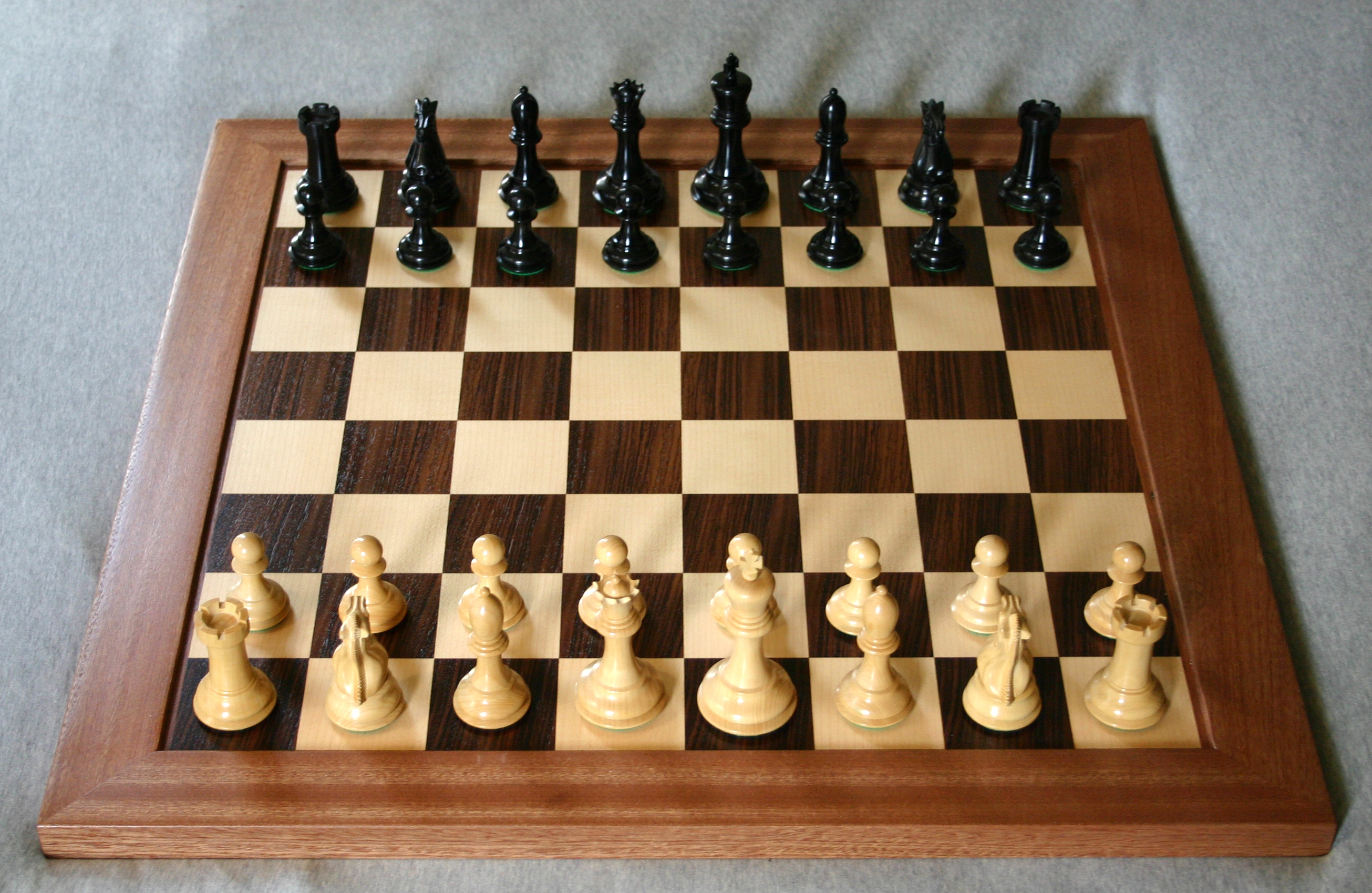
The Evans Gambit arises from the Italian Game after 1.e4 e5 2.Nf3 Nc6 3.Bc4 Bc5 4.b4. White sacrifices the b-pawn for rapid development, center control, and attacking chances.
An unlikely inventor
The gambit is named for William Davies Evans (1790–1872), a Welsh sea captain, not a professional chess player. According to the story that’s been retold ever since, Evans worked out the idea in 1824 while at sea, commanding a steam postal packet running between Milford in Wales and Dunmore in Ireland. He brought it ashore to London and first tested it against Alexander McDonnell, one of the strongest players in the world at the time, around 1826 to 1827; a later, more polished version of the same idea beat McDonnell decisively. Evans wasn’t a one-trick inventor, either: he separately invented a system of tri-colored maritime navigation lights to prevent ship collisions at night, an innovation serious enough that the British government awarded him £1,500 and a gold chronometer, and the Tsar of Russia gave him a further £200. A sea captain who solved night-collision risk for the entire shipping industry and, almost as a side project, handed his name to one of the most studied gambits in chess.
Paul Morphy, the strongest player of the 19th century, used the Evans extensively and produced devastating attacks with it. Bobby Fischer studied it and called it “the best gambit” in his own analysis. The Evergreen Game, Anderssen’s other immortal attacking masterpiece besides the game against Kieseritzky, also opened with the Evans Gambit. Garry Kasparov played it against Viswanathan Anand at the 1995 Tal Memorial in Riga and won in 25 moves, still the modern demonstration most often cited for why the Evans works even against the best defenders alive.
How it works
After 4…Bxb4 (Black takes the pawn, the Accepted), White plays 5.c3, hitting the bishop and preparing d4. Play typically continues 5…Be7 (retreating to a safer square than the more traditional 5…Ba5) 6.d4, and White has a strong center. White’s development advantage and center control compensate for the sacrificed pawn.
The key ideas:
- White’s center pawns on d4 and e4 control critical squares
- White’s bishop on c4 targets f7 (Black’s kingside weakness in many e4-e5 positions)
- White’s rapid development typically produces a kingside or central attack before Black can organize
Black can also decline the gambit (4…Bb6, 4…Be7) and steer into solid defensive positions. The declined Evans is less volatile but White still has some initiative.
Kasparov vs Anand, Riga 1995
Kasparov’s Evans Gambit against Anand at the Tal Memorial rapid event in Riga is the opening’s most celebrated modern game. Kasparov, who was preparing a specific weapon for the faster time control, sprang the Evans on Anand, built a dominant center, and methodically converted his development advantage into a decisive attack that forced resignation after 25 moves. The game is a model of the gambit’s core logic: White never needed a single flashy sacrifice, the accumulated pressure from faster development and a bigger center was enough on its own.
Kasparov later explained he prepared the Evans specifically because Anand’s greatest strength, extremely fast and precise calculation under a slower time control, mattered less in a position where White’s advantage came from structure and initiative rather than forcing tactics. The psychological and time-control preparation was as important as the opening preparation itself.
Kasparov, Garry White Anand, Viswanathan Black


Is it sound?
By modern engine standards, the Evans Gambit gives White approximately equal compensation for the pawn, not a decisive advantage, but genuine compensation in practical play. At club level, the initiative White gets is often worth more than the objective evaluation suggests. At grandmaster level, with precise defense, Black holds. The opening remains a practical weapon precisely because the defense requires precision under pressure. That’s exactly why it works for less experienced players too. Most opponents under 1600 haven’t studied the precise defense, and the attacking ideas are intuitive enough to reward understanding over rote memorization.
Sources
- Hooper, David, and Kenneth Whyld. The Oxford Companion to Chess. Oxford University Press, 1992.
- Kasparov, Garry, vs. Anand, Viswanathan. Tal Memorial, Riga, Round 4, April 16 1995.
- Fischer, Bobby. My 60 Memorable Games. Batsford/Pavilion. (affiliate)
- Chernev, Irving. Logical Chess: Move by Move. Batsford. (affiliate)
This page contains affiliate links. As an Amazon Associate, DiscussChess earns from qualifying purchases.
Sources
- Hooper, David, and Kenneth Whyld. The Oxford Companion to Chess. Oxford University Press, 1992.
- Kasparov, Garry, vs. Anand, Viswanathan. Tal Memorial, Riga, Round 4, April 16 1995.
Further reading
- My 60 Memorable Games, Bobby Fischer ASIN verified via Open Library 2026-05-02. Fischer included Evans Gambit games in his annotated collection, explaining the attacking ideas that make it work.
- Logical Chess: Move by Move, Irving Chernev ASIN verified via Open Library 2026-05-02. Chernev's annotated games include Italian Game positions that explain the structural principles underlying the Evans.