Candidates Tournament 2026: Sindarov Wins
Javokhir Sindarov won the 2026 FIDE Candidates Tournament in Cyprus with 10/14, the highest score in modern Candidates history, clinching with a round to spare. He'll face Gukesh Dommaraju for the world title. Everything you need to know about what happened in Pegeia.
The 2026 FIDE Candidates Tournament ended April 16 in Pegeia, Cyprus, with Javokhir Sindarov of Uzbekistan earning the right to challenge Gukesh Dommaraju for the world chess title. His final score: 10/14. Six wins. Eight draws. Zero losses. He clinched with a round to spare, which is unusual at this level. The score itself, 10/14, is the highest recorded in the modern Candidates era.
He was 20 years old.
What the Candidates actually is
The Candidates Tournament has existed in one form or another since 1950, when FIDE ran the first one in Budapest as a double round-robin among 10 players. Before that, the reigning world champion simply chose his own challenger, which is exactly the kind of arrangement that produces grudges and accusations of duck-picking. From 1950 through 1965, qualification ran through a two-stage system: large Interzonal tournaments (20 to 24 players) fed into the smaller Candidates event, all of it running on a fixed three-year cycle.
That system produced the most notorious scandal in the event’s history. At the 1962 Curaçao Candidates, Bobby Fischer finished fourth and immediately published an article in Sports Illustrated titled “The Russians Have Fixed World Chess.” His specific claim: Tigran Petrosian, Efim Geller, and Paul Keres had prearranged to draw all their games against each other, which they did, all twelve of those games ending in draws averaging 19 moves, freeing them to focus their competitive effort entirely on non-Soviet opponents. Petrosian won the tournament and the world title the following year. FIDE never proved collusion, but it took the allegation seriously enough to rebuild the format from scratch: starting with the next cycle in 1965, the round-robin gave way to a series of straight knockout matches, specifically to remove the kind of built-in draw-collusion opportunity that a round-robin field creates.
The knockout era lasted through the 1990s, then the world championship fractured into competing organizations for over a decade before FIDE reunified the title in 2006. After some experimentation with formats, the Candidates settled in 2013 into the structure still used today: eight players, double round-robin, everyone plays everyone twice, all in one tournament rather than a bracket. The cycle since then has been consistent: qualification runs through the odd-numbered year, the Candidates itself is played early in the following even-numbered year, and the World Championship match closes out that same year. Sindarov’s 2026 run fits that pattern exactly.
The clinching game, Round 13
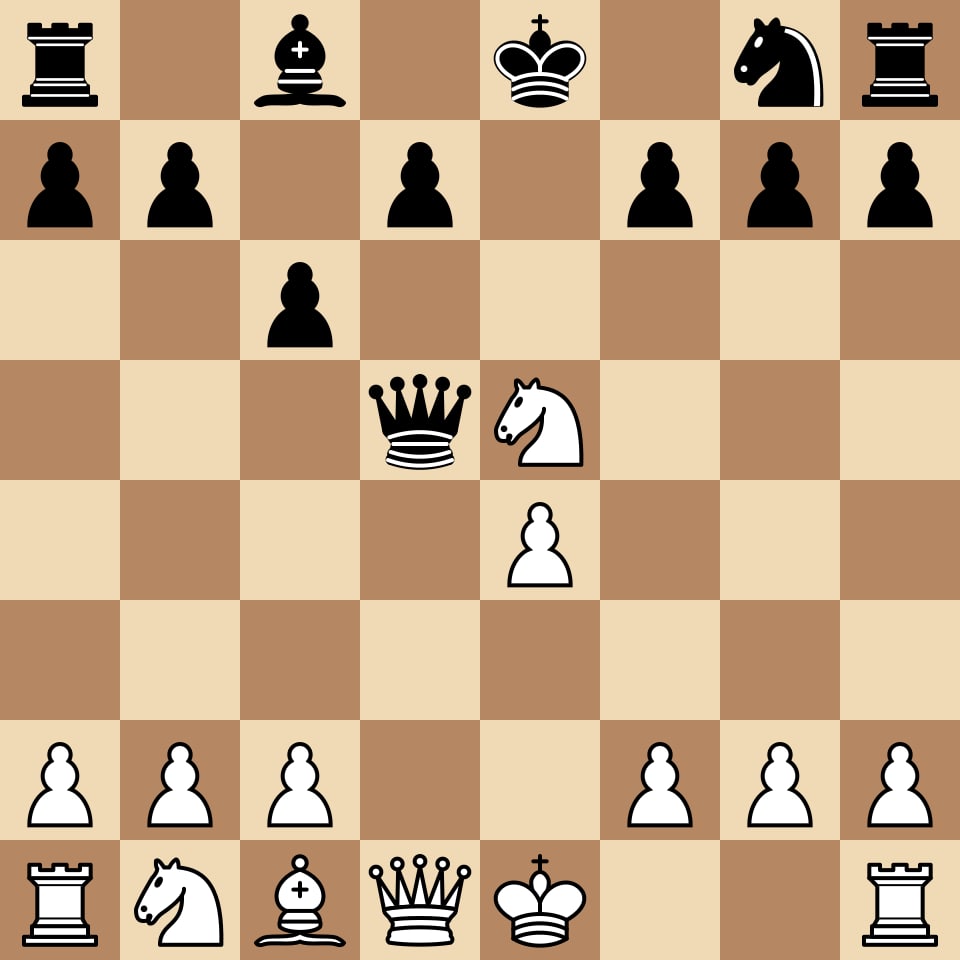
Sindarov needed only a draw against Anish Giri in Round 13 to clinch the tournament. He got it. Giri had White in a Queen’s Gambit Declined and pressed for a win, the exchange went off but Black defended accurately, and by move 57 the position repeated three times. Sindarov became the 2026 Candidates winner without winning a game in the final round.
Giri, Anish White Sindarov, Javokhir Black


The tournament
The event ran from March 28 to April 16 at the Cap St Georges Hotel and Resort in Pegeia, a coastal town in western Cyprus. The open section had eight players: Sindarov, Anish Giri, Fabiano Caruana, Hikaru Nakamura, Andrey Esipenko, Matthias Blübaum, Wei Yi, and R Praggnanandhaa.
That’s a serious field. Caruana is a former world title challenger who nearly won in 2018. Nakamura has been in the world top five for years. Giri is consistently in the top ten. Wei Yi won the 2025 World Cup runner-up spot by reaching the Goa final.
Sindarov beat Caruana in Round 4, a win that marked the moment the tournament’s eventual winner became clear. He went undefeated across 14 rounds. The consistency wasn’t a grind; he found multiple winning chances and converted them cleanly.
Giri finished second. Caruana third.
What Nakamura’s qualification tells you
Magnus Carlsen hasn’t played in the world championship cycle since he voluntarily stepped away in 2022. Under FIDE rules, a player must play a minimum number of rated classical games over the qualifying period to be eligible for the Candidates. Carlsen didn’t meet the threshold: reportedly 40 games. So the world number one, by rating, is sitting out the match for the world title.
That left Nakamura as the next highest-rated eligible player, earning his Candidates spot via rating. He finished fourth in Cyprus. The field is as strong as any Candidates in memory. Sindarov finished ahead of all of them by a meaningful margin.
The women’s section
Vaishali Rameshbabu, younger sister of Praggnanandhaa, won the women’s Candidates in Cyprus. She’ll play for the Women’s World Chess Championship. Two siblings from the same Chennai family now qualify for world championship matches in the same year. That’s not a coincidence or luck; it’s a data point about what the Indian training system produces.
What the 2026 World Championship match looks like
Gukesh vs. Sindarov. An 18-year-old Indian world champion versus a 20-year-old Uzbek challenger who set a Candidates record. Neither player was on most people’s radar as a world championship contender three years ago.
The world chess championship is currently in the middle of a genuine generational change. The 2024 WCC match between Gukesh and Ding Liren was already outside the Carlsen axis. The 2026 match continues that completely: no Carlsen, no Caruana, no Nakamura in the final. Just two players who broke through fast, against each other.
For anyone new to how world championship challengers are produced, Chess Duels by Yasser Seirawan is the best account of what it actually feels like to be preparing for and playing in world championship-level matches. For the foundational game-reading that underpins Sindarov’s positional accuracy, Logical Chess: Move by Move by Irving Chernev remains the most practical starting point.
Also related: Sindarov’s World Cup 2025 win in Goa, where this story started.
Sources
- Candidates Tournament 2026, Wikipedia
- Sindarov, Vaishali Triumph: 7 FIDE Candidates Conclusions, Chess.com
- Candidates R13: Sindarov secures overall victory with a round to spare, ChessBase
- Candidates 2026 R13 PGN, Lichess broadcast
- FIDE Candidates Cyprus 2026: official
- Seirawan, Yasser. Chess Duels: My Games with the World Champions. Everyman Chess, 2018.
This page contains affiliate links. As an Amazon Associate, DiscussChess earns from qualifying purchases.
Sources
- Candidates Tournament 2026, Wikipedia
- Sindarov, Vaishali Triumph: 7 Candidates Conclusions, Chess.com
- Candidates R13: Sindarov secures victory with a round to spare, ChessBase
- FIDE Candidates Cyprus 2026, official
- FIDE Candidates Tournament, Wikipedia
- The Candidates Tournaments 1959 and 1962, ChessBase
- Candidates 2026 R13 PGN, Lichess broadcast (Giri-Sindarov)
Further reading
- Chess Duels: My Games with the World Champions, Yasser Seirawan ASIN verified via Open Library 2026-05-02. Everyman Chess 2018. Seirawan's personal account of playing the world champions, the best frame for understanding what Sindarov is walking into.
- Logical Chess: Move by Move, Irving Chernev ASIN verified via Open Library 2026-05-02. Batsford edition. The foundational game study text that traces the decision-making visible in Sindarov's positional accuracy.
- DGT 3000 Digital Chess Clock ASIN verified via Amazon 2026-05-02. Used at every FIDE-rated event including the Candidates.