Best Chess Clock: DGT vs. Chronos
The DGT 3000 dominates European and FIDE events. The Chronos is standard at most USCF-rated play in the US. Buy whichever one your tournament director uses: that's the whole answer.
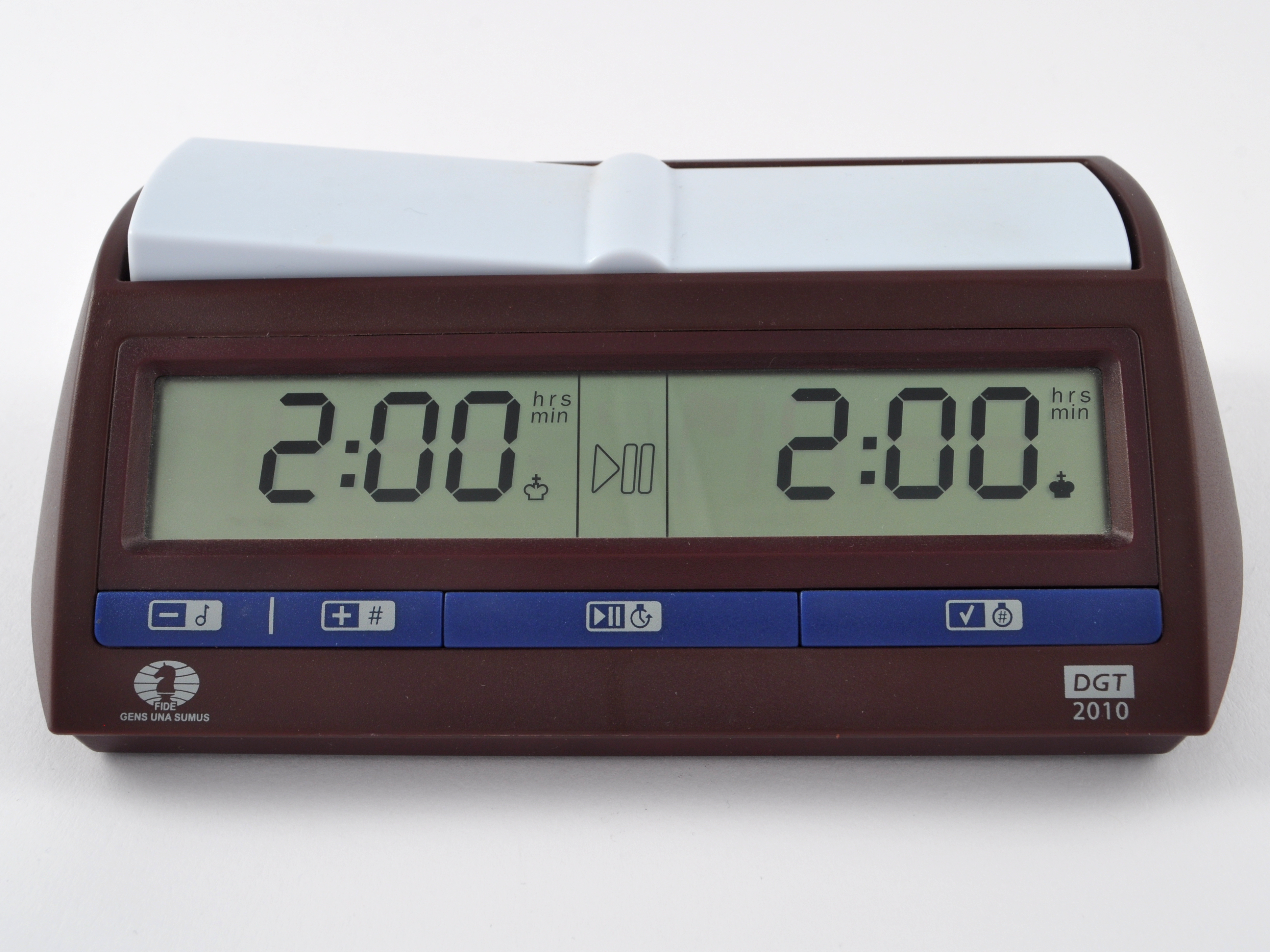
The DGT 3000 is the right clock for most players outside North America. The Chronos is standard for USCF-rated play in the United States. Both handle Fischer increment and Bronstein delay correctly. Both are well-made and will last years of club use. Buy whichever one your local tournament director uses, that single piece of information renders every other clock comparison irrelevant.
If you don’t know which clock your local tournament uses, email the organizer before buying. It takes two minutes and saves you from owning the wrong clock.
The three options worth discussing
DGT 3000. Made by Digital Game Technology in the Netherlands, built specifically to meet FIDE’s clock regulations and carrying FIDE’s own approval. The most widely used tournament clock in the world outside the United States. Used at most FIDE-rated events in Europe, Asia, and South America. The physical clock is small, about 6” wide by 4” deep by 3” tall, runs on two AA batteries (DGT recommends alkaline), and DGT rates the battery at roughly 10,000 hours of active tournament use, or about five years sitting idle switched off. It ships with 24 pre-programmed timing options covering the standard classical, rapid, and blitz formats organizers actually use, plus 5 fully manual slots for anything unusual, and it handles both US delay and Bronstein delay correctly in addition to Fischer increment. The display is clear, time control programming is logical once you’ve done it once, and the clock is reliable under years of club use.
The one legitimate criticism: the buttons require a deliberate press rather than a tap. Some players find this slower in speed chess. It’s not a problem at standard time controls.
DGT North American: Same internals as the DGT 3000, different button layout. The buttons sit on top of the clock rather than the side, which is the preferred orientation at many North American tournaments. Functionally identical to the 3000; the choice between them is entirely about button feel.
Chronos (by Game Timer): The dominant clock at USCF-rated events for two decades. The large round buttons are satisfying to press and audibly confirm the time transfer. The current Chronos GX model ships with a shorter case and smaller display than the older full-size Chronos II, which trades away the move counter but keeps every timing feature that matters: it comes with 4 preset blitz time controls and 8 preset tournament time controls out of the box, and every one of those presets can independently be set up with delay, increment, or Bronstein-style final delay, not just one timing style locked in for the whole clock. Programming is more button-heavy than the DGT but once you’ve memorized the sequence for standard time controls it’s fast. The display is slightly harder to read at a glance. Preferred by many experienced US players for blitz because the large button allows a cleaner slap, and the metal case is built to survive years of being slapped that way.
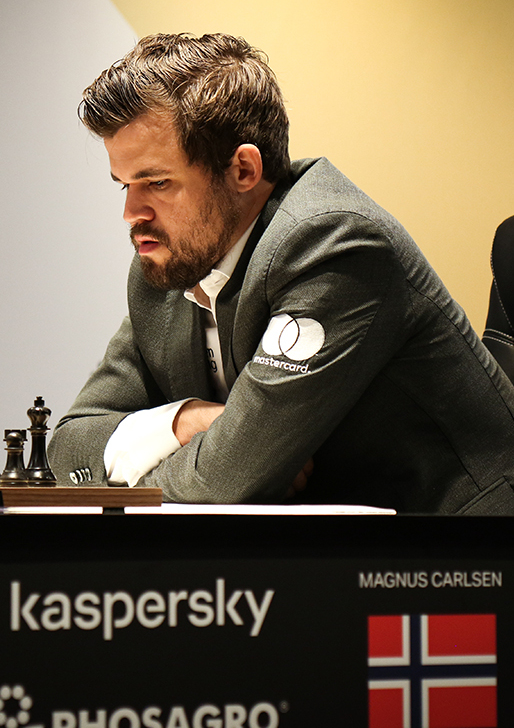
At professional level, the clock is DGT electronic boards tied into the broadcast system. At club level, the same DGT 3000 that sits on tournament tables worldwide runs $40–$60 and handles every time control you’ll encounter. Photo: Lennart Ootes via Wikimedia Commons. CC BY-SA 4.0.
Fischer increment vs. Bronstein delay
Make sure the clock you buy handles both correctly, because most rated chess is played with one or the other.
Fischer increment: Additional time is added to your clock after each move. G/90 +30 means 90 minutes with 30 seconds added per move, credited immediately after you press the clock. You can accumulate time if you move quickly, which makes it nearly impossible to flag (lose on time) in a position you’re actually winning.
Bronstein delay: Your clock doesn’t start counting down until the delay period runs out. G/90 d5 means the clock waits 5 seconds before ticking. Move in under 5 seconds and you haven’t lost any time. Move slower and the delay runs out, then normal counting resumes. Unlike Fischer increment, you can’t accumulate the delay: it’s a buffer, not a bonus.
Both the DGT 3000 and the Chronos handle both formats. Verify before buying cheaper alternatives: some budget clocks support increment but not delay, or implement them incorrectly.
What the clock actually enforces
It’s worth knowing the rule your clock is enforcing, not just how to program it. Per FIDE’s Laws of Chess, Article 6.9: “If a player does not complete the prescribed number of moves in the allotted time, the game is lost by that player,” with one exception written directly into the rule, Article 6.9 continues that the game is drawn instead “if the position is such that the opponent cannot checkmate the player’s king by any possible series of legal moves.” In plain terms: your flag falling loses the game on time, unless your opponent has literally nothing left on the board (a lone king, say) that could ever deliver checkmate, in which case it’s a draw regardless of the clock.
Flag falls don’t require the arbiter to be staring at the clock at the exact moment. Article 6.8 defines it as “when the arbiter observes the fact or when either player has made a valid claim to that effect,” meaning your opponent can legitimately stop the clocks and claim the win on time themselves in an unarbited club game, which is exactly the scenario a reliable clock with a clear display prevents from turning into an argument. It’s also the arbiter, not either player, who decides where the clock sits before the round starts (Article 6.5), which is why tournament clocks are built to be read clearly from either side of the board rather than angled toward one player.
What to avoid
Analog clocks. Legal in some formats but no longer standard at serious rated events. The wind-up mechanism makes them unreliable for short time controls. Acceptable for casual home games.
Budget digital clocks under $20. Usually can’t store multiple time control settings and have unclear displays. Fine for learning; not suitable for tournament play.
Phone apps. Prohibited at most rated over-the-board events due to phone policies. Fine for casual home games.
Where to buy
DGT clocks are available from DGT’s website directly and from US chess retailers: Chess House, USCF Sales, Wholesale Chess. The Chronos is available from Game Timer directly and from the same US retailers.
Amazon carries both. The standard listing for each:
- DGT 3000 Digital Chess Clock on Amazon (affiliate)
- Chronos GX Button Black on Amazon (affiliate)
Confirm the listing title matches the model name before purchasing, older discontinued versions appear in search results and the product photos don’t always match the shipped item.
If a timer isn’t enough and you want a full offline training partner, the DGT Centaur (affiliate) is a sensor board with weighted pieces and a built-in adaptive engine, effectively a clock and a sparring opponent in one unit. It’s a different price bracket than a standalone clock, but it replaces both a clock and a screen for OTB practice.
Pair your clock with a proper chess set if you’re setting up for club play or home analysis.
Also pair your clock with our guide on how to improve at chess, proper time management at G/60 and G/90 is a core part of serious study. And see best chess books for the study resources that make those practice games count.
Sources
- FIDE Laws of Chess, Article 6 (the chess clock), FIDE Rules Commission
- FIDE Laws of Chess, official PDF
- DGT3000 official specifications, DGT Shop
- Chronos GX Digital Game Clock, World Chess Shop
This page participates in the Amazon Associates program (tag: discusschess-20). ASINs are verified before publishing.
This page contains affiliate links. As an Amazon Associate, DiscussChess earns from qualifying purchases.
Sources
Further reading
- DGT 3000 Digital Chess Clock ASIN verified via Amazon search 2026-05-02. Title: 'DGT 3000 Digital Chess Clock'. Standard FIDE-approved model.
- Chronos GX Digital Game Chess Clock, Button, Black ASIN verified via Amazon search 2026-05-02. Title: 'Chronos GX Digital Game Chess Clock - Button - Black'. Standard US tournament model.
- DGT North American Chess Clock and Game Timer ASIN verified via Amazon search 2026-05-02. Standard DGT North American model with top-mounted buttons, preferred at many USCF events.