Anish Giri: Dutch GM, Candidates Runner-Up
Anish Giri has been a Candidates Tournament fixture for over a decade, finally breaking through to a career-best runner-up finish in 2026. He's also one of chess's most visible online personalities, and drew the most controversial stretch in recent Candidates history.
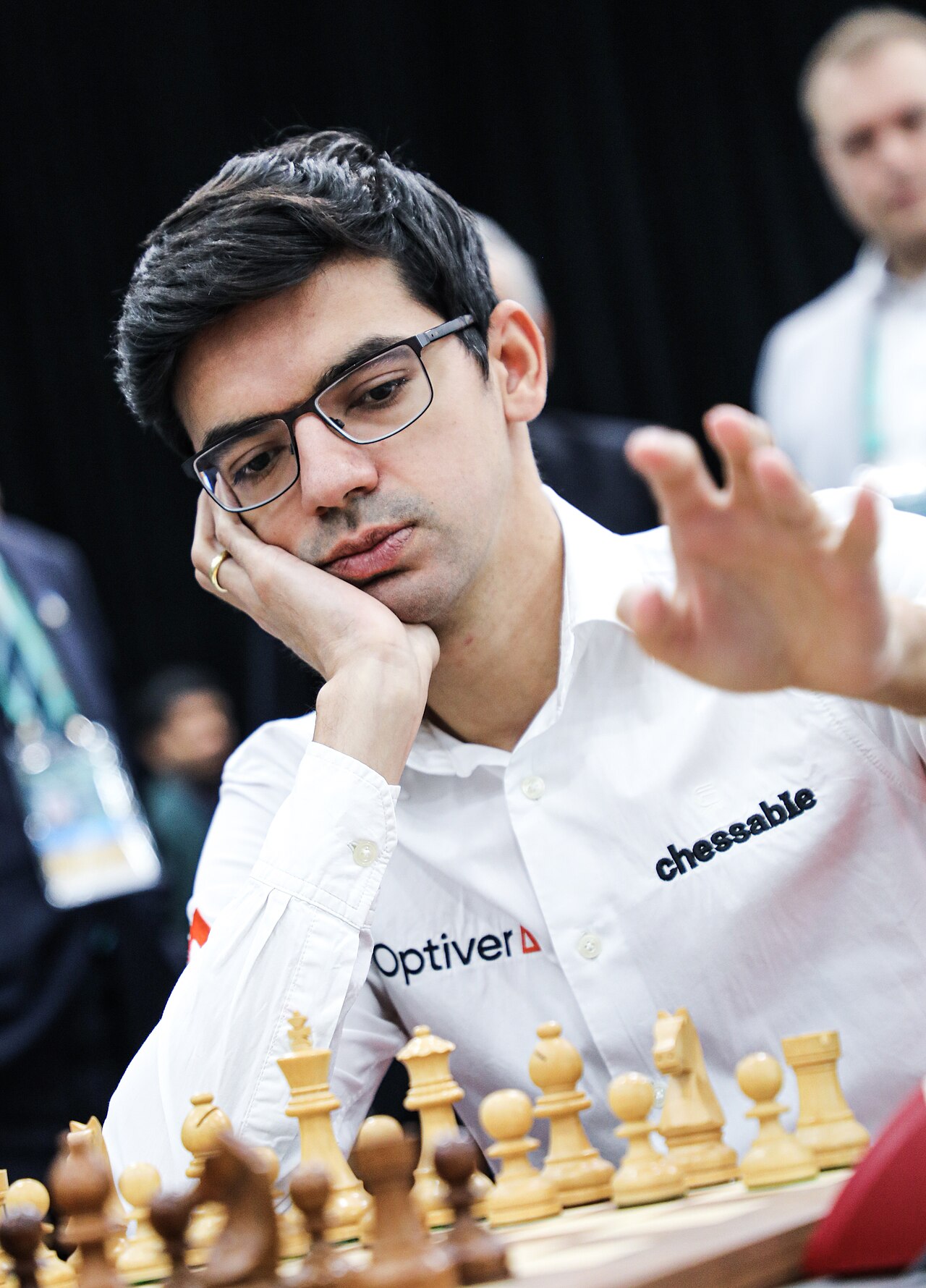
Anish Giri was born June 28, 1994, in St. Petersburg to a Nepali father and Russian mother, and grew up in Japan before the family settled in the Netherlands when he was a teenager. He became a grandmaster at 14 in 2009, reached a peak FIDE rating of 2798 in October 2015 (a career-high world ranking of No. 3 that January), and has stayed inside the world’s top 10 for most of the fifteen years since. He was a Candidates Tournament fixture for over a decade without winning it, until a career-best runner-up finish in 2026 finally moved him past the “nearly man” label he’d worn since his teens.
He’s also one of chess’s most visible online personalities, with a following built on genuinely self-deprecating humor rather than manufactured content. When he drew all 14 classical games at the 2016 Candidates Tournament, a result that eliminated him from championship contention, he was the first to joke about it publicly, and the joke stuck to his public image for the next decade.
Background and rise
Giri’s path was unusual. Born in Russia, raised partly in Japan, competing for the Netherlands: the combination reflects a genuinely cosmopolitan upbringing, and he’s fluent in Russian, English, and Dutch, with working knowledge of Japanese, Nepali, and German. He became a Dutch citizen, has represented the Netherlands at seven Chess Olympiads (2010 through 2024), and has won five Dutch national championships (2009, 2011, 2012, 2015, and 2023).
He was one of the youngest players ever to reach 2700 FIDE, at 16, and broke into the world’s top 20 before he turned 18. His rise was rapid and his results have been consistently elite for a decade and a half, a remarkable stretch of sustained top-level performance in a sport where prodigies routinely plateau or burn out. In 2015 he married Georgian Woman Grandmaster Sopiko Guramishvili; they have three children.
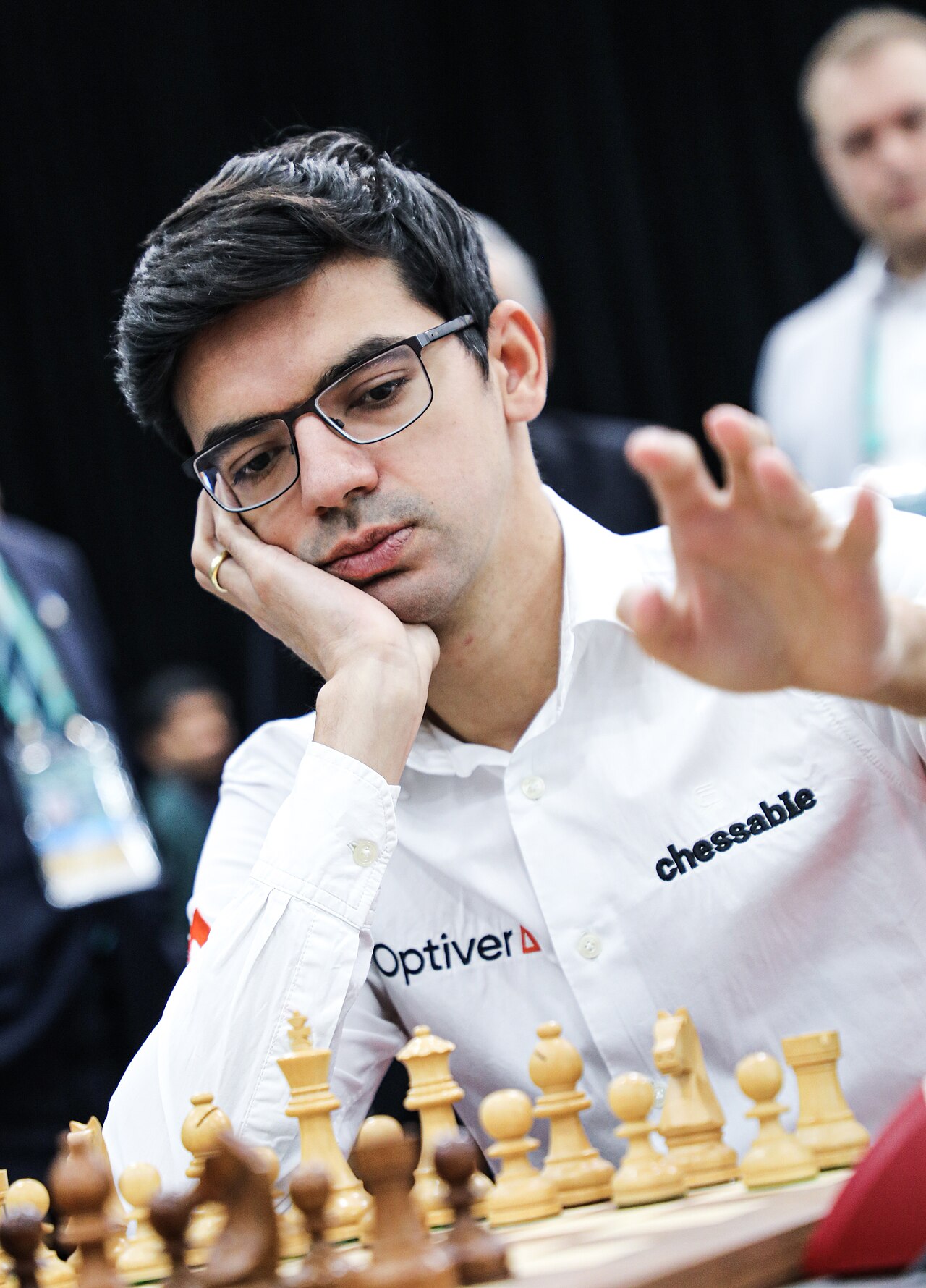
The 2016 Candidates and the draw controversy
At the 2016 Candidates Tournament in Moscow, Giri drew all 14 classical games, the first time any player had done that in a full Candidates field. The result eliminated him from contention (he needed wins to qualify). The reaction was mixed: some saw it as excessively cautious play; others noted that drawing with everyone in a Candidates field means beating no one but also losing to no one, a survival strategy, not a win strategy.
Giri’s response on Twitter was characteristically direct: he made jokes about his own result before anyone else could. The self-awareness became part of his public persona, and it followed him through two more Candidates cycles: a shared third in 2020-21 with 7.5/14, and a 2022 cycle that again fell short of a title match. Every one of those campaigns fed the same running joke, that Giri was chess’s most durable Candidates participant and its least likely eventual challenger, until 2026 rewrote the second half of that sentence.
The Carlsen wins
Giri’s results against Magnus Carlsen bookend his career in an unusually clean way. In 2011, at 16, he beat Carlsen in just 22 moves at the Tata Steel Masters, a result striking enough that Carlsen himself remarked he’d probably not lose like that again for another ten years. He was nearly right: Giri didn’t beat Carlsen again in classical chess for twelve years. The breakthrough came at Tata Steel in January 2023, in the same tournament where he also defeated reigning world champion Ding Liren and knocked him below the 2800 rating mark for the first time in years. Two decisive results in one event, against two different world champions, a decade apart from his first career-defining win, is the kind of symmetry that gets repeated in profiles of him for a reason.
Playing style
Giri plays technically excellent, deeply prepared chess. His defensive resources are exceptional. He’s beaten world-class attacks and held positions that others would have lost. The criticism of his play is about decisiveness in positions that require risk to win, not about the quality of his technical chess.
His preparation depth is considerable. He’s known for knowing theoretical lines at an unusual depth and for finding improvements in positions the chess world thought were settled. He’s since turned that preparation into product: he’s published four Chessable courses (on the Sicilian Najdorf, Sicilian Dragon, French Defense, and Grünfeld Defense) and a 2014 book, My Junior Years In 20 Games, drawn from his own annotated early career.
Online presence
Giri’s Twitter and streaming presence has made him one of the most recognized chess personalities outside the core chess audience. His commentary on major events, often delivered with genuine wit, reaches players who wouldn’t otherwise follow grandmaster chess. His YouTube channel has grown past 229,000 subscribers, and he’s a regular annotator for ChessBase and a contributor to New in Chess and 64 magazine. He is one of the voices alongside GothamChess and Hikaru Nakamura who have made chess more accessible online, and unlike either of them, he does it while still competing at the very top of the game: he’s been sponsored by the Dutch trading firm Optiver since 2016 and signed with the esports organization Team Secret in April 2025 to compete on the Champions Chess Tour.
2026: the best Candidates finish yet
The 2026 Candidates Tournament was held at the Cap St Georges Hotel and Resort in Pegeia, Cyprus, from March 28 to April 16. Javokhir Sindarov won it outright with a round to spare, finishing 10/14 undefeated, a new record for the event that broke the previous benchmark of 9.5/14. Giri finished clear second at 8.5/14, four wins against zero losses, the best Candidates result of his career by a wide margin. The turning point was a must-win game against Caruana in Round 9, which he took to lock up sole second place. Two rounds earlier, in Round 7, he’d held a fortress draw against Sindarov that kept his own tournament alive.
The two met again in Round 13, on April 14, with Sindarov needing only a draw to clinch the challenger spot outright. Giri, still mathematically alive for a highly improbable path to first, pressed for the full point in a queenless middlegame that simplified into a rook ending. He never quite found enough, and the game repeated after 58 moves. It was the moment Sindarov’s title challenge became official, and it closed out, for the third time in a decade, a Candidates campaign that ended one round short of the outcome Giri actually wanted. This time, at least, the outcome he settled for was the best of his career.
Giri, Anish White Sindarov, Javokhir Black


Sources
- FIDE Rating Profile: Anish Giri
- Anish Giri, Wikipedia
- Candidates Tournament 2026, Wikipedia: venue, dates, and final standings
- Silman, Jeremy. How to Reassess Your Chess. Siles Press, 4th ed. 2010. (affiliate)
This page contains affiliate links. As an Amazon Associate, DiscussChess earns from qualifying purchases.
Sources
Further reading
- How to Reassess Your Chess, Jeremy Silman ASIN verified via Amazon 2026-05-02. Giri's positional depth and defensive precision reflect exactly the structural understanding Silman's framework develops.