Alekhine Defense: Provoking White's Pawns
The Alekhine Defense (1.e4 Nf6) attacks White's center pawn on move 1, inviting White to advance pawns that Black then undermines. A hypermodern defense named for World Champion Alexander Alekhine.
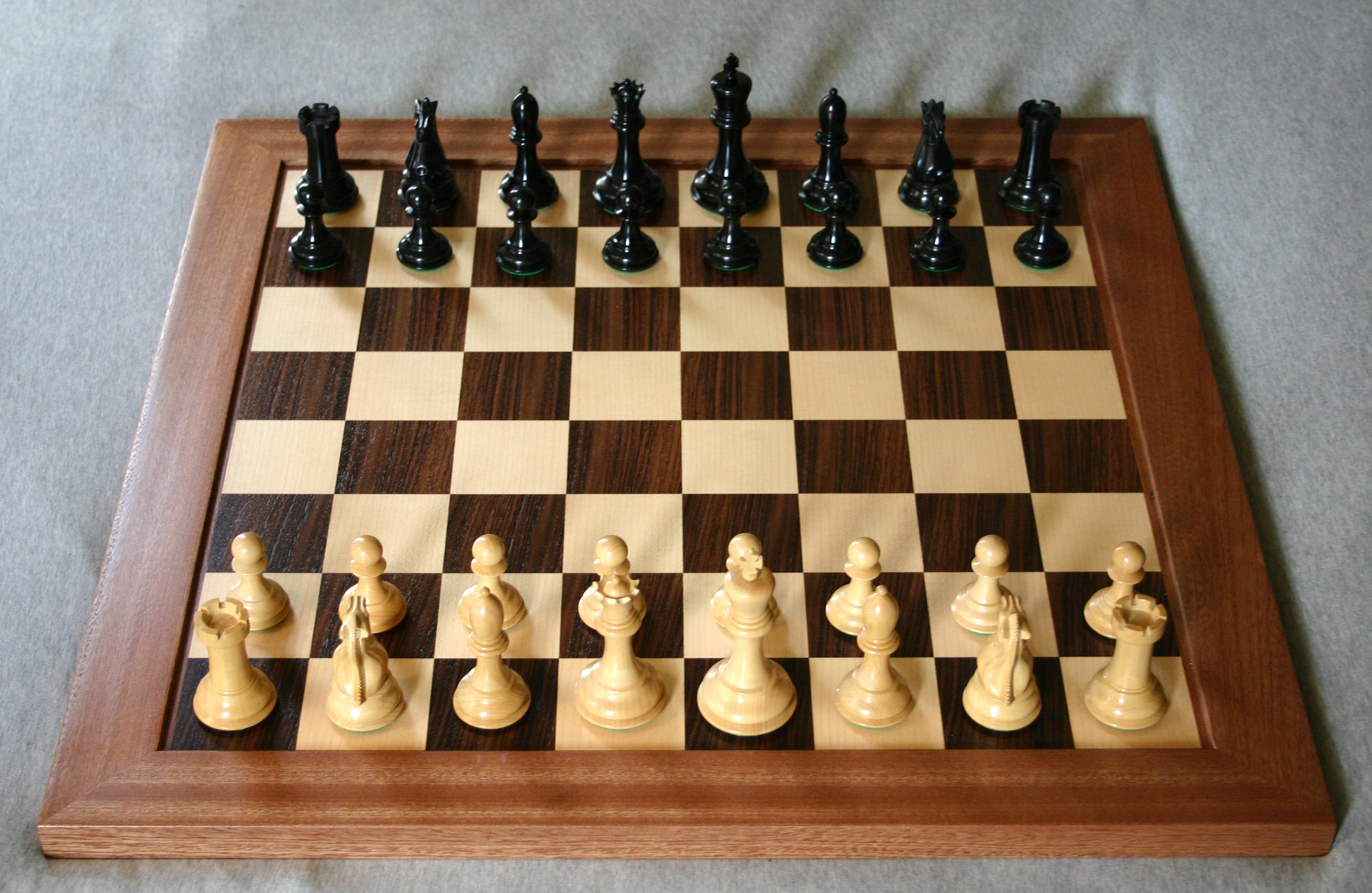
The Alekhine Defense begins 1.e4 Nf6. Black attacks White’s center pawn on the first move, before developing any other piece. The natural response is 2.e5, chasing the knight. After 2…Nd5 3.d4 d6 4.Nf3 Bg4 5.Be2, Black has a knight on d5 and is attacking the pawn chain White has built.
The opening is hypermodern in concept: instead of contesting the center with pawns, Black provokes White to advance pawns and then undermines them with piece pressure. Alexander Alekhine, World Chess Champion from 1927 to 1935 and 1937 to 1946, played it against the world’s strongest players and won, giving it both a name and a record.
Where it came from
Alekhine introduced the defense in round 5 of the Budapest tournament of 1921, drawing Friedrich Sämisch with it after the game went 1.e4 Nf6 2.e5 Nd5 3.Nc3 e6 4.Nxd5 exd5 5.d4 d6, a slightly different move order from the modern main line but the same underlying idea: let White’s pawns advance, then attack them. The defense arrived at the exact moment hypermodernism was taking shape as a school of thought. Richard Réti had just shown, with 1.Nf3 followed by fianchettoed bishops, that pieces could control the center from a distance. Aron Nimzowitsch was developing the theories that became My System, arguing that a pawn center advanced too far becomes a target rather than a strength. Alekhine’s contribution was the most provocative version of the idea applied directly against 1.e4: invite the pawns forward on move one, then spend the rest of the game proving they shouldn’t have come.
It’s a genuinely radical move for 1921. Every strong player of the previous century had been taught to meet 1.e4 by fighting for central squares immediately, with 1…e5 or 1…c5. Alekhine’s approach conceded the center outright and dared White to prove that owning more space was actually an advantage. The gamble paid off often enough that the opening carries his name a century later.
The strategic logic, precisely
The point isn’t simply “provoke pawns and hope.” After 2.e5 Nd5 3.d4 d6 4.Nf3 Bg4, Black is doing something specific: developing the light-squared bishop outside the pawn chain before playing …e6, then pressuring d4 with pieces (the knight on d5, the bishop on g4, later a knight on c6 or the queen along the d-file) while White’s e5 and d4 pawns can become weak once they stop being useful as space and start needing defense. The further White pushes (e5, d4, c4, f4 in the most aggressive lines), the more squares behind those pawns become permanently weak. Black’s whole plan is trading static space for dynamic piece activity and long-term structural targets, exactly the imbalance hypermodern theory says is worth having.
Main variations
Four Pawns Attack: 2.e5 Nd5 3.d4 d6 4.c4 Nb6 5.f4. White builds an imposing pawn structure: e5, d4, c4, f4. Aggressive and risky. Black’s counterplay against the overextended pawns is immediate, usually starting with …Bg4 or …Bf5 and a quick strike at d4 or c4 before White’s space advantage becomes decisive.
Exchange Variation: 2.e5 Nd5 3.d4 d6 4.c4 Nb6 5.exd6. White trades the pawn and reduces the complexity. Solid for White; Black gets the bishop pair and active pieces in exchange for a slightly passive position. This is the practical choice for a White player who wants to neutralize the Alekhine’s surprise value rather than fight through its sharpest theory.
Modern Variation: 2.e5 Nd5 3.d4 d6 4.Nf3. White develops normally without the aggressive f4 push. The most principled response, solid development and preparation before committing to a central structure. This is what most strong players choose today precisely because it sidesteps the sharpest, most theoretically demanding Four Pawns lines while still keeping a space edge.
Two Knights Variation: 2.Nc3, avoiding the pawn chase altogether. White develops a piece instead of advancing the pawn, transposing toward more standard e4 structures after 2…d5. A quieter option for a White player who doesn’t want to enter Alekhine theory at all.
Who uses it
The Alekhine is a legitimate, though uncommon, defense at top level. It requires Black to understand the structural consequences of the pawn chase and to be comfortable in positions where White has more space. Players who use it tend to be tactically oriented and comfortable in asymmetric positions.
It appears occasionally in rapid and blitz chess as a surprise weapon. In classical chess at the top level it’s rare, most elite players prefer defenses with more direct counterplay. But when it’s played, the games tend to be decisive, and the single most important demonstration of that came from the man who arguably understood provocation-based chess better than anyone: Bobby Fischer.
Fischer’s Alekhine Defense at the board that decided the world title
Fischer played the Alekhine Defense as Black against Boris Spassky in Game 13 of their 1972 World Championship match in Reykjavik, one of the most chaotic games ever played at that level. Both sides pushed passed pawns down opposite wings in a mutual race: Black’s queenside pawn eventually broke through, and after 74 moves and an adjournment, Fischer’s last pawn was about to queen and Spassky resigned. It remains the most famous game in the Alekhine Defense’s history and the clearest proof that the opening can hold up under the highest possible pressure, a game that decided a world championship match, not a speculative surprise weapon in a minor event.
Spassky, Boris White Fischer, Bobby Black


For club players
The provocation logic that makes the Alekhine work at the top also makes it a demanding opening to learn. Black has to know, concretely, which of White’s advanced pawns are targets and when to strike them, rather than just reacting move by move. Play it without that knowledge and White’s extra space simply produces a cramped, difficult middlegame for Black with no compensation. Play it having studied the Four Pawns and Modern lines specifically, and it rewards a player who likes calculating in sharp, asymmetric positions more than one who prefers quiet development.
Sources
- Hooper, David, and Kenneth Whyld. The Oxford Companion to Chess. Oxford University Press, 1992.
- Alekhine, Alexander. My Best Games of Chess, 1908–1923. Harcourt Brace, 1927.
- Sämisch, Friedrich, vs. Alekhine, Alexander. Budapest, Round 5, 1921.
- Spassky, Boris, vs. Fischer, Bobby. World Chess Championship 1972, Game 13, Reykjavik, August 10 1972.
- Silman, Jeremy. How to Reassess Your Chess. Siles Press, 4th ed. 2010. (affiliate)
- Fischer, Bobby. My 60 Memorable Games. Batsford/Pavilion. (affiliate)
This page contains affiliate links. As an Amazon Associate, DiscussChess earns from qualifying purchases.
Sources
- Hooper, David, and Kenneth Whyld. The Oxford Companion to Chess. Oxford University Press, 1992.
- Alekhine, Alexander. My Best Games of Chess, 1908–1923. Harcourt Brace, 1927.
- Sämisch, Friedrich, vs. Alekhine, Alexander. Budapest, Round 5, 1921. (First tournament outing of the defense.)
- Spassky, Boris, vs. Fischer, Bobby. World Chess Championship 1972, Game 13, Reykjavik, August 10 1972.
Further reading
- How to Reassess Your Chess, Jeremy Silman ASIN verified via Amazon 2026-05-02. The hypermodern concept behind the Alekhine, controlling the center with pieces rather than occupying it with pawns, is explained through Silman's imbalance framework.
- My 60 Memorable Games, Bobby Fischer ASIN verified via Open Library 2026-05-02. Fischer's own annotated games, including his World Championship win over Spassky with the Alekhine Defense as Black.